New South Wales
AlphaESS battery installers in New South Wales.
Get matched with top solar companies in New South Wales
- AlphaESS SMILE combines battery storage and an inverter in one home energy system
- Unlock up to $7,000 in federal solar + battery rebates*
- Compare quotes from vetted installers, with AlphaESS experience where available
AlphaESS
What could an AlphaESS battery save your home?
*For eligible combined solar and battery installations before January 2027. Battery-only rebates vary with usable capacity. Your installer confirms eligibility and amount.
✓ Up to 3 vetted installers
✓ Free to compare, no obligation
✓ Your chosen battery, your quote request
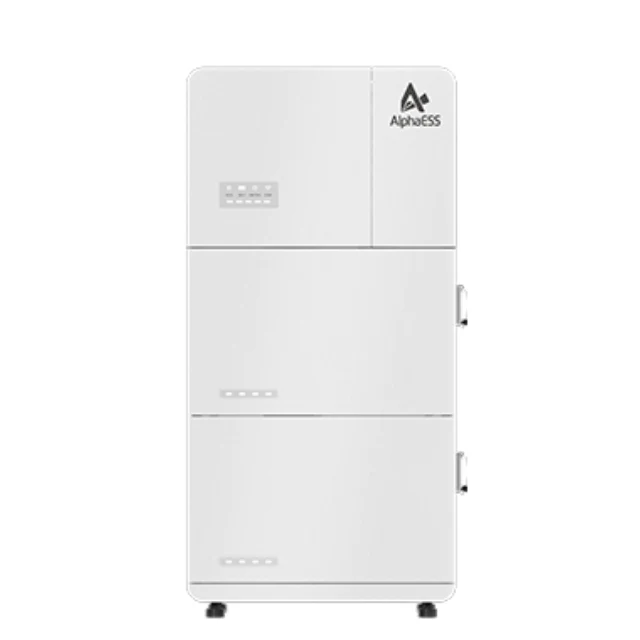
Meet AlphaESS All-in-one SMILE systems for new solar, or for the solar you already have.
- New solar or existing solar
Choose the SMILE-G3-S5 hybrid for a new solar system, or the B5 to add storage beside existing solar.
Ask which version your quote is: S5 (hybrid) or B5 (AC-coupled).
- 9.3 kWh modules, all usable
Each module holds 9.3 kWh at 100% depth of discharge, and up to four link together for 37.2 kWh.
- More panels on one inverter
The S5 takes up to 10 kW of panels on a 5 kW inverter, so more of your roof can feed the battery.
Your local network's rules can limit how much solar you connect.
The company behind it
A Chinese energy-storage maker founded in Nantong in 2012, with an Australian subsidiary since 2015.
Founded 2012
AlphaESS says it was established in Nantong, China, in 2012, and launched its first storage battery in 2013.
Global installs
AlphaESS says over 300,000 of its systems are running in more than 130 countries.
Australian subsidiary
AlphaESS says it set up its Australian subsidiary in 2015.
Want an AlphaESS battery in New South Wales?
Get my AlphaESS quotesCompare up to 3 vetted installers. Free, no obligation.
Why AlphaESS is different
AlphaESS makes energy storage and nothing else. Inverter manufacturers add batteries to move more inverters; car companies add batteries to complete an ecosystem; AlphaESS builds the whole storage system — battery and hybrid inverter integrated — as the product itself. That single-mindedness shows up not as one flagship unit but as span: the SMILE range is engineered to have a configuration for nearly any Australian home rather than one answer for everyone.
The span is the striking part. SMILE systems run from under 4 kWh to beyond 60 kWh, across compact single-phase homes, current-generation single-phase families with unusually wide capacity steps, and three-phase systems in multiple inverter sizes. Where most brands size the household into the product, AlphaESS sizes the product to the household — which is precisely why homes with awkward loads, odd phase arrangements or unusual ambitions keep ending up with it on the shortlist.
What the brand lacks is your recognition. AlphaESS is a long-running specialist with a dedicated Australian arm, sitting comfortably in the customer-rated top ten, yet it is known to installers far more than to homeowners — most buyers meet the name for the first time on a quote. That is not a red flag; it is how specialist brands work. They win by installer relationship rather than advertising, and the right response is to interrogate the relationship rather than the unfamiliarity.
The trade-off hiding inside the breadth is specification risk. Two AlphaESS quotes are not automatically the same product — family, generation, inverter size and module count all have to be right for your load, and the wrong point in a wide range is a subtler failure than a wrong brand. The badge tells you almost nothing; the model number tells you everything. Buyers should treat that as the defining feature of shopping this brand.
The SMILE system, piece by piece
The SMILE-M5 is the compact single-phase path, stepping from 5 to 20 kWh. Choosing it decides that your home fits the typical mould — and for most single-phase houses with ordinary evening loads, it genuinely does. Its job is to be the sensible default, correctly sized.
The SMILE-G3 single-phase family is the current generation with the widest span, building from under 4 kWh to beyond 37 kWh. It decides the generation question and the headroom question at once: a G3 quote is buying newer platform engineering plus room to grow that the compact family cannot match. The flip side is more configuration choices to get right.
The three-phase SMILE-G3 systems decide the big-home question. Multiple inverter sizes with storage past 60 kWh at the top put three-phase properties — rural blocks, large households, storage-heavy plans — inside the range rather than at its edge. Three-phase also raises the blackout detail that single-phase never faces: whether all phases hold up in an outage or only one depends on the specific configuration and switchboard wiring, so the quote must say.
Across every family, two decisions ride on the exact model chosen: Clean Energy Council listing, which is per configuration and carries the federal rebate with it, and backup behaviour, which differs across the range enough that the phrase backup capable means nothing until it is expressed as a circuit list.
Put AlphaESS to the test on your own numbers
Reading about it only goes so far — real quotes are where a AlphaESS decision gets made. Get 2-3 quotes from vetted installers in New South Wales. Free for homeowners.
What AlphaESS does best
Fitting the homes nobody else fits neatly. The mechanism is pure range arithmetic — with capacity steps from under 4 kWh to past 60 kWh across both phase types, the odds that some SMILE configuration lands close to your actual load are higher than with any one-model brand. Households that have been quoted compromises elsewhere often discover the compromise was the range, not the house.
Serious three-phase storage without top-tier positioning. Three-phase homes wanting real capacity usually face a choice between stretching a single-phase-centric product or paying flagship prices; the three-phase SMILE families exist exactly in that gap, with inverter sizes to match the property rather than the brochure.
Being a system rather than a pairing. Because battery and hybrid inverter are integrated by design, there is no cross-vendor compatibility matrix to check and one point of engineering responsibility when something behaves oddly. The monitoring reflects the same philosophy — competent coverage of solar, storage and consumption for owners who want to confirm the system works, not tinker with it nightly.
Keeping the VPP door open. Participation exists through several Australian programs, which puts AlphaESS ahead of the newest entrants — with the caveat the record itself insists on: acceptance is per-model, so the income only belongs in your maths once your exact configuration is confirmed against the specific program.
Who an AlphaESS suits — and who it does not
It suits the household the standard products bend around. If your quotes keep coming back oversized, undersized or wrong-phased, the width of the SMILE range is the actual remedy — there is likely a configuration that fits your load instead of approximating it, and finding it is a design exercise a good installer will enjoy.
It suits three-phase properties with real storage ambitions, and it suits buyers who find the storage-only argument persuasive: a company whose entire business is the thing on your wall has different incentives from one for whom your battery is a line extension. Buyers who weight that kind of focus over brand fame are this product’s natural audience.
It rewards the right installer relationship more than most. Specialist ranges reward familiarity — a company that fits AlphaESS regularly and supports it directly is buying you most of what a household name would, while a company proposing it for the first time is not. If the installer in front of you is in the second category, that is a reason to change installer or change brand, whichever costs you less.
Look elsewhere if recognition itself is the requirement — a brand your neighbours know, the deepest consumer support footprint in the country — because that is what the big names charge for and AlphaESS does not pretend to offer. Look elsewhere too if you are retrofitting onto a recent inverter you intend to keep: SMILE systems are integrated by design, and their natural path replaces the inverter role rather than working beside it.
On money, the discipline is to divide the after-rebate figure by usable kilowatt-hours and compare configurations, not brands. A wide range cuts both ways commercially — there is a right-sized SMILE for most homes, and there is also an oversized one that inflates the quote while flattering the per-kWh figure. Insist on the installer justifying the step chosen against the step below it; the justification is worth more than the number.
AlphaESS in New South Wales
NSW stacks a VPP top-up of roughly $550–$1,500 on the federal rebate through the Peak Demand Reduction Scheme, payable only when the battery joins an approved Virtual Power Plant. AlphaESS clears that bar more comfortably than the newest brands — several Australian programs accept its systems — but acceptance is per-model across a wide range, so the NSW move is specific: have the quote name the program and confirm your exact SMILE configuration is on its accepted list before the top-up enters your arithmetic.
Feed-in tariffs in New South Wales typically pay 5–12c/kWh while grid power costs 30–35c — so a stored kilowatt-hour is worth what you avoid buying, not what exporting earns, and the wider that gap sits on your own plan, the harder a battery works for you. NSW sets no regulated floor under feed-in rates, which makes right-sizing the battery to your evening load — the thing a wide range does well — the whole financial game here.
Put AlphaESS to the test on your own numbers
Reading about it only goes so far — real quotes are where a AlphaESS decision gets made. Get 2-3 quotes from vetted installers in New South Wales. Free for homeowners.
The installer decides the AlphaESS outcome
With this brand the specification is the risk surface. Family, generation, inverter size, module count — four choices where a one-model brand offers none, and every one of them has to match your load rather than the installer’s stock on hand. The first thing to ask about an AlphaESS quote is why this exact model: an installer who can defend the choice against the step above and below it has done the design work; one who cannot has done the paperwork.
Verification is non-negotiable because eligibility is per configuration. The exact SMILE model on the quote needs showing on the Clean Energy Council approved battery list before anything is signed — with a range this wide, the wrong variant is an easy administrative slip with a four-figure consequence, and it is unrecoverable after install.
Integrated systems concentrate commissioning risk: the inverter and battery succeed or fail together, so setup quality shapes everything from round-trip efficiency to how faithfully the monitoring reflects your home. A proper handover ends with backup scope demonstrated circuit by circuit, the monitoring configured against your actual tariff, and a clear answer to who takes the call when a manufacturer claim is needed years from now. Ask each candidate how many SMILE systems they have commissioned; specialists are exactly the brands where that number predicts your outcome.
This matching problem is what Solar Select is for. Your enquiry goes to up to 3 approved installers, subject to current coverage, eligibility and brand suitability — chosen so that each has a genuine shot at the job and a genuine reason to design rather than template. We sell no hardware, the service is free for homeowners, and the small shortlist is deliberate: three considered quotes beat ten copied ones.
Is AlphaESS right for your home? Fit and warranty checks
A good fit if…
- Households whose size or phase setup does not fit the one-model brands neatly
- Three-phase properties wanting serious storage capacity without top-tier positioning
- Buyers who value a storage-only specialist over a brand extending from another product line
- Customers of installers who fit AlphaESS regularly and support it themselves
Consider the limitations
- You want a household-name brand your neighbours already recognise
- You want the deepest possible Australian consumer support footprint behind the badge
- Your installer is proposing AlphaESS for the first time — specialist ranges reward familiarity
- You are retrofitting onto an existing inverter you want to keep, since SMILE systems are integrated by design
Why the installer matters more than the battery
More than 60% of inspected home battery installs were substandard. The Clean Energy Regulator inspected 1,278 home battery installations under the Cheaper Home Batteries Program between July 2025 and April 2026. More than 60% came back substandard and 1.2% unsafe — and the hardware was rarely the problem. The install was.
That is the part a brand cannot fix for you. Solar Select checks installer approval and current campaign eligibility for your New South Wales enquiry. Confirm business history and current independent reviews before choosing an installer. Your enquiry goes to up to 3 of them, and no one else sees your details.
Battery rebates in New South Wales
Cheaper Home Batteries Program (federal) — roughly a quarter off the installed battery cost, applied upfront at the quote by the installer rather than claimed back later.
NSW VPP Incentive (Peak Demand Reduction Scheme) — NSW adds a VPP top-up of roughly $550–$1,500 for connecting the battery to an approved Virtual Power Plant. It stacks with the federal rebate, but it is VPP-conditional — if you don’t want a third-party operator dispatching your battery during peak events, you lose it.
Ready for AlphaESS quotes in New South Wales?
Postcode in — up to 3 vetted installers out. Federal battery rebate applied at quote. Free, no obligation, maximum 3 installers ever.
AlphaESS installers in Sydney
- AlphaESS battery installers in Sydney — serving Greater Sydney
Regional New South Wales
- AlphaESS installers Newcastle — serving Newcastle and the Hunter
- AlphaESS battery installers in Central Coast — serving the NSW Central Coast
- AlphaESS installers Wollongong — serving Wollongong and the Illawarra
- AlphaESS battery installation Albury — serving Albury–Wodonga
- AlphaESS battery installers in Coffs Harbour — serving Coffs Harbour and surrounds
- AlphaESS battery installation Wagga Wagga — serving Wagga Wagga and surrounds
- AlphaESS installers Port Macquarie — serving Port Macquarie and surrounds
- AlphaESS battery installation Ballina — serving Ballina and surrounds
- AlphaESS installers Tamworth — serving Tamworth and surrounds
- AlphaESS battery installers in Orange — serving Orange and surrounds
- AlphaESS battery installation Bowral — serving Bowral and the Southern Highlands
- AlphaESS battery installers in Dubbo — serving Dubbo and surrounds
- AlphaESS battery installers in Forster — serving Forster–Tuncurry and the Great Lakes
This page also covers the New South Wales towns that no longer have a page of their own. Across the Capital Region and South Coast, the Central West, the Far West and Orana and the Illawarra, enquiries from Batemans Bay, Bega, Cooma, Eden, Goulburn, Jindabyne, Merimbula, Moruya, Narooma, Queanbeyan, Yass, Young, Bathurst, Cowra, Forbes, Lithgow, Mudgee, Parkes, West Wyalong, Broken Hill, Narromine, Wellington and Kiama route through this page on postcode. In the Hunter Valley, the Mid North Coast, the Murray and Lake Macquarie, the same applies to Cessnock, Dungog, Maitland, Medowie, Muswellbrook, Nelson Bay, Raymond Terrace, Scone, Singleton, Camden Haven, Gloucester, Kempsey, Nambucca Heads, Taree, Wauchope, Corowa, Deniliquin, Hay and Morisset. Further out, Alstonville, Byron Bay, Casino, Kyogle, Lismore, Murwillumbah, Tweed Heads, Cootamundra, Griffith, Junee, Leeton, Temora, Tumut, Nowra, Sanctuary Point and Ulladulla in the Northern Rivers, the Riverina and the Shoalhaven are matched the same way. Armidale, Glen Innes, Gunnedah, Inverell, Moree, Narrabri, Tenterfield, Bellingen, Grafton, Woolgoolga, Yamba and Katoomba in New England and the North West, the Coffs Coast and Clarence and the Blue Mountains sit in the same New South Wales pool.
Page updated 6 October 2026