Northern Territory
Bluetti battery installers in Northern Territory.
Get matched with top solar companies in Northern Territory
- Bluetti home systems combine a solar inverter with batteries sized for your household
- Unlock up to $7,000 in federal solar + battery rebates*
- Compare quotes from vetted installers, with Bluetti experience where available
Bluetti
What could a Bluetti battery save your home?
*For eligible combined solar and battery installations before January 2027. Battery-only rebates vary with usable capacity. Your installer confirms eligibility and amount.
✓ Up to 3 vetted installers
✓ Free to compare, no obligation
✓ Your chosen battery, your quote request
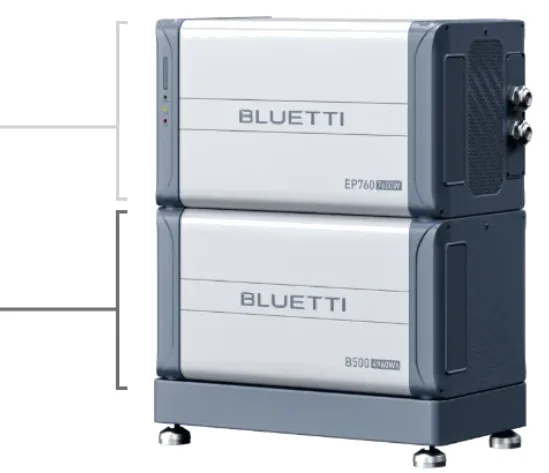
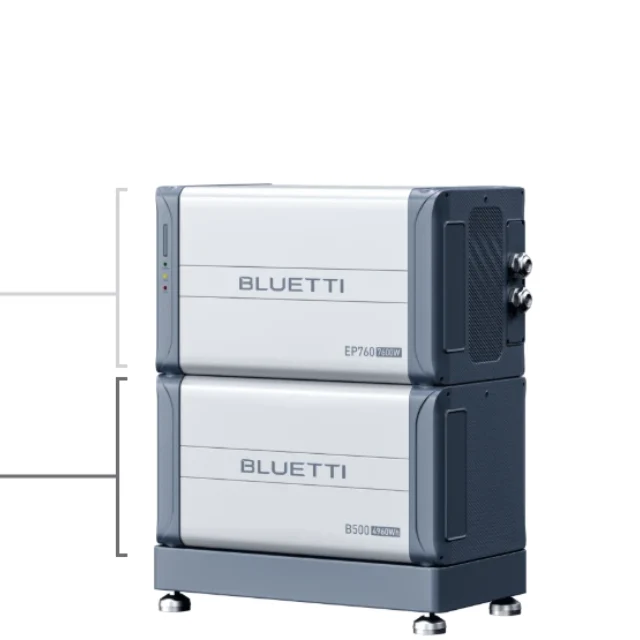
Meet Bluetti Modular home batteries for single-phase and three-phase homes, from BLUETTI.
- Add it to your current solar
EP760 connects to your existing solar through AC coupling, without affecting your current solar certification, BLUETTI says.
- Runs most household loads
EP760 delivers up to 7,600 W, which BLUETTI says covers over 95% of typical household energy needs.
- One pack to eight
Start with one B500 pack and add more, up to eight, for 4.96 kWh to 39.68 kWh of storage.
These are BLUETTI's nominal figures. Usable capacity is a little lower.
- 10-year warranty on EP760
BLUETTI backs the EP760 system with a 10-year warranty.
The EP2000 page doesn't state a warranty term. Ask for it in writing.
The company behind it
A battery maker founded in 2009, now selling modular home battery systems in Australia.
Founded 2009
BLUETTI says it was founded in 2009.
Users worldwide
BLUETTI says it has over 3.5 million users across more than 110 countries.
Local phone support
BLUETTI's Australian site lists a local customer support line, open Monday to Friday.
Want a Bluetti battery in Northern Territory?
Get my Bluetti quotesCompare up to 3 vetted installers. Free, no obligation.
Why Bluetti is different
Bluetti earned its Australian name in portable power stations — the boxes people take camping and keep for blackouts — and its installed home range carries that packaging instinct into fixed infrastructure. Where the modular specialists offer configurators full of families, generations and variants, Bluetti offers two packaged systems: the EP760 for single-phase homes and the EP2000 for three-phase, each arriving with the hybrid inverter included and around 20 kWh of expandable storage. One box of decisions instead of a decision tree.
The distinction that matters most is the one inside the brand itself. The EP systems on this page are switchboard-wired home energy infrastructure, installed by an electrician, with grid rules and rebate eligibility attached — a different product class entirely from the portable units the name is famous for. The portable reputation is long and real; the installed record is much younger, and it is the installed record that governs what you are buying here.
Simplicity is both the pitch and the constraint, and it is worth seeing clearly as a trade. Fewer configurations means fewer ways a quote can be subtly wrong — a genuine reduction in specification risk for the typical home. It also means less room to tailor: the package points are where they are, and a household whose load sits awkwardly between them cannot fine-tune its way closer the way a modular range allows.
The remaining caveats are structural. Because the hybrid inverter comes in the box, the package naturally takes over the inverter role — which makes it a clean fit for new systems and a clumsy one for homes wanting to keep a recent inverter. And virtual-power-plant support is not part of the pitch; a buyer whose maths leans on VPP income needs specific program acceptance verified before it counts for anything.
The Bluetti EP system, piece by piece
The EP760 is the single-phase package: roughly 20 kWh of expandable storage with the hybrid inverter built in. Choosing it is less a choice than a consequence — the phase decision follows your switchboard — and what it decides for you is the whole architecture: one packaged system running panels, storage and grid together.
The EP2000 is the three-phase counterpart at around 22 kWh, with grid backup capability. Its extra decision is the one three-phase always brings: what actually happens in an outage, phase by phase and circuit by circuit, is a design matter the quote must spell out rather than a property the package delivers automatically.
Expansion battery modules grow capacity within each system’s range — the package stretches without being redesigned. What the initial configuration decides is the ceiling: confirm how much expansion room the quoted setup genuinely leaves, and what adding modules later means in switchboard terms, before treating expandable as a plan.
The included inverter is the piece that decides your existing solar’s fate. It wants the inverter job, so on an ageing system the package doubles as a generational refresh, while on a recent install it means paying to displace hardware that still works. This is the fork in every Bluetti quote for a home with solar already on the roof, and it deserves a written justification either way.
Put Bluetti to the test on your own numbers
Reading about it only goes so far — real quotes are where a Bluetti decision gets made. Get 2-3 quotes from vetted installers in Northern Territory. Free for homeowners.
What Bluetti does best
Collapsing the decision. For a typical home, the entire specification conversation reduces to one question — EP760 or EP2000 — dictated by the switchboard, with capacity and inverter already settled inside the package. The mechanism is standardisation: fewer combinations to get wrong at quote stage, and a much shorter path from enquiry to a comparable set of quotes.
New systems built in one pass. Because the hybrid inverter is part of the package, a home starting from scratch — or replacing solar wholesale — gets panels, storage and grid management engineered as one purchase rather than assembled from parts. This is the situation where the included inverter is a feature with no downside attached.
Straightforward three-phase. Plenty of packaged products stop at single-phase and send three-phase homes off to the configurators; the EP2000 keeps the packaged simplicity available to them, which is rarer than it should be.
Carrying trust across from the portable line. Many buyers arrive already knowing the brand from years of camping and backup gear, and the app and monitoring carry that consumer heritage — closer to a well-designed consumer product than utility software. Day-two ownership stays simple for the same packaging reason the purchase did: a single system with a single point of responsibility.
Who a Bluetti EP suits — and who it does not
It suits the typical home that wants the shopping to be over. If your house is ordinary in the ways that matter — standard load, standard roof, no exotic requirements — the package removes most of what makes battery buying stressful, and comparing two EP quotes is refreshingly close to comparing the installers alone, since the hardware inside is identical.
It suits the new-build and the full-refresh, where the included inverter earns its place, and the three-phase household that wants a packaged answer in the EP2000. It also suits buyers for whom the brand already means something — years of the portable gear working as promised is a legitimate, if partial, trust signal.
It is the wrong fit for the retrofit-and-keep buyer. A home with a recent inverter it likes should be looking at AC-coupled systems that leave the inverter alone; this package wants the job, and paying to replace working hardware is the kind of cost no rebate softens. It is equally wrong for the household that needs fine-grained sizing — two package points cannot chase an awkward load the way a deep modular range can.
Two more exclusions. If virtual-power-plant income is central to your plan, this is not the natural brand — support is not the pitch, and anything promised needs the specific program and specific system verified in writing. And if what you want is the longest installed-storage track record money can buy, remember the asymmetry: Bluetti’s portable history is long, but its wired-in history is short, and the two do not transfer.
On money, run the same discipline as for any brand: after-rebate cost divided by usable kilowatt-hours, compared across quotes. Packages make the division easy and the comparison fair — with identical hardware in every EP quote, the spread you see is installation scope and margin, which is precisely the part worth negotiating on.
Bluetti in Northern Territory
The Territory’s Home and Business Battery Scheme pays $400 per usable kilowatt-hour up to a $12,000 cap on top of the federal rebate — per-kWh generosity that a 20 kWh package converts into serious support, comfortably clear of the caps that constrain smaller state schemes. The Territory-shaped caution is delivery: wet-season humidity and cyclone-region mounting standards demand local installation craft, and for a brand whose wired-in record is young, the commissioning crew’s NT experience is the thing to interrogate hardest.
Feed-in tariffs in Northern Territory typically pay 8–27c/kWh while grid power costs 30–35c — so a stored kilowatt-hour is worth what you avoid buying, not what exporting earns, and the wider that gap sits on your own plan, the harder a battery works for you. Darwin heat is a year-round battery placement problem, not a summer one — insist on siting that keeps the package shaded and ventilated, and ask how the crew handles wet-season commissioning before you sign anything.
Put Bluetti to the test on your own numbers
Reading about it only goes so far — real quotes are where a Bluetti decision gets made. Get 2-3 quotes from vetted installers in Northern Territory. Free for homeowners.
The installer decides the Bluetti outcome
Do not let the packaging fool you about the install. Because the inverter comes in the box, fitting an EP system is a solar-electrical redesign, not an appliance drop-in — switchboard work, grid connection and the handover of the inverter role all land on the installer, and the quality of that work decides whether the packaged simplicity survives contact with your house.
Experience needs the right denominator. An installer’s history with Bluetti portable units tells you nothing useful; the question is how many wired-in EP systems they have commissioned, because the installed range is young in Australia and the pool of genuinely experienced crews is smaller than the brand’s name recognition suggests. Ask the question with the word wired-in included.
The design details that packages do not settle still need settling: backup scope at circuit level — capable is not a scope — the fate of any existing inverter justified in writing, and the exact quoted system shown on the Clean Energy Council approved battery list, since eligibility is model-by-model and carries the federal rebate. A good handover ends with the app configured for your tariff and the backup behaviour demonstrated, not described.
Matching you to that installer is what Solar Select does. An enquiry here goes to up to 3 approved installers, subject to current coverage, eligibility and brand suitability — a shortlist small enough that each treats the job as winnable and designs accordingly. We sell no hardware, take no side on brand, and the service is free for homeowners.
Is Bluetti right for your home? Fit and warranty checks
A good fit if…
- Buyers who want one packaged decision rather than a configuration exercise
- New solar-plus-storage installs where the included hybrid inverter is a feature, not a conflict
- Households that already trust the brand from its portable gear
- Three-phase homes wanting a straightforward packaged option in the EP2000
Consider the limitations
- You are adding storage to existing solar you want to keep — an AC-coupled system leaves your inverter alone; this package replaces its role
- You want fine-grained modular sizing rather than two package points
- Virtual-power-plant income is central to your plan
- You want the longest possible installed-storage track record — Bluetti’s portable reputation is long, its wired-in record is not
Why the installer matters more than the battery
More than 60% of inspected home battery installs were substandard. The Clean Energy Regulator inspected 1,278 home battery installations under the Cheaper Home Batteries Program between July 2025 and April 2026. More than 60% came back substandard and 1.2% unsafe — and the hardware was rarely the problem. The install was.
That is the part a brand cannot fix for you. Solar Select checks installer approval and current campaign eligibility for your Northern Territory enquiry. Confirm business history and current independent reviews before choosing an installer. Your enquiry goes to up to 3 of them, and no one else sees your details.
Battery rebates in Northern Territory
Cheaper Home Batteries Program (federal) — roughly a quarter off the installed battery cost, applied upfront at the quote by the installer rather than claimed back later.
Home and Business Battery Scheme (HBBS) — The NT adds the most generous state layer in Australia — a $400 per usable kWh grant capped at $12,000 via Grants NT — on top of the federal rebate. Installer availability is the real constraint in the Territory, not the money.
Ready for Bluetti quotes in Northern Territory?
Postcode in — up to 3 vetted installers out. Federal battery rebate applied at quote. Free, no obligation, maximum 3 installers ever.
Bluetti installers in Darwin
- Bluetti installers Darwin — serving Greater Darwin
Regional Northern Territory
- Bluetti installers Alice Springs — serving Alice Springs and surrounds
This page also covers the Northern Territory towns that no longer have a page of their own. Across the Territory outback and greater Darwin, enquiries from Katherine, Nhulunbuy, Tennant Creek and Palmerston route through this page on postcode.
Page updated 6 October 2026