Tasmania
Dyness battery installers in Tasmania.
Get matched with top solar companies in Tasmania
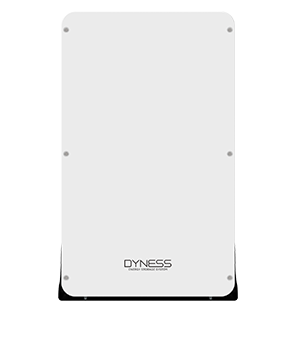
- Dyness PowerBox batteries can be wall-mounted to keep floor space clear
- Unlock up to $7,000 in federal solar + battery rebates*
- Compare quotes from vetted installers, with Dyness experience where available
Dyness
What could a Dyness battery save your home?
*For eligible combined solar and battery installations before January 2027. Battery-only rebates vary with usable capacity. Your installer confirms eligibility and amount.
✓ Up to 3 vetted installers
✓ Free to compare, no obligation
✓ Your chosen battery, your quote request
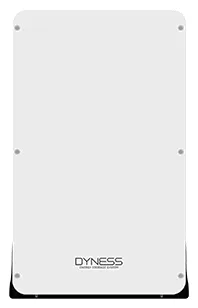
Meet Dyness Stackable and wall-mounted batteries that work with a long list of inverter brands.
- Keep your inverter options open
Dyness lists 26 inverter brands, its own included, as compatible with STACK100 Pro, so your installer has choice.
The exact inverter must be on Dyness's list for your battery.
- Modules stack with zero wiring
STACK100 Pro modules stack with no wiring between them, and Dyness says one tower goes up in 30 minutes.
- Mix modules for three years
STACK100 Pro starts at three modules, 15.36 kWh, and Dyness allows free mixing of modules within three years.
After three years, check expansion options with your installer.
- Three families listed, 10-year cover
PowerBox G2, PowerBox Pro and STACK100 Pro are approved-listed, and PowerBox Pro keeps 70% usable energy for 10 years.
Dyness's warranty needs a CEC-approved installer, and it transfers with the house while the battery stays.
The company behind it
Dyness is a Suzhou-based energy storage maker, founded in 2017, with an Australian branch in Victoria.
Founded 2017
Dyness says it was established in 2017, with its global headquarters in Suzhou, China.
1,000,000+ units shipped
Over 1,000,000 units delivered to more than 100 countries and regions, Dyness says.
Australian branch
Dyness says its Australian branch opened in March 2023, with an office in Burwood, Victoria.
Want a Dyness battery in Tasmania?
Get my Dyness quotesCompare up to 3 vetted installers. Free, no obligation.
Why Dyness is different
Dyness is a battery company that publishes its inverter list. That sounds like a small thing until you compare it with the integrated brands: instead of one inverter you must buy, Dyness’s Australian site carries compatibility lists — updated through 2026 — naming dozens of third-party brands for its low-voltage boxes and more than two dozen for its high-voltage stack. The installer chooses the electronics; Dyness supplies the storage. That is the proposition, and everything good and bad about the brand follows from it.
The range is broader than most component brands manage. At the small end there is a compact low-voltage block; in the middle the wall-mounted PowerBox family, which parallels in large numbers; above that the STACK100 Pro, built up module by module into a cluster and then clusters in parallel for small commercial sites; and, unusually for a battery-maker, the Cygni all-in-one with its own inverter inside for buyers who do not want the pairing decision at all.
The company is young by the standards of the brands it sells against — a Suzhou manufacturer founded in 2017, with a Melbourne office SolarQuotes dates to about 2018 and an importer of record in Sydney named on the Australian warranty. Its owners on SolarQuotes describe solid construction and reliable operation, with complaints about software limits, a battery-management system that likes a periodic full charge, and installers slow to respond when something needed attention.
Which is the point about a component brand: the experience is only as good as the pairing and the person who commissioned it. A Dyness battery on a listed inverter, set up by someone who has done it before, is a value buy with a long expansion runway. The same box on an unlisted inverter, left uncalibrated, is where the mixed reviews come from.
The Dyness range, piece by piece
The inverter is the first decision and Dyness leaves it to you. The compatibility list is the document that governs it: the low-voltage list runs to dozens of brands including the big hybrid names and the off-grid platforms, the STACK100 Pro list is shorter and concentrated on high-voltage hybrids. A quote should name the exact inverter model and show it against the list for the battery family in question — a model that is merely similar to a listed one is not on the list.
The PowerBox is the residential mainstay: a wall-mounted low-voltage box in two current versions, the G2 and the Pro, which parallel in large numbers behind a compatible inverter. Dyness’s pages give the G2 the higher ingress rating and the longer cycle claim of the two, so where a box will hang — outdoors on a west wall, or in a garage — is a reason to prefer one over the other.
The STACK100 Pro is the high-voltage line. Modules stack into a single cluster from a household size to a small-commercial one, and clusters run in parallel beyond that; Dyness says it recently joined the Clean Energy Council list, which the CEC search confirms model by model. Its quote-stage question is the ceiling: how many modules the chosen hybrid can manage, and whether the cabling and footprint were sized for that number rather than for today’s count.
The Cygni is the exception in the range — an all-in-one with Dyness’s own inverter in two output sizes and a stack of modules inside. It removes the pairing decision and the compatibility-list check, at the cost of the freedom that is the brand’s main selling point. For a buyer who simply wants one badge on one box, it is the Dyness to ask about.
Put Dyness to the test on your own numbers
Reading about it only goes so far — real quotes are where a Dyness decision gets made. Get 2-3 quotes from vetted installers in Tasmania. Free for homeowners.
What Dyness does best
Letting the installer choose the inverter. Published lists covering dozens of brands mean an installer can pick the electronics that suit the property — a particular hybrid for a three-phase house, an off-grid platform for a farm — and add Dyness storage to it. On unusual properties that freedom is often the difference between a good design and a forced one.
Delivering capacity per dollar. Owners on SolarQuotes describe the brand as good value, and the product pages are built around expansion: boxes paralleled in numbers, modules added to a stack. For a household that wants more storage than the integrated brands offer at the same budget, that is the case in one sentence.
Growing in stages. The PowerBox parallels and the STACK100 Pro adds modules, and Dyness’s own pages describe expansion well past domestic sizes. The discipline is to do most of the growing early, within one module generation, and to have the inverter and cabling sized for the eventual count from the first day.
Living outdoors. The current boxes and the stack carry high ingress ratings on Dyness’s pages, which matters in a country where the battery usually ends up on an external wall. It is not a licence to mount in full western sun — the warranty sets an operating temperature window — but it widens the options.
Who a Dyness system suits — and who it does not
It suits households whose installer wants to choose the inverter on its merits and bolt storage to it, and buyers who put capacity per dollar ahead of a branded app. Owners on SolarQuotes in this group report solid, reliable hardware.
It suits larger homes and small businesses that will grow a stack in stages, and properties — farms, workshops, off-grid builds — where the inverter platform is a particular choice rather than a default.
It suits people who read the compatibility list and the warranty, because both are short documents and both decide whether the system is supported.
It does not suit buyers who want one manufacturer accountable for inverter, battery and app together — the Cygni aside, that is not what Dyness sells. It does not suit a household whose virtual-power-plant plan is written around a specific integrated system. And it does not suit anyone who wants a long Australian field history, because SolarQuotes is candid that the local track record and review volume are still thin.
The real fit test is the installer. A Dyness system commissioned by someone who has paired it before, configured the communications link, allowed the calibration charge and registered the warranty is a sound value buy. The mixed reviews on SolarQuotes describe the other kind of installer, not a different battery.
Dyness in Tasmania
Tasmania adds no state layer in 2026, and its dim winters put the sizing question at its sharpest: what can the roof actually refill in June? A build in boxes or modules answers it plainly — start with the units winter generation can cycle, expand early if loads grow — and Dyness’s off-grid inverter partners suit the state’s rural and remote properties.
Feed-in tariffs in Tasmania typically pay 8.0–9.0c/kWh while grid power costs 30–35c — so a stored kilowatt-hour is worth what you avoid buying, not what exporting earns, and the wider that gap sits on your own plan, the harder a battery works for you. Tasmania’s regulated flat feed-in tariff means no time windows to play; the value of every stored kilowatt-hour is the plain gap between export and grid price, all year round, which keeps the unit-count decision checkable.
Put Dyness to the test on your own numbers
Reading about it only goes so far — real quotes are where a Dyness decision gets made. Get 2-3 quotes from vetted installers in Tasmania. Free for homeowners.
The installer decides the Dyness outcome
No integrated brand depends on its installer the way a component brand does. Dyness’s warranty applies only where the product was installed by a properly qualified battery installer and excludes damage from an incompatible inverter, so the pairing itself is a warranty condition. The first question for any installer is simply whether the exact inverter model is on Dyness’s list for the battery family they are quoting.
The second is commissioning. The battery talks to the inverter over a communications link that has to be set up correctly, and SolarQuotes owners describe capacity readings and calibration behaviour that trace back to this step. Ask how the installer verifies the link, what their commissioning checklist covers, and whether the inverter is set to allow the periodic full charge the battery-management system wants.
The third is registration and the year-five question. Dyness’s Australian warranty page says registration through the app or portal helps secure a longer warranty period and gates extended cover, and the warranty routes faults through the installer before Dyness. An installer who registers the system in your name at handover and says in writing that they will diagnose a fault in year five is doing the job the brand’s structure requires of them.
This is where Solar Select earns its place. We put your enquiry in front of up to 3 approved installers, subject to current coverage, eligibility and brand suitability — and comparing them is free for homeowners. For a battery whose reviews split on the installer rather than the hardware, that filter is most of the decision.
Is Dyness right for your home? Fit and warranty checks
A good fit if…
- Households whose installer wants to choose the inverter on its merits and bolt storage to it
- Buyers prioritising capacity per dollar over ecosystem polish
- Larger homes and small businesses that will grow a stack in stages
- Owners happy for the inverter brand’s app to be the daily interface
Consider the limitations
- You want one manufacturer accountable for inverter, battery and app together
- Your virtual-power-plant plan is written around a specific integrated system
- You want a long Australian field history behind the warranty
- You would rather not depend on the installer to keep the battery calibrated and registered
Dyness specifications and source documents
- Dyness is DC-coupled: the battery and inverter are one system, so on a retrofit the existing solar inverter is replaced rather than kept. Source
- Listed models are on the Clean Energy Council approved battery list. Source
- Any accredited installer can fit Dyness under the manufacturer's warranty terms. Source
- Every Dyness model in this record is Clean Energy Council listed, which is the hardware condition of the federal Cheaper Home Batteries Program; the discount is delivered upfront through an SAA-accredited installer or retailer, with no separate application to the Clean Energy Regulator. Source
Why the installer matters more than the battery
More than 60% of inspected home battery installs were substandard. The Clean Energy Regulator inspected 1,278 home battery installations under the Cheaper Home Batteries Program between July 2025 and April 2026. More than 60% came back substandard and 1.2% unsafe — and the hardware was rarely the problem. The install was.
That is the part a brand cannot fix for you. Solar Select checks installer approval and current campaign eligibility for your Tasmania enquiry. Confirm business history and current independent reviews before choosing an installer. Your enquiry goes to up to 3 of them, and no one else sees your details.
Battery rebates in Tasmania
Cheaper Home Batteries Program (federal) — roughly a quarter off the installed battery cost, applied upfront at the quote by the installer rather than claimed back later.
Federal-only in Tasmania for 2026 — Tasmania runs federal-only on battery rebates in 2026. The federal Cheaper Home Batteries discount still applies in full.
Ready for Dyness quotes in Tasmania?
Postcode in — up to 3 vetted installers out. Federal battery rebate applied at quote. Free, no obligation, maximum 3 installers ever.
Dyness installers in Hobart
- Dyness battery installers in Hobart — serving Greater Hobart
Regional Tasmania
- Dyness battery installers in Launceston — serving Launceston and surrounds
This page also covers the Tasmania towns that no longer have a page of their own. Across the North West Coast and greater Hobart, enquiries from Burnie, Devonport, Latrobe, Queenstown, Smithton, Ulverstone, Wynyard, Kingston, New Norfolk and Sorell route through this page on postcode. In the North East and the Huon, the same applies to Deloraine, George Town, Scottsdale, St Helens and Huonville.
Page updated 6 October 2026