Queensland
Enphase battery installers in Queensland.
Get matched with top solar companies in Queensland — Enphase-experienced prioritised
- IQ Battery 5P units let you choose how much storage your home needs
- Unlock up to $7,000 in federal solar + battery rebates*
- Compare quotes from vetted installers, with Enphase experience where available
Enphase
What could an Enphase battery save your home?
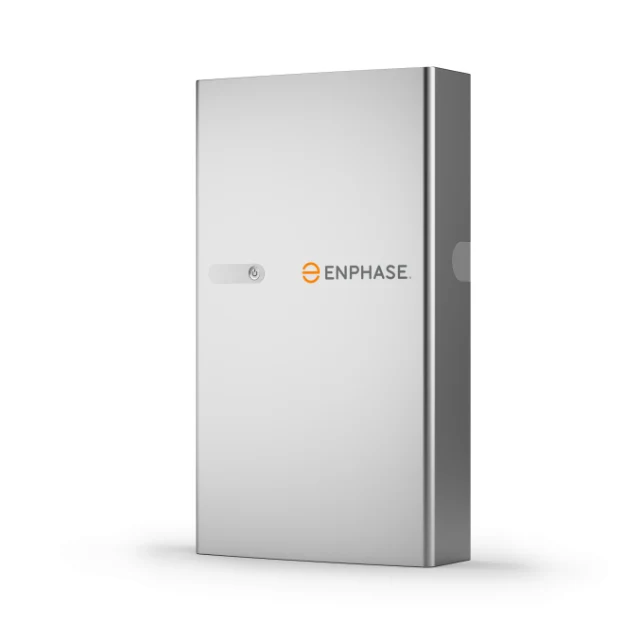
*For eligible combined solar and battery installations before January 2027. Battery-only rebates vary with usable capacity. Your installer confirms eligibility and amount.
✓ Up to 3 vetted installers
✓ Free to compare, no obligation
✓ Your chosen battery, your quote request
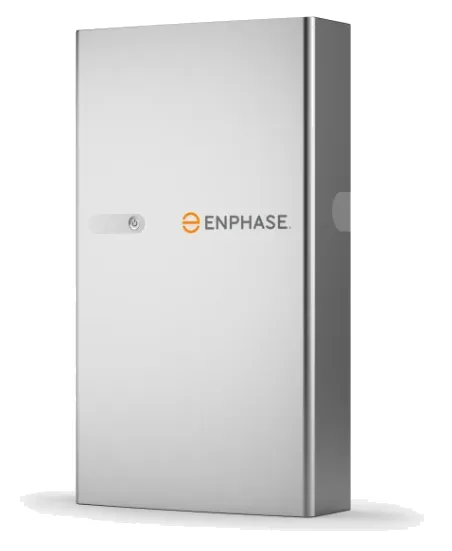
Meet Enphase Small 5 kWh batteries with microinverters inside, added one at a time.
- Adds to solar you already have
An all-in-one AC-coupled battery, so it can join an existing solar system or go in with new panels.
Your installer should confirm how it connects to your current inverter.
- Six small inverters inside
Each battery has six built-in microinverters, and PowerMatch switches on only the ones your home needs at the time.
- Start with 5 kWh, grow later
Each unit holds 5 kWh. Start with one and add more as your needs grow, up to 70 kWh.
- 15-year warranty
IQ Batteries are covered by a 15-year limited warranty, up to 6,000 cycles.
Ask your installer to confirm they're Enphase-certified; the warranty requires it.
IP55 rated to keep working in rain and rough weather, Enphase says.
The company behind it
A California company founded in 2006, known for solar microinverters and the batteries built on them.
Founded 2006
Enphase says it was founded in California in 2006 by Raghu Belur and Martin Fornage.
Millions shipped
Enphase says it has shipped about 89.4 million microinverters, with systems in over 165 countries.
Australian office
Enphase's Australian office is in Victoria, with a 1800 technical support line.
Want an Enphase battery in Queensland?
Get my Enphase quotesCompare up to 3 vetted installers. Free, no obligation.
Why the Enphase IQ Battery is different
Enphase built its name by putting a small inverter behind every solar panel, and the IQ Battery extends the same conviction to storage: instead of one central inverter everything depends on, each battery unit carries several grid-forming microinverters of its own. The practical consequence is the brand’s engineering signature — a failure inside a unit reduces its output rather than switching the battery off. Every other product in this comparison has a box whose failure stops the show; this one degrades politely instead.
The second consequence of the architecture matters to far more buyers. The IQ Battery is AC-coupled: it connects on the alternating-current side of your home and simply does not care whose solar is on the roof. An existing system of any brand keeps its inverter and keeps working; the battery arrives alongside it. For the enormous population of Australian homes that already have solar and no wish to replace a functioning inverter, this is the straightest retrofit path on the market.
Capacity arrives in small stacked units rather than one cabinet, which turns sizing from a bet into a sequence — start with what you need, add units when the EV or the budget arrives. The FlexPhase configuration extends that flexibility to your supply: the same hardware is set up at installation for either single-phase or true three-phase backup, which puts Enphase on a short list for three-phase households who want the whole house behind the battery.
The trade-off is blunt, and worth stating plainly: this is the most expensive storage per usable kilowatt-hour in this comparison, and every unit claims its own patch of wall. Modest systems wear that lightly; large ones feel it in both budget and bricks. You are buying an architecture — redundancy, retrofit freedom, fine-grained growth — and the extra cost only makes sense if at least one of those is genuinely yours.
The Enphase system, piece by piece
The IQ Battery unit is the repeating element: a compact AC-coupled LFP block with its several microinverters inside, passively cooled, with no fans or moving parts to hum through a wall. The quote-stage decision it drives is count and placement — how many units your evening load actually justifies, and precisely where each one mounts, because every additional unit needs real wall space with clearances.
FlexPhase is a decision more than a device: the same battery hardware is configured at installation for single-phase backup or true three-phase backup, and the choice is made with tools on the day, not adjusted in software afterwards. A three-phase home should see the words "three-phase backup" — and the circuits it covers — written on the quote, because correcting the other answer later is not a firmware update.
The system controller is what makes backup real: it manages the disconnection from the grid when the street goes dark and forms the island your house then runs on. It is required for backup and it is a line item — a quote that promises blackout protection without showing a controller has left out the crucial part, and that omission has a habit of resurfacing as a variation.
The app ties it all together, and with this brand it sees unusually deeply — down to individual panels on the solar side. That granularity turns "the system feels down" into "panel eleven is down". At quote stage, it also means asking the installer to show how your existing solar will be metered alongside the battery, because AC coupling done carelessly is how self-consumption quietly misses its model.
Put Enphase to the test on your own numbers
Reading about it only goes so far — real quotes are where a Enphase decision gets made. Get 2-3 quotes from vetted installers in Queensland. Free for homeowners.
What Enphase does best
Retrofit without regret. Because it is AC-coupled, the IQ Battery attaches to solar of any brand without touching the inverter — the exact job most competing batteries make expensive by demanding their own matching electronics. If your solar works and your inverter is healthy, this is the brand that does not make you pay again for what you already own.
True three-phase backup. Through FlexPhase, an Enphase system can hold all three phases up during an outage — a capability that immediately shortens the shortlist for three-phase households, since prominent rivals energise one phase only. The configuration is fixed at install, which is exactly why it belongs in writing at quote stage.
Growing in small steps. Small units mean sizing precision no cabinet product matches: cover this year’s evening peak now, add the next unit when the car arrives, and never carry capacity your household cannot yet use. The per-panel monitoring then shows, with unusual candour, whether the units you own are earning — evidence for the expansion decision rather than a hunch.
Staying quiet and living indoors. Passive cooling means no fans, which means units silent enough for a garage or laundry wall — and indoor mounting suits the hardware anyway, since its operating temperature range is narrower than some rivals. In the hot parts of the country, the quiet indoor install is not a preference; it is the design.
Who an Enphase system suits — and who it does not
The clearest yes is the household with existing solar it likes. If your panels are producing and your inverter is not due for replacement, the AC-coupled retrofit is the argument every alternative struggles against — most competing batteries would strand that inverter to earn their place on your wall. This is the case where the Enphase price gap buys the most.
Three-phase homes wanting every phase backed up are the second clear yes, and cautious starters are the third: if committing to a large battery in one purchase feels premature, starting with a unit or two and expanding on evidence is precisely what this architecture exists for. Homes already running Enphase microinverters get the tidiest version of all of it — one ecosystem, one app, one view of everything.
The clear no is the big-system buyer. Past a handful of units, two constraints compound: cost per kilowatt-hour does not improve with volume the way stacked towers do, and the wall area required becomes a genuine planning problem rather than a detail. If your target is a large storage bank in one corner of the garage, price a modular tower first and make Enphase beat it.
Payback-first buyers should also pause. If the spreadsheet is the whole decision, the extra cost here is hard to defend against cheaper storage cycling the same kilowatt-hours — the redundancy, the retrofit freedom and the staged growth have to be worth something to you personally, or you are paying for someone else’s priorities.
The money frame that keeps comparisons fair: value per usable kilowatt-hour after the federal rebate, at the total size you will eventually reach — counting the units you plan to add later and the wall positions they will occupy. The federal program pays its full rate on the first tier of usable capacity, which suits incremental sizing unusually well; ask each installer to map the quoted stack against that tier, next to a cabinet alternative at the same capacity.
Enphase in Queensland
Queensland runs federal-only on batteries in 2026, so the local question is heat, and Enphase answers it differently from most: the units are passively cooled with no fans, quiet enough to bring inside, and their operating temperature range is narrower than some rivals — which together make a Queensland garage or laundry their natural home. Up here, treat indoor mounting as the default rather than the fallback.
Feed-in tariffs in Queensland typically pay 4–13c/kWh while grid power costs 30–35c — so a stored kilowatt-hour is worth what you avoid buying, not what exporting earns, and the wider that gap sits on your own plan, the harder a battery works for you. Regional postcodes on Ergon’s regulated feed-in rate keep a stronger export case than the south-east corner, so have the installer run the unit-count arithmetic for your address instead of a Brisbane template.
Put Enphase to the test on your own numbers
Reading about it only goes so far — real quotes are where a Enphase decision gets made. Get 2-3 quotes from vetted installers in Queensland. Free for homeowners.
The installer decides the Enphase outcome
Enphase install quality is mostly decided with a tape measure and a metering plan. Multi-unit systems live or die on wall planning — clearances, cable runs, and where units three and four will one day go — while AC coupling lives or dies on correct metering and configuration, because a battery that cannot see the house’s energy flows accurately never reaches its modelled self-consumption. Both are quote-stage disciplines, not install-day improvisations.
FlexPhase raises the stakes on the supply question: single-phase or true three-phase backup is committed with hardware on the day, and the wrong call is not softened later by software. Heat is the other siting discipline — with an operating range narrower than some rivals, the units belong out of the summer sun, and across most of Australia that sensibly means indoors.
A good handover shows the system proving itself: the app reading every unit and every panel, your existing solar metered correctly beside the battery, backup demonstrated by actually islanding the house, and the mounting positions matching the plan you approved on paper. Ask a prospective installer how many multi-unit Enphase systems they have commissioned; the answer separates practised hands from first attempts.
Finding those practised hands is what Solar Select is for. We connect your enquiry with up to 3 approved installers, subject to current coverage, eligibility and brand suitability. We sell no hardware and take no margin on your system; the service is free for homeowners, and keeping the group small keeps every quote a considered one — which this wall-planning-heavy brand rewards more than most.
Is Enphase right for your home? Fit and warranty checks
A good fit if…
- Retrofitting a battery onto existing solar of any brand without replacing the inverter — this is where Enphase genuinely wins
- Homes already running Enphase microinverters that want one ecosystem and one app
- Three-phase homes wanting true three-phase backup via the FlexPhase configuration
- Buyers who want to start small and add capacity in steps rather than commit up front
- Shaded or complex roofs where the per-panel architecture already suits the site
Consider the limitations
- You want a large system — the cost and the wall space both become hard to justify at scale
- You are optimising for payback period rather than flexibility
- You have limited wall space; each unit needs its own footprint
- You want the lowest cost per kWh available in the market
Why the installer matters more than the battery
More than 60% of inspected home battery installs were substandard. The Clean Energy Regulator inspected 1,278 home battery installations under the Cheaper Home Batteries Program between July 2025 and April 2026. More than 60% came back substandard and 1.2% unsafe — and the hardware was rarely the problem. The install was.
That is the part a brand cannot fix for you. Solar Select checks installer approval and current campaign eligibility for your Queensland enquiry. Confirm business history and current independent reviews before choosing an installer. Your enquiry goes to up to 3 of them, and no one else sees your details.
Battery rebates in Queensland
Cheaper Home Batteries Program (federal) — roughly a quarter off the installed battery cost, applied upfront at the quote by the installer rather than claimed back later.
Federal-only in Queensland for 2026 — Queensland runs federal-only on battery rebates in 2026 — no active state battery program. The federal Cheaper Home Batteries discount still applies in full.
Ready for Enphase quotes in Queensland?
Postcode in — up to 3 vetted installers out. Federal battery rebate applied at quote. Free, no obligation, maximum 3 installers ever.
Enphase installers in Brisbane
- Enphase battery installers in Brisbane — serving Greater Brisbane
Regional Queensland
- Enphase battery installers in Gold Coast — serving the Gold Coast
- Enphase battery installation Sunshine Coast — serving the Sunshine Coast
- Enphase installers Townsville — serving Townsville and surrounds
- Enphase battery installation Cairns — serving Cairns and the Far North
- Enphase installers Toowoomba — serving Toowoomba and surrounds
- Enphase battery installers in Mackay — serving Mackay and surrounds
- Enphase battery installers in Rockhampton — serving Rockhampton and surrounds
- Enphase battery installers in Bundaberg — serving Bundaberg and surrounds
- Enphase battery installation Hervey Bay — serving Hervey Bay and surrounds
- Enphase battery installers in Gladstone — serving Gladstone and surrounds
This page also covers the Queensland towns that no longer have a page of their own. Across the Darling Downs and Maranoa, the Burdekin and North and the Sunshine Coast hinterland, enquiries from Chinchilla, Dalby, Goondiwindi, Roma, Stanthorpe, Warwick, Ayr, Charters Towers, Home Hill, Ingham, Caloundra and Nambour route through this page on postcode. In the Whitsundays and Isaac and greater Brisbane and the Lockyer, the same applies to Airlie Beach, Bowen, Moranbah, Proserpine, Sarina, Beaudesert, Caboolture, Gatton and Ipswich. Further out, Charleville, Cloncurry, Longreach, Mount Isa, Weipa, Biloela, Blackwater, Emerald and Yeppoon in outback Queensland and Central Queensland are matched the same way. Atherton, Innisfail, Mareeba, Tully, Gympie, Kingaroy and Maryborough in the Far North and the Wide Bay sit in the same Queensland pool.
Page updated 6 October 2026