New South Wales
ESY Sunhome battery installers in New South Wales.
Get matched with top solar companies in New South Wales
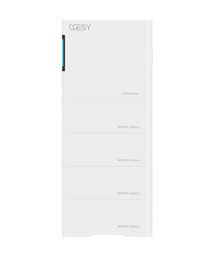
- ESY Sunhome HM6 keeps the inverter and battery modules together in one tower
- Unlock up to $7,000 in federal solar + battery rebates*
- Compare quotes from vetted installers, with ESY Sunhome experience where available
ESY Sunhome
What could an ESY Sunhome battery save your home?
*For eligible combined solar and battery installations before January 2027. Battery-only rebates vary with usable capacity. Your installer confirms eligibility and amount.
✓ Up to 3 vetted installers
✓ Free to compare, no obligation
✓ Your chosen battery, your quote request
Meet ESY Sunhome An all-in-one battery with a built-in fire extinguisher and a case sealed for outdoor walls.
- A fire extinguisher inside
ESY builds a fire extinguisher into the HM6 as part of what it calls its smart protection system.
- Sealed for outdoor walls
An IP66-rated enclosure that works from -25 °C to 60 °C, so the HM6 can sit on an outside wall.
- Stack 5 kWh blocks to 30
Each battery adds about 5 kWh, and the HM6's 6 kW inverter takes up to six of them for 30 kWh in total.
Add any extra modules in the first year: ESY's warranty doesn't allow expansion after that.
- 10 years, 70% capacity kept
ESY's Australian warranty covers the single-phase system to keep at least 70% of its capacity for 120 months from installation.
Ask your installer to confirm ESY has authorised them; the warranty excludes installs by anyone ESY hasn't authorised.
The company behind it
ESYsunhome is a Shenzhen battery maker that started with laptop and phone batteries before moving into home storage.
20-plus years
ESY says it has over 20 years in batteries, starting with laptop, phone and power-tool packs.
Shenzhen manufacturing
ESY says it builds in a 100,000 m² Shenzhen facility with 800 engineers and production staff.
Australian warranty entity
ESY Sunhome Australia Pty Ltd, of Greenacre NSW, provides and covers the Australian single-phase warranty.
Want an ESY Sunhome battery in New South Wales?
Get my ESY Sunhome quotesCompare up to 3 vetted installers. Free, no obligation.
Why ESY Sunhome is different
Most brands that arrived in Australia in the last few years are still asking buyers to take them on trust, because there is no local evidence to look at. ESY Sunhome is the exception in this group. It opened a Sydney office in 2023 and has since accumulated a body of owner reviews on SolarQuotes far larger than any of its contemporaries, and those owners rate it well. For a value-positioned brand that is a genuinely unusual position, and it is the single strongest thing anyone can say about it.
The product is an all-in-one tower. A hybrid inverter and stacked lithium iron phosphate modules share one weatherproof enclosure that stands on the ground rather than hanging on a wall, and the range is simply how many modules are inside it. The inverter output does not change as you go up the range — only the storage does — which is a design decision with real consequences that we come back to below.
The engineering is aimed squarely at Australian outdoor conditions: a high weatherproof rating, passive cooling with no fans to fail, a wide operating temperature band with performance easing off at the hot end, and an extinguisher built into the unit. For a country where the battery frequently ends up on an exterior wall in full sun, that is a sensible set of priorities rather than a marketing list.
And then there is the constraint that defines ownership of this brand. ESY Sunhome’s own Australian warranty terms permit capacity expansion within the first year after installation and state plainly that expansion beyond one year is not allowed. That is the tightest window of any brand covered on this site. It does not make the product worse; it makes the sizing conversation at quote stage close to irreversible, and a buyer who understands that will get a much better outcome than one who assumes they can top up later.
The ESY Sunhome system, piece by piece
The tower is one object with two jobs. The hybrid inverter sits at the top and the battery modules stack beneath it in a single vertical footprint, so the whole system occupies one patch of ground rather than spreading across a wall. This is why siting is straightforward on a tight block, and why the position needs to be chosen with summer heat in mind — the unit is passively cooled and eases off its output at the top of its temperature range.
The modules are identical and the model number is the count. That makes comparing quotes unusually easy: two proposals naming the same model are the same system, and there is no denser variant to argue about. It also means the capacity ladder is the only dimension you are actually choosing along.
The inverter output is constant across the range, and this is the subtlety most buyers miss. Adding modules buys you duration, not power. A large stack will run your backed-up circuits for longer during an outage but will not run more at once, so a household that wants to keep heavy loads alive needs to check the inverter output rather than the storage figure.
The expansion window is a component of the purchase in everything but name. Because further modules may only be added inside the first year, the practical ceiling is fixed almost immediately. A good installer treats that as a reason to talk about electric cars, heat pumps and future consumption at the quote rather than as a detail buried in the terms.
The paperwork chain matters more here than on most brands. The warranty is conditional on the unit being bought through an authorised channel and on the installer holding the right licensing for your state. A tower bought cheaply through an unclear supply route can arrive without the cover that made it worth buying, and there is no way to tell by looking at it.
Put ESY Sunhome to the test on your own numbers
Reading about it only goes so far — real quotes are where a ESY Sunhome decision gets made. Get 2-3 quotes from vetted installers in New South Wales. Free for homeowners.
What ESY Sunhome does best
Delivering storage per dollar. This is a value-positioned product and it competes on that basis without the usual accompanying compromise on owner satisfaction. Buyers who want a substantial amount of usable capacity and are not paying for a brand name or an ecosystem tend to land here for defensible reasons.
Providing evidence. Almost uniquely among the newer arrivals, there are enough Australian owners writing publicly about this product to form a picture rather than a guess. That is worth more than any specification comparison, and it is the reason this brand can be recommended for consideration where several of its contemporaries cannot yet.
Standing outside. The weatherproof rating, the passive cooling and the ground-standing form factor together solve the siting problem that stops plenty of batteries going in at all: no free garage wall, no space beside the switchboard, no appetite for a fan running near a bedroom.
Being simple to specify and simple to check. One tower, one inverter, a module count and a model string. A homeowner can verify almost the entire proposal themselves in a few minutes, which is not true of systems assembled from several product families across two voltage classes.
Who an ESY Sunhome system suits — and who it does not
It suits single-phase households buying solar and storage together who want one weatherproof unit on the ground and a keen price per kilowatt-hour.
It suits buyers who care about evidence. If being able to read dozens of Australian owner accounts before committing is what makes a new brand acceptable to you, this is the one in this group that offers it.
It suits people whose consumption is settled. If you know what you need and that is not going to change materially, the one-year expansion window costs you nothing at all and the simplicity is pure benefit.
It does not suit a household expecting to grow into more capacity in a few years — an electric car arriving in year three has no answer on this brand. It does not suit a three-phase home, since the residential tower described here is single-phase. And it does not suit a retrofit where keeping the existing inverter matters, because the inverter is inside the tower.
The real test is whether you can size it correctly today. Everything else about this product is straightforward and well-reviewed; the one decision that cannot be revisited is how many modules go in. Spend the effort there, ask the installer to model a larger stack alongside the one they proposed, and the rest of the ownership is likely to be uneventful in the way good hardware should be.
ESY Sunhome in New South Wales
New South Wales adds a VPP top-up of roughly $550–$1,500 through the Peak Demand Reduction Scheme for a battery enrolled in an approved Virtual Power Plant, stacking with the federal discount. The brand builds virtual power plant capability into the range and has its Australian office in Sydney, so the support chain and the enrolment paperwork sit in the same state as the customer. Owners have flagged app controls around grid export as more limited than expected, which is worth raising specifically if a VPP plan is part of your plan.
Feed-in tariffs in New South Wales typically pay 5–12c/kWh while grid power costs 30–35c — so a stored kilowatt-hour is worth what you avoid buying, not what exporting earns, and the wider that gap sits on your own plan, the harder a battery works for you. New South Wales sets no floor under feed-in rates, so self-consumption carries the case — and with expansion closing after the first year, the module count chosen now has to reflect the evening load you will still have in five years.
Put ESY Sunhome to the test on your own numbers
Reading about it only goes so far — real quotes are where a ESY Sunhome decision gets made. Get 2-3 quotes from vetted installers in New South Wales. Free for homeowners.
The installer decides the ESY Sunhome outcome
Sizing is the first and most consequential thing the installer does here, because it is the one decision the warranty terms will not let you revisit after the first year. An installer who asks about future electric vehicles, pool equipment and heating before proposing a module count is doing the job. One who quotes the cheapest tower that fits the roof is setting up a household to be stuck a few years from now.
The supply chain is the second. Cover depends on the unit coming through an authorised channel and on the installer holding the right licensing for the state the work is done in. Both are easy to confirm before signing and impossible to fix afterwards, so ask plainly where the hardware is coming from.
Firmware is the third, and it comes straight out of what owners have reported. Several describe early firmware needing a remote update shortly after installation. An installer who checks for and applies an update as part of the handover removes a problem the homeowner would otherwise have to notice and chase themselves.
The fourth is explaining what the backup will and will not do. Because the inverter output is the same across the whole range, a larger stack extends how long the backed-up circuits run without increasing what can run at once. A quote that presents a bigger battery as a stronger blackout answer has skipped that explanation, and the disappointment arrives during the first outage.
This is where Solar Select earns its place. We put your enquiry in front of up to 3 approved installers, subject to current coverage, eligibility and brand suitability — and comparing them is free for homeowners. On a brand where sizing is effectively permanent and the warranty depends on the supply route, comparing installers is comparing the two things that actually decide the outcome.
Is ESY Sunhome right for your home? Fit and warranty checks
A good fit if…
- Single-phase households that want one tower rather than separate boxes on a wall
- Buyers who want a keen price per kilowatt-hour without being the very first owner in the country
- People confident about the capacity they need now, given expansion closes after the first year
- Sites where the battery has to stand outdoors and a weatherproof floor-mounted unit solves the siting problem
- Households who value a large body of real owner reviews over a longer corporate history
Consider the limitations
- You expect your consumption to grow years from now and will want to add capacity then
- You want to keep an existing inverter, since the tower brings its own
- Your home is three-phase, because the residential tower described here is a single-phase system
- You want a decade of Australian warranty claims behind the brand rather than a few years
ESY Sunhome specifications and source documents
- ESY Sunhome pairs with its own hybrid inverter: new solar-and-battery installs use one unit; a retrofit means replacing the existing inverter. Source
- Listed models are on the Clean Energy Council approved battery list. Source
- Any accredited installer can fit ESY Sunhome under the manufacturer's warranty terms. Source
- The single-phase ESY Sunhome models in this record are on the Clean Energy Council approved battery list, the hardware condition of the federal Cheaper Home Batteries Program. Every listing on that register carries its own expiry date and the residential line is listed under a different model string from the system name on a quote, so it is worth matching the exact string on the register at the time you sign rather than assuming. Source
Why the installer matters more than the battery
More than 60% of inspected home battery installs were substandard. The Clean Energy Regulator inspected 1,278 home battery installations under the Cheaper Home Batteries Program between July 2025 and April 2026. More than 60% came back substandard and 1.2% unsafe — and the hardware was rarely the problem. The install was.
That is the part a brand cannot fix for you. Solar Select checks installer approval and current campaign eligibility for your New South Wales enquiry. Confirm business history and current independent reviews before choosing an installer. Your enquiry goes to up to 3 of them, and no one else sees your details.
Battery rebates in New South Wales
Cheaper Home Batteries Program (federal) — roughly a quarter off the installed battery cost, applied upfront at the quote by the installer rather than claimed back later.
NSW VPP Incentive (Peak Demand Reduction Scheme) — NSW adds a VPP top-up of roughly $550–$1,500 for connecting the battery to an approved Virtual Power Plant. It stacks with the federal rebate, but it is VPP-conditional — if you don’t want a third-party operator dispatching your battery during peak events, you lose it.
Ready for ESY Sunhome quotes in New South Wales?
Postcode in — up to 3 vetted installers out. Federal battery rebate applied at quote. Free, no obligation, maximum 3 installers ever.
ESY Sunhome installers in Sydney
- ESY Sunhome battery installation Sydney — serving Greater Sydney
Regional New South Wales
- ESY Sunhome battery installers in Newcastle — serving Newcastle and the Hunter
- ESY Sunhome battery installation Central Coast — serving the NSW Central Coast
- ESY Sunhome battery installers in Wollongong — serving Wollongong and the Illawarra
- ESY Sunhome installers Albury — serving Albury–Wodonga
- ESY Sunhome battery installers in Coffs Harbour — serving Coffs Harbour and surrounds
- ESY Sunhome installers Wagga Wagga — serving Wagga Wagga and surrounds
- ESY Sunhome battery installers in Port Macquarie — serving Port Macquarie and surrounds
- ESY Sunhome installers Ballina — serving Ballina and surrounds
- ESY Sunhome battery installers in Tamworth — serving Tamworth and surrounds
- ESY Sunhome battery installation Orange — serving Orange and surrounds
- ESY Sunhome installers Bowral — serving Bowral and the Southern Highlands
- ESY Sunhome battery installation Dubbo — serving Dubbo and surrounds
This page also covers the New South Wales towns that no longer have a page of their own. Across the Capital Region and South Coast, the Central West, the Far West and Orana and the Illawarra, enquiries from Batemans Bay, Bega, Cooma, Eden, Goulburn, Jindabyne, Merimbula, Moruya, Narooma, Queanbeyan, Yass, Young, Bathurst, Cowra, Forbes, Lithgow, Mudgee, Parkes, West Wyalong, Broken Hill, Narromine, Wellington and Kiama route through this page on postcode. In the Hunter Valley, the Mid North Coast, the Murray and Lake Macquarie, the same applies to Cessnock, Dungog, Maitland, Medowie, Muswellbrook, Nelson Bay, Raymond Terrace, Scone, Singleton, Camden Haven, Forster, Gloucester, Kempsey, Nambucca Heads, Taree, Wauchope, Corowa, Deniliquin, Hay and Morisset. Further out, Alstonville, Byron Bay, Casino, Kyogle, Lismore, Murwillumbah, Tweed Heads, Cootamundra, Griffith, Junee, Leeton, Temora, Tumut, Nowra, Sanctuary Point and Ulladulla in the Northern Rivers, the Riverina and the Shoalhaven are matched the same way. Armidale, Glen Innes, Gunnedah, Inverell, Moree, Narrabri, Tenterfield, Bellingen, Grafton, Woolgoolga, Yamba and Katoomba in New England and the North West, the Coffs Coast and Clarence and the Blue Mountains sit in the same New South Wales pool.
Page updated 6 October 2026