South Australia
Fox ESS battery installers in South Australia.
Get matched with top solar companies in South Australia
- Fox ESS EQ battery modules let you size your storage to your electricity use
- Unlock up to $7,000 in federal solar + battery rebates*
- Compare quotes from vetted installers, with Fox ESS experience where available
Fox ESS
What could a Fox ESS battery save your home?
*For eligible combined solar and battery installations before January 2027. Battery-only rebates vary with usable capacity. Your installer confirms eligibility and amount.
✓ Up to 3 vetted installers
✓ Free to compare, no obligation
✓ Your chosen battery, your quote request
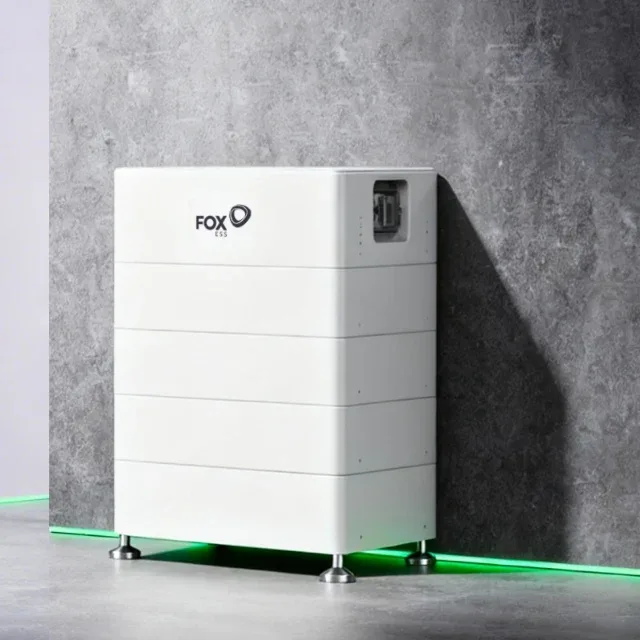
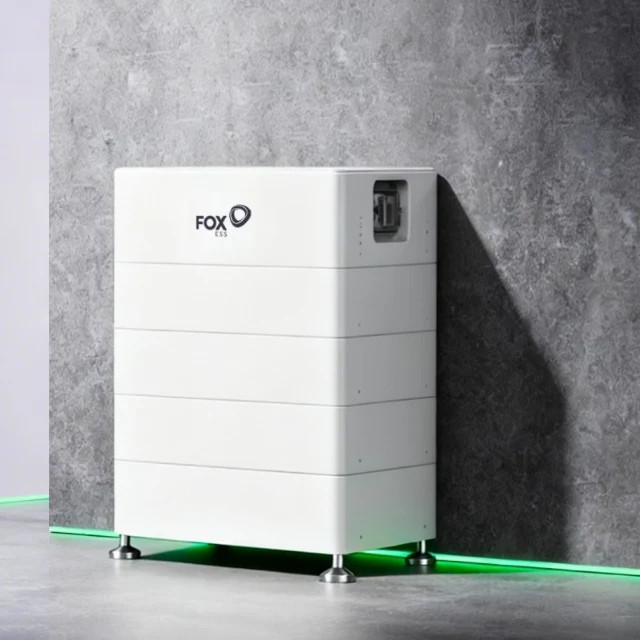
Meet Fox ESS A wide range of modular batteries, so your system can match your home closely.
- A size for nearly any home
Fox ESS sells six home battery families, from 4.66 kWh modules to almost 98 kWh, to fit most homes.
- Stack in 5.46 kWh modules
EQ5500 builds from 10.92 kWh to 49.14 kWh in 5.46 kWh modules, so capacity lands close to what you need.
- Use every kWh it holds
Rated for 100% depth of discharge, so the full stated capacity is there for your home to use.
- Covered 10 years, rebate-listed
EQ5500 and EQ4800 carry 10-year warranties, and both stack families are on the approved battery list for the rebate.
Fox ESS states 70% battery retention at 10 years for EQ4800.
The company behind it
Fox ESS is a Wenzhou-based maker of inverters, batteries and EV chargers, founded in 2019.
Founded 2019
Fox ESS was established in 2019, with global headquarters in Wenzhou, China.
2,000,000+ batteries
Fox ESS says it has installed over 2,000,000 batteries globally in the past three years.
Two Australian offices
Fox ESS entered Australia in 2021 and supports products from offices in Victoria and NSW.
Want a Fox ESS battery in South Australia?
Get my Fox ESS quotesCompare up to 3 vetted installers. Free, no obligation.
Why Fox ESS is different
Fox ESS went from niche to everywhere in about three years — named the fastest-growing energy-storage manufacturer in Australia on 2025 Clean Energy Regulator registry data, holding roughly a tenth of the market by kilowatt-hour while sitting inside the customer-rated top ten. Growth like that has a mechanism, and it is not a mystery: keen pricing, and a range built so an installer can land almost exactly on the capacity a home needs instead of rounding to the nearest package.
The range is the argument. EQ is the modular mainstream — the EQ4800 stacks 4.66 kWh modules from roughly 9 kWh to 42 kWh. EP fixed blocks scale by paralleling whole units. CQ covers the large-format end, reaching toward 98 kWh for big homes and light commercial. Across the families, capacity is matched rather than rounded, which changes both the quote and the economics: you stop paying for kilowatt-hours you never asked for.
The second mechanism is accuracy in the headline number: Fox publishes full usable capacity on the EQ range, so nominal and usable are effectively the same figure. That matters most when comparing quotes — a brand quoting nominal against a brand quoting usable is not a like-for-like comparison, and Fox’s convention removes the discount you would otherwise have to apply.
The trade-off is time, and the record does not dress it up. The support and installer-experience base is real but young — the installer pool grew as fast as the brand did, so experience varies widely between crews rather than being uniformly thin — and a family of closely named models makes quotes unusually easy to mis-specify. Momentum is evidence of a product installers like fitting; it is not a substitute for the years of field history the established names carry.
The Fox ESS range, piece by piece
The EQ4800 is the default conversation: 4.66 kWh high-voltage modules stacking from 9.32 to 41.93 kWh, all of it usable. Two decisions ride on it at quote stage — the module count for today’s load, and the headroom the enclosure and inverter leave for tomorrow’s, because expansion later only exists if the original design allowed for it.
The EP11 and EP12 are the fixed-block alternative, 10.36 to 46.08 kWh, scaling by adding whole units in parallel rather than modules to a stack. They suit homes that want a set block of capacity without module-level sizing — a different growth model that should be chosen on purpose, not arrived at by default. The right family is the one whose growth model matches how your household actually changes.
The CQ6 and CQ7 sit at the large end, 11.98 to 98.28 kWh — three-phase properties, very large homes, light commercial. Their presence means big requirements stay inside one brand conversation instead of jumping to commercial hardware.
The matching Fox ESS hybrid inverter is the part quotes forget to explain: it either replaces your current inverter or the design does not work, and its rating co-writes the expansion ceiling. And because EQ4800, EQ5000 and EQ5500 are different products, the exact model string on the quote — checked against the Clean Energy Council approved battery list — is the difference between a specification and a brand name.
Put Fox ESS to the test on your own numbers
Reading about it only goes so far — real quotes are where a Fox ESS decision gets made. Get 2-3 quotes from vetted installers in South Australia. Free for homeowners.
What Fox ESS does best
Precision sizing. The 4.66 kWh module is the mechanism: a stack can sit close to your measured evening load instead of a package size above it, which is money not spent on idle capacity. On the per-usable-kilowatt-hour comparison most buyers actually run, that granularity plus keen pricing is the core of the case. Granularity also shrinks the gap between what you pay for and what you use — the quiet leak in most battery quotes.
Making comparisons fair. Full usable capacity on the EQ range means the number on the datasheet survives contact with reality — and it hands you a tool: ask every competing quote for its usable figure and compare those. A brand confident in that comparison invites it, and Fox’s numbering is built for it.
Scaling past the usual ceiling. With the EQ topping out past 40 kWh and CQ approaching 98, large homes, three-phase properties and heavy-load households stay inside the residential conversation — territory where much of the market quietly hands you to commercial gear.
Converting volume into buyer leverage. The fastest-growing label on registry data and a customer-rated top-ten position are measurements, not marketing — and growth that fast usually means installers find the product priced well and straightforward to fit. The practical consequence for you is competitive quoting; the caveat is that the crews doing the quoting vary in experience, which is your filter to apply.
Who a Fox ESS suits — and who it does not
The natural buyer is comparing on price per usable kilowatt-hour with a measured load in hand. If you know your evening consumption and want capacity matched to it — not the nearest package above it — the modular EQ range is close to purpose-built for you. Bring a recent bill to the quoting conversation; a stack built from real numbers is worth three built from averages.
Large-requirement households fit unusually well: 20 kWh and beyond without stepping into commercial hardware is a real differentiator, and the family structure — EQ modular, EP blocks, CQ large-format — keeps the answer in one ecosystem as needs grow. Households in that bracket rarely get this many residential options from a single maker.
New solar-plus-storage builds fit better than retrofits. The matching hybrid inverter is a feature when there is no incumbent to displace, and a conflict when there is: if you are keeping an existing inverter you like, an AC-coupled product suits that home better than replacing working equipment.
Prefer another brand if the longest possible Australian field record is your priority — the volume is recent, and longevity data follows time, not shipments. Likewise if virtual-power-plant income is central to your plan and your preferred program does not list the model, or if you would simply rather choose between two products than a dozen closely named ones; that preference is legitimate, and this range does not serve it.
On money: compare after-rebate value per usable kilowatt-hour, and let the usable-capacity convention work in your favour — but keep the discipline the granularity enables. The best-value configuration is the one sized to the load you actually have, with documented headroom for the load you expect; paying less per kilowatt-hour for a stack twice your need is still overpaying.
Fox ESS in South Australia
South Australia adds no state rebate in 2026, and its battery retail market is organised around VPP plans — the axis where a fast-growing brand’s program coverage lags its market share. Verify which SA programs list the exact quoted model before a VPP plan is priced into the decision; without one, the federal discount and self-consumption still carry a solid case, and dispatch control stays yours.
Feed-in tariffs in South Australia typically pay 4–12c/kWh while grid power costs 30–35c — so a stored kilowatt-hour is worth what you avoid buying, not what exporting earns, and the wider that gap sits on your own plan, the harder a battery works for you. SA’s flexible-export rules reward precise commissioning, and with an installer pool that grew as fast as the brand, experience varies — ask how many of these systems the crew has actually configured under SA’s rules.
Put Fox ESS to the test on your own numbers
Reading about it only goes so far — real quotes are where a Fox ESS decision gets made. Get 2-3 quotes from vetted installers in South Australia. Free for homeowners.
The installer decides the Fox ESS outcome
Model confusion is the standout risk in the record, and it is entirely human: EQ4800, EQ5000 and EQ5500 are different products with nearly identical names, and “Fox ESS battery” on a quote is not a specification. The first competence test is simply whether the paperwork names the exact variant, the module count, the usable figure and the matching inverter — a quote that does is already ahead of the field.
Design decisions do the rest. High-voltage stacks demand correct inverter pairing, and a mismatch limits capacity or backup behaviour in ways that surface later, not on day one. Expansion headroom is fixed at install — a stack built to its ceiling cannot grow without new hardware — so “how much room does this leave to add modules in three years” is a question with a number for an answer, and the installer should have it ready.
Because the installer pool grew as fast as the brand, experience is the variable to probe directly: how many Fox ESS systems commissioned, what the handover covers, who takes a support call in year six. The spread between crews is wider here than for long-established brands — which means choosing well is worth more, not less. A crew that answers in specifics has done it before; a crew that answers in adjectives has not.
That filter is what Solar Select applies for you: an enquiry is matched to up to 3 approved installers, subject to current coverage, eligibility and brand suitability — and the matching is free for homeowners. For a brand whose outcomes hinge on exact specification, collecting a few competing, fully specified quotes is the strongest move a buyer can make.
Is Fox ESS right for your home? Fit and warranty checks
A good fit if…
- Households that want capacity matched precisely rather than rounded up to a package
- Larger homes needing 20 kWh and beyond without stepping into commercial hardware
- Buyers comparing on price per usable kilowatt-hour
- New solar-plus-storage installs where the matching hybrid inverter is a feature rather than a conflict
Consider the limitations
- You want the longest Australian field record — Fox’s volume is recent, and longevity data follows time, not shipments
- You are keeping an existing inverter you like, which points to an AC-coupled system instead
- Virtual-power-plant income is central to your plan and your preferred program does not list the model
- You would rather choose from two products than from a dozen closely named ones
Why the installer matters more than the battery
More than 60% of inspected home battery installs were substandard. The Clean Energy Regulator inspected 1,278 home battery installations under the Cheaper Home Batteries Program between July 2025 and April 2026. More than 60% came back substandard and 1.2% unsafe — and the hardware was rarely the problem. The install was.
That is the part a brand cannot fix for you. Solar Select checks installer approval and current campaign eligibility for your South Australia enquiry. Confirm business history and current independent reviews before choosing an installer. Your enquiry goes to up to 3 of them, and no one else sees your details.
Battery rebates in South Australia
Cheaper Home Batteries Program (federal) — roughly a quarter off the installed battery cost, applied upfront at the quote by the installer rather than claimed back later.
Federal-only in South Australia for 2026 — South Australia runs federal-only on battery rebates in 2026 — no active state battery program. SA retailers compete hard on battery + VPP plans, and the federal discount applies in full.
Ready for Fox ESS quotes in South Australia?
Postcode in — up to 3 vetted installers out. Federal battery rebate applied at quote. Free, no obligation, maximum 3 installers ever.
Fox ESS installers in Adelaide
- Fox ESS battery installers in Adelaide — serving Greater Adelaide
Regional South Australia
- Fox ESS battery installers in Gawler — serving Gawler and surrounds
This page also covers the South Australia towns that no longer have a page of their own. Across the Riverland, Fleurieu and Limestone Coast and the Adelaide Hills and outer Adelaide, enquiries from Barmera, Berri, Bordertown, Goolwa, Loxton, Millicent, Mount Gambier, Murray Bridge, Naracoorte, Renmark, Strathalbyn, Victor Harbor, Waikerie and Mount Barker route through this page on postcode. In the Barossa, Yorke Peninsula and Mid North, the same applies to Clare, Kadina, Moonta, Nuriootpa, Port Pirie, Tanunda and Wallaroo. Further out, Ceduna, Coober Pedy, Port Augusta, Port Lincoln, Roxby Downs and Whyalla in the Eyre Peninsula and outback are matched the same way.
Page updated 6 October 2026