South Australia
GoodWe battery installers in South Australia.
Get matched with top solar companies in South Australia
- Flexible GoodWe battery sizes for different homes and energy needs
- Unlock up to $7,000 in federal solar + battery rebates*
- Compare quotes from vetted installers, with GoodWe experience where available
GoodWe
What could a GoodWe battery save your home?
*For eligible combined solar and battery installations before January 2027. Battery-only rebates vary with usable capacity. Your installer confirms eligibility and amount.
✓ Up to 3 vetted installers
✓ Free to compare, no obligation
✓ Your chosen battery, your quote request
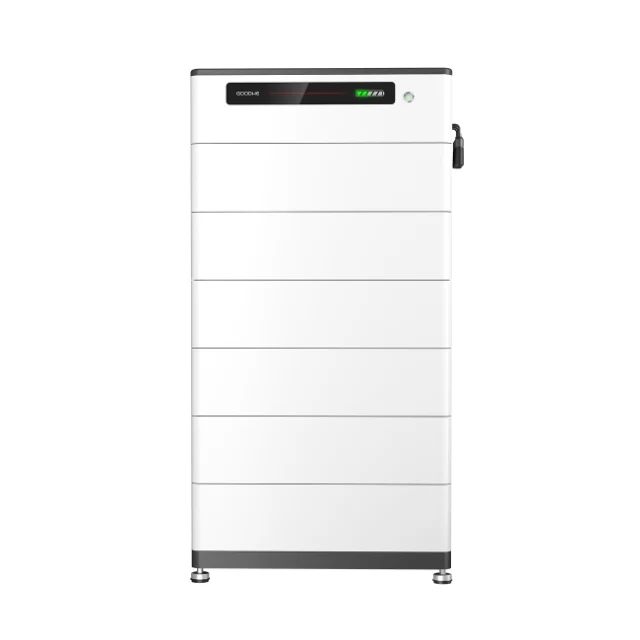
Meet GoodWe Battery modules that recognise each other as they stack, for single- or three-phase homes.
- Stacks up without fiddly wiring
Lynx F G2 modules detect each other as they stack, and pre-wired cables join them, so assembly stays simple.
- Sizes from 6.4 to 28.8 kWh
One tower holds 6.4 to 28.8 kWh, so your installer can size it to how your household uses power.
Plan extra modules early: GoodWe's warranty doesn't allow adding capacity after the first year.
- Fits single- or three-phase homes
It pairs with GoodWe's EH and ET hybrid inverters, on single-phase or three-phase power.
GoodWe's warranty expects a GoodWe inverter. Check the exact battery and inverter pair on your quote.
- 10 years, 70% capacity kept
GoodWe's Australian warranty runs for 10 years and promises at least 70% of the battery's usable capacity.
Cover can end sooner once the battery reaches its energy-output limit. It assumes about one full cycle a day.
The company behind it
A Suzhou-based solar inverter and battery maker, founded in 2010 and listed in Shanghai.
Founded 2010
GoodWe says it was founded in Suzhou, China, in 2010, and listed on the Shanghai Stock Exchange in 2020.
Global footprint
GoodWe says its inverters are installed in over 100 countries.
Australian arm
GoodWe Australia Pty Ltd, the local importer, is based in Rowville, Victoria.
Want a GoodWe battery in South Australia?
Get my GoodWe quotesCompare up to 3 vetted installers. Free, no obligation.
Why GoodWe is different
GoodWe’s claim on your shortlist is longevity of a specific kind: it is one of the longer-standing Chinese inverter manufacturers in the Australian market, a high-volume maker globally, and its Lynx Home battery range grew out of that inverter business rather than arriving as a startup’s first product. The pitch is not prestige — it is breadth and price, from a company that has been shipping into this market for years, and whose equipment already runs in plenty of Australian homes without drama.
Breadth is the actual mechanism. The Lynx Home range spans two voltage families — high-voltage stacks that pair with GoodWe’s HV hybrid inverters for the mainstream path, and low-voltage modular packs suited to smaller, retrofit-leaning and some off-grid designs. Add single-phase and three-phase hybrid ranges plus backup-capable configurations, and the result is a catalogue with an answer for most house shapes, including the awkward ones that force other brands into compromises.
The trade-offs are the mirror image. There is no big-name brand story here and no claim to category leadership — GoodWe did not place among the podium finishers in the 2026 installer vote, and its virtual-power-plant compatibility in Australia is narrower than the market leaders’. Breadth cuts both ways too: with this many models, not every inverter-battery combination is valid, and Clean Energy Council listing runs model-by-model, so the exact strings on the quote matter more than the brand on the box.
The most important sentence in the GoodWe record is about people, not product: outcomes with value-tier equipment track the installer more closely than the badge. An installer who fits this brand regularly, knows the valid pairings and supports their own work will deliver a good result; one learning the range on your roof is the actual risk being priced. That is not a warning against the brand — it is an instruction about how to buy it.
The Lynx Home system, piece by piece
The high-voltage Lynx Home stack is the mainstream battery: stackable modules pairing with GoodWe’s HV hybrid inverters. Module count decides usable capacity and the expansion ceiling at once, so the quote-stage question is double-barrelled — how many modules now, and how many more this configuration accepts later. The high-voltage path is the one most modern hybrid installs take, and it generally rewards that choice with better efficiency and cleaner scaling.
The low-voltage Lynx Home packs are a different tool for different jobs: smaller systems, retrofit-leaning configurations, and some off-grid designs. The two families are not interchangeable and pair with different inverters, which makes “which family, and why for this house” a question the installer should answer unprompted.
The GoodWe hybrid inverter is the required partner, offered in single-phase and three-phase ranges. It decides more than compatibility: three-phase backup behaviour — which phases stay live in a blackout, feeding which circuits — is set by the inverter model and the switchboard wiring, and “backup ready” on a quote is not the same thing as backup installed. Have the quote state which circuits stay on in a blackout, and on which phase.
The final component is a list entry: the specific model on the Clean Energy Council approved battery list. Eligibility for the federal rebate runs model-by-model, not brand-wide, so the approved-list check is effectively part of the product — the wrong variant on paper is the same hardware minus the rebate.
Put GoodWe to the test on your own numbers
Reading about it only goes so far — real quotes are where a GoodWe decision gets made. Get 2-3 quotes from vetted installers in South Australia. Free for homeowners.
What GoodWe does best
Fitting the house in front of it. Two voltage families, single and three-phase hybrids, backup-capable configurations — the mechanism is simple coverage, and it shows most on properties other ranges handle awkwardly: three-phase homes that do not want top-tier pricing, unusual switchboards, staged builds.
Value with a manufacturer behind it. GoodWe’s position is competitive pricing from an established high-volume maker with a real Australian presence — not the absolute floor of the market, but a level where a whole system often lands within reach of what the big names ask for a battery alone. What the lower position trades away is field history on the specific battery and depth of support, not chemistry. Judged per usable kilowatt-hour, that trade is exactly what a value-focused buyer is shopping for.
Three-phase without ceremony. The range treats three-phase hybrids as first-class products rather than afterthoughts, which is one of the more practical reasons the brand gets shortlisted — larger homes get a real configuration path instead of a workaround. Backup-capable configurations extend the same practicality: blackout coverage can be designed in rather than bolted on.
Keeping monitoring modest. The platform covers solar, battery and consumption competently without pretending to be a smart-home hub — a fair reflection of the whole proposition, which is function over flourish. Owners get the basics done well; nobody is buying this brand for the app, and the brand does not pretend otherwise.
Who a GoodWe suits — and who it does not
The natural GoodWe buyer is specifying a whole new system on a budget, with an installer who knows the brand. All three parts matter. Inverter and battery chosen together let the pairing be specified cleanly from the start; the value pricing does its work; and the installer’s familiarity converts the range’s breadth from a hazard into an advantage.
It also earns a place for homes with structural needs — three-phase supply, backup requirements, awkward layouts — that would otherwise push the budget into top-tier territory. A backup-capable three-phase configuration without top-tier pricing is a real and fairly unusual combination, and for those homes the range’s breadth stops being an abstraction and becomes the reason the quote works at all.
Look elsewhere if brand story and the longest field history top your list: the established big names hold that ground, and no value-tier maker can manufacture time. Look elsewhere too if your existing non-GoodWe inverter is staying — the batteries pair with GoodWe hybrids, so keeping the incumbent means choosing a different storage route entirely.
And be clear about the VPP question. If virtual-power-plant earnings are load-bearing in your maths, the narrower compatibility list is a genuine constraint — verify the exact model against the exact program before committing, and if it fails that check, either change the model or change the maths. The check takes minutes; skipping it can cost the whole earning plan.
The money lens is value per usable kilowatt-hour after the federal rebate — which for this brand carries a precondition: the rebate exists only if the exact model is on the approved list. Clear that gate first, then compare usable-kWh value across quotes. A GoodWe configuration that passes tends to compare well; one that fails is not cheap at any price.
GoodWe in South Australia
South Australia stacks nothing on the federal discount in 2026, but it is the country’s most competitive market for battery-and-VPP retail plans — and that cuts against a brand whose VPP compatibility list is shorter than the leaders’. The plans still open to a given Lynx Home model may be perfectly good ones; the point is to find out which they are before signing, because in SA the retailer plan can move the ten-year value as much as the hardware choice does.
Feed-in tariffs in South Australia typically pay 4–12c/kWh while grid power costs 30–35c — so a stored kilowatt-hour is worth what you avoid buying, not what exporting earns, and the wider that gap sits on your own plan, the harder a battery works for you. SA’s flexible-export and remote-management rules also arrive earliest in the country, and they reward an installer who knows the compliance settings for this specific brand — one more reason familiarity outweighs badge here.
Put GoodWe to the test on your own numbers
Reading about it only goes so far — real quotes are where a GoodWe decision gets made. Get 2-3 quotes from vetted installers in South Australia. Free for homeowners.
The installer decides the GoodWe outcome
Every risk in the GoodWe record routes through specification. A broad catalogue means invalid inverter-battery combinations exist to be quoted by accident; model-by-model rebate eligibility means one wrong string forfeits the federal discount; backup that was mentioned but never designed means a blackout finds you in the dark. None of these are hardware faults — all of them are decided at a desk before install day.
So the vetting questions are concrete. Which exact battery and inverter models, and where is the documentation showing they are a listed pair? Where is this model on the current Clean Energy Council approved battery list? How many GoodWe storage systems has this crew commissioned — storage, not solar — and who answers the phone in year four?
A good handover with this brand looks unremarkable, which is the point: backup circuits named and tested, monitoring connected across solar, battery and consumption, settings matched to your retailer plan, and the compatibility paperwork left with you. The value tier does not lower that bar; it raises the cost of an installer who skips it. A crew that fits GoodWe week in, week out will do all of this by habit — and that habit is what you are really hiring.
Finding that installer is the job Solar Select does. Your enquiry goes to up to 3 approved installers, subject to current coverage, eligibility and brand suitability, which for this brand is precisely the property worth filtering for. Comparing them costs nothing, because the service is free for homeowners.
Is GoodWe right for your home? Fit and warranty checks
A good fit if…
- Value-focused buyers who want a modular battery from an established inverter manufacturer
- Households buying inverter and battery together, where the pairing can be specified cleanly from the start
- Homes needing a three-phase or backup-capable configuration without top-tier pricing
- Customers of an installer who fits GoodWe regularly and will support it themselves
Consider the limitations
- You want a big-name brand story and the longest Australian field history
- Your installer has not fitted GoodWe before — with value-tier equipment, familiarity matters more than usual
- You are retrofitting onto a non-GoodWe inverter you want to keep
- You want the strongest virtual-power-plant support; compatibility is narrower than the market leaders
Why the installer matters more than the battery
More than 60% of inspected home battery installs were substandard. The Clean Energy Regulator inspected 1,278 home battery installations under the Cheaper Home Batteries Program between July 2025 and April 2026. More than 60% came back substandard and 1.2% unsafe — and the hardware was rarely the problem. The install was.
That is the part a brand cannot fix for you. Solar Select checks installer approval and current campaign eligibility for your South Australia enquiry. Confirm business history and current independent reviews before choosing an installer. Your enquiry goes to up to 3 of them, and no one else sees your details.
Battery rebates in South Australia
Cheaper Home Batteries Program (federal) — roughly a quarter off the installed battery cost, applied upfront at the quote by the installer rather than claimed back later.
Federal-only in South Australia for 2026 — South Australia runs federal-only on battery rebates in 2026 — no active state battery program. SA retailers compete hard on battery + VPP plans, and the federal discount applies in full.
Ready for GoodWe quotes in South Australia?
Postcode in — up to 3 vetted installers out. Federal battery rebate applied at quote. Free, no obligation, maximum 3 installers ever.
GoodWe installers in Adelaide
- GoodWe battery installers in Adelaide — serving Greater Adelaide
This page also covers the South Australia towns that no longer have a page of their own. Across the Riverland, Fleurieu and Limestone Coast and the Adelaide Hills and outer Adelaide, enquiries from Barmera, Berri, Bordertown, Goolwa, Loxton, Millicent, Mount Gambier, Murray Bridge, Naracoorte, Renmark, Strathalbyn, Victor Harbor, Waikerie, Gawler and Mount Barker route through this page on postcode. In the Barossa, Yorke Peninsula and Mid North, the same applies to Clare, Kadina, Moonta, Nuriootpa, Port Pirie, Tanunda and Wallaroo. Further out, Ceduna, Coober Pedy, Port Augusta, Port Lincoln, Roxby Downs and Whyalla in the Eyre Peninsula and outback are matched the same way.
Page updated 6 October 2026