Tasmania
Growatt battery installers in Tasmania.
Get matched with top solar companies in Tasmania
- Growatt APX modules let you choose a battery size around your home's energy use
- Unlock up to $7,000 in federal solar + battery rebates*
- Compare quotes from vetted installers, with Growatt experience where available
Growatt
What could a Growatt battery save your home?
*For eligible combined solar and battery installations before January 2027. Battery-only rebates vary with usable capacity. Your installer confirms eligibility and amount.
✓ Up to 3 vetted installers
✓ Free to compare, no obligation
✓ Your chosen battery, your quote request
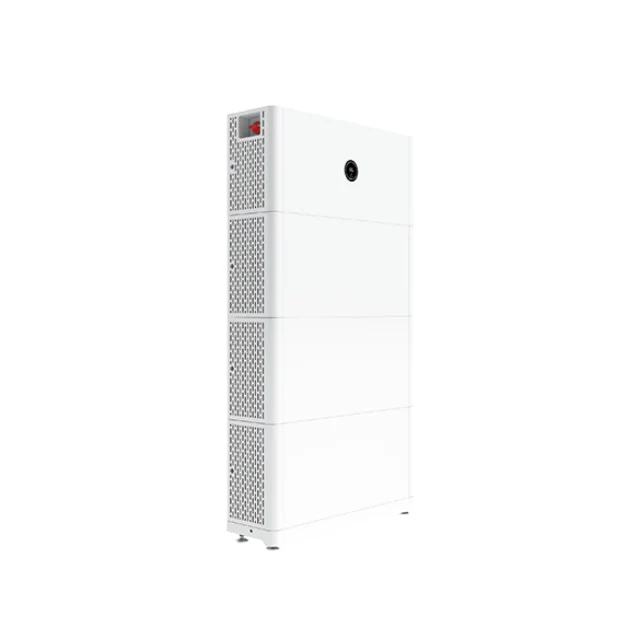
Meet Growatt Growatt's APX battery lets you add modules later, even mixed with the ones you have.
- Add modules years from now
Growatt says APX can mix new and older module batches, so topping up later doesn't mean replacing what you have.
Your installer should confirm the inverter and firmware support the extra modules.
- Every module gives its all
Growatt says its modular energy optimisation lets the system fully use every module's energy.
- Five to 30 kWh, your call
One to six 5 kWh modules make a 5 to 30 kWh battery, sized to what you use after dark.
Two APX systems can be linked if you need more.
- APX S2 AU on the list
Growatt lists a 10-year warranty, and the 5 to 30 kWh APX S2 AU models are on the approved list.
Look for an 'AU' model on your quote. Non-AU APX S2 listings end 30 Nov 2026.
Link two APX systems for more capacity.
The company behind it
Growatt is an inverter and battery maker founded in 2011, with Australian offices in Western and South Australia.
Founded 2011
Growatt was founded in 2011 by a group headed by David Ding, who remains CEO.
63+ offices worldwide
Growatt says it has 63+ offices and subsidiaries across 30+ countries.
Two Australian offices
Growatt has Australian offices in Canning Vale, WA, and Melrose Park, SA.
Want a Growatt battery in Tasmania?
Get my Growatt quotesCompare up to 3 vetted installers. Free, no obligation.
Why Growatt is different
Growatt’s story runs backwards compared with most battery brands: the inverter came first, at enormous scale. S&P Global Commodity Insights ranked it the world’s largest residential PV inverter supplier in its 2024 market tracker, and the company has sold into Australia for well over fifteen years. The storage range — APX, ARK and ALP — is that inverter house extending its distribution and pricing discipline into batteries.
The design mechanism is coverage in tidy steps. Storage spans both voltage classes — high-voltage APX and ARK XH stacks for modern grid-connected hybrids, and the 48-volt ALP family for off-grid, hybrid and larger stacked builds — sized in roughly 5 kWh units from small systems past 40 kWh. Few brands cover that much of the map, and the step size makes staged expansion unusually clean: capacity can track a growing household instead of being bought in one bet.
Buying battery and inverter from one manufacturer keeps accountability in one place — the practical inheritance of the inverter-house heritage, along with a monitoring platform that long predates the batteries and is mature by inverter-brand standards. That single-vendor shape matters most on the day something misbehaves: there is no second manufacturer to point at, and no ambiguity about whose platform the diagnosis runs through.
The real asterisk is age — not the company’s, the category’s. The inverter reputation and the storage reputation are different ages, and the record’s own advice is to judge the battery on battery evidence: installer experience with the exact model, and the support answer for year four. Fifteen years of inverter history cannot stand in for a storage track record that has not yet had time to accumulate.
The Growatt line-up, piece by piece
APX is the newer high-voltage platform — cobalt-free cells, cable-free module stacking, 5 to 30 kWh and extendable further in multiple columns. For a new grid-connected system it is usually where the conversation starts, and its stacking design decides how gracefully capacity can grow later. Ask how many more units the quoted column accepts; that answer defines the system’s future.
ARK XH is the established high-voltage family, stacked modules from roughly 5 to 25.6 kWh serving single and three-phase homes. Between APX and ARK the choice is mostly vintage and configuration fit — which is exactly why the quote must name the family and the model rather than “Growatt battery”, the loose phrasing the record explicitly warns against.
ALP is the 48-volt low-voltage family, 5 to 40 kWh in 5 kWh units — the off-grid and hybrid shape. Low-voltage and high-voltage systems are not interchangeable, and correcting the wrong class after install is expensive, so the family choice is really the install-type choice and should be justified in those terms on the quote.
The paired Growatt inverter completes the system and decides the phase configuration, the backup behaviour and what happens to any existing inverter. Cross-brand pairing narrows compatibility sharply — possible in places, but a matter for the supported list, not optimism — and where a different brand’s inverter is staying, an AC-coupled battery is usually the cleaner answer than forcing the pairing. Either way, the quote should say what happens to the old unit.
Put Growatt to the test on your own numbers
Reading about it only goes so far — real quotes are where a Growatt decision gets made. Get 2-3 quotes from vetted installers in Tasmania. Free for homeowners.
What Growatt does best
Growing in increments. The 5 kWh step is the range’s most practical feature: expansion can follow the household — the EV, the pool, the teenage years — one unit at a time, provided the original design left headroom. Buying capacity as it is needed, rather than years early, is the most reliable way to improve a battery’s economics, and this range is shaped for exactly that.
Slotting into its own ecosystem. Where a Growatt inverter already runs the solar — common, given fifteen-plus years of Australian volume — adding Growatt storage is the straightforward path, with one manufacturer accountable across the system and one platform monitoring it. The same heritage shows in the plumbing of ownership — data, alerts and firmware delivery all run through machinery the company has operated at scale for years.
Reaching the off-grid corner of the map. The ALP family gives the brand a genuine 48-volt offer for off-grid and hybrid builds, backed by an inverter pedigree that class of work actually draws on — territory many grid-focused ranges simply do not serve. For properties heading off-grid in stages, that pedigree is worth shortlisting on its own.
Monitoring that predates the marketing. Because the platform matured on inverters long before the batteries arrived, day-two ownership runs on tooling that has had years of real-world sanding — an unglamorous advantage that shows up every single day you own the system.
Who a Growatt suits — and who it does not
The cleanest fit is a home already running a Growatt inverter: the pairing is native, the accountability is single-vendor, and the price stays value-tier. Second-cleanest is a budget-conscious buyer specifying a new system who wants one manufacturer across inverter and battery without paying top-tier money for the privilege. In both cases the appeal is identical: the fewest moving parts between you and an accountable answer.
Planners fit too — households that expect demand to grow and want each stage to be a 5 kWh decision rather than a system replacement. The condition is designed-in headroom: the inverter rating and stack configuration set the ceiling on day one, so future plans have to be on the table at quote stage to be worth anything. A headroom question asked now costs nothing; the same question in year three costs hardware.
Off-grid and hybrid builders get a real option in ALP, with the usual off-grid caveat: the designer’s track record matters more than the brand, and the low-voltage family should be chosen because the install type demands it — never because it appeared on a quote unexplained.
Prefer another brand if you want a storage-first maker with a long dedicated battery record, if a different brand’s inverter is staying and you want it left alone, or if app polish and ecosystem experience rank high on your list — the platform is mature, not delightful. And as with any broad value range, walk away from a quote that will not name the family and model precisely.
The money frame is value per usable kilowatt-hour after the federal rebate — measured at the size you will cycle this year, not the size the range can reach. The step sizing makes restraint cheap: start where your evening load points, keep headroom in the design, and let the per-kWh maths improve with each staged addition instead of betting everything on the big version paying off.
Growatt in Tasmania
Tasmania stacks nothing on the federal discount, and its low winter sun makes modest, careful sizing the difference between a battery that pays and one that idles. Starting at a single 5 kWh unit and adding another only when the generation data supports it is exactly the purchase shape Growatt’s step sizing allows — provided the original inverter and stack design left the headroom, which is a quote-time question with a yes-or-no answer.
Feed-in tariffs in Tasmania typically pay 8.0–9.0c/kWh while grid power costs 30–35c — so a stored kilowatt-hour is worth what you avoid buying, not what exporting earns, and the wider that gap sits on your own plan, the harder a battery works for you. The regulated flat tariff means no timing games in Tasmania: the return is the standing gap between export and grid price, cycled as many evenings as your winter roof allows.
Put Growatt to the test on your own numbers
Reading about it only goes so far — real quotes are where a Growatt decision gets made. Get 2-3 quotes from vetted installers in Tasmania. Free for homeowners.
The installer decides the Growatt outcome
The record’s risks are specification risks, and they concentrate in one place: three families across two voltage classes make it easy for a loose quote to name the wrong one. The family drives the voltage class, the voltage class drives the inverter, and the inverter drives backup and phases — one wrong early choice cascades through the whole design, and it is made at a desk, not on a ladder. Insist on seeing family, model and voltage class written down before comparing anything else.
The screening question the record itself supplies is precise: how many Growatt battery systems — not inverters — has this crew commissioned? Fifteen years of inverter familiarity is genuinely useful and genuinely not the same thing, and an installer who conflates the two is answering a different question from the one you asked.
A commissioning worth paying for ends with the stack’s headroom documented, the backup circuits listed and tested, any cross-brand pairing verified against the supported list, and the monitoring platform configured with your tariff in it rather than the defaults. Ask what the handover includes before signing, and treat a vague answer as data.
Solar Select’s matching exists to shortcut that vetting: an enquiry brings quotes from up to 3 approved installers, subject to current coverage, eligibility and brand suitability. It is free for homeowners — and for a range where the quote’s precision decides the outcome, three precise quotes beat any brochure.
Is Growatt right for your home? Fit and warranty checks
A good fit if…
- Homes already running a Growatt inverter, where the pairing is straightforward
- Budget-conscious buyers who still want one manufacturer across the system
- Households planning to expand in 5 kWh increments over time
- Off-grid and hybrid builds that need a low-voltage option in the ALP range
Consider the limitations
- You want a storage-first brand with a long dedicated battery record
- You are keeping a different brand’s inverter and want it left alone
- Ecosystem polish and app experience are high on your list
- Your virtual-power-plant program does not support the model
Why the installer matters more than the battery
More than 60% of inspected home battery installs were substandard. The Clean Energy Regulator inspected 1,278 home battery installations under the Cheaper Home Batteries Program between July 2025 and April 2026. More than 60% came back substandard and 1.2% unsafe — and the hardware was rarely the problem. The install was.
That is the part a brand cannot fix for you. Solar Select checks installer approval and current campaign eligibility for your Tasmania enquiry. Confirm business history and current independent reviews before choosing an installer. Your enquiry goes to up to 3 of them, and no one else sees your details.
Battery rebates in Tasmania
Cheaper Home Batteries Program (federal) — roughly a quarter off the installed battery cost, applied upfront at the quote by the installer rather than claimed back later.
Federal-only in Tasmania for 2026 — Tasmania runs federal-only on battery rebates in 2026. The federal Cheaper Home Batteries discount still applies in full.
Ready for Growatt quotes in Tasmania?
Postcode in — up to 3 vetted installers out. Federal battery rebate applied at quote. Free, no obligation, maximum 3 installers ever.
Growatt installers in Hobart
- Growatt installers Hobart — serving Greater Hobart
Regional Tasmania
- Growatt installers Launceston — serving Launceston and surrounds
This page also covers the Tasmania towns that no longer have a page of their own. Across the North West Coast and greater Hobart, enquiries from Burnie, Devonport, Latrobe, Queenstown, Smithton, Ulverstone, Wynyard, Kingston, New Norfolk and Sorell route through this page on postcode. In the North East and the Huon, the same applies to Deloraine, George Town, Scottsdale, St Helens and Huonville.
Page updated 6 October 2026