Melbourne, VIC
Growatt battery installers across Greater Melbourne, VIC.
Get matched with top solar companies in Melbourne
- Growatt APX modules let you choose a battery size around your home's energy use
- Unlock up to $7,000 in federal solar + battery rebates*
- Compare quotes from vetted installers, with Growatt experience where available
Growatt
What could a Growatt battery save your home?
*For eligible combined solar and battery installations before January 2027. Battery-only rebates vary with usable capacity. Your installer confirms eligibility and amount.
✓ Up to 3 vetted installers
✓ Free to compare, no obligation
✓ Your chosen battery, your quote request
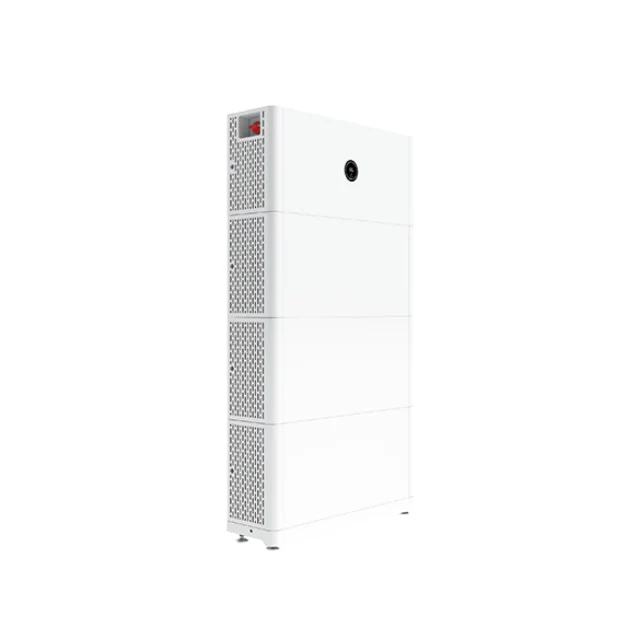
Meet Growatt Growatt's APX battery lets you add modules later, even mixed with the ones you have.
- Add modules years from now
Growatt says APX can mix new and older module batches, so topping up later doesn't mean replacing what you have.
Your installer should confirm the inverter and firmware support the extra modules.
- Every module gives its all
Growatt says its modular energy optimisation lets the system fully use every module's energy.
- Five to 30 kWh, your call
One to six 5 kWh modules make a 5 to 30 kWh battery, sized to what you use after dark.
Two APX systems can be linked if you need more.
- APX S2 AU on the list
Growatt lists a 10-year warranty, and the 5 to 30 kWh APX S2 AU models are on the approved list.
Look for an 'AU' model on your quote. Non-AU APX S2 listings end 30 Nov 2026.
Link two APX systems for more capacity.
The company behind it
Growatt is an inverter and battery maker founded in 2011, with Australian offices in Western and South Australia.
Founded 2011
Growatt was founded in 2011 by a group headed by David Ding, who remains CEO.
63+ offices worldwide
Growatt says it has 63+ offices and subsidiaries across 30+ countries.
Two Australian offices
Growatt has Australian offices in Canning Vale, WA, and Melrose Park, SA.
Want a Growatt battery on your Melbourne home?
Get my Growatt quotesCompare up to 3 vetted installers. Free, no obligation.
A Growatt in Melbourne performs exactly as well as its configuration — and the configuration is decided by whoever installs it.
Why the installer matters more than the battery
The Clean Energy Regulator inspected 1,278 home battery installations under the Cheaper Home Batteries Program between July 2025 and April 2026 — more than 60% came back substandard and 1.2% unsafe. Solar Select checks installer approval and current eligibility before matching your Melbourne enquiry. Manufacturer accreditation is a separate check; confirm the credentials relevant to your chosen battery.
What specifically goes wrong on a Growatt install
- Three families across two voltage classes make mis-specification easy — the quote must name the family and the model, not just “Growatt battery”
- Low-voltage and high-voltage systems are not interchangeable, and correcting the choice after install is expensive
- Pairing with a non-Growatt inverter narrows compatibility sharply and needs checking against the supported list
- Stacking headroom is fixed at design time, so a system built to its ceiling cannot take another unit
Request my Growatt quotes in Melbourne.
That's why Growatt quotes in Melbourne are only comparable when the scope matches. Here's what to hold constant.
Comparing Growatt quotes in Melbourne
We don't publish price bands, because installed prices move constantly and depend on your roof, switchboard and supply. What we can tell you is what to hold constant so three quotes are actually comparable — match these first, then compare after-rebate dollars per usable kWh.
- Which family — APX, ARK XH or ALP — since high-voltage and low-voltage suit different inverters and different install shapes
- The paired Growatt inverter, and whether your existing inverter is kept or replaced
- Number of 5 kWh units now against the ceiling of the quoted configuration
- Single-phase or three-phase, which narrows the family choice before anything else
- Confirmation the exact model is on the Clean Energy Council approved battery list
A cheaper quote that skips backup hardware, assumes an inverter you don't have, or quietly changes the configuration isn't cheaper — it's a different job.
Want three Growatt quotes you can actually compare? Your enquiry goes to up to 3 vetted installers in Melbourne, all quoting the same scope.
Who installs Growatt batteries in Melbourne?
Solar Select is a matching platform for homeowners looking for Growatt battery installation in Melbourne. Submit your postcode and system requirements to request a match with up to 3 suitable installers, subject to current coverage, availability and brand suitability.
Enter your postcode and we check which vetted installers cover Melbourne for Growatt.
How are Growatt installers matched in Melbourne?
Matching considers approved installer accounts, active campaign geography, the requested system and current eligibility. Verified brand accreditations are prioritised when relevant. The actual match happens after you submit your postcode and enquiry; displayed companies are not a promise of who will receive it.
Compare recent independent reviews, business history, workmanship terms and the accreditation relevant to your chosen battery. Manufacturer accreditation and general installer approval are separate checks.
Battery rebates in Victoria
- Cheaper Home Batteries Program (federal) — roughly a quarter off the installed battery cost, upfront, paid at its full rate on the first tier of usable capacity and at a reduced rate above that. Applied at quote by the installer, not claimed back later.
- Federal-only in 2026 (VIC) — Victoria runs federal-only on battery rebates in 2026 — the Solar Homes rebate covers panels, not storage. The federal Cheaper Home Batteries discount still applies in full. Full VIC rebate breakdown
Still weighing a Growatt up? The Melbourne numbers and the deeper reading are below.
Growatt battery installation in Melbourne, VIC
Comparing Growatt for a home in Greater Melbourne? Use your property's postcode and existing solar details when requesting quotes. This page focuses on Greater Melbourne, VIC.
- 528,883 small-scale solar installations across 233 postcodes assigned to the Melbourne study area.
- 9.8 kW median of residential-plausible postcode average system sizes in 2025.
Clean Energy Regulator postcode data · as at 2026-06. Solar Select aggregation of CER data for postcodes containing mapped suburbs nearest to Melbourne within 45 km. This study area is not an official city boundary; postcodes can cross its edges. These figures do not measure installer availability.
The Melbourne numbers
Solar Select's Melbourne study-area aggregation of Clean Energy Regulator data includes 528,883 small-scale systems across 233 postcodes — about 3,481 MW of capacity as at 2026-06. For a Growatt retrofit in Melbourne, check the existing inverter and switchboard before choosing the configuration. Ask whether the inverter stays, is replaced, or works alongside another one; installation counts do not answer that for your home.
In the typical Greater Melbourne postcode, new systems averaged about 9.8 kW through 2025. That is the scale of array a Growatt battery would be charged from here, so ask each installer to size storage against that generation rather than the headline capacity: the configuration that suits a 9.8 kW roof is not automatically the biggest one quoted.
Five distributors carve up Greater Melbourne: CitiPower in the inner city, Powercor across the west, Jemena in the north-west, AusNet Services through the north-east and outer east, and United Energy south-east of the Yarra. A Growatt quote written for a Powercor address does not automatically transfer to an AusNet one — export caps and approval rules move at the boundary.
Melbourne swings from about 7 peak sun hours in Jan to 1.8 in Jun — roughly 3.9× more generation in the sunniest month than the dullest. On a 10 kW array that is around 59.5 kWh a day in Jan against 15.3 kWh in Jun. Size a Growatt on the winter figure: Growatt is 5–40 kWh across the residential families, so the real question at quote stage is what it can actually refill on a 15.3 kWh day, not what it holds on paper.
Show month-by-month generation
| Month | Peak sun hours | 10 kW array, kWh/day |
|---|---|---|
| Jan | 7 | 59.5 kWh |
| Feb | 6.2 | 52.7 kWh |
| Mar | 4.7 | 39.9 kWh |
| Apr | 3.3 | 28.1 kWh |
| May | 2.2 | 18.7 kWh |
| Jun | 1.8 | 15.3 kWh |
| Jul | 2 | 17 kWh |
| Aug | 2.9 | 24.7 kWh |
| Sep | 3.9 | 33.2 kWh |
| Oct | 5.1 | 43.4 kWh |
| Nov | 6.1 | 51.9 kWh |
| Dec | 6.7 | 57 kWh |
Monthly shape from Bureau of Meteorology climatology for Victoria, scaled to Melbourne's annual average of 4.3 peak sun hours; 85% system derate.
Install counts and capacity: Clean Energy Regulator postcode data for small-scale installations (CC BY).
What owning a Growatt is actually like
Spec sheets stop being interesting about a week after install. These are the things owners notice in year one.
- Buying battery and inverter from one manufacturer keeps accountability in one place, which is the practical benefit of the inverter-house heritage.
- The 5 kWh step size makes staged expansion unusually tidy — capacity can track a growing household rather than being bought all at once.
- Growatt’s monitoring platform is mature by inverter-brand standards, since it long predates the battery range.
- The inverter reputation and the storage reputation are different ages; judge the battery on battery evidence rather than on the inverter history.
Four questions to ask any Growatt quote
- Which family and model, and is it high voltage or low voltage?
- Which Growatt inverter is paired with it, and is my existing inverter staying?
- How many 5 kWh units can I add later without new hardware?
- How many Growatt battery systems — not inverters — have you commissioned?
Is Growatt right for your home? Fit and warranty checks
A good fit in Melbourne if…
- Homes already running a Growatt inverter, where the pairing is straightforward
- Budget-conscious buyers who still want one manufacturer across the system
- Households planning to expand in 5 kWh increments over time
- Off-grid and hybrid builds that need a low-voltage option in the ALP range
Consider the limitations
- You want a storage-first brand with a long dedicated battery record
- You are keeping a different brand’s inverter and want it left alone
- Ecosystem polish and app experience are high on your list
- Your virtual-power-plant program does not support the model
Grid connection in Melbourne
- Distributor pre-approval — battery systems usually need explicit pre-approval from your distributor: across Greater Melbourne that is CitiPower, Powercor, Jemena, AusNet Services or United Energy, depending on the address. A good installer lodges the application and flags any constraint in the quote — not after.
- Typical export cap ~5 kW — single-phase residential export across Greater Melbourne is typically around 5 kW, though the exact cap depends on which network your address is on. A battery softens the cap — solar that can't export charges the Growatt instead of being curtailed.
- 5–15 business days — typical connection-approval turnaround once the installer lodges with your distributor.
Ready for Growatt quotes in Melbourne?
Request quotes from up to 3 vetted installers for a Growatt in Melbourne — postcode in, quotes out.
Areas served around Melbourne
Matching covers Greater Melbourne, not just the centre — enquiries route on your postcode. Local solar detail for each suburb:
- Carlton South (3053) · 1.2 km from Melbourne — 205 systems, 2,217 kW installed
- World Trade Centre (3005) · 1.2 km from Melbourne
- East Melbourne (3002) · 1.5 km from Melbourne — 108 systems, 1,043 kW installed
- South Wharf (3006) · 1.5 km from Melbourne — 47 systems, 1,450 kW installed
- Southbank (3006) · 1.7 km from Melbourne
- Carlton (3053) · 1.9 km from Melbourne
- Docklands (3008) · 1.9 km from Melbourne — 120 systems, 2,122 kW installed
- Hotham Hill (3051) · 1.9 km from Melbourne — 340 systems, 2,492 kW installed
- Melbourne University (3052) · 1.9 km from Melbourne — 175 systems, 2,084 kW installed
- Royal Melbourne Hospital (3050) · 1.9 km from Melbourne
- University Of Melbourne (3010) · 1.9 km from Melbourne
- South Melbourne (3205) · 2.1 km from Melbourne — 369 systems, 2,987 kW installed
- Melbourne (3004) · 2.2 km from Melbourne — 26 systems, 631 kW installed
- Fitzroy (3065) · 2.5 km from Melbourne — 395 systems, 2,783 kW installed
- Collingwood (3066) · 2.6 km from Melbourne — 281 systems, 2,702 kW installed
- Collingwood North (3066) · 2.6 km from Melbourne
- Richmond North (3121) · 2.6 km from Melbourne — 1,272 systems, 8,880 kW installed
- St Kilda Road Central (3004) · 2.6 km from Melbourne
- St Kilda Road Melbourne (3004) · 2.6 km from Melbourne
- Domain Road Po (3141) · 2.7 km from Melbourne — 461 systems, 3,268 kW installed
- North Melbourne (3051) · 2.7 km from Melbourne
- Carlton North (3054) · 3.0 km from Melbourne — 488 systems, 2,529 kW installed
- Cremorne (3121) · 3.0 km from Melbourne
- Richmond (3121) · 3.1 km from Melbourne
- Richmond South (3121) · 3.1 km from Melbourne
- Richmond East (3121) · 3.2 km from Melbourne
- Abbotsford (3067) · 3.3 km from Melbourne — 323 systems, 2,610 kW installed
- Albert Park (3206) · 3.4 km from Melbourne — 556 systems, 3,210 kW installed
- West Melbourne (3003) · 3.4 km from Melbourne — 149 systems, 2,232 kW installed
- Parkville (3052) · 3.5 km from Melbourne
- Princes Hill (3054) · 3.5 km from Melbourne
- South Yarra (3141) · 3.5 km from Melbourne
- Burnley North (3121) · 4.0 km from Melbourne
- Chapel Street North (3141) · 4.0 km from Melbourne
- Fitzroy North (3068) · 4.0 km from Melbourne — 1,419 systems, 7,751 kW installed
- Kensington (3031) · 4.0 km from Melbourne — 1,024 systems, 6,399 kW installed
- Middle Park (3206) · 4.1 km from Melbourne
- Port Melbourne (3207) · 4.1 km from Melbourne — 657 systems, 7,748 kW installed
- Victoria Gardens (3121) · 4.2 km from Melbourne
- Clifton Hill (3068) · 4.4 km from Melbourne
- Glen Iris (3146) · 9.3 km from Melbourne — 2,035 systems, 13,540 kW installed
- Avondale Heights (3034) · 10.5 km from Melbourne — 1,007 systems, 5,904 kW installed
- Merlynston (3058) · 10.5 km from Melbourne — 3,712 systems, 23,281 kW installed
- Ormond (3204) · 11.8 km from Melbourne — 2,671 systems, 16,798 kW installed
- Surrey Hills North (3127) · 11.8 km from Melbourne — 1,678 systems, 10,316 kW installed
- Surrey Hills South (3125) · 11.8 km from Melbourne — 1,314 systems, 8,286 kW installed
- McKinnon (3204) · 12.4 km from Melbourne
- Burwood (3125) · 13.3 km from Melbourne
Other locations for Growatt
Growatt installers across Victoria, town by town
- Growatt installers Geelong — 65 km
- Growatt installers Warragul — 93 km
- Growatt battery installers in Ballarat — 101 km
- Growatt battery installers in Bendigo — 132 km
- Growatt battery installation Traralgon — 143 km
- Growatt battery installers in Shepparton — 164 km
- Growatt battery installation Mildura — 475 km
Growatt questions, Melbourne answers
Growatt is known for inverters — is the battery side proven in Melbourne?
The two reputations are different ages, and it is worth keeping them apart. The inverter business has been in Australia for well over a decade at real volume; the home-storage range is a more recent extension of it. That is not a mark against the batteries, and the shared manufacturing and distribution genuinely help, but it does mean you should judge the storage on storage evidence — installer experience with the exact model, and the support answer for year four.
What is the difference between the APX, ARK and ALP ranges for a Melbourne home?
Voltage class and vintage, mainly. APX and ARK XH are the high-voltage families that suit modern grid-connected hybrid inverters, with APX the newer platform. ALP is the 48 V low-voltage family, the traditional shape for off-grid and certain hybrid builds. Your inverter and your install type determine which is appropriate, so the useful thing is not to pick one yourself but to make the installer explain why they specified the one they did.
Can I add a Growatt battery to another brand’s inverter in Melbourne, VIC?
Sometimes, but it narrows the options considerably and needs checking against the supported compatibility list rather than assumed. The range is designed around Growatt’s own inverters, and that pairing is where the single-vendor accountability benefit lives. If you are keeping a different brand’s inverter that you are happy with, an AC-coupled battery is usually the cleaner answer than forcing a cross-brand pairing.
Is Growatt eligible for the federal battery rebate if I live in Melbourne?
Growatt models do appear on the Clean Energy Council approved battery list, assessed model-by-model. With three families and several variants in play, a brand-level yes is not sufficient — ask to see the exact quoted model on the current list before signing.
How small can I start, and how big can it get for Melbourne households?
Around 5 kWh is the practical entry point and the range extends past 40 kWh in the low-voltage family, with expansion in roughly 5 kWh units. That granularity is one of the better reasons to consider the brand if your needs are likely to change. The constraint is the headroom designed in at install: the inverter rating and stack configuration set the ceiling, so tell your installer about future plans before the design is locked.
Does a Growatt system work in a blackout across Greater Melbourne?
Backup-capable configurations keep the circuits wired to the backup side running, with duration set by the capacity installed and the load drawn. The brand does not change that arithmetic — design does. Ask for the backup circuits to be listed on the quote and for the changeover behaviour to be described, rather than accepting a general statement that the system supports backup.
Who installs Growatt batteries in Melbourne?
Solar Select is a matching platform for homeowners seeking Growatt battery installation in Greater Melbourne. Submit your postcode and requirements to request a match with up to 3 approved installers, subject to current coverage and eligibility. Manufacturer accreditation is verified separately; ask for the credentials relevant to your chosen battery. Free for homeowners.
How do I compare Growatt quotes in Melbourne?
Installed prices move constantly and vary by site, so compare on after-rebate dollars per usable kWh rather than headline totals — and only once the scope matches. For this brand the variables that matter are: which family — APX, ARK XH or ALP — since high-voltage and low-voltage suit different inverters and different install shapes; the paired Growatt inverter, and whether your existing inverter is kept or replaced; number of 5 kWh units now against the ceiling of the quoted configuration. Get all three quotes on the same scope, then compare the installers harder than the numbers.
What battery rebates apply in Melbourne?
The federal Cheaper Home Batteries Program applies nationwide — roughly a quarter off installed cost, upfront, paid at its full rate on the first tier of usable capacity and tapering above that. Because Growatt is 5–40 kWh across the residential families, how much you collect depends on how the configuration lines up with those tiers, so ask the installer to show the tier split rather than one flat "government incentive" line. VIC runs federal-only on batteries in 2026.
Which distributor approves a Growatt connection in Melbourne?
Across Greater Melbourne the poles-and-wires network is CitiPower, Powercor, Jemena, AusNet Services or United Energy, depending on the address — your installer identifies which one at quote stage and lodges with them. The application covers the whole system, so what gets scrutinised depends on the configuration: three families across two voltage classes make mis-specification easy — the quote must name the family and the model, not just “Growatt battery”. Export is typically around 5 kW single-phase, though the exact cap depends on your network, and approval usually runs 5–15 business days once lodged.
Are your Melbourne installers Growatt-accredited?
Accreditation is one of the things we look at, and where a Growatt-accredited installer covers Greater Melbourne you'll see that in the match. It is deliberately not the only filter — a current accreditation badge says the installer has done the brand's training, not that they wire a good switchboard or come back in year three. Every installer serving Melbourne is vetted on the same bar set out above before they join. Ask the ones you're matched with what Growatt work they've actually done, and how much of it, before you sign.
Is a Growatt battery worth it in Melbourne?
Melbourne averages 4.3 peak sun hours, so a 10 kW rooftop array generates roughly 36.6 kWh on an average day — enough to cycle a Growatt on most days of the year. With Victoria feed-in tariffs typically paying 4.9–12c/kWh while grid power costs 30–35c, every stored kWh you use yourself is worth several times what exporting it earns.
How many solar installations are recorded across Greater Melbourne?
Solar Select's Melbourne study-area aggregation of Clean Energy Regulator data includes 528,883 small-scale systems across 233 postcodes — about 3,481 MW as at 2026-06. These are system counts, not a count of unique homes or Growatt installers. For a retrofit, check your existing inverter, switchboard and actual generation before choosing storage; the study-area total cannot establish those details.
Answered what you needed?
Get your up to 3 vetted Growatt quotes for Melbourne — free, no obligation.
Local data reviewed by the Solar Select team. Installer network information is shown separately above when verified records are available. Melbourne data sourced from BOM (sun hours), CER (rebates) and AER (CitiPower network — export figures are indicative; your distributor sets the limit for your address). Growatt product and pricing figures are sourced below. Last verified 2026-08-16. Page updated 6 October 2026.
- Growatt — energy storage products
- Solar Choice — Growatt battery review
- Clean Energy Council — approved batteries
- DCCEEW — Cheaper Home Batteries Program
All Victoria locations · All Growatt locations · How it works