Western Australia
Neovolt battery installers in Western Australia.
Get matched with top solar companies in Western Australia
- Neovolt offers battery systems for new solar installations or existing rooftop solar
- Unlock up to $7,000 in federal solar + battery rebates*
- Compare quotes from vetted installers, with Neovolt experience where available
Neovolt
What could a Neovolt battery save your home?
*For eligible combined solar and battery installations before January 2027. Battery-only rebates vary with usable capacity. Your installer confirms eligibility and amount.
✓ Up to 3 vetted installers
✓ Free to compare, no obligation
✓ Your chosen battery, your quote request
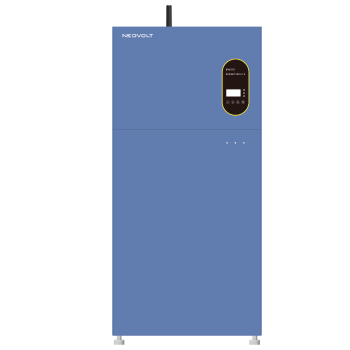
Meet Neovolt A battery system that can keep your existing solar panels working during a blackout.
- Your solar keeps working in outages
Neovolt's grid-forming function lets on-grid solar inverters keep working normally during a power outage.
Needs the backup circuits and grid-forming set-up included in your quote.
- Handles motor-driven appliances
Neovolt describes UPS-level control that copes with inductive loads, like the motors in fridges and pumps.
- Starts your generator for you
With a generator on site, Neovolt can start it automatically and report its status through the app or cloud.
- BW-BAT-10.1P: listed, 10-year cover
Bytewatt's Australian warranty covers the BW-BAT-10.1P battery for 10 years at 70% capacity, and it's approved-listed.
BW-BAT-9.6P listings were suspended from 15 Sep 2026. Check your quoted battery is listed.
Cells similar to those used in vehicles, Neovolt says.
The company behind it
Neovolt is the home battery brand of Bytewatt Technology, a Suzhou-based Chinese maker with an office in NSW.
Made by Bytewatt
Neovolt says it is made by Bytewatt Technology, whose global head office is in Suzhou, China.
Inverter and UPS heritage
Bytewatt claims 10 years in inverter technology and 15 years in UPS technology.
Seven Hills office
Its Australian office is in Seven Hills, NSW, with two NSW warehouses.
Want a Neovolt battery in Western Australia?
Get my Neovolt quotesCompare up to 3 vetted installers. Free, no obligation.
Why Neovolt is different
Neovolt is what happens when an uninterruptible-power-supply company builds a home battery. Bytewatt, the Suzhou firm behind the brand, spent years on UPS equipment before it built inverters, according to SolarQuotes, and the product behaves like it: the single-phase system switches to backup so quickly that most appliances do not notice, and it runs a grid-forming mode that keeps an existing solar inverter producing during an outage instead of shutting it down. Owners on SolarQuotes mention the blackout behaviour more than any other feature.
The second difference is the shape of the offer. The single-phase system is an all-in-one that comes two ways — a hybrid inverter for new solar, or a battery inverter that sits beside an existing solar inverter and leaves it alone — paired with a single wall-mounted battery. Above it, a three-phase hybrid runs high-voltage batteries in two module sizes, and Bytewatt’s pages describe several inverters sharing one battery bank. Everything pairs with Bytewatt’s own electronics; there is no open compatibility list.
The third is the support chain, and it is the main caveat in every review. The Australian warranty document names a Bytewatt contact in Rouse Hill and an importer in South Australia, routes claims through the installer, and was only extended to its current term by a published update statement in late 2024. There is no large local subsidiary. The product has earned strong reviews; the service organisation has not yet had the years to earn the same.
What ties it together is price. Neovolt sells as a value all-in-one, and SolarQuotes’ owner reviews are dominated by people who paid less than the household names and got reliable overnight supply and a blackout-proof house for it. The minority who are unhappy describe communication drop-outs, discharge faults and inverters too small to refill the battery — installer and configuration problems more than hardware ones.
The Neovolt system, piece by piece
The inverter is the first decision, and the single-phase system offers two kinds. The hybrid version takes the solar array through Neovolt’s own electronics, which is the right shape for a new install; the battery-inverter version leaves an existing solar inverter in place and adds storage beside it, which is the right shape for a retrofit that wants to keep working hardware. The quote should say which, and the sizing should follow the array, not the battery.
The battery on the single-phase system is one wall-mounted unit, listed on Bytewatt’s page with the system rather than as a menu of sizes. That simplicity is a feature for most households and a limit for the ambitious ones: a house that expects to double its storage later should start on the three-phase side rather than plan to add a second single-phase system.
The three-phase system is where the range grows. Bytewatt’s page pairs its three-phase hybrid with high-voltage batteries in two module sizes that stack, describes battery sharing across several paralleled inverters, and rates the enclosure for outdoor installation. Its quote-stage questions are the ones every stacked system has — how many modules now, how many later — plus which of the two module sizes the design is built on.
The accessories decide the monitoring and the backup. A Wi-Fi stick connects the system to Bytewatt’s cloud platform; a current-transformer meter or a grid meter tells the inverter what the house is doing; the backup output carries the circuits wired to it. SolarQuotes’ most common owner complaint — the system dropping off the app — is a Wi-Fi stick placement problem far more often than an inverter fault.
Put Neovolt to the test on your own numbers
Reading about it only goes so far — real quotes are where a Neovolt decision gets made. Get 2-3 quotes from vetted installers in Western Australia. Free for homeowners.
What Neovolt does best
Handling a blackout. The UPS lineage shows: switchover is fast enough that most appliances stay on, the single-phase system keeps charging from solar through the outage, and the grid-forming mode keeps an existing solar inverter working when the grid is gone. Owners on SolarQuotes describe outages they only learned about from the neighbours.
Adding storage to solar you already have. The battery-inverter version of the single-phase system is built for exactly that, sitting beside an existing solar inverter rather than replacing it, which the integrated brands mostly cannot offer without a change of inverter.
Cutting the bill without the big-name price. The recurring praise on SolarQuotes is a large drop in grid use for a price well under the household names, and the review page carries dozens of owners saying so. For a price-led buyer who wants an all-in-one rather than a component build, that is the case.
Keeping the decision small. One battery, one of two inverters on single-phase, a fixed accessory list: there is not much to configure, and the things that remain — inverter sizing, backup circuits, Wi-Fi placement, who honours the warranty — are all checkable from the quote.
Who a Neovolt system suits — and who it does not
It suits households where blackout behaviour is the reason to buy: homes with medical equipment, home offices, or simply a history of outages, where appliances must not notice the switch. That is the strength the reviews keep returning to.
It suits owners adding storage beside an existing solar inverter through the battery-inverter version, and price-led buyers who want an all-in-one they can understand in one conversation.
It suits larger homes that will stack the three-phase system’s high-voltage batteries and share one bank across paralleled inverters.
It does not suit buyers who want a long Australian operating history and a large local service organisation behind the warranty, because the chain today runs through a Rouse Hill contact and an importer. It does not suit a household whose virtual-power-plant plan does not list Bytewatt hardware. And it does not suit anyone who wants a battery that pairs with other brands’ inverters, because the ecosystem is closed.
The real fit test is the inverter sizing and the installer’s handover count. A Neovolt sized to the array, with the Wi-Fi stick somewhere sensible, the backup circuits named and the warranty paperwork identifying who processes a claim, is the system the majority of SolarQuotes reviewers describe. The unhappy minority describe the other kind of install.
Neovolt in Western Australia
Western Australia’s Residential Battery Scheme pays per usable kilowatt-hour — $130 up to $1,300 for Synergy customers, $380 up to $3,800 for Horizon Power — capped at 10 kWh and conditional on VPP enrolment. The single-phase system’s battery sits under the cap by design, so the scheme’s arithmetic is straightforward; the VPP condition means confirming that the program accepts Bytewatt hardware before the money is counted, a sharper check for a brand this young.
Feed-in tariffs in Western Australia typically pay 2–10c/kWh while grid power costs 30–35c — so a stored kilowatt-hour is worth what you avoid buying, not what exporting earns, and the wider that gap sits on your own plan, the harder a battery works for you. DEBS pays more in the evening window, and a system scheduled to hold energy for that window — with an inverter sized to refill it — is the version that earns here.
Put Neovolt to the test on your own numbers
Reading about it only goes so far — real quotes are where a Neovolt decision gets made. Get 2-3 quotes from vetted installers in Western Australia. Free for homeowners.
The installer decides the Neovolt outcome
Bytewatt’s warranty puts the installer inside it: cover excludes installation by anyone without the required accreditation, claims are lodged by the installer with fault codes and evidence, and the installer is the one who arranges any replacement and returns the faulty unit. Choose the installer and you have chosen the front half of your warranty chain.
The first question is sizing. The failure SolarQuotes owners describe most is an inverter too small to refill the battery in time; an installer who sizes the hybrid to the battery rather than to the array and the household’s winter load is building that failure in. Ask to see the array size and the inverter size on the same page of the quote.
The second is commissioning: the Wi-Fi stick placed where the signal is strong and the cloud platform confirmed as reporting; the grid-forming mode tested with the existing solar inverter, not assumed; the backup circuits named. The third is paperwork — the warranty document names an Australian contact and an importer, and the installer should confirm which of them processes a claim in year six.
This is where Solar Select earns its place. We put your enquiry in front of up to 3 approved installers, subject to current coverage, eligibility and brand suitability — and comparing them is free for homeowners. For a value brand with a young support chain, the installer who can show you a previous Neovolt handover and answer the warranty question in a sentence is the one to shortlist.
Is Neovolt right for your home? Fit and warranty checks
A good fit if…
- Households where blackout behaviour matters and appliances must not notice the switch
- Owners adding storage beside an existing solar inverter via the battery-inverter version
- Price-led buyers who want an all-in-one rather than a component build
- Larger homes that will stack the three-phase system’s high-voltage batteries
Consider the limitations
- You want a long Australian operating history and a large local service organisation behind the warranty
- You want the widest choice of local installers who have commissioned the brand before
- Your virtual-power-plant plan is written around specific integrated systems and does not list Bytewatt
- You want a battery that pairs with inverters from other brands
Neovolt specifications and source documents
- Neovolt pairs with its own hybrid inverter: new solar-and-battery installs use one unit; a retrofit means replacing the existing inverter. Source
- Listed models are on the Clean Energy Council approved battery list. Source
- Any accredited installer can fit Neovolt under the manufacturer's warranty terms. Source
- The Clean Energy Council listed BW-BAT modules meet the federal Cheaper Home Batteries Program’s hardware condition; the program also requires the battery to be connected to new or existing solar and the installer to hold SAA accreditation, and it asks buyers to seek more than one quote. Source
Why the installer matters more than the battery
More than 60% of inspected home battery installs were substandard. The Clean Energy Regulator inspected 1,278 home battery installations under the Cheaper Home Batteries Program between July 2025 and April 2026. More than 60% came back substandard and 1.2% unsafe — and the hardware was rarely the problem. The install was.
That is the part a brand cannot fix for you. Solar Select checks installer approval and current campaign eligibility for your Western Australia enquiry. Confirm business history and current independent reviews before choosing an installer. Your enquiry goes to up to 3 of them, and no one else sees your details.
Battery rebates in Western Australia
Cheaper Home Batteries Program (federal) — roughly a quarter off the installed battery cost, applied upfront at the quote by the installer rather than claimed back later.
WA Residential Battery Scheme — WA adds the Residential Battery Scheme — $130 per usable kWh for Synergy customers (max $1,300) or $380 per kWh for Horizon Power customers (max $3,800), capped at 10 kWh and conditional on VPP enrolment. It stacks with the federal rebate.
Ready for Neovolt quotes in Western Australia?
Postcode in — up to 3 vetted installers out. Federal battery rebate applied at quote. Free, no obligation, maximum 3 installers ever.
Neovolt installers in Perth
- Neovolt battery installers in Perth — serving Greater Perth
Regional Western Australia
- Neovolt battery installers in Bunbury — serving Bunbury and the South West
- Neovolt battery installers in Busselton — serving Busselton and the Margaret River region
This page also covers the Western Australia towns that no longer have a page of their own. Across the Kimberley and Pilbara and the Wheatbelt and Great Southern, enquiries from Broome, Derby, Karratha, Kununurra, Newman, Port Hedland, Tom Price, Albany, Jurien Bay, Katanning, Narrogin and Northam route through this page on postcode. In the South West and the Peel region, the same applies to Australind, Collie, Dunsborough, Harvey, Manjimup, Margaret River, Mandurah and Pinjarra. Further out, Carnarvon, Esperance, Exmouth, Geraldton, Kalbarri and Kalgoorlie in the Goldfields, Mid West and Gascoyne are matched the same way.
Page updated 6 October 2026