Victoria
SMA battery installers in Victoria.
Get matched with top solar companies in Victoria
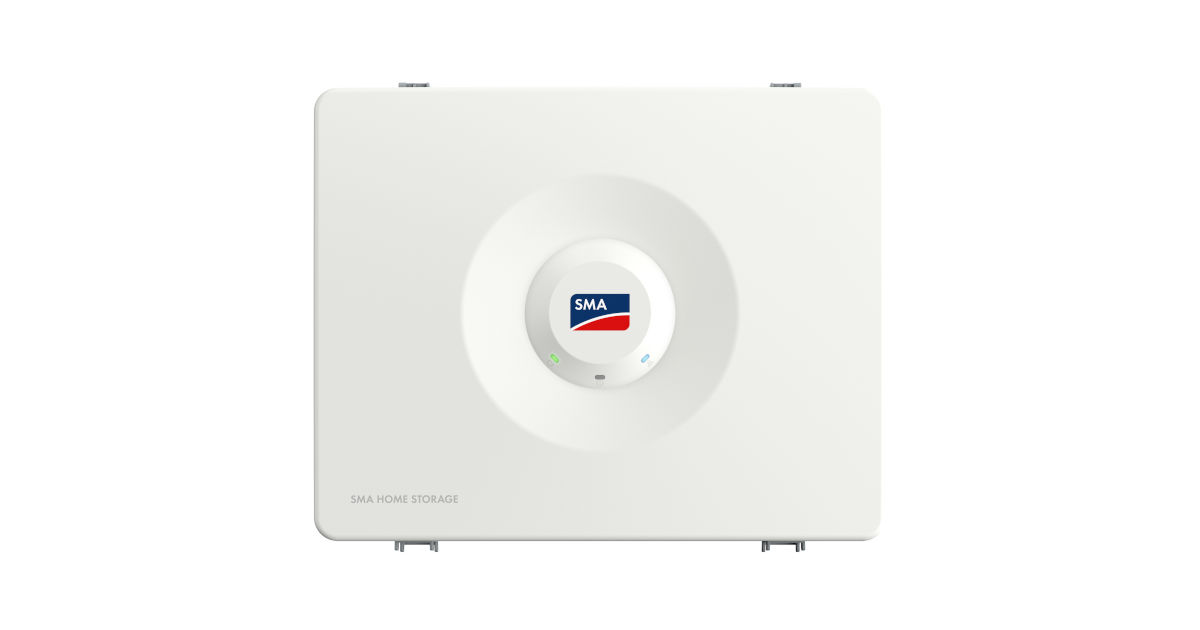
- SMA Home Storage offers wall or floor mounting to suit your available space
- Unlock up to $7,000 in federal solar + battery rebates*
- Compare quotes from vetted installers, with SMA experience where available
SMA
What could an SMA battery save your home?
*For eligible combined solar and battery installations before January 2027. Battery-only rebates vary with usable capacity. Your installer confirms eligibility and amount.
✓ Up to 3 vetted installers
✓ Free to compare, no obligation
✓ Your chosen battery, your quote request
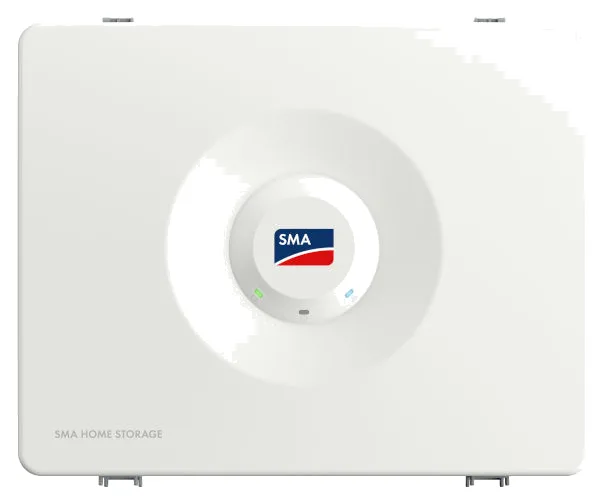
Meet SMA SMA, founded in Germany in 1981, makes a battery that plugs straight into its own inverters.
- Made for your SMA inverter
Home Storage plugs into SMA's Sunny Boy or Sunny Tripower Smart Energy hybrid inverter, so one brand runs the whole system.
Needs an SMA Smart Energy inverter. SMA says it is exiting Australia's home solar market; ask your installer about ongoing support.
- Sets itself up on the day
Preassembled cables plug the modules together, and the system sets itself up automatically, leaving less to get wrong on the day.
- Grow in 3.28 kWh steps
Add identical 3.28 kWh modules: up to four on SMA's single-phase inverter, or two to five on its three-phase one.
Extra modules can only be added within 2 years of installation.
- 10-year warranty, registered
Register it in the first 30 days and the warranty runs 10 years, SMA's Australian page says.
Ask your installer to register it before they leave; without registration the factory warranty is 2 years.
IP65 rated, so it can go on an outside wall.
The company behind it
SMA is a German solar technology company, founded in 1981, that has operated in Australia since 2007.
Founded 1981, Germany
SMA says it was established in Germany in 1981.
In Australia since 2007
SMA says it began operating in Australia in 2007.
Products in Australia
SMA says over half a million of its products are already installed across Australia.
Want an SMA battery in Victoria?
Get my SMA quotesCompare up to 3 vetted installers. Free, no obligation.
Why SMA is different
SMA is one of the oldest names in solar electronics, a German manufacturer whose Sunny Boy inverters have been going onto Australian roofs for decades. Almost every experienced installer in the country has commissioned one. That reputation is real and it was earned on inverters, which is the thing to keep hold of when looking at the battery, because the battery is a much newer and much narrower proposition.
Home Storage is one module, repeated. There is no larger variant, no denser chemistry option and no second family for bigger homes — capacity is simply how many identical modules are in the stack. It is DC-coupled and runs only on SMA’s own hybrid inverters. The whole range reached the Australian approved-product register in 2025, years behind competitors who had been selling storage here for most of a decade.
The narrowness is a design choice with visible upsides. The system arrives as a plug-and-play stack with preassembled cables and commissions itself automatically, which removes a category of installation error that hand-wired battery systems still suffer from. For an installer who already knows the inverter, there is very little left to get wrong.
It also produces a set of hard ceilings that a buyer needs to see before signing rather than afterwards. The range tops out well below what several rivals offer. Separate stacks cannot be connected in parallel to work around that. The single-phase inverter accepts a shallower stack than the three-phase one because of a voltage limit on the string. And modules may only be added within two years of the original installation. SMA is unusually explicit about all four, which is to its credit, but each one closes a door that other brands leave open.
The SMA system, piece by piece
The inverter is chosen first and it decides everything after it. The single-phase Sunny Boy Smart Energy takes a shallower battery stack than the three-phase Sunny Tripower Smart Energy, and SMA attributes that to a voltage ceiling on the battery string rather than to a marketing decision. A single-phase household therefore cannot reach the top of the published capacity range at all. If your target sits near the upper end, the phase configuration of your house has already answered the question.
The battery is the module and the module is the battery. Every step up the range is another identical unit in the same column, which makes comparing quotes trivially easy: the same stack depth is the same product regardless of who quoted it. It also means there is no clever way to buy more capacity in the same footprint.
Expansion is time-limited in a way most buyers will not expect. SMA states that further modules can be integrated into an existing installation within two years of the initial install. That is a genuine deadline, not a soft guideline, and it converts the usual reassurance that capacity can always be added later into something a household should diarise. Combined with the ban on paralleling separate stacks, it means the practical ceiling is fixed early.
The warranty is structured around a registration step. SMA’s Australian page describes a short factory period that extends by a further eight years only when the owner registers the system in its online service centre within thirty days of commissioning. The performance side runs longer still on the same condition. Nothing about the installed hardware reveals whether that step happened, which makes it the least visible and most valuable item on the handover list.
The enclosure is rated for outdoor installation and the system is built for dynamic tariffs and virtual power plant participation, with monitoring through the same SMA portal and app that has watched its inverters for years. For a household already living in that ecosystem, the battery appears inside a familiar interface rather than adding a second one.
Put SMA to the test on your own numbers
Reading about it only goes so far — real quotes are where a SMA decision gets made. Get 2-3 quotes from vetted installers in Victoria. Free for homeowners.
What SMA does best
Completing an SMA system. If you have chosen a Sunny Boy Smart Energy or Sunny Tripower Smart Energy on the strength of the inverter, the matching battery gives you one manufacturer, one monitoring platform, one commissioning process and one counterparty for support. That coherence is worth real money in year six, when a fault has to be diagnosed across the boundary between two products.
Removing installation variables. Preassembled cables and automatic commissioning mean fewer decisions made on a hot roof by someone in a hurry. Battery installations go wrong at the interfaces more often than in the cells, and a stack designed to plug together closes off several of those interfaces entirely.
Being open about its limits in public. The capacity ceiling, the phase-dependent stack depth, the ban on parallel connection and the two-year expansion window are all stated plainly on SMA’s own Australian page. Plenty of manufacturers leave a buyer to discover constraints like these from an installer, or from experience. Published limits are easier to plan around than unpublished ones.
Engineering longevity into the boring parts. The outdoor rating, the wide ambient temperature range and the self-commissioning design all point the same way: a product built by a company that expects to be servicing it for a long time and has designed to reduce the number of ways it can be got wrong.
Who an SMA system suits — and who it does not
It suits households who were buying an SMA hybrid inverter anyway and want the storage to come from the same place, with one app, one warranty conversation and one company to call.
It suits three-phase homes more than single-phase ones, simply because the three-phase inverter accepts the deeper stack. A three-phase household gets access to the full range; a single-phase household is shopping in the lower half of it whether or not anyone says so out loud.
It suits buyers who know their final capacity now. If the number you want is inside the range and you are confident it will not change, the constraints on expansion cost you nothing and the plug-and-play simplicity is a genuine benefit.
It does not suit anyone chasing the largest possible battery, and it does not suit a household whose consumption is likely to grow — an electric car, a pool, a heat pump — after the expansion window has closed. It does not suit a buyer who wants to keep a non-SMA inverter. And it does not suit someone who weights the end-of-term capacity floor heavily, because SMA commits to a lower figure than much of the market.
The clarifying question is what you are actually buying. If the answer is "an SMA system", this is a sound and well-engineered way to get one. If the answer is "the best battery I can get for the money", the fair advice is that SMA came late to this category, offers a narrow range, and would not top most objective comparisons — and its own reviewers say so.
SMA in Victoria
Victoria runs federal-only on battery rebates in 2026 — Solar Homes covers panels, not storage — so the federal discount stands alone and pays best on the first tier of usable capacity. That suits a range whose ceiling is modest anyway: SMA’s stack sizes land inside the tier where the discount works hardest, and the installer can show which module count sits there without the comparison being clouded by a second product family.
Feed-in tariffs in Victoria typically pay 4.9–12c/kWh while grid power costs 30–35c — so a stored kilowatt-hour is worth what you avoid buying, not what exporting earns, and the wider that gap sits on your own plan, the harder a battery works for you. Victoria’s minimum feed-in tariff pays more in the evening than at midday, so the charging schedule set during SMA’s automatic commissioning still needs a human to point it at that window.
Put SMA to the test on your own numbers
Reading about it only goes so far — real quotes are where a SMA decision gets made. Get 2-3 quotes from vetted installers in Victoria. Free for homeowners.
The installer decides the SMA outcome
The most consequential thing an installer does on this brand costs nothing and leaves no trace. Registering the system in SMA’s service centre inside the required window is what turns a short factory warranty into the decade-long one the customer believes they bought. Skip it and the hardware behaves identically for years, until the moment it matters. Ask for it to be done before they leave, and ask for the confirmation in writing.
The second is the inverter decision, which is really a capacity decision in disguise. An installer who specifies the single-phase unit without discussing the stack depth it allows has quietly set the household’s permanent ceiling, because separate stacks cannot be paralleled later to escape it. That conversation belongs at quote stage, alongside a frank question about what the house might need in ten years.
The third is the expansion horizon. Two years is not long, and a household that sizes conservatively on the assumption they can top up later needs to know the deadline exists. A good installer raises it unprompted; it is a fair test of whether they have actually read the product documentation or are working from a distributor’s summary.
The fourth is fluency with the battery specifically rather than the inverter generally. Many Australian installers have commissioned SMA inverters for years and have never commissioned Home Storage, which only reached the register here in 2025. Those are different bodies of experience, and the second one is the one that matters for this purchase.
This is where Solar Select earns its place. We put your enquiry in front of up to 3 approved installers, subject to current coverage, eligibility and brand suitability — and comparing them is free for homeowners. On a brand whose warranty turns on a registration step and whose capacity is fixed by an inverter choice made at quote stage, the person writing the quote is deciding more than they usually do.
Is SMA right for your home? Fit and warranty checks
A good fit if…
- Households already choosing an SMA hybrid inverter who want the matching battery rather than a third-party pairing
- Three-phase homes, which can use the deeper stack the single-phase inverter cannot reach
- Buyers who value a long-established manufacturer and straightforward, self-commissioning hardware
- People who know their final capacity now and will not need to revisit it after the expansion window closes
Consider the limitations
- You want the largest possible battery, because the range tops out well below what several competitors offer
- You want to keep or choose a non-SMA inverter — Home Storage runs only on SMA’s own hybrids
- You expect to expand capacity years from now, after the two-year window has closed
- You weight the end-of-term capacity floor heavily, since SMA commits to a lower figure than much of the market
- You want a deep body of Australian owner reviews, which barely exists for this product yet
SMA specifications and source documents
- SMA is DC-coupled: the battery and inverter are one system, so on a retrofit the existing solar inverter is replaced rather than kept. Source
- Listed models are on the Clean Energy Council approved battery list. Source
- The SMA Home Storage module is on the Clean Energy Council approved battery list, but one module on its own falls below the federal Cheaper Home Batteries Program, which covers systems from 5 kWh to 100 kWh of usable capacity: a qualifying SMA system therefore starts at two modules. The program pays its full rate on the first 14 kWh of usable capacity and tapers above that, a boundary the deeper three-phase stack crosses and the single-phase stack does not. Source
Why the installer matters more than the battery
More than 60% of inspected home battery installs were substandard. The Clean Energy Regulator inspected 1,278 home battery installations under the Cheaper Home Batteries Program between July 2025 and April 2026. More than 60% came back substandard and 1.2% unsafe — and the hardware was rarely the problem. The install was.
That is the part a brand cannot fix for you. Solar Select checks installer approval and current campaign eligibility for your Victoria enquiry. Confirm business history and current independent reviews before choosing an installer. Your enquiry goes to up to 3 of them, and no one else sees your details.
Battery rebates in Victoria
Cheaper Home Batteries Program (federal) — roughly a quarter off the installed battery cost, applied upfront at the quote by the installer rather than claimed back later.
Federal-only in Victoria for 2026 — Victoria runs federal-only on battery rebates in 2026 — the Solar Homes rebate covers panels, not storage. The federal Cheaper Home Batteries discount still applies in full.
Ready for SMA quotes in Victoria?
Postcode in — up to 3 vetted installers out. Federal battery rebate applied at quote. Free, no obligation, maximum 3 installers ever.
SMA installers in Melbourne
- SMA installers Melbourne — serving Greater Melbourne
Regional Victoria
- SMA installers Geelong — serving Geelong and the Bellarine
- SMA battery installers in Ballarat — serving Ballarat and surrounds
- SMA battery installers in Bendigo — serving Bendigo and surrounds
- SMA battery installers in Shepparton — serving Shepparton and the Goulburn Valley
- SMA battery installation Mildura — serving Mildura and Sunraysia
- SMA installers Warragul — serving Warragul–Drouin and West Gippsland
- SMA battery installation Traralgon — serving Traralgon and the Latrobe Valley
This page also covers the Victoria towns that no longer have a page of their own. Across Gippsland, the Wimmera and Mallee and the Central Highlands, enquiries from Bairnsdale, Cowes, Inverloch, Korumburra, Lakes Entrance, Leongatha, Maffra, Moe, Morwell, Sale, Wonthaggi, Ararat, Horsham, Kerang, Stawell, Swan Hill, Daylesford and Maryborough route through this page on postcode. In the Hume and High Country and the South West, the same applies to Alexandra, Beechworth, Benalla, Bright, Kilmore, Mansfield, Myrtleford, Seymour, Wangaratta, Wodonga, Camperdown, Colac, Hamilton, Portland and Warrnambool. Further out, Bacchus Marsh, Emerald, Gisborne, Healesville, Melton, Pakenham, Sunbury, Wallan, Drysdale, Lara, Ocean Grove and Torquay in outer Melbourne and the Bellarine and Surf Coast are matched the same way. Cobram, Echuca, Kyabram, Numurkah, Rochester, Yarrawonga, Castlemaine, Kyneton and Woodend in the Goulburn Valley and Murray and the Macedon Ranges and Goldfields sit in the same Victoria pool.
Page updated 6 October 2026