Queensland
SOFAR battery installers in Queensland.
Get matched with top solar companies in Queensland
- SOFAR PowerAll combines a solar inverter and battery modules in one stack
- Unlock up to $7,000 in federal solar + battery rebates*
- Compare quotes from vetted installers, with SOFAR experience where available
SOFAR
What could a SOFAR battery save your home?
*For eligible combined solar and battery installations before January 2027. Battery-only rebates vary with usable capacity. Your installer confirms eligibility and amount.
✓ Up to 3 vetted installers
✓ Free to compare, no obligation
✓ Your chosen battery, your quote request
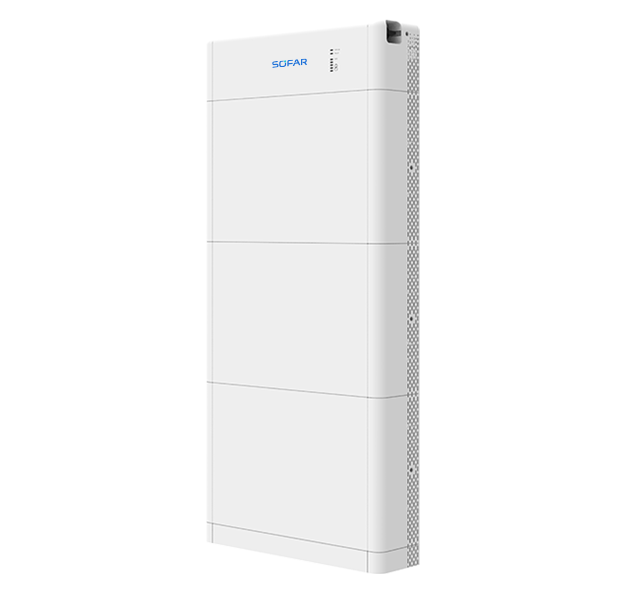
Meet SOFAR SOFAR battery stacks that grow in 5 kWh steps, made for SOFAR's own three-phase inverters.
- Start small, then add modules
Begin with two modules and add more as needs change, up to four per stack, about 20 kWh.
Ask how many modules your quoted stack can still take.
- Made for SOFAR three-phase hybrids
SOFAR designed BTS specially for its ME and HYD three-phase hybrid inverters, so battery and inverter work as a pair.
Suits three-phase homes. An existing inverter from another brand would be replaced.
- Sealed for outdoor installs
Both the battery modules and the distribution unit are rated IP65 against dust and water jets.
It charges between 0 °C and 50 °C, so a sheltered spot suits frosty areas.
- 10 years, 70% energy kept
SOFAR's Australian warranty covers each module for 10 years and promises it keeps 70% of its usable energy.
Cover lasts 10 years or to a per-module energy limit; ask for it. Ask your installer to confirm they're SOFAR-certified; the warranty requires it.
The company behind it
SOFAR is a Shenzhen inverter and battery maker, founded in 2013, with an Australian presence since 2016.
Founded 2013, Shenzhen
Founded in 2013 in Shenzhen, SOFAR began with inverters, then moved into energy storage.
48 GW of inverters
SOFAR says it has shipped over 48 GW of inverters, with systems in 100+ countries and regions.
In Australia since 2016
SOFAR has been present in Australia since 2016, with an office in NSW.
Want a SOFAR battery in Queensland?
Get my SOFAR quotesCompare up to 3 vetted installers. Free, no obligation.
Why SOFAR is different
SOFAR comes at Australian storage from two directions at once, and that duality is the brand. PowerAll is the all-in-one: a hybrid inverter and modular battery sharing a single wall-mounted stack, growing from about 4.75 kilowatt-hours to 28.5 as modules are added. The BTS range is the component route — high-voltage battery modules designed to sit with a separate SOFAR hybrid inverter. One manufacturer, two genuinely different installs.
The right one is not a matter of taste. The all-in-one takes over the inverter role, which makes it the natural shape for a new install and an expensive shape for a home whose existing solar inverter still works; the component route suits designs where the electrical layout calls for the inverter as a separate unit. The deciding question is what you already own, and the quote should answer it explicitly.
The other thing to know is the brand’s trajectory. SOFAR is recognised among the top five fastest-growing battery manufacturers in Australia on 2025 Clean Energy Regulator registry data — growth that says the market is voting for its cost-per-kilowatt-hour case, while also meaning the local support presence and installer base have grown alongside the brand rather than preceding it.
That is the trade. You get modularity in fine 4.75-kilowatt-hour steps, a real all-in-one option, and one manufacturer across inverter and battery without top-tier pricing — against a shorter Australian field record than the established names, with installer familiarity the variable most worth probing. The hardware argument is strong; the history argument belongs to older brands, and pretending otherwise helps nobody.
The SOFAR range, piece by piece
PowerAll is the single-stack answer: hybrid inverter on the wall with one to six battery modules beneath it, 4.75 kilowatt-hours each. What it decides is simplicity — one product, one app, one manufacturer answering for the lot — and, because it includes the inverter, what happens to your existing one. On healthy solar, that replacement is a real cost the quote must own rather than bury.
The BTS series is the battery alone — high-voltage modules from roughly 5 to 20 kilowatt-hours in steps of about 5.12 — and it never arrives by itself: it pairs with a separate SOFAR hybrid inverter, and the quote should name which one. The pairing stays inside one brand, which spares you the two-manufacturer support boundary of open-component systems, but it is still a decision, and it still shapes cost, backup behaviour and the app you live with.
Expansion modules are the third line in the range, and the one that decides your future. Both shapes grow by module — but only inside the ceiling fixed by the inverter rating and the stack design on day one. A configuration quoted at its maximum cannot grow at all, so the number to demand at quote stage is not the starting capacity but the headroom above it.
One trap deserves naming: “a SOFAR battery” on a quote could mean either range, and those are different jobs with different upgrade paths. Make the paperwork state PowerAll or BTS, the module count now, the ceiling, the exact model variant for the approved-list check, and which circuits the backup covers — five lines that turn a vague quote into a comparable one.
Put SOFAR to the test on your own numbers
Reading about it only goes so far — real quotes are where a SOFAR decision gets made. Get 2-3 quotes from vetted installers in Queensland. Free for homeowners.
What SOFAR does best
Removing decisions on a new install. For a home starting from scratch, the PowerAll collapses inverter choice, battery choice and compatibility homework into one stack from one maker — the set of questions that makes battery shopping exhausting simply does not arise. That is the all-in-one’s proper job, and this is one of the few value-tier products offering it.
Starting small without ending small. Growth in 4.75-kilowatt-hour steps is finer-grained than most of the market, which lets a cautious budget begin with what it can afford and add modules as the case proves itself — provided the original design left headroom, which is precisely why headroom belongs in the quote.
Winning the cost-per-usable-kilowatt-hour comparison. The brand’s Australian growth is being driven by buyers who run the numbers per kilowatt-hour rather than per badge, and its place among the five fastest-growing manufacturers on registry data is the market’s receipt for that argument.
Keeping one manufacturer across the whole system without top-tier pricing. Both shapes leave a single brand behind inverter and battery, with SOFAR’s own monitoring platform across the top — competent software, and not the reason to pick or avoid the brand — so day-two life has one company answering for it.
Who a SOFAR system suits — and who it does not
It suits the new build and the fresh install, where the PowerAll’s everything-in-one-stack shape does its best work and nothing existing gets discarded. If you are buying solar and storage together, it belongs on the shortlist for exactly that reason.
It suits the staged buyer — the household that wants storage now, more later, and a fine-grained module size that maps spending to confidence. Say the growth plan out loud at quote stage so the ceiling gets designed for it.
It suits the spreadsheet buyer, comparing usable kilowatt-hours per dollar across brands. On that metric the range argues as well as anything in its tier, and the single-manufacturer build keeps the comparison clean.
It is the wrong shape for some homes. If your existing inverter is healthy and you want to keep it, neither SOFAR range fits well — an AC-coupled product suits that retrofit better, and a quote proposing to replace working equipment should say so in plain terms. Look elsewhere too if you need capacity well beyond 28 kilowatt-hours in one system, if a long Australian field record is your first criterion, or if the virtual-power-plant program you are counting on does not list the specific model — check the listing, not the logo.
Price this the way the brand invites you to: usable kilowatt-hours per dollar after the federal rebate, on the exact variant named in the quote. The approved list works model-by-model, so the variant matters; and a stack quoted at its ceiling should be priced against the fact that its growth story is already over. Cheap capacity with headroom is the strong version of the deal.
SOFAR in Queensland
Queensland runs federal-only on battery support in 2026, and the state splits sharply on export value: Ergon’s regulated regional feed-in tariff still pays real money while south-east rates are set by retailers and sit low. That split should drive the module count — a Brisbane home leans harder on self-consumption than a Rockhampton one — and a quote proposing the same stack for both is not doing the arithmetic.
Feed-in tariffs in Queensland typically pay 4–13c/kWh while grid power costs 30–35c — so a stored kilowatt-hour is worth what you avoid buying, not what exporting earns, and the wider that gap sits on your own plan, the harder a battery works for you. Queensland’s other input is heat: a wall that cooks all afternoon shortens any battery’s life, so stack placement — shade, airflow, service access — belongs in the site visit, not the fine print.
Put SOFAR to the test on your own numbers
Reading about it only goes so far — real quotes are where a SOFAR decision gets made. Get 2-3 quotes from vetted installers in Queensland. Free for homeowners.
The installer decides the SOFAR outcome
The installer’s first job here is precision, because this brand’s biggest quoting risk is vagueness: the two ranges are easy to conflate, and an all-in-one where a component build was intended — or the reverse — is a different install with a different upgrade path. A quote that names the range, the variant, the module count and the ceiling is the work of an installer who knows the product; a quote that just says SOFAR is not.
Design discipline carries the rest. Headroom is fixed the day the configuration is signed, backup covers only the circuits wired to it, and the approved-list check must land on the exact model or the federal rebate is forfeit. None of this is difficult; all of it is the kind of detail a shop with several SOFAR commissionings behind it does automatically and a first-timer discovers late.
Because the local installer base is younger than the established brands’, the who-fits-it question carries extra weight. The strongest signal is a shop that supports its own installs — ask how many SOFAR systems they have commissioned and who answers for yours in year four. An installer with both answers ready closes most of the gap between a fast-growing brand and a long-established one.
Solar Select’s matching exists to shorten that search. Your enquiry goes to up to 3 approved installers, subject to current coverage, eligibility and brand suitability — so the familiarity question gets asked before the quotes arrive, not after. The comparison costs you nothing, since the service is free for homeowners, and a small quoting field keeps every installer designing to win rather than templating to volume.
Is SOFAR right for your home? Fit and warranty checks
A good fit if…
- New installs where an all-in-one stack removes a set of decisions
- Households starting small and intending to add modules as budget allows
- Buyers comparing on cost per usable kilowatt-hour rather than on brand history
- Homes wanting a single manufacturer across inverter and battery without paying top-tier prices
Consider the limitations
- You want a long Australian field record above all else
- You are keeping an existing inverter — an AC-coupled system fits that better than either SOFAR shape
- You need capacity well beyond 28 kWh in a single system
- Your virtual-power-plant program does not list the specific model
Why the installer matters more than the battery
More than 60% of inspected home battery installs were substandard. The Clean Energy Regulator inspected 1,278 home battery installations under the Cheaper Home Batteries Program between July 2025 and April 2026. More than 60% came back substandard and 1.2% unsafe — and the hardware was rarely the problem. The install was.
That is the part a brand cannot fix for you. Solar Select checks installer approval and current campaign eligibility for your Queensland enquiry. Confirm business history and current independent reviews before choosing an installer. Your enquiry goes to up to 3 of them, and no one else sees your details.
Battery rebates in Queensland
Cheaper Home Batteries Program (federal) — roughly a quarter off the installed battery cost, applied upfront at the quote by the installer rather than claimed back later.
Federal-only in Queensland for 2026 — Queensland runs federal-only on battery rebates in 2026 — no active state battery program. The federal Cheaper Home Batteries discount still applies in full.
Ready for SOFAR quotes in Queensland?
Postcode in — up to 3 vetted installers out. Federal battery rebate applied at quote. Free, no obligation, maximum 3 installers ever.
SOFAR installers in Brisbane
- SOFAR battery installers in Brisbane — serving Greater Brisbane
Regional Queensland
- SOFAR battery installation Gold Coast — serving the Gold Coast
- SOFAR installers Sunshine Coast — serving the Sunshine Coast
- SOFAR battery installers in Townsville — serving Townsville and surrounds
- SOFAR installers Cairns — serving Cairns and the Far North
- SOFAR battery installers in Toowoomba — serving Toowoomba and surrounds
- SOFAR battery installers in Mackay — serving Mackay and surrounds
- SOFAR battery installers in Rockhampton — serving Rockhampton and surrounds
- SOFAR battery installers in Bundaberg — serving Bundaberg and surrounds
- SOFAR installers Hervey Bay — serving Hervey Bay and surrounds
- SOFAR battery installation Gladstone — serving Gladstone and surrounds
This page also covers the Queensland towns that no longer have a page of their own. Across the Darling Downs and Maranoa, the Burdekin and North and the Sunshine Coast hinterland, enquiries from Chinchilla, Dalby, Goondiwindi, Roma, Stanthorpe, Warwick, Ayr, Charters Towers, Home Hill, Ingham, Caloundra and Nambour route through this page on postcode. In the Whitsundays and Isaac and greater Brisbane and the Lockyer, the same applies to Airlie Beach, Bowen, Moranbah, Proserpine, Sarina, Beaudesert, Caboolture, Gatton and Ipswich. Further out, Charleville, Cloncurry, Longreach, Mount Isa, Weipa, Biloela, Blackwater, Emerald and Yeppoon in outback Queensland and Central Queensland are matched the same way. Atherton, Innisfail, Mareeba, Tully, Gympie, Kingaroy and Maryborough in the Far North and the Wide Bay sit in the same Queensland pool.
Page updated 6 October 2026