Geelong, VIC
SOFAR battery installers across Geelong and the Bellarine, VIC.
Get matched with top solar companies in Geelong
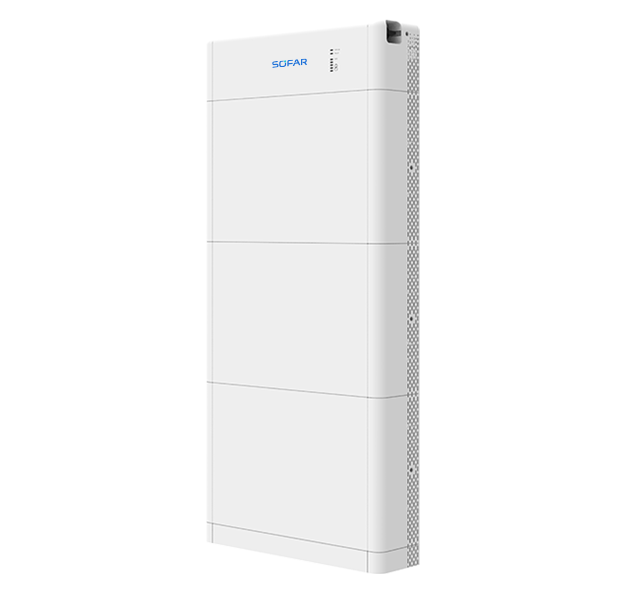
- SOFAR PowerAll combines a solar inverter and battery modules in one stack
- Unlock up to $7,000 in federal solar + battery rebates*
- Compare quotes from vetted installers, with SOFAR experience where available
SOFAR
What could a SOFAR battery save your home?
*For eligible combined solar and battery installations before January 2027. Battery-only rebates vary with usable capacity. Your installer confirms eligibility and amount.
✓ Up to 3 vetted installers
✓ Free to compare, no obligation
✓ Your chosen battery, your quote request
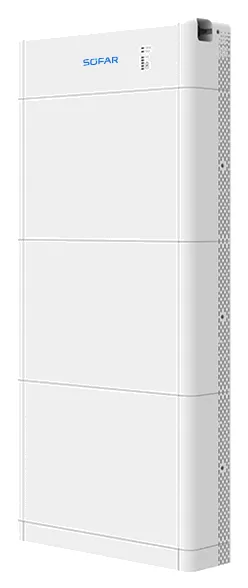
Meet SOFAR SOFAR battery stacks that grow in 5 kWh steps, made for SOFAR's own three-phase inverters.
- Start small, then add modules
Begin with two modules and add more as needs change, up to four per stack, about 20 kWh.
Ask how many modules your quoted stack can still take.
- Made for SOFAR three-phase hybrids
SOFAR designed BTS specially for its ME and HYD three-phase hybrid inverters, so battery and inverter work as a pair.
Suits three-phase homes. An existing inverter from another brand would be replaced.
- Sealed for outdoor installs
Both the battery modules and the distribution unit are rated IP65 against dust and water jets.
It charges between 0 °C and 50 °C, so a sheltered spot suits frosty areas.
- 10 years, 70% energy kept
SOFAR's Australian warranty covers each module for 10 years and promises it keeps 70% of its usable energy.
Cover lasts 10 years or to a per-module energy limit; ask for it. Ask your installer to confirm they're SOFAR-certified; the warranty requires it.
The company behind it
SOFAR is a Shenzhen inverter and battery maker, founded in 2013, with an Australian presence since 2016.
Founded 2013, Shenzhen
Founded in 2013 in Shenzhen, SOFAR began with inverters, then moved into energy storage.
48 GW of inverters
SOFAR says it has shipped over 48 GW of inverters, with systems in 100+ countries and regions.
In Australia since 2016
SOFAR has been present in Australia since 2016, with an office in NSW.
Want a SOFAR battery on your Geelong home?
Get my SOFAR quotesCompare up to 3 vetted installers. Free, no obligation.
A SOFAR in Geelong performs exactly as well as its configuration — and the configuration is decided by whoever installs it.
Why the installer matters more than the battery
The Clean Energy Regulator inspected 1,278 home battery installations under the Cheaper Home Batteries Program between July 2025 and April 2026 — more than 60% came back substandard and 1.2% unsafe. Solar Select checks installer approval and current eligibility before matching your Geelong enquiry. Manufacturer accreditation is a separate check; confirm the credentials relevant to your chosen battery.
What specifically goes wrong on a SOFAR install
- The two ranges are easy to conflate in a quote — “SOFAR battery” could mean an all-in-one or a component build, and those are different jobs
- All-in-one systems take over the inverter role, so a retrofit on healthy solar means paying to replace working equipment unless that is explicitly intended
- Module headroom is fixed at design time; a stack specified at its ceiling cannot grow
- Approved-list checks must name the exact variant, not the family
Request my SOFAR quotes in Geelong.
That's why SOFAR quotes in Geelong are only comparable when the scope matches. Here's what to hold constant.
Comparing SOFAR quotes in Geelong
We don't publish price bands, because installed prices move constantly and depend on your roof, switchboard and supply. What we can tell you is what to hold constant so three quotes are actually comparable — match these first, then compare after-rebate dollars per usable kWh.
- PowerAll or BTS — the all-in-one and the component route produce different installs and different upgrade paths
- Module count now versus the maximum the quoted stack accepts
- On BTS, which SOFAR hybrid inverter is included and what becomes of your existing one
- Whether backup is wired and which circuits it covers
- Confirmation the exact model appears on the Clean Energy Council approved battery list
A cheaper quote that skips backup hardware, assumes an inverter you don't have, or quietly changes the configuration isn't cheaper — it's a different job.
Want three SOFAR quotes you can actually compare? Your enquiry goes to up to 3 vetted installers in Geelong, all quoting the same scope.
Who installs SOFAR batteries in Geelong?
Solar Select is a matching platform for homeowners looking for SOFAR battery installation in Geelong. Submit your postcode and system requirements to request a match with up to 3 suitable installers, subject to current coverage, availability and brand suitability.
Enter your postcode and we check which vetted installers cover Geelong for SOFAR.
How are SOFAR installers matched in Geelong?
Matching considers approved installer accounts, active campaign geography, the requested system and current eligibility. Verified brand accreditations are prioritised when relevant. The actual match happens after you submit your postcode and enquiry; displayed companies are not a promise of who will receive it.
Compare recent independent reviews, business history, workmanship terms and the accreditation relevant to your chosen battery. Manufacturer accreditation and general installer approval are separate checks.
Battery rebates in Victoria
- Cheaper Home Batteries Program (federal) — roughly a quarter off the installed battery cost, upfront, paid at its full rate on the first tier of usable capacity and at a reduced rate above that. Applied at quote by the installer, not claimed back later.
- Federal-only in 2026 (VIC) — Victoria runs federal-only on battery rebates in 2026 — the Solar Homes rebate covers panels, not storage. The federal Cheaper Home Batteries discount still applies in full. Full VIC rebate breakdown
Still weighing a SOFAR up? The Geelong numbers and the deeper reading are below.
SOFAR battery installation in Geelong, VIC
Comparing SOFAR for a home in Geelong and the Bellarine? Use your property's postcode and existing solar details when requesting quotes. This page focuses on Geelong and the Bellarine, VIC.
- 77,403 small-scale solar installations across 33 postcodes assigned to the Geelong study area.
- 9.3 kW median of residential-plausible postcode average system sizes in 2025.
Clean Energy Regulator postcode data · as at 2026-06. Solar Select aggregation of CER data for postcodes containing mapped suburbs nearest to Geelong within 45 km. This study area is not an official city boundary; postcodes can cross its edges. These figures do not measure installer availability.
The Geelong numbers
Solar Select's Geelong study-area aggregation of Clean Energy Regulator data includes 77,403 small-scale systems across 33 postcodes — about 485 MW of capacity as at 2026-06. For a SOFAR retrofit in Geelong, check the existing inverter and switchboard before choosing the configuration. Ask whether the inverter stays, is replaced, or works alongside another one; installation counts do not answer that for your home.
In the typical Geelong and the Bellarine postcode, new systems averaged about 9.3 kW through 2025. That is the scale of array a SOFAR battery would be charged from here, so ask each installer to size storage against that generation rather than the headline capacity: the configuration that suits a 9.3 kW roof is not automatically the biggest one quoted.
Geelong's market stretches across the Bellarine to Ocean Grove and Drysdale and down the coast to Torquay — a spread of newer coastal estates and older suburbs with early-2010s systems now due for retrofit. That retrofit skew matters for SOFAR: many quotes here involve replacing a decade-old inverter, so make each installer state what happens to the existing hardware, not just what gets added.
Geelong swings from about 6.6 peak sun hours in Jan to 1.7 in Jun — roughly 3.9× more generation in the sunniest month than the dullest. On a 10 kW array that is around 56.1 kWh a day in Jan against 14.5 kWh in Jun. Size a SOFAR on the winter figure: SOFAR is 4.75–28.5 kWh across the residential range, so the real question at quote stage is what it can actually refill on a 14.5 kWh day, not what it holds on paper.
Show month-by-month generation
| Month | Peak sun hours | 10 kW array, kWh/day |
|---|---|---|
| Jan | 6.6 | 56.1 kWh |
| Feb | 5.9 | 50.2 kWh |
| Mar | 4.5 | 38.3 kWh |
| Apr | 3.1 | 26.4 kWh |
| May | 2.1 | 17.8 kWh |
| Jun | 1.7 | 14.5 kWh |
| Jul | 1.9 | 16.2 kWh |
| Aug | 2.7 | 23 kWh |
| Sep | 3.7 | 31.5 kWh |
| Oct | 4.8 | 40.8 kWh |
| Nov | 5.8 | 49.3 kWh |
| Dec | 6.4 | 54.4 kWh |
Monthly shape from Bureau of Meteorology climatology for Victoria, scaled to Geelong's annual average of 4.1 peak sun hours; 85% system derate.
Install counts and capacity: Clean Energy Regulator postcode data for small-scale installations (CC BY).
What owning a SOFAR is actually like
Spec sheets stop being interesting about a week after install. These are the things owners notice in year one.
- The all-in-one PowerAll keeps day-two life simple: one stack on the wall, one app, one manufacturer answering for the lot.
- Both ranges grow by adding modules, so the useful question at quote time is the ceiling of the configuration rather than only the starting capacity.
- Monitoring runs through SOFAR’s own platform — competent, and not the reason to pick the brand either way.
- The Australian support presence has grown alongside the brand rather than preceding it, so installer familiarity is the variable worth probing.
Four questions to ask any SOFAR quote
- Is this PowerAll or BTS, and why that one for my home?
- How many modules now, and what is the maximum this configuration accepts?
- What happens to my existing inverter under this design?
- How many SOFAR systems have you installed, and who supports mine in year four?
Is SOFAR right for your home? Fit and warranty checks
A good fit in Geelong if…
- New installs where an all-in-one stack removes a set of decisions
- Households starting small and intending to add modules as budget allows
- Buyers comparing on cost per usable kilowatt-hour rather than on brand history
- Homes wanting a single manufacturer across inverter and battery without paying top-tier prices
Consider the limitations
- You want a long Australian field record above all else
- You are keeping an existing inverter — an AC-coupled system fits that better than either SOFAR shape
- You need capacity well beyond 28 kWh in a single system
- Your virtual-power-plant program does not list the specific model
Grid connection in Geelong
- United Energy pre-approval — battery systems usually need explicit pre-approval before install. A good installer lodges the application and flags any constraint in the quote — not after.
- Typical export cap ~5 kW — single-phase residential export in Geelong is typically around 5 kW on the United Energy network. A battery softens the cap — solar that can't export charges the SOFAR instead of being curtailed.
- 5–15 business days — typical connection-approval turnaround once the installer lodges with United Energy.
Ready for SOFAR quotes in Geelong?
Request quotes from up to 3 vetted installers for a SOFAR in Geelong — postcode in, quotes out.
Areas served around Geelong
Matching covers Geelong and the Bellarine, not just the centre — enquiries route on your postcode. Local solar detail for each suburb:
- Bareena (3220) · 1.6 km from Geelong — 1,891 systems, 16,075 kW installed
- South Geelong (3220) · 2.0 km from Geelong
- Drumcondra (3215) · 2.1 km from Geelong — 2,444 systems, 16,014 kW installed
- East Geelong (3219) · 2.1 km from Geelong — 2,586 systems, 14,008 kW installed
- Geelong West (3218) · 2.1 km from Geelong — 1,635 systems, 10,279 kW installed
- Newtown (3220) · 2.5 km from Geelong
- Thomson (3219) · 2.8 km from Geelong
- Manifold Heights (3218) · 3.0 km from Geelong
- Rippleside (3215) · 3.0 km from Geelong
- Belmont (3216) · 3.1 km from Geelong — 7,861 systems, 44,491 kW installed
- Herne Hill (3218) · 3.3 km from Geelong
- Newcomb (3219) · 3.7 km from Geelong
- Breakwater (3219) · 3.8 km from Geelong
- Whittington (3219) · 4.2 km from Geelong
- Highton (3216) · 4.5 km from Geelong
- Geelong North (3215) · 4.6 km from Geelong
- North Geelong (3215) · 4.6 km from Geelong
- Bell Park (3215) · 4.9 km from Geelong
- Hamlyn Heights (3215) · 4.9 km from Geelong
- Freshwater Creek (3216) · 5.0 km from Geelong
- Mount Duneed (3216) · 5.0 km from Geelong
- Grovedale (3216) · 5.7 km from Geelong
- Grovedale East (3216) · 5.7 km from Geelong
- North Shore (3214) · 5.7 km from Geelong — 2,974 systems, 15,355 kW installed
- St Albans Park (3219) · 5.8 km from Geelong
- Marshall (3216) · 5.8 km from Geelong
- Wandana Heights (3216) · 6.2 km from Geelong
- Bell Post Hill (3215) · 6.3 km from Geelong
- Fyansford (3218) · 6.4 km from Geelong
- Fyansford (3221) · 6.4 km from Geelong — 507 systems, 2,194 kW installed
- Norlane (3214) · 6.5 km from Geelong
- Moolap (3221) · 7.3 km from Geelong
- Moolap (3224) · 7.3 km from Geelong — 2,403 systems, 14,341 kW installed
- Charlemont (3217) · 7.6 km from Geelong — 3,811 systems, 24,365 kW installed
- Corio (3214) · 8.4 km from Geelong
- Ceres (3221) · 8.6 km from Geelong
- Batesford (3213) · 9.5 km from Geelong — 754 systems, 6,299 kW installed
- Batesford (3221) · 9.5 km from Geelong
- Lovely Banks (3213) · 9.6 km from Geelong
- Armstrong Creek (3217) · 9.8 km from Geelong
- Barrabool (3221) · 10.0 km from Geelong
- Stonehaven (3218) · 10.0 km from Geelong
- Stonehaven (3221) · 10.0 km from Geelong
- Waurn Ponds (3216) · 10.3 km from Geelong
- Leopold (3224) · 10.5 km from Geelong
- Moorabool (3221) · 10.6 km from Geelong
- Queenscliff (3225) · 26.8 km from Geelong — 1,490 systems, 9,163 kW installed
- St Leonards (3223) · 31.1 km from Geelong — 2,403 systems, 14,175 kW installed
Other locations for SOFAR
SOFAR installers across Victoria, town by town
Also comparing Melbourne? SOFAR battery installers in Melbourne
- SOFAR battery installation Ballarat — 78 km
- SOFAR battery installers in Warragul — 137 km
- SOFAR battery installers in Bendigo — 154 km
- SOFAR installers Traralgon — 189 km
- SOFAR battery installers in Shepparton — 217 km
- SOFAR installers Mildura — 482 km
SOFAR questions, Geelong answers
What is the difference between PowerAll and BTS in Geelong?
PowerAll puts the hybrid inverter and the battery modules in one wall-mounted stack, so the system is a single product with a single manufacturer behind it. BTS is the battery half only, designed to pair with a separate SOFAR hybrid inverter. For a new install PowerAll is usually the simpler answer; BTS makes sense where the electrical design or the property calls for the inverter to be a separate unit. Either way, the quote should name which one it is.
Can I start small and add capacity later for a Geelong home?
That is one of the range’s genuine strengths — both shapes build from modules, so a smaller system now can grow. The condition is headroom: the inverter rating and the stack design set a ceiling at install time, and reaching that ceiling means new hardware rather than another module. If you expect an EV or a bigger load in a few years, raise it before the design is signed off.
Is SOFAR eligible for the federal battery rebate in Geelong, VIC?
SOFAR models do appear on the Clean Energy Council approved battery list, with eligibility assessed model-by-model. Because the brand sells two quite different ranges with several variants, ask the installer to point at the exact quoted model on the current list rather than accepting that the brand is approved in general.
How does SOFAR compare with the better-known brands if I live in Geelong?
On hardware terms it is competitive — the same lithium iron phosphate chemistry as most of the market, modular sizing and a full-featured all-in-one. What the established names have is time: more Australian installs, more installers who have serviced them, more accumulated field data. If price per usable kilowatt-hour is your priority, SOFAR argues well; if a long local record is, it does not yet.
Does a SOFAR system provide blackout backup for Geelong households?
Backup-capable configurations hold up the circuits wired to the backup side, and how long they last is a function of the capacity you installed and the load you put on it. As with every brand, the scope is a design decision rather than a product feature — which circuits, whether changeover is automatic, and what happens as the modules drain. Have it written into the quote.
Who supports a SOFAR system across Geelong and the Bellarine?
The brand has an Australian distribution and support presence that grew as its volumes did, and the front line in practice is your installer. Because the local installer base is younger than for the long-established brands, the who-fits-it question carries more weight here: an installer with several SOFAR commissionings behind them and a habit of supporting their own work closes most of the gap.
Who installs SOFAR batteries in Geelong?
Solar Select is a matching platform for homeowners seeking SOFAR battery installation in Geelong and the Bellarine. Submit your postcode and requirements to request a match with up to 3 approved installers, subject to current coverage and eligibility. Manufacturer accreditation is verified separately; ask for the credentials relevant to your chosen battery. Free for homeowners.
How do I compare SOFAR quotes in Geelong?
Installed prices move constantly and vary by site, so compare on after-rebate dollars per usable kWh rather than headline totals — and only once the scope matches. For this brand the variables that matter are: powerAll or BTS — the all-in-one and the component route produce different installs and different upgrade paths; module count now versus the maximum the quoted stack accepts; on BTS, which SOFAR hybrid inverter is included and what becomes of your existing one. Get all three quotes on the same scope, then compare the installers harder than the numbers.
What battery rebates apply in Geelong?
The federal Cheaper Home Batteries Program applies nationwide — roughly a quarter off installed cost, upfront, paid at its full rate on the first tier of usable capacity and tapering above that. Because SOFAR is 4.75–28.5 kWh across the residential range, how much you collect depends on how the configuration lines up with those tiers, so ask the installer to show the tier split rather than one flat "government incentive" line. VIC runs federal-only on batteries in 2026.
What does United Energy need to approve for a SOFAR in Geelong?
The connection application covers the whole system, so what gets scrutinised depends on the configuration: the two ranges are easy to conflate in a quote — “SOFAR battery” could mean an all-in-one or a component build, and those are different jobs. Export in Geelong is typically around 5 kW single-phase, and approval usually runs 5–15 business days once lodged.
Are your Geelong installers SOFAR-accredited?
Accreditation is one of the things we look at, and where a SOFAR-accredited installer covers Geelong and the Bellarine you'll see that in the match. It is deliberately not the only filter — a current accreditation badge says the installer has done the brand's training, not that they wire a good switchboard or come back in year three. Every installer serving Geelong is vetted on the same bar set out above before they join. Ask the ones you're matched with what SOFAR work they've actually done, and how much of it, before you sign.
Is a SOFAR battery worth it in Geelong?
Geelong averages 4.1 peak sun hours, so a 10 kW rooftop array generates roughly 34.9 kWh on an average day — enough to cycle a SOFAR on most days of the year. With Victoria feed-in tariffs typically paying 4.9–12c/kWh while grid power costs 30–35c, every stored kWh you use yourself is worth several times what exporting it earns.
How many solar installations are recorded across Geelong and the Bellarine?
Solar Select's Geelong study-area aggregation of Clean Energy Regulator data includes 77,403 small-scale systems across 33 postcodes — about 485 MW as at 2026-06. These are system counts, not a count of unique homes or SOFAR installers. For a retrofit, check your existing inverter, switchboard and actual generation before choosing storage; the study-area total cannot establish those details.
Answered what you needed?
Get your up to 3 vetted SOFAR quotes for Geelong — free, no obligation.
Local data reviewed by the Solar Select team. Installer network information is shown separately above when verified records are available. Geelong data sourced from BOM (sun hours), CER (rebates) and AER (United Energy network — export figures are indicative; your distributor sets the limit for your address). SOFAR product and pricing figures are sourced below. Last verified 2026-08-16. Page updated 6 October 2026.