Victoria
SolarEdge battery installers in Victoria.
Get matched with top solar companies in Victoria — SolarEdge-experienced prioritised
- Free $2,000+ inverter upgrade for existing SolarEdge homeowners who add a SolarEdge battery
- Unlock up to $7,000 in federal solar + battery rebates*
- SolarEdge-experienced installers prioritised, and your installer confirms TradeUp eligibility
SolarEdge
What could a SolarEdge battery save your home?
*For eligible combined solar and battery installations before January 2027. Battery-only rebates vary with usable capacity. Your installer confirms eligibility and amount.
✓ Up to 3 vetted installers
✓ Free to compare, no obligation
✓ Your chosen battery, your quote request
 TradeUp program
Already have SolarEdge in Victoria? Get a free $2,000 inverter upgrade
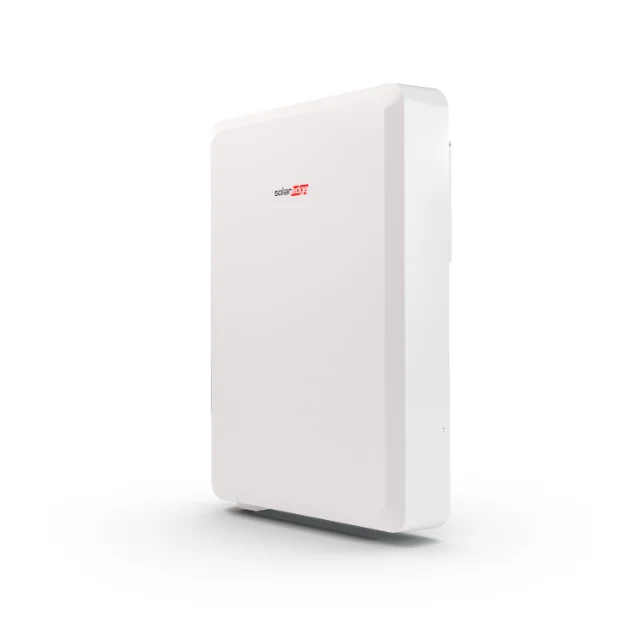
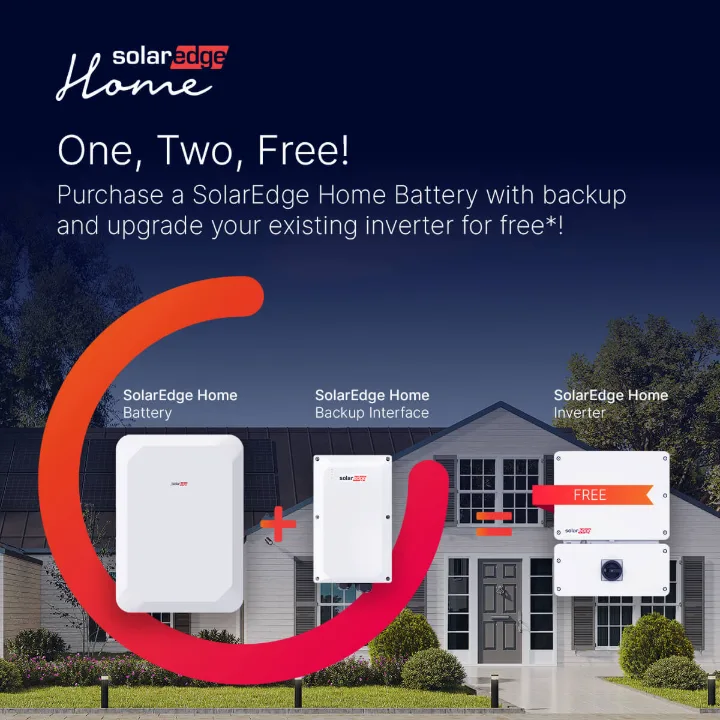
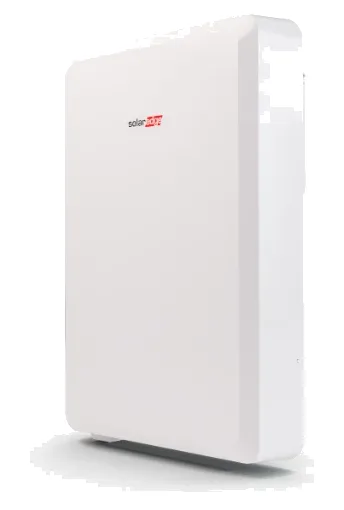
Existing SolarEdge homeowners can receive a free 10kW SolarEdge Home Hub inverter, single or three-phase, when they add a SolarEdge Home Battery and Backup Interface under SolarEdge’s TradeUp program. The Home Hub retails online for over $2,000.
- Free 10kW Home Hub inverter, single-phase or three-phase
- New 12-year inverter warranty
- Three-phase homes need at least three SolarEdge three-phase battery modules
- SolarEdge’s program ends 31 December 2026
The inverter is free; the battery, Backup Interface and installation are quoted by your installer. SolarEdge-experienced installers are prioritised, and your installer confirms whether your inverter qualifies. TradeUp is run by SolarEdge. Full terms: solaredge.com/aus/trade-up Read SolarEdge’s terms
Meet SolarEdge Each panel works on its own, and one app runs panels, battery and car charger.
- Every panel pulls its weight
A power optimiser behind each panel lets it work on its own, so one shaded or dirty panel doesn't drag the others down.
- Spot a lazy panel fast
Panel-level monitoring shows how each panel is doing, so a shaded or underperforming one stands out.
- Solar, battery and car, one app
Solar, battery, EV charging and smart devices are all watched and managed from a single SolarEdge app.
- 10-year cover, rebate-listed batteries
SolarEdge's Home Battery carries a 10-year warranty, and both its three-phase and single-phase batteries are on the approved list.
SolarEdge says long spells at extreme temperatures may void the battery warranty.
Built for roofs with shade, dirt or mismatched panels.
The company behind it
An Israeli company founded in 2006, known for inverters that use a power optimiser on every panel.
Founded 2006
Founded in 2006, SolarEdge began making inverters with panel optimisers in 2010.
Shipped at scale
SolarEdge says it had shipped 6.2 million inverters and about 143 million optimisers by early 2026.
Australian office
SolarEdge's Australian office is in Victoria, with field technicians around the country.
Want a SolarEdge battery in Victoria?
Get my SolarEdge quotesCompare up to 3 vetted installers. Free, no obligation.
Why SolarEdge is different
SolarEdge starts on the roof, not on the wall. Every panel in a SolarEdge system carries its own power optimiser, so each one is tracked and harvested individually instead of the whole string sagging to its weakest member. That is the mechanism the brand is built around, and it explains both halves of its reputation: on shaded, multi-orientation or otherwise awkward roofs it recovers output that plain string systems lose, while on a simple unshaded roof much of that advantage — and the extra cost that pays for it — evaporates.
The storage side is DC-coupled and belongs to the same closed system: SolarEdge batteries pair only with a matching SolarEdge hybrid inverter. There is no casual retrofit path here — adding one of these batteries to another brand’s inverter means replacing that inverter, which usually breaks the economics before the conversation starts. The clean cases are a compatible SolarEdge hybrid already on the wall, or a new system designed as SolarEdge end to end.
Then comes the fork most buyers never hear about until it bites: there are two SolarEdge battery families, and they are not interchangeable. A high-voltage unit serves the single-phase path, with up to three per inverter; stackable low-voltage LFP modules serve the three-phase path with the Home Hub Universal inverter. Hardware bought for one family cannot move to the other, which makes the family choice a permanent decision that has to match your supply at quote stage.
The remaining trade-offs continue the pattern of being knowable in advance. Backup runs through a separate Backup Interface with a switchover that is deliberate rather than instant, so sensitive equipment reboots during an outage. Commissioning has been a reported friction point in Australia. And the company is an engineering-led brand working through a financial turnaround rather than a volume leader — a fact to weigh calmly alongside a genuinely strong architecture, not a reason to close the page.
The SolarEdge system, piece by piece
The optimisers are where the money is won or lost. One sits behind each panel, and the count and string design around them decide whether the shading recovery the brand sells actually materialises on your roof. They are brand-agnostic on the panel side, too — so the panel choice stays open even though the electronics do not.
The battery family is the quote’s most consequential line. Single-phase homes take the high-voltage unit, up to three per inverter; three-phase homes take stackable low-voltage LFP modules with the Home Hub Universal inverter. The families do not mix and do not transfer, so the quote must name the family and the family must match your supply — verified against your switchboard, not assumed.
The hybrid inverter is the system’s heart and its gatekeeper: without a compatible SolarEdge hybrid there is no battery, and an older non-hybrid SolarEdge unit does not count. Fitting the right hybrid inverter with new solar now and adding the battery later is one of the brand’s better plays — but only if the inverter choice anticipated the battery from day one.
The Backup Interface is a separate required unit if blackout protection matters to you, and it comes with a behaviour to plan around: switchover is deliberate rather than seamless, so computers and other sensitive loads will drop and restart. The rest of the ecosystem — EV charging, hot-water control, load switching — shares the one app, and per-module monitoring rounds it out with visibility that turns vague underperformance into a named panel.
Put SolarEdge to the test on your own numbers
Reading about it only goes so far — real quotes are where a SolarEdge decision gets made. Get 2-3 quotes from vetted installers in Victoria. Free for homeowners.
What SolarEdge does best
Difficult roofs. Shade crossing the array through the day, panels facing several directions, dormers and obstructions — this is the terrain the optimiser architecture was designed for, and where per-panel harvesting recovers real output rather than theoretical percentages. The more complicated your roof, the stronger this brand’s claim on your shortlist.
Roofs whose future is uncertain. A string system is designed around the shade you have today; per-panel optimisation keeps clear panels earning whatever happens to their neighbours — the growing tree, the block next door with development potential. Buying resilience against a decade of change is a quieter argument than a launch-day yield claim, and arguably the better one.
The all-electric home. EV charging, hot water and load control run from the same app as the solar and storage, which starts to matter when those loads are most of the bill. One schedule moving hot water into the solar window while the battery holds its charge for the evening is the ecosystem doing precisely what it was bought for.
Diagnosis without a service call. Per-module monitoring means the system tells you which panel is down rather than that something is — a distinction that saves site visits and settles arguments with the weather. For owners who actually look at their systems, it is the difference between watching a number and understanding one.
Who a SolarEdge system suits — and who it does not
Start with your roof, because this brand’s fit is written on it. If your panels will face multiple directions, or shade moves across them at some point in the day, per-panel optimisation is working for you and the extra cost has a job to do. If your roof is one clean unshaded plane, accept that you would be paying for capability with little to act on — a simpler system will serve that roof for less.
The retrofit rule is just as clean: a compatible SolarEdge hybrid inverter already on the wall makes the battery a natural next step, and anything else makes it an inverter replacement first. Three-phase homes have a genuine path here — the stackable low-voltage family — provided the quote states explicitly that this is what it is quoting.
Households with hard backup requirements should be careful. The deliberate switchover means an outage is felt — briefly, but felt — before backup carries on, so anyone who needs seamless continuity for medical or work-critical equipment is looking at the wrong product. Buyers who want the simplest possible purchase should also note that the two-family split, the inverter dependency and the separate Backup Interface make this one of the easier systems to mis-specify.
The company question deserves adult treatment: an engineering-led brand in financial turnaround is a fair consideration for a purchase meant to last a decade, set against a large installed base and well-established technology. Reasonable buyers weigh it differently; unreasonable quotes pretend it is not there.
On money, the frame is value per usable kilowatt-hour after the federal rebate — with one adjustment specific to this brand: count the optimisers and any inverter change as part of the system’s true cost, and weigh the yield the architecture will actually recover on your particular roof, because that recovery is the product. The federal program’s full-rate capacity tier anchors the sizing conversation; where your roof sits on the complexity spectrum anchors everything else.
SolarEdge in Victoria
Victoria is federal-only for batteries in 2026, so the Cheaper Home Batteries discount does the lifting, and the two-family split decides how sizing meets it: single-phase homes take fixed high-voltage units while the three-phase path stacks low-voltage modules in steps. The stacked path can be trimmed toward the federal program’s full-rate tier; the single-phase path moves in bigger jumps — either way, make the installer show where the quoted capacity sits against that tier.
Feed-in tariffs in Victoria typically pay 4.9–12c/kWh while grid power costs 30–35c — so a stored kilowatt-hour is worth what you avoid buying, not what exporting earns, and the wider that gap sits on your own plan, the harder a battery works for you. Victoria’s minimum feed-in rate pays most in the evening window, and a household running the wider SolarEdge ecosystem — battery, hot water and load control on one schedule — has more levers than most for aligning its loads with the solar and saving the stored energy for the evening.
Put SolarEdge to the test on your own numbers
Reading about it only goes so far — real quotes are where a SolarEdge decision gets made. Get 2-3 quotes from vetted installers in Victoria. Free for homeowners.
The installer decides the SolarEdge outcome
Every SolarEdge risk on this page funnels through the installer. The family choice — single-phase high-voltage or three-phase low-voltage — is permanent, so the first thing a good quote does is state the family and tie it to your verified supply. The second is the string and optimiser layout, because the shading recovery you are paying for is either designed in on paper or lost on the roof.
Backup demands the same explicitness: the Backup Interface is either in the price or it is not, and the switchover behaviour should be described to you before you sign rather than discovered by your desktop computer during the first outage. If backup matters, the quoted scope should say which circuits carry through and what the changeover will actually feel like.
Commissioning is this brand’s reported weak point in Australia, which turns process questions into quality signals: agree the commissioning timeline in writing, get a named escalation contact, and ask how many SolarEdge systems the installer has commissioned and what their handover covers. A good handover ends with per-panel monitoring live and readable, the tariff configured, backup behaviour demonstrated, and every ecosystem device — EV charger, hot water — actually enrolled in the app rather than promised to it.
This is where Solar Select fits. Your enquiry goes to up to 3 approved installers, subject to current coverage, eligibility and brand suitability — a filter that counts for unusually much with a brand where specification errors are permanent. We sell no equipment and take no cut of your system; the matching service is free for homeowners, and its small scale is deliberate, because installers who expect a fair contest put their effort into the design.
Is SolarEdge right for your home? Fit and warranty checks
A good fit if…
- Shaded, multi-orientation or otherwise complex roofs, where per-module optimisation genuinely pays
- Homes already running a compatible SolarEdge hybrid inverter — this is the clean retrofit case
- Three-phase homes, via the low-voltage LFP path with the Home Hub Universal inverter
- Households wanting per-panel monitoring plus EV charging and hot-water control in one app
Consider the limitations
- Your inverter is not SolarEdge — a battery retrofit means replacing it, which usually breaks the economics
- You need seamless backup; the deliberate switchover delay will drop sensitive equipment
- You have a simple unshaded roof, where the optimiser advantage largely disappears
- You want the simplest possible product decision — the two-family split is a real trap
Why the installer matters more than the battery
More than 60% of inspected home battery installs were substandard. The Clean Energy Regulator inspected 1,278 home battery installations under the Cheaper Home Batteries Program between July 2025 and April 2026. More than 60% came back substandard and 1.2% unsafe — and the hardware was rarely the problem. The install was.
That is the part a brand cannot fix for you. Solar Select checks installer approval and current campaign eligibility for your Victoria enquiry. Confirm business history and current independent reviews before choosing an installer. Your enquiry goes to up to 3 of them, and no one else sees your details.
Battery rebates in Victoria
Cheaper Home Batteries Program (federal) — roughly a quarter off the installed battery cost, applied upfront at the quote by the installer rather than claimed back later.
Federal-only in Victoria for 2026 — Victoria runs federal-only on battery rebates in 2026 — the Solar Homes rebate covers panels, not storage. The federal Cheaper Home Batteries discount still applies in full.
Ready for SolarEdge quotes in Victoria?
Postcode in — up to 3 vetted installers out. Federal battery rebate applied at quote. Free, no obligation, maximum 3 installers ever.
SolarEdge installers in Melbourne
- SolarEdge battery installation Melbourne — serving Greater Melbourne
Regional Victoria
- SolarEdge battery installation Geelong — serving Geelong and the Bellarine
- SolarEdge battery installers in Ballarat — serving Ballarat and surrounds
- SolarEdge installers Bendigo — serving Bendigo and surrounds
- SolarEdge installers Shepparton — serving Shepparton and the Goulburn Valley
- SolarEdge battery installers in Mildura — serving Mildura and Sunraysia
- SolarEdge battery installation Warragul — serving Warragul–Drouin and West Gippsland
- SolarEdge battery installers in Traralgon — serving Traralgon and the Latrobe Valley
This page also covers the Victoria towns that no longer have a page of their own. Across Gippsland, the Wimmera and Mallee and the Central Highlands, enquiries from Bairnsdale, Cowes, Inverloch, Korumburra, Lakes Entrance, Leongatha, Maffra, Moe, Morwell, Sale, Wonthaggi, Ararat, Horsham, Kerang, Stawell, Swan Hill, Daylesford and Maryborough route through this page on postcode. In the Hume and High Country and the South West, the same applies to Alexandra, Beechworth, Benalla, Bright, Kilmore, Mansfield, Myrtleford, Seymour, Wangaratta, Wodonga, Camperdown, Colac, Hamilton, Portland and Warrnambool. Further out, Bacchus Marsh, Emerald, Gisborne, Healesville, Melton, Pakenham, Sunbury, Wallan, Drysdale, Lara, Ocean Grove and Torquay in outer Melbourne and the Bellarine and Surf Coast are matched the same way. Cobram, Echuca, Kyabram, Numurkah, Rochester, Yarrawonga, Castlemaine, Kyneton and Woodend in the Goulburn Valley and Murray and the Macedon Ranges and Goldfields sit in the same Victoria pool.
Page updated 6 October 2026