Queensland
Soltaro battery installers in Queensland.
Get matched with top solar companies in Queensland
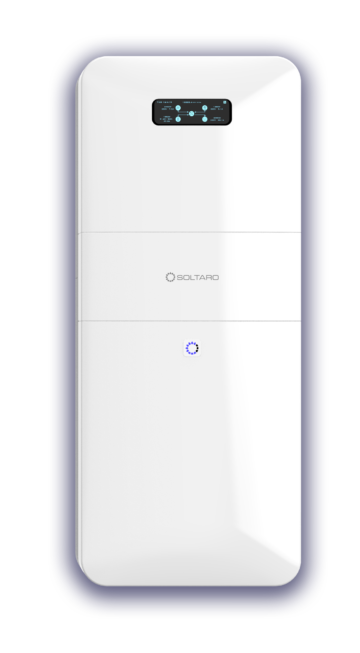
- Soltaro AIO2 combines the battery and inverter in one compact enclosure
- Unlock up to $7,000 in federal solar + battery rebates*
- Compare quotes from vetted installers, with Soltaro experience where available
Soltaro
What could a Soltaro battery save your home?
*For eligible combined solar and battery installations before January 2027. Battery-only rebates vary with usable capacity. Your installer confirms eligibility and amount.
✓ Up to 3 vetted installers
✓ Free to compare, no obligation
✓ Your chosen battery, your quote request
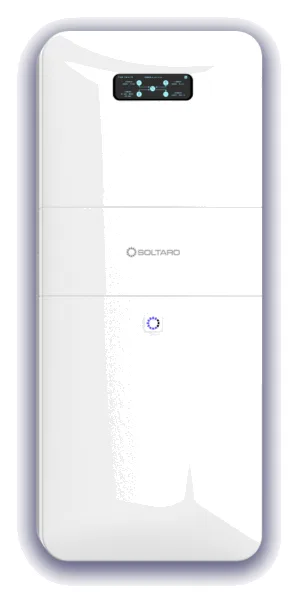
Meet Soltaro An Australian company's all-in-one battery that runs on the grid, as backup, or fully off-grid.
- Designed and engineered here
Soltaro says it designs and engineers the AIO2 in Australia, and its Australian company holds both AIO2 approved-list entries.
- Charges from solar you already have
The AIO2 can connect alongside an existing solar system and store its spare power, as well as charging from new panels.
- Grid, backup or off-grid
Use it on the grid, as backup, or off-grid; black-start technology lets it recharge from the sun without grid power.
Off-grid systems get 5 years of warranty, not 10.
- Up to 10 years of cover
Five years or 5,000 cycles as standard, plus five more free when bought through a Soltaro retailer and used on-grid.
Ask your installer to confirm they're Soltaro-licensed; the warranty requires it.
The company behind it
Soltaro is an Australian-owned battery company based in Tullamarine, Victoria, with its own factory in China.
Australian owned
SolarQuotes describes Soltaro as an Australian owned and operated battery storage company.
Own factory since 2016
Soltaro opened its own battery manufacturing and assembly plant in Wuxi, China, in 2016.
Victorian head office
Soltaro's head office is at 8 Mohr Street, Tullamarine, Victoria, with a local 1300 phone number.
Want a Soltaro battery in Queensland?
Get my Soltaro quotesCompare up to 3 vetted installers. Free, no obligation.
Why Soltaro is different
Soltaro is an Australian company, and on this site that is genuinely unusual. Its warranty document names an Australian entity with a registered office in Melbourne as the party providing the cover, and the approved-product register lists that same Australian entity as the certificate holder. The products are designed and engineered here and manufactured at the company’s own facility in China. So the business you would be dealing with if something went wrong is local, which is a different proposition from an offshore manufacturer working through a distributor.
The product is an all-in-one: battery, inverter and management system in a single enclosure, in a smaller and a larger size, each able to take two further modules provided they match the original. The most useful technical feature is flexibility about how it connects — Soltaro’s own Australian page describes the system as able to be AC or DC coupled. That matters on a retrofit, because AC coupling lets a perfectly good existing solar inverter stay where it is rather than being replaced to accommodate a battery.
Then there is the part that cannot be glossed over. The owner reviews for this brand are not mediocre, they are polarised. Most owners rate it highly and describe responsive local support and a system that does what it should. A persistent minority describe faults that took months to resolve, including one owner who reported waiting the better part of a year. SolarQuotes weighs that split and its reviewer declines to recommend the brand.
Both halves of that picture are real, and neither cancels the other. Australian ownership is worth something concrete when a warranty claim has to go somewhere. A service record with a visible tail of long delays is worth something too, in the other direction. This page’s job is to make sure you have both before you decide, rather than only the one the marketing leads with.
The Soltaro system, piece by piece
The unit combines battery, inverter and management in one enclosure, which is why the size you choose first matters more than usual. Further modules have to match the size of the original, so the initial decision sets the whole ladder. Choosing the smaller unit to save money at the outset permanently caps what the system can grow into, and there is no way to correct that later short of replacing it.
The coupling choice is a real design decision rather than a technicality. Configured DC coupled, the system integrates with the solar and behaves like a conventional hybrid install. Configured AC coupled, it sits alongside an existing solar inverter that stays in service. On a retrofit that difference can be the difference between a straightforward addition and an unnecessary inverter replacement, so the quote should state which one it is and why.
The inverter inside the unit carries its own warranty period, and it is shorter than the battery’s. That is normal across the industry and easy to miss when a single enclosure makes the system feel like one product. Two components, two terms, one box.
The warranty runs in two halves. A base period covers the battery, and Soltaro adds a free extension of the same length again — but only where the product came through its own retail channel, was installed by an installer it has licensed, and is not being used off grid. Meeting all three costs nothing. Missing one halves the cover, and nothing about the finished installation will reveal which position you are in.
Two further clauses shape what a claim actually gets you. Cover is parts only: unless Soltaro specifically agrees otherwise, defective parts are replaced and the original unit is returned rather than swapped for a new one. And where a repair or replacement does happen, the continuing cover excludes the labour of removing the unit and refitting it. That labour is a real cost, and it sits with the owner.
Put Soltaro to the test on your own numbers
Reading about it only goes so far — real quotes are where a Soltaro decision gets made. Get 2-3 quotes from vetted installers in Queensland. Free for homeowners.
What Soltaro does best
Being an Australian counterparty. When a battery develops a fault in year six, the practical question is who you call and whether they are obliged to help. An Australian company with an Australian registered office, providing a warranty under Australian law, is a materially better answer to that question than a chain of distributors leading offshore — provided the company answers, which is exactly what the reviews divide over.
Fitting retrofits gracefully. The ability to configure the system AC coupled means a household with good, recent solar does not have to discard a working inverter to add storage. Plenty of all-in-one products force that replacement, and it is an expensive and avoidable part of many battery quotes.
Designing for local conditions. The company designs and engineers the product in Australia for Australian conditions and rules, rather than adapting a product built for a European or North American market. That is no assurance on its own, but it is the right starting point and it shows in a range that is shaped around how Australian houses actually buy storage.
Keeping the install simple. One enclosure holding battery, inverter and management means fewer boxes on the wall, fewer interconnections to get wrong, and a tidier result. Several of the positive reviews mention exactly that: a clean installation that has behaved itself since.
Who a Soltaro system suits — and who it does not
It suits buyers for whom dealing with an Australian company is a real decision criterion rather than a slogan. That preference is legitimate and this brand is one of the few that genuinely satisfies it.
It suits retrofits with good existing solar, because AC coupling keeps that investment in place instead of writing it off.
It suits households who will do the paperwork properly: confirm the retailer is inside Soltaro’s channel, confirm the installer is licensed by Soltaro, and confirm the system is connected to the company’s portal before the installer leaves. Those three steps are free and they are what stands between the advertised warranty and half of it.
It does not suit a buyer who cannot carry the service risk. A minority of owners have reported repairs dragging on for months, and if a long outage would be genuinely disruptive for your household, that tail matters more than the majority experience does.
It does not suit an off-grid property, which is excluded from the free half of the warranty term and subject to a minimum storage requirement. And it does not suit someone who wants whole-unit replacement rather than parts-only cover with the removal and refitting labour left on their side of the line. Read the record’s warranty line and then read the fine print behind it, because on this brand the gap between the two is where the decision actually sits.
Soltaro in Queensland
Queensland adds nothing at state level in 2026, so the federal discount carries the case, and the export picture splits between Ergon’s regulated regional tariff and south-east retailer rates. Queensland households are also the most likely in the country to have recent solar already on the roof, which makes the AC-coupled option unusually valuable here: adding storage without replacing a good inverter is a very Queensland-shaped problem, and this brand answers it directly.
Feed-in tariffs in Queensland typically pay 4–13c/kWh while grid power costs 30–35c — so a stored kilowatt-hour is worth what you avoid buying, not what exporting earns, and the wider that gap sits on your own plan, the harder a battery works for you. On the Ergon side export income is real and a battery is a smaller step; in the south-east the gap is wide enough that self-consumption carries it alone.
Put Soltaro to the test on your own numbers
Reading about it only goes so far — real quotes are where a Soltaro decision gets made. Get 2-3 quotes from vetted installers in Queensland. Free for homeowners.
The installer decides the Soltaro outcome
This brand puts more of the warranty in the installer’s hands than almost any other on the site, and it does so explicitly. The warranty requires installation by a company Soltaro has licensed, and states that damage to a product installed by anyone else is deemed to have been caused by incorrect installation unless the owner can prove otherwise. That reverses the usual burden of proof onto the homeowner, which is a serious thing to inherit by accident.
The same licensing requirement gates the free second half of the term, alongside the retailer being inside Soltaro’s channel. So an installer offering a keener price on a unit sourced elsewhere may be quietly selling you half the warranty you think you are buying. Asking to see the licence, and asking where the hardware comes from, settles both questions in one conversation.
The coupling decision is the installer’s to make and yours to understand. On a retrofit, an installer who defaults to DC coupling without discussing it may be writing off a good existing inverter that AC coupling would have kept. That is a large avoidable cost, and it should appear as an explicit choice in the quote rather than an assumption in the design.
The portal connection is the step most likely to be skipped and the one with the sharpest consequence. Soltaro requires the system to be connected and reviewed remotely by its technical team before a warranty claim can proceed at all. An unconnected system is not a slightly worse position; it is a system with no route to a claim until someone fixes it.
This is where Solar Select earns its place. We put your enquiry in front of up to 3 approved installers, subject to current coverage, eligibility and brand suitability — and comparing them is free for homeowners. On a brand where the warranty depends on who installs it, where they bought it and whether they connected it, comparing installers is not a nicety. It is the purchase.
Is Soltaro right for your home? Fit and warranty checks
A good fit if…
- Buyers who place real weight on dealing with an Australian company and an Australian warranty counterparty
- Retrofits where keeping the existing solar inverter matters, since the system can be AC coupled
- Households that want battery, inverter and management in one enclosure rather than several boxes
- Owners who will confirm the retailer, the installer’s licensing and the portal connection before signing
Consider the limitations
- A minority of owners reporting long warranty delays is a risk you do not want to carry
- You are going off-grid, which is excluded from the free half of the warranty term
- You want whole-unit replacement rather than parts-only cover
- You want a large body of consistently positive Australian reviews rather than a polarised one
Soltaro specifications and source documents
- Listed models are on the Clean Energy Council approved battery list. Source
- Soltaro requires a manufacturer-certified installer for the warranty to hold. Source
- Both AIO2 battery models are on the Clean Energy Council approved battery list, the hardware condition of the federal Cheaper Home Batteries Program, which covers systems from 5 kWh to 100 kWh of usable capacity. The smaller of the two sits below that floor on its own, so a qualifying Soltaro system starts at the larger unit or at more than one module. Source
Why the installer matters more than the battery
More than 60% of inspected home battery installs were substandard. The Clean Energy Regulator inspected 1,278 home battery installations under the Cheaper Home Batteries Program between July 2025 and April 2026. More than 60% came back substandard and 1.2% unsafe — and the hardware was rarely the problem. The install was.
That is the part a brand cannot fix for you. Solar Select checks installer approval and current campaign eligibility for your Queensland enquiry. Confirm business history and current independent reviews before choosing an installer. Your enquiry goes to up to 3 of them, and no one else sees your details.
Battery rebates in Queensland
Cheaper Home Batteries Program (federal) — roughly a quarter off the installed battery cost, applied upfront at the quote by the installer rather than claimed back later.
Federal-only in Queensland for 2026 — Queensland runs federal-only on battery rebates in 2026 — no active state battery program. The federal Cheaper Home Batteries discount still applies in full.
Ready for Soltaro quotes in Queensland?
Postcode in — up to 3 vetted installers out. Federal battery rebate applied at quote. Free, no obligation, maximum 3 installers ever.
Soltaro installers in Brisbane
- Soltaro battery installers in Brisbane — serving Greater Brisbane
Regional Queensland
- Soltaro battery installers in Gold Coast — serving the Gold Coast
- Soltaro battery installation Sunshine Coast — serving the Sunshine Coast
- Soltaro installers Townsville — serving Townsville and surrounds
- Soltaro battery installation Cairns — serving Cairns and the Far North
- Soltaro installers Toowoomba — serving Toowoomba and surrounds
- Soltaro battery installers in Mackay — serving Mackay and surrounds
- Soltaro battery installers in Rockhampton — serving Rockhampton and surrounds
- Soltaro battery installers in Bundaberg — serving Bundaberg and surrounds
- Soltaro battery installation Hervey Bay — serving Hervey Bay and surrounds
- Soltaro battery installers in Gladstone — serving Gladstone and surrounds
This page also covers the Queensland towns that no longer have a page of their own. Across the Darling Downs and Maranoa, the Burdekin and North and the Sunshine Coast hinterland, enquiries from Chinchilla, Dalby, Goondiwindi, Roma, Stanthorpe, Warwick, Ayr, Charters Towers, Home Hill, Ingham, Caloundra and Nambour route through this page on postcode. In the Whitsundays and Isaac and greater Brisbane and the Lockyer, the same applies to Airlie Beach, Bowen, Moranbah, Proserpine, Sarina, Beaudesert, Caboolture, Gatton and Ipswich. Further out, Charleville, Cloncurry, Longreach, Mount Isa, Weipa, Biloela, Blackwater, Emerald and Yeppoon in outback Queensland and Central Queensland are matched the same way. Atherton, Innisfail, Mareeba, Tully, Gympie, Kingaroy and Maryborough in the Far North and the Wide Bay sit in the same Queensland pool.
Page updated 6 October 2026