Western Australia
sonnen battery installers in Western Australia.
Get matched with top solar companies in Western Australia
- sonnenBatterie Evo can sit indoors or outdoors alongside your existing solar system
- Unlock up to $7,000 in federal solar + battery rebates*
- Compare quotes from vetted installers, with sonnen experience where available
sonnen
What could a sonnen battery save your home?
*For eligible combined solar and battery installations before January 2027. Battery-only rebates vary with usable capacity. Your installer confirms eligibility and amount.
✓ Up to 3 vetted installers
✓ Free to compare, no obligation
✓ Your chosen battery, your quote request
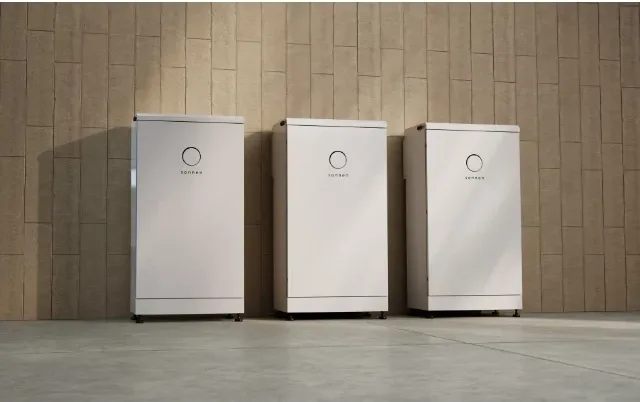
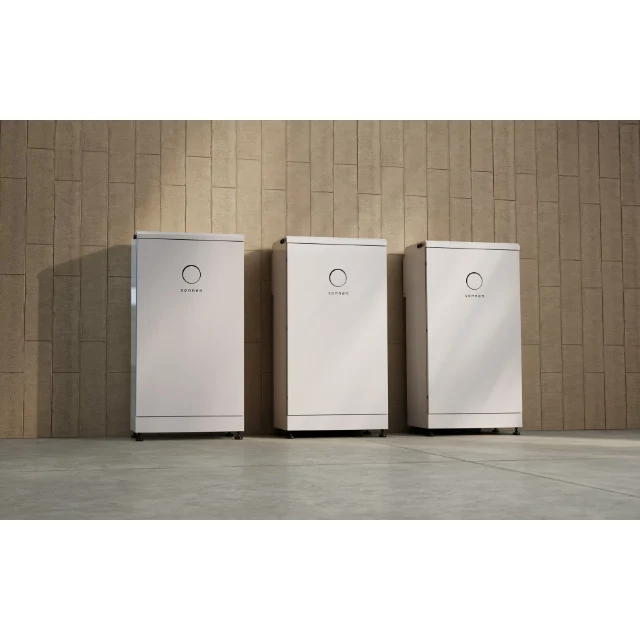
Meet sonnen A German-built battery that pairs with the solar you already have, indoors or out.
- Works with the solar you have
The Evo is AC-coupled, and sonnen says it pairs with any solar system.
- Developed for Aussie outdoors
sonnen developed the Evo for Australia and New Zealand, with an IP56 rating for an outside wall.
It meets AS/NZS 5139 for indoor or outdoor installation, sonnen says.
- Backup power comes included
Backup is built in, so chosen lights and appliances keep running when the grid goes down.
Your installer decides which circuits stay on. Ask for the list.
- Full warranty, rebate-listed
Inverter, power electronics, energy manager and battery modules share a 10-year warranty, and the Evo is approved-listed.
Cover ends at 10,000 cycles if that comes before 10 years.
Keep your solar. Add the battery beside it.
The company behind it
sonnen is a German home-battery maker, founded in 2010 and part of Shell since 2019.
Founded 2010
sonnen says it was founded in Wildpoldsried, Germany, in 2010, where its headquarters and production remain.
150,000+ batteries installed
More than 150,000 sonnenBatteries installed since 2010, sonnen says.
Shell-owned, Australian office
sonnen says it has been part of Shell since 2019, with offices in six countries, Australia among them.
Want a sonnen battery in Western Australia?
Get my sonnen quotesCompare up to 3 vetted installers. Free, no obligation.
Why sonnen is different
sonnen answers a question most of the market ignores: what about the solar you already own? The sonnenBatterie Evo is AC-coupled — it carries its own inverter and connects on the alternating-current side of the switchboard, so your existing solar inverter keeps doing its job untouched. Where most modern batteries arrive by replacing your inverter, this one arrives beside it, which is why the Evo is the retrofit shape of the top tier.
The company is a long-established German storage specialist, and the Australian product shows local intent rather than an imported afterthought: the Evo’s enclosure was developed specifically for Australian and New Zealand outdoor conditions. Around 10 kilowatt-hours usable from two 5-kilowatt-hour modules, lithium iron phosphate cells, and a deliberately narrow capacity band — a smaller, more considered proposition than the big modular stacks, with fewer decisions attached.
sonnen also treats software as the product’s ongoing half. The brand has built its identity around energy management as a service — the battery deciding when to store, use and export against your patterns and tariff — rather than a hardware sale that ends at handover. On a time-of-use tariff with a wide price spread, that intelligence is a real part of what you are paying for; on a flat tariff, much less so, and a good quote conversation should include which tariff you will actually be on.
The trade-offs are unusually clean. AC coupling costs a little round-trip efficiency against a DC-coupled hybrid on a brand-new install, the capacity does not stack upward so the sizing must be right the first time, and the price position is high-end — the value case rests on longevity, software and retrofit fit, not on cost per kilowatt-hour, where this brand does not compete.
The sonnenBatterie Evo, piece by piece
The Evo’s own built-in inverter is the piece that defines the install. Because storage conversion happens inside the unit, nothing about your existing solar changes — and that is the decision to interrogate at quote stage: on a retrofit beside healthy solar, AC coupling is the whole reason to buy; on a new solar-and-battery install, a DC-coupled hybrid is usually the more efficient architecture, and a quote proposing the Evo there should argue the choice explicitly rather than assume it.
The battery itself is two 5-kilowatt-hour modules — 11 kilowatt-hours nominal, about 10 usable — and that band is fixed rather than stackable. What it decides is the most consequential number on the quote: whether roughly 10 kilowatt-hours covers your after-dark consumption. Heavy air-conditioning, a pool or home EV charging can push past it, and the real test is an evening-load calculation from your actual bills, shown to you before anyone signs.
The enclosure is a genuine product feature, developed for local outdoor conditions, and it decides placement. Outdoor mounting opens options that indoor-only units close — but an ingress rating protects against dust and water, not against a west-facing wall that bakes all afternoon, and heat shortens every lithium battery’s working life. Which wall, what shade, what airflow: settle it at the site visit.
Around the Evo sits a wider international range — the modular sonnenBatterie 12 platform and the home-automation-oriented ecoLinx — but the Evo is the mainstream Australian product, and quotes here should name it. The final piece is backup scope: which circuits stay live in an outage is a wiring and configuration decision, not something high-end positioning settles for you, so require the quote to state whether backup is included and exactly what it covers.
Put sonnen to the test on your own numbers
Reading about it only goes so far — real quotes are where a sonnen decision gets made. Get 2-3 quotes from vetted installers in Western Australia. Free for homeowners.
What sonnen does best
Retrofits that respect what you own. For the large population of Australian homes with good existing solar, the Evo adds storage without touching a working inverter — no replacing healthy equipment, no re-terminating the array. That is the product’s clearest earned advantage, and the reason it belongs on retrofit shortlists almost by default.
Outliving the equipment beside it. Because the battery runs its own inverter on the AC side, it is not chained to your solar inverter’s lifespan — when that unit eventually fails or the panels get upgraded, the battery carries across to the new system. It is a long-horizon advantage that rarely gets priced into quote comparisons, and on older solar it is worth real consideration.
Living outdoors in Australian conditions. The locally developed enclosure means placement flexibility without an indoor equipment room, which on many blocks is the difference between a tidy install and a compromised one — with the standing caveat that shade and airflow still matter wherever it lands.
Managing energy rather than just storing it. The software’s job is to work your tariff — deciding when to store, use and export instead of mechanically filling and draining — and households on time-of-use plans with wide spreads collect the benefit daily. Paired with the long European engineering record behind the brand, this is the substance under the high-end position: you are buying judgement and longevity, not just kilowatt-hours.
Who a sonnenBatterie Evo suits — and who it does not
It suits the home with solar already on the roof and an inverter worth keeping — the retrofit case is where this product’s architecture, price and pitch all line up. The older the solar, the stronger the additional argument that the battery will outlast and outstay the inverter beside it.
It suits households whose evening consumption sits comfortably inside about 10 kilowatt-hours, and who would rather have one properly sized, outdoor-rated unit than a growth plan. If your load is stable and known, the fixed band is a feature: one decision, made once, made well.
It suits buyers who weight engineering pedigree and software judgement over headline capacity — the household that reads the tariff optimisation as the interesting part rather than the fine print.
It is the wrong product for capacity ambitions. If you need 20 kilowatt-hours or more, want to add storage progressively over several years, or are running the comparison purely on cost per kilowatt-hour, the big modular stacks exist for you and this does not — and on a brand-new solar-plus-storage build, a DC-coupled hybrid deserves the first look on efficiency grounds. The record is also quiet on virtual power plants, so if VPP income is part of your plan, make compatibility with your intended program an explicit quote-stage question rather than an assumption.
Money-wise, judge the Evo the fair way: value per usable kilowatt-hour after the federal rebate, weighed against what the extra cost is actually buying — retrofit fit, outdoor hardware, software and the prospect of outliving your solar inverter. On raw kilowatt-hours per dollar it will lose to the volume brands; the question worth answering is whether those specific advantages are worth the difference to your household, and a quote that cannot articulate them is not making the brand’s own case.
sonnen in Western Australia
Western Australia’s Residential Battery Scheme pays $130 per usable kilowatt-hour for Synergy customers to a cap of $1,300, or $380 to $3,800 for Horizon Power, on capacity up to 10 kWh with VPP enrolment required. The Evo’s roughly 10 usable kilowatt-hours aligns almost exactly with where the scheme stops paying — no stranded capacity past the cap — while the VPP requirement is the item to resolve early, since the record is silent on posture: confirm which WA-approved programs take the Evo before the paperwork starts.
Feed-in tariffs in Western Australia typically pay 2–10c/kWh while grid power costs 30–35c — so a stored kilowatt-hour is worth what you avoid buying, not what exporting earns, and the wider that gap sits on your own plan, the harder a battery works for you. Under DEBS the evening window pays several times the daytime rate, so the software’s timing decisions are worth real money in Perth: store the midday surplus, meet the evening peak, export what is left while the rate is up.
Put sonnen to the test on your own numbers
Reading about it only goes so far — real quotes are where a sonnen decision gets made. Get 2-3 quotes from vetted installers in Western Australia. Free for homeowners.
The installer decides the sonnen outcome
A high-end unit does not install itself well. The Evo’s outcome turns on three site-level judgements: whether AC coupling is genuinely the right architecture for your install, whether roughly 10 kilowatt-hours genuinely covers your evenings, and where the unit physically lives. All three are decided before a tool comes out, which is why the quality of the quote conversation predicts the quality of the install.
Sizing deserves the most scepticism, because the fixed capacity band removes the safety net modular systems carry — there is no adding a module next year if the estimate was optimistic. An installer who asks for your bills and shows an evening-load calculation is doing the job; one who asserts that 10 kilowatt-hours suits most homes is selling, and the difference will follow you for a decade.
Placement and configuration finish the work. The right wall — shaded, ventilated, serviceable — protects the battery’s life; the backup scope needs specifying circuit by circuit; and handover should end with the energy-management software configured for your actual tariff, because that configuration is where the extra cost’s value is realised or quietly lost. Ask what an installer’s commissioning and handover include; the thoroughness of the answer is the audition.
Solar Select’s role is to start you with installers worth auditioning. One enquiry, up to 3 approved installers, subject to current coverage, eligibility and brand suitability, which a high-end product rewards. The matching is free for homeowners, and deliberately small: a handful of installers who can each win the job design harder than a crowd who cannot.
Is sonnen right for your home? Fit and warranty checks
A good fit if…
- Homes with good existing solar and an inverter worth keeping
- Buyers who want an outdoor-rated unit designed for local conditions
- Households whose evening use fits comfortably inside about 10 kWh
- Owners who weight engineering pedigree and software over headline capacity
Consider the limitations
- You need 20 kWh or more, which this range is not shaped for
- Cost per usable kilowatt-hour is your deciding metric
- You are doing a new solar-plus-storage install where a hybrid inverter would be more efficient than AC coupling
- You want to add capacity progressively over several years
Why the installer matters more than the battery
More than 60% of inspected home battery installs were substandard. The Clean Energy Regulator inspected 1,278 home battery installations under the Cheaper Home Batteries Program between July 2025 and April 2026. More than 60% came back substandard and 1.2% unsafe — and the hardware was rarely the problem. The install was.
That is the part a brand cannot fix for you. Solar Select checks installer approval and current campaign eligibility for your Western Australia enquiry. Confirm business history and current independent reviews before choosing an installer. Your enquiry goes to up to 3 of them, and no one else sees your details.
Battery rebates in Western Australia
Cheaper Home Batteries Program (federal) — roughly a quarter off the installed battery cost, applied upfront at the quote by the installer rather than claimed back later.
WA Residential Battery Scheme — WA adds the Residential Battery Scheme — $130 per usable kWh for Synergy customers (max $1,300) or $380 per kWh for Horizon Power customers (max $3,800), capped at 10 kWh and conditional on VPP enrolment. It stacks with the federal rebate.
Ready for sonnen quotes in Western Australia?
Postcode in — up to 3 vetted installers out. Federal battery rebate applied at quote. Free, no obligation, maximum 3 installers ever.
sonnen installers in Perth
- sonnen installers Perth — serving Greater Perth
Regional Western Australia
- sonnen installers Bunbury — serving Bunbury and the South West
- sonnen installers Busselton — serving Busselton and the Margaret River region
This page also covers the Western Australia towns that no longer have a page of their own. Across the Kimberley and Pilbara and the Wheatbelt and Great Southern, enquiries from Broome, Derby, Karratha, Kununurra, Newman, Port Hedland, Tom Price, Albany, Jurien Bay, Katanning, Narrogin and Northam route through this page on postcode. In the South West and the Peel region, the same applies to Australind, Collie, Dunsborough, Harvey, Manjimup, Margaret River, Mandurah and Pinjarra. Further out, Carnarvon, Esperance, Exmouth, Geraldton, Kalbarri and Kalgoorlie in the Goldfields, Mid West and Gascoyne are matched the same way.
Page updated 6 October 2026