Tasmania
Tesla Powerwall battery installers in Tasmania.
Get matched with top solar companies in Tasmania — Tesla Powerwall-experienced prioritised
- Powerwall 3 combines a battery and solar inverter in one wall-mounted unit
- Unlock up to $7,000 in federal solar + battery rebates*
- Compare quotes from vetted installers, with Tesla Powerwall experience where available
Tesla Powerwall
What could a Tesla Powerwall battery save your home?
*For eligible combined solar and battery installations before January 2027. Battery-only rebates vary with usable capacity. Your installer confirms eligibility and amount.
✓ Up to 3 vetted installers
✓ Free to compare, no obligation
✓ Your chosen battery, your quote request
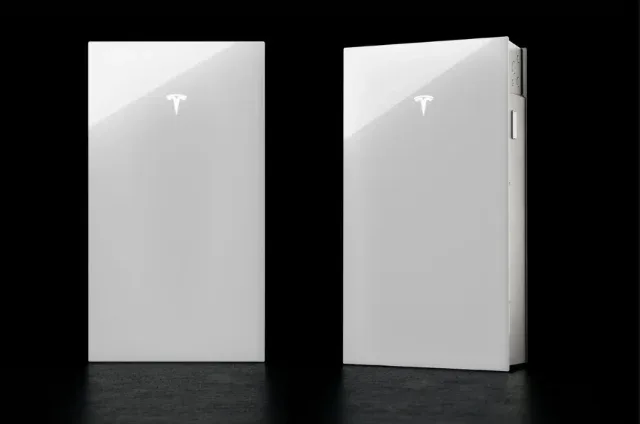
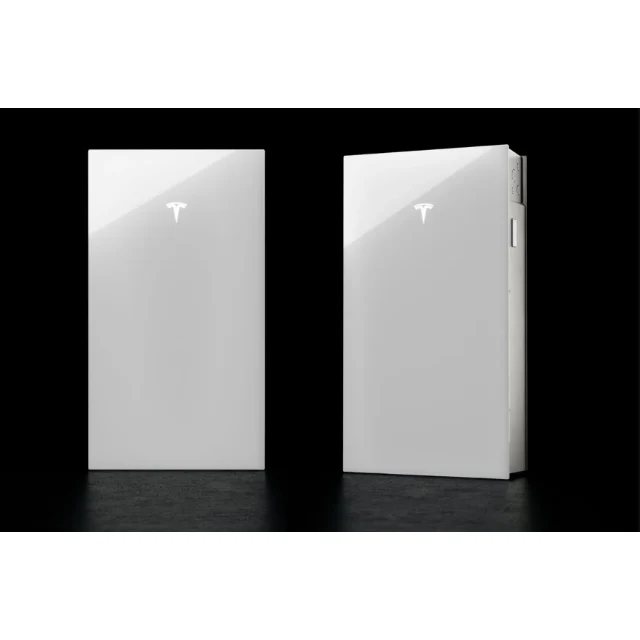
Meet Tesla Powerwall Battery and solar inverter in one box, with room to add more later.
- Solar inverter built in
Powerwall 3 has its own solar inverter, so new panels connect straight to the battery. One box does both jobs.
- Already have solar? There's Powerwall 3AC
Powerwall 3AC is a battery-only version made for homes adding storage to an existing solar system.
Check whether your quote is a Powerwall 3 or a Powerwall 3AC. The 3AC puts out up to 5 kW.
- Enough power for most homes
Up to 11.04 kW of steady output starts heavy loads, and Tesla says one unit covers most homes' power needs.
Output depends on the power setting on your quote: 5, 10 or 11.04 kW.
- 10 years' cover, unlimited cycles
Ten-year warranty, with at least 70% capacity left at year ten and no cycle limit for solar and backup use.
Ask your installer to confirm they're Tesla-certified; the warranty requires it. Keep it online and registered, or Tesla may honour only four years.
Owners say blackouts barely register, and praise the app (SolarQuotes, Oct 2026).
The company behind it
Tesla is the US electric-car maker; its energy arm builds Powerwall home batteries and grid-scale storage.
Powerwall since 2015
Australia was among the first markets for Tesla's original Powerwall, announced in 2015.
Storage at scale
Tesla deployed 43.5 GWh of energy storage in the 12 months to September 2025.
Australian warranty desk
Tesla's warranty lists a NSW address and a 1800 number for Australian claims.
Want a Tesla Powerwall battery in Tasmania?
Get my Tesla Powerwall quotesCompare up to 3 vetted installers. Free, no obligation.
Why the Tesla Powerwall 3 is different
Most batteries join a system; the Powerwall 3 replaces half of it. The battery and a full solar inverter share one enclosure, so a home buying solar and storage together puts one device on the wall where other designs need two, with one manufacturer answering for the pair. Behind that first unit sit battery-only Expansion units for households that want more capacity without paying for a second inverter — the storage grows, the electronics do not double.
That integration is the value and the constraint at once. Because the solar inverter lives inside the unit, your panels are strung directly into it — efficient when the system is designed as a whole, wasteful when a retrofit is done lazily. An array laid out to suit an old inverter does not automatically suit this one, and a design that ignores that leaves panel capacity unused. It also means a household with a recent hybrid inverter it likes has to weigh stranding it, because the Powerwall does not politely defer to what is already on the wall.
The other genuine difference is maturity. No current home battery has operated on Australian walls longer, and that shows in the places brochures cannot: an established local service channel, installers who have already met the failure modes, an app that non-technical households still open long after the novelty fades, and virtual-power-plant support that spans effectively every major Australian program. Newer brands can match the specification sheet; the operating history is the one thing they cannot ship.
The real trade-offs are structural. Backup energises a single phase no matter how many units are fitted, which three-phase households must confront at quote stage rather than during the first blackout. Capacity moves in fixed blocks rather than fine steps, the cost per kilowatt-hour weakens as systems grow, EV charging is separate hardware rather than a built-in module, and the product expects a live internet connection to work as sold. None of this is hidden — it is simply the shape of a product that chose simplicity over configurability.
The Powerwall 3 system, piece by piece
The Powerwall 3 itself is the battery and the solar inverter in one box, and the first thing a quote must make explicit is that it is quoting this and not an Expansion unit — the two look related on paper and are different products in fact. Because the inverter is inside, this unit also decides how your panels are strung, which is where a careless design quietly costs output.
Expansion units are pure capacity. They sit behind the main unit and add storage without a second inverter, which is why they cost less per kilowatt-hour than adding another complete Powerwall. The question they raise is careful sizing: whether your evening load justifies the next block, given that the steps are large and the arithmetic does not improve at scale.
The Backup Gateway is the hardware that separates your home from the grid in an outage and determines which circuits stay live. It is where two Tesla quotes diverge most — gateway placement and the switchboard work behind it are the classic corner-cutting site — and for a three-phase home it is where the single-phase backup question becomes concrete: which phase, carrying which circuits, named on paper.
The app is not an accessory here; it is the operating surface for tariff settings, backup reserve and monitoring, and the reason the product can be this simple. It leans on a live internet connection, so signal strength at the mounting position is a real design input — a unit installed where the wi-fi dies delivers a worse product than the one demonstrated in the showroom.
Put Tesla Powerwall to the test on your own numbers
Reading about it only goes so far — real quotes are where a Tesla Powerwall decision gets made. Get 2-3 quotes from vetted installers in Tasmania. Free for homeowners.
What the Tesla Powerwall does best
Being bought once and understood immediately. For a single-phase home taking solar and storage together, the integrated inverter is where the value concentrates: one device, one install, one app, one company accountable for all of it. Households that want a battery rather than a hobby get the strongest version of this product.
Keeping doors open with retailers. Broad virtual-power-plant support is a compounding advantage rather than a launch-day feature — effectively every major Australian program works with a Powerwall, so switching retailers or joining a better plan in three years does not depend on whether your hardware made the list. Owners of narrower-supported batteries tend to make that discovery at the worst possible moment.
Surviving year six. The longest local operating history in the market translates into a service channel that already exists, parts that already move, and installers who have already seen the edge cases. When hardware is meant to sit on a wall for a decade, the question of who answers the phone in the back half of that decade is not a soft one, and this is the brand with the longest answer.
Staying used. Plenty of batteries are monitored enthusiastically for a month and never opened again; the Powerwall app is the one non-technical households demonstrably keep using, which matters because tariff settings and backup reserve only save money when somebody actually sets them. Polish sounds cosmetic until it is the difference between configured and abandoned.
Who a Tesla Powerwall suits — and who it does not
It suits the household that wants one good decision instead of five. Single-phase homes buying solar and battery together are the centre of the target: the integrated inverter earns its keep, the install is the simplest in the category, and a single manufacturer answers for the whole system. If your reaction to configuration options is relief that there are none, this is your product.
It suits VPP-minded owners and long-holders. If joining a virtual power plant — now, or when the plans improve — is part of your thinking, no battery keeps more Australian programs open to you. And if you expect to own the house long past the purchase conversation, the longest local operating history in the market is a rational thing to pay for.
Three-phase homes wanting the whole house alive in a blackout should look elsewhere, and should not let anyone talk them past it. One phase stays live, however many units are on the wall. Backing up a chosen set of circuits satisfies many three-phase households — but that is a decision to make knowingly, with the circuits listed, not a surprise saved for the first storm.
Big-system buyers and fine-tuners are also better served by other architectures. Capacity comes in large fixed blocks, so a household wanting a little more storage ends up buying a lot more, and at bigger sizes the cost per kilowatt-hour loses to modular stacks convincingly. The same applies to anyone with a healthy recent hybrid inverter and no wish to strand it.
On money, judge value per usable kilowatt-hour after the federal rebate, at the size you would actually buy — never the headline figure. Fixed blocks make this brand strongest at one unit and progressively harder to defend as units stack, and the federal program’s full-rate capacity tier gives you a neutral anchor: ask each installer to show where the quoted configuration lands against it, and price a modular alternative at the same usable size before signing anything.
Tesla Powerwall in Tasmania
Tasmania is federal-only in 2026, and it is the state that stress-tests a fixed-block battery most directly: the winter sun is the weakest in the country, and a Powerwall only pays its way on the days your roof can refill it. The right question for a Hobart quote is not how many units but what a July day’s generation actually cycles through one — if the answer is half a unit, that is also your answer on the second.
Feed-in tariffs in Tasmania typically pay 8.0–9.0c/kWh while grid power costs 30–35c — so a stored kilowatt-hour is worth what you avoid buying, not what exporting earns, and the wider that gap sits on your own plan, the harder a battery works for you. Tasmania’s flat regulated rate at least keeps the sums stable: no windows, no peak periods, just one steady gap the battery either beats daily or does not.
Put Tesla Powerwall to the test on your own numbers
Reading about it only goes so far — real quotes are where a Tesla Powerwall decision gets made. Get 2-3 quotes from vetted installers in Tasmania. Free for homeowners.
The installer decides the Powerwall outcome
A Powerwall quote hides its differences in the backup design. Which circuits stay live — and on a three-phase home, which phase carries them — is settled by gateway placement and switchboard work at design stage, and it is the single most common gap between what buyers assumed and what they own. Have the backed-up circuits listed by name on the quote; an installer who resists that is telling you something.
Stringing is the quiet second test. The integrated inverter means your array must be designed into it, and retrofits punish laziness: panels strung for the old inverter and left as-is waste capacity invisibly. Siting is the third — the unit is rated for outdoor life, but a west-facing wall in full summer sun, a bedroom wall within fan-noise range, or a position where the wi-fi barely reaches all make a worse system out of identical hardware.
A proper handover finishes the job: the app running on your actual tariff, the backup reserve set to a number you chose, the connection verified from the unit’s real mounting position, and you shown which switch isolates what. Installs here run through the manufacturer’s installer program, which narrows the workmanship spread — and still leaves design and handover quality to the specific people on your roof.
That is the matching problem Solar Select exists to solve. We put your enquiry in front of up to 3 approved installers, subject to current coverage, eligibility and brand suitability. We sell no hardware, the service is free for homeowners, and matching a small number is deliberate: each installer has a genuine shot at the work, which is what buys you designed systems instead of templated ones.
Is Tesla Powerwall right for your home? Fit and warranty checks
A good fit if…
- Single-phase homes buying solar and battery together — the integrated inverter is where the value sits
- Households who want maximum virtual-power-plant choice; Powerwall works with effectively every major Australian VPP
- Buyers who want one manufacturer accountable for the whole system rather than three
- People who want the longest local operating history behind the product on their wall
Consider the limitations
- You have a three-phase home and want whole-home backup — Powerwall 3 energises one phase, even with multiple units
- You want a large stack; cost per kWh is materially better elsewhere at bigger capacities
- You already have a recent hybrid inverter you do not want to strand
- You want fine-grained sizing — Powerwall comes in fixed blocks, not small increments
Why the installer matters more than the battery
More than 60% of inspected home battery installs were substandard. The Clean Energy Regulator inspected 1,278 home battery installations under the Cheaper Home Batteries Program between July 2025 and April 2026. More than 60% came back substandard and 1.2% unsafe — and the hardware was rarely the problem. The install was.
That is the part a brand cannot fix for you. Solar Select checks installer approval and current campaign eligibility for your Tasmania enquiry. Confirm business history and current independent reviews before choosing an installer. Your enquiry goes to up to 3 of them, and no one else sees your details.
Battery rebates in Tasmania
Cheaper Home Batteries Program (federal) — roughly a quarter off the installed battery cost, applied upfront at the quote by the installer rather than claimed back later.
Federal-only in Tasmania for 2026 — Tasmania runs federal-only on battery rebates in 2026. The federal Cheaper Home Batteries discount still applies in full.
Ready for Tesla Powerwall quotes in Tasmania?
Postcode in — up to 3 vetted installers out. Federal battery rebate applied at quote. Free, no obligation, maximum 3 installers ever.
Tesla Powerwall installers in Hobart
- Tesla Powerwall battery installation Hobart — serving Greater Hobart
Regional Tasmania
- Tesla Powerwall battery installation Launceston — serving Launceston and surrounds
- Tesla Powerwall battery installers in Devonport — serving Devonport and surrounds
- Tesla Powerwall battery installers in Burnie — serving Burnie and surrounds
This page also covers the Tasmania towns that no longer have a page of their own. Across the North West Coast and greater Hobart, enquiries from Latrobe, Queenstown, Smithton, Ulverstone, Wynyard, Kingston, New Norfolk and Sorell route through this page on postcode. In the North East and the Huon, the same applies to Deloraine, George Town, Scottsdale, St Helens and Huonville.
Page updated 6 October 2026