South Australia
Victron battery installers in South Australia.
Get matched with top solar companies in South Australia
- Victron systems combine solar, batteries and generator power for off-grid homes
- Free savings estimate before you request installer quotes
- Compare quotes from vetted installers, with Victron experience where available
Victron
What could a Victron battery save your home?
Your installer confirms the equipment, compatibility and any rebates available for your system.
✓ Up to 3 vetted installers
✓ Free to compare, no obligation
✓ Your chosen battery, your quote request
Meet Victron Open, modular power gear from the Netherlands, built for backup and off-grid homes.
- Built for off-grid living
Victron off-grid systems start from 500 W and scale up by running units in parallel, on single, split or three-phase.
- Open to other gear
Victron integrates a long list of other makers' managed batteries and solar inverters, so you aren't locked into one brand.
To claim the federal rebate, the battery itself must be on the approved list.
- Keep an existing solar inverter
Victron inverter/chargers support many grid-tie solar inverters once a software assistant is installed, so working solar can often stay.
Ask your installer to check your solar inverter's brand works with Victron.
- 5-year warranty on power gear
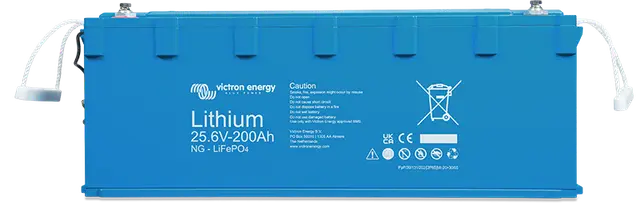
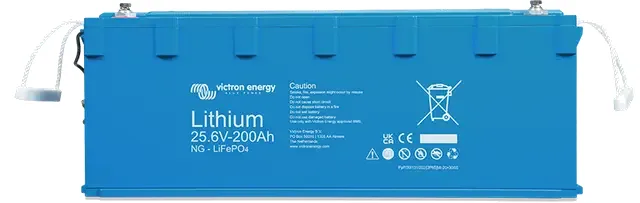
Victron's power products carry a 5-year warranty, upgradable to 10; its lithium batteries carry 3 years as standard.
The 10-year upgrade costs an extra 10% of the purchase price.
Watch the complete system from a free app or the VRM portal.
The company behind it
Victron Energy is a Dutch maker of inverter/chargers, batteries and monitoring gear, founded in the early 1970s.
Started in the 1970s
Founder Reinout Vader started Victron in the early 1970s after reworking a borrowed inverter, Victron says.
Still family-led
Victron says the founder's son, Matthijs, is now its chief executive.
Support through dealers
Victron says warranty and repair requests go through the dealer who originally sold the product.
Want a Victron battery in South Australia?
Get my Victron quotesCompare up to 3 vetted installers. Free, no obligation.
Why Victron is different
Every other brand on this site is trying to sell you a household appliance. Victron is not. It is a Dutch manufacturer that has spent decades building direct-current power systems for boats, caravans, ambulances, remote telecom huts and properties that will never see a power pole, and it has a devoted following among people who run those systems. Understanding that heritage explains everything else about the product, including the things that look like shortcomings from a suburban rooftop.
The clearest signal is on Victron’s own product pages: battery capacity is published in amp-hours at twelve, twenty-four and forty-eight volts. Every packaged home battery in Australia is sold in kilowatt-hours, because that is the unit on a power bill. Amp-hours at a system voltage is how you size a direct-current system, and quoting them is not an oversight — it is the plain advertisement of what this equipment was designed to do.
Then there is the fact that decides most Australian purchases. When we searched the Clean Energy Regulator’s full approved-battery register, covering several thousand rows, no Victron battery appeared anywhere in it. The federal discount requires listed hardware, so a Victron battery cannot attract it. Victron’s MultiPlus-II does appear on the separate approved inverter list, which is a genuinely different register and does not change the battery position.
None of this is a criticism of the engineering, which is excellent, and it is not a suggestion that Victron has failed at something. It is a category statement. A company that sells lead-acid, gel, AGM, lead-carbon and telecom batteries alongside its lithium range, and lists marine, recreational vehicles, professional vehicles, hybrid generators and telecom among its markets, is not primarily competing for grid-connected suburban households — and the Australian rebate framework reflects that.
The Victron system, piece by piece
A Victron installation is assembled, not bought. The inverter/charger, the solar charge controller, the monitoring device, the battery and, on the modular lithium line, a separate battery management system are all individual products that a designer selects and configures. That is the source of the ecosystem’s famous flexibility and the reason two installations wearing the same badge can be worlds apart in quality.
The inverter/charger is the heart of it, and it is a different animal from a hybrid solar inverter. It manages grid or generator input, battery charging and alternating-current output, which is why Victron systems handle generators, multiple charging sources and unusual load patterns far more gracefully than a product designed for a suburban roof. On an off-grid property that capability is the whole point.
The battery management system deserves specific attention because it is easy to miss on a quote. Victron lists battery management as its own product category, and the modular lithium range expects one alongside it. A design that leaves it out or specifies it loosely is not making a performance compromise; it is making a safety and warranty one.
Monitoring is where Victron is genuinely, unarguably ahead. VictronConnect on a phone and the Victron Remote Monitoring portal in a browser are free, and the manufacturer cites more than a million users worldwide. The depth on offer — every parameter, historical detail, remote configuration — is beyond what packaged home batteries typically expose, and for an owner who wants to understand their own system it is a real pleasure to use.
Support runs through the dealer who supplied the system, backed by a worldwide repair network, rather than through a national homeowner service desk. That structure suits a professional installer ecosystem and puts unusual weight on choosing the right supplier, because that supplier is your warranty counterparty in practice as well as on paper.
Put Victron to the test on your own numbers
Reading about it only goes so far — real quotes are where a Victron decision gets made. Get 2-3 quotes from vetted installers in South Australia. Free for homeowners.
What Victron does best
Living without a grid connection. On a property with no network to export to, the rebate question simply does not arise, and every advantage Victron has — generator integration, multiple charging sources, deep configurability, hardware built for punishing conditions — becomes the reason to choose it. This is the market the company has served for decades and it shows.
Moving. Boats, caravans, buses and work vehicles are where the self-contained lithium products with integrated management and safety switching earn their keep, and where amp-hours at a low system voltage is exactly the right way to specify a battery. No packaged home battery competes here at all.
Giving an owner real visibility. The free monitoring tools show more, in more detail, than most household systems will ever surface, and they are available on the phone and in a browser without a subscription. For someone who wants to actually manage their consumption rather than glance at a summary, this is a substantial and often decisive advantage.
Being repairable and modular. A system assembled from discrete products can have one part replaced or upgraded without discarding the rest, which is a genuinely different lifecycle from a sealed cabinet. Over a long ownership, on a remote site, that matters more than a specification sheet suggests.
Who a Victron system suits — and who it does not
It suits genuinely off-grid properties, where there is no connection to rebate against and where the ability to blend solar, battery and generator intelligently is the difference between a system that works in August and one that does not.
It suits vehicles and vessels, which is the use case the self-contained lithium range was designed around.
It suits owners who want to understand and tune their own system, and who regard the free monitoring depth as a feature rather than a complication.
It suits households who want Victron electronics and are willing to pair them with a listed battery from another brand — which is the usual way an installer keeps both the ecosystem and access to the federal discount, and a perfectly sensible design.
It does not suit a grid-connected household that wants the federal discount on the battery itself, because no Victron battery can attract it. It does not suit a buyer who wants one cabinet, one manufacturer and one warranty document. And it does not suit someone comparing warranty terms on a spreadsheet, because Victron’s standard lithium term sits well short of the ten years that packaged home batteries routinely carry. If you arrived on this page looking for a straightforward rebate-eligible home battery, the plain answer is that this is not it, and knowing that now is worth more than a page that told you what you hoped to hear.
Victron in South Australia
South Australia runs federal-only on batteries in 2026, inside the most VPP-driven retail market in the country — and virtual power plant plans are written around named, listed, grid-connected hardware, which excludes a Victron battery from that market entirely. South Australia’s pastoral country and its islands are a different matter, and are where this equipment has always made sense in this state.
Feed-in tariffs in South Australia typically pay 4–12c/kWh while grid power costs 30–35c — so a stored kilowatt-hour is worth what you avoid buying, not what exporting earns, and the wider that gap sits on your own plan, the harder a battery works for you. A connected Adelaide household drawn to Victron should be looking at the electronics with a listed battery beneath them, not at a Victron battery.
Put Victron to the test on your own numbers
Reading about it only goes so far — real quotes are where a Victron decision gets made. Get 2-3 quotes from vetted installers in South Australia. Free for homeowners.
The installer decides the Victron outcome
On most brands the installer determines how well a finished product performs. On Victron the installer determines what the product actually is. The system is assembled from separate inverter/chargers, controllers, monitoring devices, batteries and management hardware, and the design decisions made at quote stage are the system. There is no cabinet arriving pre-configured to absorb a weak specification.
The first question is therefore whether they are an established Victron dealer rather than a generalist who can order the parts. Warranty and repairs run through the supplying dealer and the wider repair network, which makes that relationship your practical support channel for the life of the system. A dealer who has designed dozens of these is a different proposition from one working from a distributor’s configurator.
The second is the rebate conversation, and a good installer raises it without being asked. If the quote puts a Victron battery on a grid-connected house, the federal discount is not available on that hardware, and the alternative — Victron electronics with a listed battery from another brand — should be offered as an explicit option with the numbers beside it. An installer who lets a customer assume the discount applies has failed at the most consequential part of the job.
The third is sizing against reality. Off-grid and backup systems fail in the first genuinely bad week, not on the day of commissioning, and the difference is whether the design was built from a measured load profile or from an optimistic estimate. Ask what consumption figures the system was sized against and ask to see the working; a designer who has done this properly will be pleased to show you.
This is where Solar Select earns its place. We put your enquiry in front of up to 3 approved installers, subject to current coverage, eligibility and brand suitability — and comparing them is free for homeowners. On a brand where the hardware is a kit of parts, the support runs through the supplier, and the rebate depends on a design choice, the person quoting is making decisions no product page can make for you.
Is Victron right for your home? Fit and warranty checks
A good fit if…
- Genuinely off-grid properties where no network connection exists to rebate against
- Boats, caravans, buses and remote sheds, which is what this equipment was designed for
- Owner-operators who want to see and tune every parameter rather than watch a simplified app
- Households pairing a Victron inverter with a listed battery from another brand to keep the federal discount
- Sites where a hybrid generator, multiple charging sources or unusual loads make a modular system worth the complexity
Consider the limitations
- You want the federal battery discount, which no Victron battery can attract
- You want a single cabinet from a single manufacturer with one warranty document
- You want the longest possible battery warranty term, since Victron’s lithium term is well short of the market norm
- You would rather not depend on one dealer’s competence for design, support and warranty
Victron specifications and source documents
- Not on the Clean Energy Council approved battery list at the date checked. Source
- No Victron battery appears on the Clean Energy Council approved battery list, which is the hardware condition of the federal Cheaper Home Batteries Program, so a Victron battery does not attract the federal discount. A Victron inverter paired with a listed battery from another brand is the usual way an installer keeps both the Victron system and the rebate. Source
Why the installer matters more than the battery
More than 60% of inspected home battery installs were substandard. The Clean Energy Regulator inspected 1,278 home battery installations under the Cheaper Home Batteries Program between July 2025 and April 2026. More than 60% came back substandard and 1.2% unsafe — and the hardware was rarely the problem. The install was.
That is the part a brand cannot fix for you. Solar Select checks installer approval and current campaign eligibility for your South Australia enquiry. Confirm business history and current independent reviews before choosing an installer. Your enquiry goes to up to 3 of them, and no one else sees your details.
Battery rebates in South Australia
Cheaper Home Batteries Program (federal) — roughly a quarter off the installed battery cost, applied upfront at the quote by the installer rather than claimed back later.
Federal-only in South Australia for 2026 — South Australia runs federal-only on battery rebates in 2026 — no active state battery program. SA retailers compete hard on battery + VPP plans, and the federal discount applies in full.
Ready for Victron quotes in South Australia?
Postcode in — up to 3 vetted installers out. Federal battery rebate applied at quote. Free, no obligation, maximum 3 installers ever.
Victron installers in Adelaide
- Victron battery installers in Adelaide — serving Greater Adelaide
This page also covers the South Australia towns that no longer have a page of their own. Across the Riverland, Fleurieu and Limestone Coast and the Adelaide Hills and outer Adelaide, enquiries from Barmera, Berri, Bordertown, Goolwa, Loxton, Millicent, Mount Gambier, Murray Bridge, Naracoorte, Renmark, Strathalbyn, Victor Harbor, Waikerie, Gawler and Mount Barker route through this page on postcode. In the Barossa, Yorke Peninsula and Mid North, the same applies to Clare, Kadina, Moonta, Nuriootpa, Port Pirie, Tanunda and Wallaroo. Further out, Ceduna, Coober Pedy, Port Augusta, Port Lincoln, Roxby Downs and Whyalla in the Eyre Peninsula and outback are matched the same way.
Page updated 6 October 2026