Western Australia
BYD battery installers in Western Australia.
Get matched with top solar companies in Western Australia
- BYD Battery-Box offers a choice of compatible inverter brands for your solar setup
- Unlock up to $7,000 in federal solar + battery rebates*
- Compare quotes from vetted installers, with BYD experience where available
BYD
What could a BYD battery save your home?
*For eligible combined solar and battery installations before January 2027. Battery-only rebates vary with usable capacity. Your installer confirms eligibility and amount.
✓ Up to 3 vetted installers
✓ Free to compare, no obligation
✓ Your chosen battery, your quote request
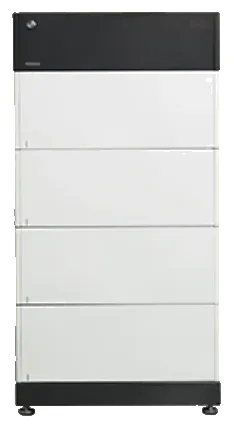
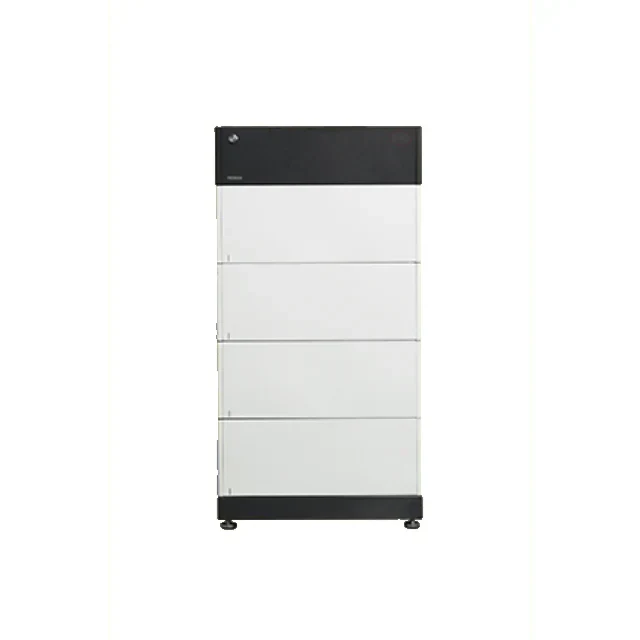
Meet BYD A plug-together battery that pairs with inverters from a range of brands.
- Pair it with your inverter
Battery-Box works with inverters on BYD's compatible list, across different brands, possibly the one already on your wall.
The exact inverter must be on BYD's compatible inverter list for your Battery-Box.
- Modules click in, no wiring
Owners rate Battery-Box 4.9 from 273 SolarQuotes reviews (Oct 2026); with no internal wiring, adding a module is simple.
- Two module sizes, room to grow
HVS stacks run 5.1 to 12.8 kWh, larger HVM stacks reach 22.1 kWh, and three identical stacks can join.
Ask whether your quoted stack has space for another module. Original HVM listings end 5 Dec 2026; ask for HVM+ if you want the rebate.
The company behind it
BYD started as a battery maker and now also builds cars, with home batteries here since 2017.
Founded 1994
BYD says it was founded in November 1994; it started out as a battery manufacturer.
Hong Kong-listed
BYD listed on the Hong Kong Stock Exchange in 2002.
Australian homes since 2017
BYD brought its home battery to Australia in 2017; Alps Power is its Australian service representative.
Want a BYD battery in Western Australia?
Get my BYD quotesCompare up to 3 vetted installers. Free, no obligation.
Why BYD is different
Almost every other name on this page is trying to sell you a complete system. BYD is not. There is no BYD hybrid inverter on an Australian wall — the Battery-Box is the storage half only, engineered to be paired with an inverter from another company, and Fronius, SMA, GoodWe and Sungrow have all supported it for years. The big inverter brands quite literally design around this battery, which tells you how the industry regards the component itself.
That single fact reshapes the whole purchase. A Battery-Box quote is a two-vendor decision: you are choosing a battery and an inverter on their separate merits, and the compatibility of the pair matters as much as either half. Done well, that freedom is the point — the inverter that genuinely suits your roof and phases, matched with storage from a manufacturer whose cell output spans electric vehicles and grid-scale projects rather than home energy alone.
The hardware itself is modular in the plainest sense. High-voltage HVS and HVM towers reach their capacity through the number of modules in the stack, low-voltage LVS packs serve the 48-volt world of off-grid and hybrid builds, and larger properties run multiple stacks in parallel — scalability that continues well past what any house needs. Capacity is a module count, revisitable later if the design leaves room, rather than a single sealed number.
The trade-off deserves equal billing. Two vendors means two support chains, and when something misbehaves the first question is whether the fault sits in the battery or the inverter. The app you live with every day is the inverter brand’s, not BYD’s, and virtual-power-plant eligibility usually follows the inverter too. None of that is a defect — it is the architecture — but it moves real weight onto the installer who joins the two halves and agrees to own the boundary between them.
The Battery-Box range, piece by piece
Start with the part BYD does not make, because it is the biggest decision on the quote. The partner inverter determines your monitoring app, your backup behaviour, your virtual-power-plant options and who you ring when something faults — so a Battery-Box quote that leads with the battery and mumbles about the inverter has the emphasis backwards. Ask which inverter is specified, and whether that exact pair sits on BYD’s supported compatibility list.
The Battery-Box Premium HVS is the compact high-voltage stack and the common suburban choice — 5.1 to 12.8 kilowatt-hours usable across two to five modules. What it decides at quote stage is the module count: the right question is not the headline capacity but why that number of modules suits your evening consumption, and whether the tower has room to take another later.
The HVM is the larger high-voltage sibling — 8.1 to 21.7 kilowatt-hours usable across three to eight modules, with multiple stacks running in parallel where a big home or rural property needs more. If your quote specifies HVM, the thing it is deciding is scale, and it should come with a load calculation that justifies the size rather than just a bigger invoice.
The LVS is the 48-volt low-voltage family, spanning 4 to 24 kilowatt-hours, and it exists for a different world — off-grid properties and third-party low-voltage inverter setups. High-voltage and low-voltage families are not interchangeable, and the inverter choice dictates which one you get; what your installer should be deciding, and explaining, is why that family is right for the job in front of them.
Put BYD to the test on your own numbers
Reading about it only goes so far — real quotes are where a BYD decision gets made. Get 2-3 quotes from vetted installers in Western Australia. Free for homeowners.
What BYD does best
Adding storage without discarding working equipment. Because the Battery-Box is only the battery, an installer can bring storage to a home whose inverter is still healthy and already on the supported list — no replacement of hardware that has years left in it. That retrofit path is one of the most practical reasons this product keeps appearing on Australian quotes.
Letting each component win on merit. An all-in-one asks you to accept its inverter to get its battery; a Battery-Box build lets the installer pick the inverter for your property first, then attach storage from a maker whose cells also go into vehicles and grid projects. Buyers who care about the engineering of each part, rather than the tidiness of one badge, get the strongest version of this product.
Serving the jobs the sealed boxes cannot. The low-voltage LVS family has been a long-standing option for off-grid and hybrid designs, and the high-voltage stacks parallel up for large properties whose needs run past any single tower. Modules in two voltage families cover an unusually wide span of Australian installs.
Staying power. BYD has been a long-standing fixture of the Australian battery market and still holds a customer-rated top-ten position — which matters less as a badge than for its consequences: an installed base local installers know, parts that are easy to find, and years of accumulated pairing experience with the major inverter brands.
Who a BYD Battery-Box suits — and who it does not
It suits the homeowner whose solar already works. If your existing inverter is healthy and on BYD’s supported list, this is one of the few products where the right quote is a battery addition rather than a system replacement — and the quote should say plainly which of those two jobs it is.
It suits deliberate buyers. Choosing the inverter and the battery separately takes a little more homework than pointing at one box, and it rewards that homework: you end up judging two products and one installer instead of accepting a bundle. If that sounds like the right kind of effort, the architecture is on your side.
It also suits the properties at the edges — off-grid builds on the low-voltage family, and large homes stacking capacity in parallel — where package products simply stop being options.
Look elsewhere if you want one manufacturer answerable for everything, or if thinking about inverter compatibility at all sounds like a burden. The same goes if the simplest possible like-for-like quote comparison matters more to you than component choice, or if the virtual-power-plant program you want is built around a specific all-in-one product — with a paired system, eligibility usually follows the inverter, and that is a constraint to check before you commit, not after.
On cost, ignore the sticker and ask each quote for its value per usable kilowatt-hour after the federal rebate, with the inverter’s share of the job priced visibly. Paired systems can hide cost in either half; putting both halves on the same per-kilowatt-hour footing is what makes a two-vendor build fairly comparable with an all-in-one.
BYD in Western Australia
Western Australia’s Residential Battery Scheme pays per usable kilowatt-hour — $130 for Synergy customers to a $1,300 cap, $380 for Horizon Power customers to $3,800 — limited to 10 kWh and conditional on VPP enrolment. Two Battery-Box notes follow: module counts let you place capacity near where the scheme stops paying rather than far past it, and the VPP condition is met through the partner inverter, so confirm the pairing is accepted before the paperwork goes in.
Feed-in tariffs in Western Australia typically pay 2–10c/kWh while grid power costs 30–35c — so a stored kilowatt-hour is worth what you avoid buying, not what exporting earns, and the wider that gap sits on your own plan, the harder a battery works for you. DEBS pays several times more for evening exports than midday ones, which rewards a system set up to hold its charge for the window that pays — a setting that lives in the inverter’s software and should be configured at handover, not left at defaults.
Put BYD to the test on your own numbers
Reading about it only goes so far — real quotes are where a BYD decision gets made. Get 2-3 quotes from vetted installers in Western Australia. Free for homeowners.
The installer decides the BYD outcome
With a paired system, the installer is not just fitting a product — they are engineering the pairing. Compatibility is the whole game: a battery-and-inverter combination that is not on the supported list can work on install day and cause support problems for years, and firmware on both sides has to match the supported combination, which is install-day discipline rather than a product feature.
The second thing to settle before signing is who owns a fault. Split responsibility between two manufacturers can turn into finger-pointing unless the installer commits, in writing, to performing the diagnosis themselves — battery or inverter, their call to make and their job to prove. An installer who agrees to that in the quote removes most of the practical difference between a paired system and an all-in-one.
Commissioning and handover carry the rest. The monitoring you will actually use lives in the inverter brand’s app, so a proper handover ends with that app configured for your tariff, backup scope demonstrated circuit by circuit, and the supported-pair documentation left with you — because that document is what protects you in year four.
That is the judgement Solar Select is built to help with. Send one enquiry and we match it with up to 3 approved installers, subject to current coverage, eligibility and brand suitability, which matters more than usual when the job is joining two manufacturers’ hardware. The service is free for homeowners, and matching a small field means every installer quoting has a genuine shot and a genuine reason to design the pairing properly.
Is BYD right for your home? Fit and warranty checks
A good fit if…
- Homes with a healthy inverter from a brand that already supports the Battery-Box
- Buyers who want to choose the inverter and the battery on their own merits
- Off-grid and hybrid setups, where the low-voltage LVS family is a long-standing option
- Large properties needing capacity built up through multiple parallel stacks
Consider the limitations
- You want one manufacturer accountable for the whole system end to end
- You would rather not think about inverter compatibility at all
- The simplest possible quote comparison matters more than component choice
- Your preferred virtual-power-plant program is built around a specific all-in-one product
Why the installer matters more than the battery
More than 60% of inspected home battery installs were substandard. The Clean Energy Regulator inspected 1,278 home battery installations under the Cheaper Home Batteries Program between July 2025 and April 2026. More than 60% came back substandard and 1.2% unsafe — and the hardware was rarely the problem. The install was.
That is the part a brand cannot fix for you. Solar Select checks installer approval and current campaign eligibility for your Western Australia enquiry. Confirm business history and current independent reviews before choosing an installer. Your enquiry goes to up to 3 of them, and no one else sees your details.
Battery rebates in Western Australia
Cheaper Home Batteries Program (federal) — roughly a quarter off the installed battery cost, applied upfront at the quote by the installer rather than claimed back later.
WA Residential Battery Scheme — WA adds the Residential Battery Scheme — $130 per usable kWh for Synergy customers (max $1,300) or $380 per kWh for Horizon Power customers (max $3,800), capped at 10 kWh and conditional on VPP enrolment. It stacks with the federal rebate.
Ready for BYD quotes in Western Australia?
Postcode in — up to 3 vetted installers out. Federal battery rebate applied at quote. Free, no obligation, maximum 3 installers ever.
BYD installers in Perth
- BYD battery installers in Perth — serving Greater Perth
Regional Western Australia
- BYD battery installers in Bunbury — serving Bunbury and the South West
- BYD battery installers in Busselton — serving Busselton and the Margaret River region
This page also covers the Western Australia towns that no longer have a page of their own. Across the Kimberley and Pilbara and the Wheatbelt and Great Southern, enquiries from Broome, Derby, Karratha, Kununurra, Newman, Port Hedland, Tom Price, Albany, Jurien Bay, Katanning, Narrogin and Northam route through this page on postcode. In the South West and the Peel region, the same applies to Australind, Collie, Dunsborough, Harvey, Manjimup, Margaret River, Mandurah and Pinjarra. Further out, Carnarvon, Esperance, Exmouth, Geraldton, Kalbarri and Kalgoorlie in the Goldfields, Mid West and Gascoyne are matched the same way.
Page updated 6 October 2026