Australia-wide

BYD battery installers in Australia

Get matched with top solar companies in Australia

  • BYD Battery-Box offers a choice of compatible inverter brands for your solar setup
  • Unlock up to $7,000 in federal solar + battery rebates*
  • Compare quotes from vetted installers, with BYD experience where available

BYD

What could a BYD battery save your home?

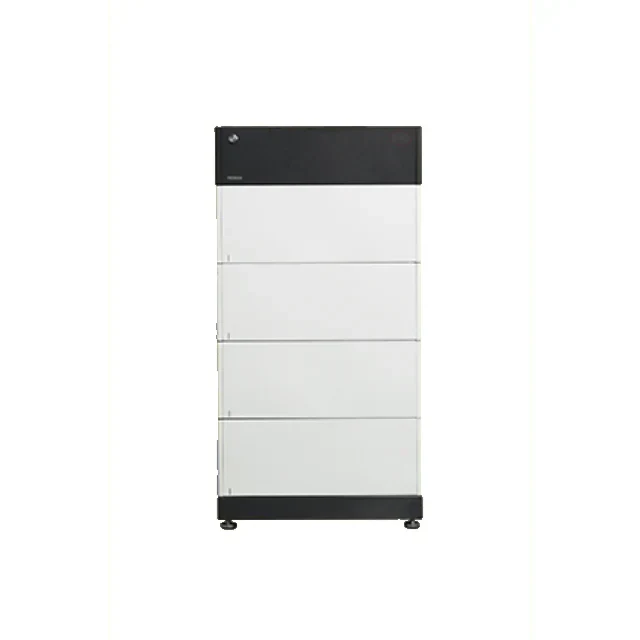
BYD Battery-Box Premium HV tower

Do you already have solar panels?

Free estimate first. No contact details needed.

*For eligible combined solar and battery installations before January 2027. Battery-only rebates vary with usable capacity. Your installer confirms eligibility and amount.

✓ Up to 3 vetted installers

✓ Free to compare, no obligation

✓ Your chosen battery, your quote request
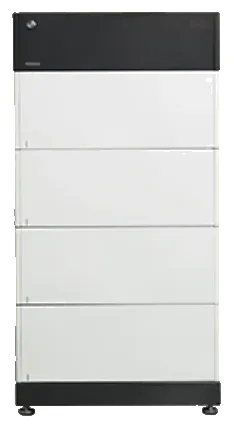
BYD Battery-Box Premium HV modules stacked on their base, front view
Image: BYD

Meet BYD A plug-together battery that pairs with inverters from a range of brands.

  • Pair it with your inverter

    Battery-Box works with inverters on BYD's compatible list, across different brands, possibly the one already on your wall.

    The exact inverter must be on BYD's compatible inverter list for your Battery-Box.

  • Modules click in, no wiring

    Owners rate Battery-Box 4.9 from 273 SolarQuotes reviews (Oct 2026); with no internal wiring, adding a module is simple.

  • Two module sizes, room to grow

    HVS stacks run 5.1 to 12.8 kWh, larger HVM stacks reach 22.1 kWh, and three identical stacks can join.

    Ask whether your quoted stack has space for another module. Original HVM listings end 5 Dec 2026; ask for HVM+ if you want the rebate.

The company behind it

BYD started as a battery maker and now also builds cars, with home batteries here since 2017.

  • Founded 1994

    BYD says it was founded in November 1994; it started out as a battery manufacturer.

  • Hong Kong-listed

    BYD listed on the Hong Kong Stock Exchange in 2002.

  • Australian homes since 2017

    BYD brought its home battery to Australia in 2017; Alps Power is its Australian service representative.

Want a BYD battery on your home?

Get my BYD quotes

Compare up to 3 vetted installers. Free, no obligation.

  • We pick them, nobody bids

    Request a match with up to 3 approved installers. Current availability, campaign geography and brand suitability are checked for your enquiry.

  • Check the installation credentials

    Ask each installer for their workmanship warranty, trading history and current brand credentials before you decide.

  • Rebates at quote

    The federal Cheaper Home Batteries discount — roughly a quarter off installed cost — plus your state layer, applied upfront at quote.

Find BYD installers near you.

Each state page lists its capital and regional centres, the battery rebate stack for that state, and the installers we match you with there. Not listed? Matching runs on postcode, so enter yours anyway.

Is BYD right for your home? Fit and warranty checks

A good fit if…

  • Homes with a healthy inverter from a brand that already supports the Battery-Box
  • Buyers who want to choose the inverter and the battery on their own merits
  • Off-grid and hybrid setups, where the low-voltage LVS family is a long-standing option
  • Large properties needing capacity built up through multiple parallel stacks

Consider the limitations

  • You want one manufacturer accountable for the whole system end to end
  • You would rather not think about inverter compatibility at all
  • The simplest possible quote comparison matters more than component choice
  • Your preferred virtual-power-plant program is built around a specific all-in-one product

The BYD range

Battery-Box Premium HVS

5.1–12.8 kWh usable, 2–5 modules

The compact high-voltage stack — the common suburban choice.

Battery-Box Premium HVM

8.1–21.7 kWh usable, 3–8 modules

Larger high-voltage modules; multiple stacks run in parallel for bigger homes.

Battery-Box Premium LVS

4–24 kWh low-voltage

The 48 V family for off-grid and third-party low-voltage inverter setups.

BYD specifications and source documents

BYD sells the battery and nothing else. There is no BYD hybrid inverter in an Australian home; the Battery-Box is paired with someone else’s — Fronius, SMA, GoodWe, Sungrow and others have supported it for years. That makes a BYD quote a two-vendor decision, which is the thing to understand before comparing it with an all-in-one. In exchange you get modular stacks in both high-voltage and low-voltage families, scalability that runs far past domestic need, and cells from one of the largest battery manufacturers on earth.

BYD questions, answered

Why does a BYD quote also name another brand?
Because BYD makes the battery and not the inverter, so every installed BYD system is a pairing — commonly with Fronius, SMA, Sungrow or GoodWe. That is not a quirk to work around; it is the product’s design, and it is why the Battery-Box turns up in retrofits where the homeowner wants to keep a good inverter. What it means practically is that you are judging two products and one installer, and the compatibility of the pair matters as much as either part.
Is a two-brand system riskier than an all-in-one?
It concentrates the risk in a different place. An all-in-one gives you one number to call; a paired system gives you component choice and a retrofit path, at the cost of a support boundary between two manufacturers. The boundary is only a problem if nobody owns it, which is why the question to press your installer on is who performs the diagnosis when something faults. An installer who answers that clearly removes most of the difference.
Can I add a BYD battery to the solar I already have?
Often yes, and it is one of the better reasons to consider one. If your existing inverter is on BYD’s supported list, the battery can be added without replacing hardware that still works. If it is not on the list, the answer is that the inverter is being replaced too, and the quote should say so plainly rather than presenting the job as a simple battery addition.
What is the difference between the high-voltage and low-voltage families?
They suit different inverters and different jobs. The high-voltage HVS and HVM stacks are the usual choice for grid-connected homes with a modern hybrid inverter, while the 48 V low-voltage LVS family is the traditional shape for off-grid and certain hybrid setups. You should not be choosing between them yourself — the inverter decision determines it — but you should expect your installer to explain which one they have specified and why.
Is BYD eligible for the federal battery rebate?
Battery-Box models do appear on the Clean Energy Council approved list, and eligibility is assessed model-by-model. Because these systems are always a pairing, ask to see both the battery and the inverter on the relevant approved lists for the exact configuration quoted, rather than relying on the brand being generally approved.
How big can a BYD system get?
Far bigger than a house needs. Stacks combine in parallel well past domestic requirements, which is why the same product family turns up in commercial installs. For a home the practical ceiling is set by your inverter, your budget and your evening load, not by the battery — so the sizing conversation should start from your actual consumption rather than from what the hardware can theoretically do.
Is this the same BYD that makes electric cars?
Yes, and the manufacturing scale behind the cells is a fair thing to weigh. It is not a guarantee about your specific installation, though: home storage lives or dies on the inverter pairing, the design and the installer’s work, none of which come from the factory. Treat the scale as reassurance about the component, not as a substitute for checking the system around it.

Read before you commit