Brand deep-dives
BYD battery review
BYD: a battery that works with the inverter you choose, and two support desks behind it.
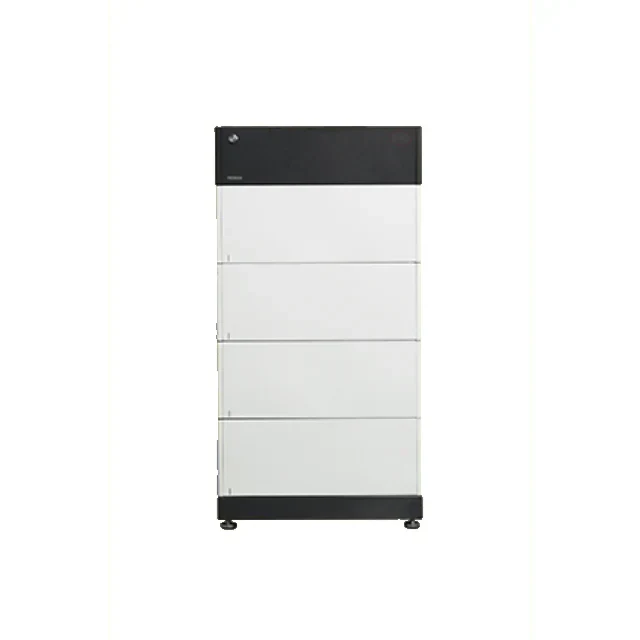
BYD supplies the Battery-Box and leaves the inverter to someone else, commonly Sungrow, GoodWe, SMA or Fronius. That gives you modular stacks, a real way to retrofit and the freedom to pick each component separately. It also means every quote is a decision about two manufacturers and the installer who stands between them.
By Kieron Taylor, Founder, Solar Select · Updated · 6 min read
The verdict
A well-established modular battery that lets you choose the inverter independently and add storage around equipment that still works. The cost of that freedom is a seam between two makers’ support desks, which only a committed installer closes.
Best for: Houses whose current inverter is in good order and on BYD’s compatibility list, off-grid and hybrid builds, and large properties that need several stacks working together.
Look elsewhere if: You want a single manufacturer answerable for the whole system, or inverter compatibility is a subject you never want to consider.
The inverter chosen, the battery range and the number of modules move a BYD quote far more than the brand name does. Each is covered under what shifts a quote, below.
The 30-second take
- Battery only. BYD does not supply a household hybrid inverter in Australia, so the Battery-Box always works with another company’s.
- Three ranges. HVS and HVM are high-voltage stacks for grid-connected homes; LVS is low-voltage and long used off-grid. The inverter determines which one applies.
- Compatibility decides everything. The exact battery and inverter should appear together on BYD’s supported list, with firmware on each matched at install.
- Two support desks. Ask the installer to commit in writing to diagnosing any fault, so you are never left between manufacturers.
- The app belongs to the inverter. Monitoring, and usually virtual-power-plant eligibility, come from the inverter brand, so judge that side as carefully as the battery.
A storage block, not a complete system
Most home batteries arrive as part of one manufacturer’s ecosystem. BYD takes the opposite approach: it builds the Battery-Box and nothing else for the house. The inverter comes from another company, and Sungrow, GoodWe, SMA and Fronius are among those that have worked with it for years.
What you get in return is modular storage offered at high voltage and at low voltage, with stacks that combine well beyond anything a household needs — the same product line appears in commercial work. The cells come from one of the world’s largest battery makers, the same company known for electric vehicles and grid storage.
That scale is fair reassurance about the component. It says nothing about your particular installation, which depends on how well the two halves are matched, designed and fitted. If you are weighing a Battery-Box against an all-in-one, begin by looking at installers who fit BYD batteries in your state and ask which inverters they use it with most often.
Two manufacturers, one fault: decide who diagnoses it
Buy an all-in-one and a single company answers for everything. Buy a Battery-Box and you gain the freedom to pick parts and to build around existing equipment, while accepting that two support desks now sit behind your system. If a fault appears, somebody has to establish which half caused it, and neither manufacturer is obliged to do that work for the other.
That seam only hurts when no one takes charge of it. Put the question to each installer directly: if this system stops working, who finds out why? The answer you want is that they do, and that they will say so in writing. An installer who accepts that job removes most of the practical difference between a two-brand system and a single-vendor one.
Compatibility is the other half of the same issue. A battery and inverter that do not appear together on the supported list may run perfectly on the day and still create support difficulties years later. Firmware matters too: both units need releases that the two makers support in combination, and getting that right is the installer’s task on the day, since no product feature does it for them.
“A two-brand system is only as good as the person who agrees, on paper, to work out which half has failed.”
HVS, HVM or LVS: the inverter picks the range
The Battery-Box Premium line has three branches. HVS is the smaller of the high-voltage stacks and the one most suburban homes end up with. HVM steps up to bigger modules, and sizeable homes may have more than one HVM tower working side by side. LVS is low-voltage, a familiar choice in off-grid systems and with some third-party low-voltage inverters.
These are not options to weigh against each other yourself, because the inverter decision settles it. The two voltage classes are not substitutes, and a range that does not suit the inverter is costly to put right. What you should expect is a clear explanation of which one has been specified, why, and whether the stack can accept another module later.
Sizing deserves the same plain treatment. The hardware can grow far past domestic need, so what limits a home system is the inverter’s capability, what you want to spend and how much power you use at night. A sound design starts from what the household uses after sunset and works back to a module count.
The retrofit case, and the app you will open every day
The clearest reason to choose a Battery-Box is an existing inverter that is in good order and on BYD’s supported list. Storage can then be added without throwing out working equipment. If the inverter is not listed, a replacement is part of the job, and the quote should say so plainly instead of dressing it up as battery-only work. You can compare BYD battery quotes from vetted installers and ask each one which case your home falls into.
BYD has no homeowner app of its own in this arrangement. Daily monitoring is the inverter maker’s software, so try it before committing. Virtual-power-plant eligibility generally follows the inverter as well, which means a program should be checked against both units together and not against the battery alone. If the program you want is designed around a particular single-vendor battery, a two-brand system may not qualify.
What shifts a BYD quote
- The inverter it works with. A separate brand choice that sets much of the total, how backup behaves and who supports what.
- High-voltage or low-voltage. HVS and HVM suit different inverters and install shapes from LVS.
- Number of modules, plus any headroom for one more.
- What happens to the existing inverter — kept, upgraded or replaced within the same job.
- Approved-list status of the exact combination, battery and inverter both.
On that last point: federal rebate eligibility is assessed one model at a time, so a general statement that the brand is approved does not settle it. Ask the installer to point to the quoted Battery-Box model in the Clean Energy Council’s approved battery listing as it stands today, and to the inverter in the inverter listing, for the configuration actually being installed.
Is a Battery-Box the right fit for your home?
- Houses with a sound inverter that BYD lists as compatible.
- People who like picking parts individually — the inverter for its strengths, the battery for its own.
- Off-grid and hybrid projects, a long-standing home for the LVS range.
- Large properties that need capacity assembled from several stacks.
- Probably not the household after single-vendor accountability, or an easy like-for-like comparison between quotes.
Installation quality counts for more here than the badge. Of the 1,278 home battery installations the Clean Energy Regulator inspected from July 2025 to April 2026, more than 60% were rated substandard, and a two-brand system adds compatibility and firmware checks to the usual list. Solar Select’s matching service is free to homeowners and introduces up to 3 vetted installers. Ask each how many Battery-Box systems they have commissioned and on which inverters, then find vetted BYD installers near you.
How long would a BYD take to pay for itself at your place?
Postcode, your bill, and whether the roof already has panels. About a minute, and the ten-year figure is yours before anyone asks for a phone number. Start with vetted BYD installers in your state.
Read next
Sources
Every quantitative claim on this page traces to one of the sources below — government, manufacturer, or independent AU industry reference. Last verified 2026-09-17.
We use AI to help research and draft. Claims are traced to the sources below and dated. Where we haven’t got a source, we say so on the page — treat that as a starting point and do your own research.
General information only. It doesn’t take your circumstances into account and isn’t legal, financial, insurance or electrical advice. Rebates, tariffs, network rules and product terms change — confirm anything you plan to rely on with your installer, insurer, retailer or distributor, and see our terms.
Postcode in, up to 3 vetted installers out. Free for homeowners, no obligation. All solar guides · Federal rebates · How it works
Filed under: Brand deep-dives