Australia-wide

Deye battery installers in Australia

Get matched with top solar companies in Australia

  • Deye battery modules stack together to match the storage your home needs
  • Unlock up to $7,000 in federal solar + battery rebates*
  • Compare quotes from vetted installers, with Deye experience where available

Deye

What could a Deye battery save your home?

Deye AI-W5.1-B stacked battery system

Do you already have solar panels?

Free estimate first. No contact details needed.

*For eligible combined solar and battery installations before January 2027. Battery-only rebates vary with usable capacity. Your installer confirms eligibility and amount.

✓ Up to 3 vetted installers

✓ Free to compare, no obligation

✓ Your chosen battery, your quote request
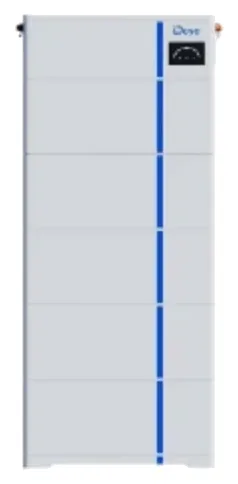
Deye AI-W5.1-B battery stack, front view
Image: Deye

Meet Deye Built for backup and off-grid living, and it can work with the solar you already have.

  • Keep the solar you have

    Deye's Australian hybrid inverter can AC-couple to an existing solar system, so working panels and their inverter can stay.

    Ask your installer to confirm your current inverter suits this set-up, and which Deye model is quoted.

  • Made for off-grid and backup

    Deye hybrid inverters run on-grid or off-grid, and up to 16 can be linked in parallel for larger properties.

    Ask for the backed-up circuits to be listed by name in your quote.

  • Charge from a generator

    The inverter can store energy from a diesel generator, handy on rural blocks or through a long outage.

  • Approved list, 10-year warranty

    Deye AI-W batteries from 5.12 to 30.72 kWh are on the approved battery list, and Deye gives them a 10-year warranty.

    Eligibility is model by model: check the exact model string on your quote.

Six charge and discharge time slots, set to suit your power plan.

The company behind it

A Shanghai-listed Chinese maker of hybrid inverters and home batteries, based in Ningbo.

  • Founded 2000

    Deye says its parent, Ningbo Deye Technology, was founded in 2000 and listed in Shanghai in April 2021.

  • Global reach

    Deye says its products are sold in over 140 countries and regions.

  • Approved here since 2024

    Deye's AI-W5.1-B battery joined Australia's approved battery list in May 2024.

Want a Deye battery on your home?

Get my Deye quotes

Compare up to 3 vetted installers. Free, no obligation.

  • We pick them, nobody bids

    Request a match with up to 3 approved installers. Current availability, campaign geography and brand suitability are checked for your enquiry.

  • Check the installation credentials

    Ask each installer for their workmanship warranty, trading history and current brand credentials before you decide.

  • Rebates at quote

    The federal Cheaper Home Batteries discount — roughly a quarter off installed cost — plus your state layer, applied upfront at quote.

Find Deye installers near you.

Each state page lists its capital and regional centres, the battery rebate stack for that state, and the installers we match you with there. Not listed? Matching runs on postcode, so enter yours anyway.

Is Deye right for your home? Fit and warranty checks

A good fit if…

  • Off-grid and hybrid-off-grid setups, where Deye’s inverter heritage is a genuine strength
  • Budget-driven buyers who have decided price outweighs brand certainty
  • Larger systems where cost per kWh dominates every other consideration
  • Households whose installer has standardised on Deye and will personally support it
  • Owners who want inverter-battery flexibility rather than a closed ecosystem

Consider the limitations

  • The longest Australian field history matters more to you than value
  • Virtual-power-plant participation with a specific retailer matters to you — compatibility is patchier than the major brands
  • You want a closed single-brand ecosystem rather than an open one
  • You are not willing to verify that your exact model is on the approved list

The Deye range

All-in-one wall unit

Inverter plus modular battery in one enclosure

The simplest Deye configuration — fewest separate components on the wall.

High-voltage stackable modules

Stackable modules with Deye HV hybrid inverters

The mainstream path for larger systems.

Low-voltage packs

Several pack sizes, large parallel expansion

Suits off-grid-leaning and larger parallel arrangements.

Deye specifications and source documents

Deye is one of the world’s largest hybrid-inverter and home-storage manufacturers, with more than 6,000 staff, and Deye-built inverters are reported to hold more than 30% of South Africa’s market. It sells both an all-in-one wall unit combining inverter and battery modules, and separate stackable high- and low-voltage modules that pair with Deye hybrid inverters. Its genuine differentiator is openness — Deye inverters work with a wide range of third-party batteries rather than locking you to one — and because it is newer to Australian homes than to the rest of the world, an installer who knows the range is the thing to look for.

Deye questions, answered

Is a Deye battery eligible for the federal rebate?
Some models are and some are not — Clean Energy Council listing is model-by-model rather than brand-wide. This is the single biggest practical trap with Deye: ask your installer to show you the exact model on the approved list before you sign, because the rebate is worth thousands and is not recoverable afterwards.
Is Deye a good brand for a home battery in Australia?
Deye is one of the largest hybrid-inverter and home-storage manufacturers in the world — more than 6,000 staff, revenue above RMB 10 billion in the first half of 2026, and Deye-built inverters reported at more than 30% of South Africa’s market, where backup power is tested daily. It is newer to Australian homes than to those markets, so the practical advice is simple: choose an installer who has commissioned Deye before, and check your exact model is on the approved list.
What is the advantage of a Deye system?
Two things: price, and openness. Deye hybrid inverters support a wide range of third-party batteries, so you are not locked to one manufacturer the way you are with Sungrow, SolarEdge or Fronius. Deye also has genuine off-grid heritage, which matters if you are running a property without a reliable grid connection.
Is Deye a risky choice because it is newer to Australia?
Worry about the right thing. The hardware risk on modern LFP batteries is lower than most buyers assume; the real exposure is who honours the paperwork and turns up in year four. Deye is a large, profitable manufacturer, so the sensible questions are about the installer’s track record with the product and who handles a manufacturer claim — not about cell chemistry.
Is Deye a good choice for an off-grid system?
This is where Deye makes the most sense. Its hybrid inverter heritage is genuinely strong for off-grid and hybrid-off-grid work, with the configuration depth those systems need. The caveat is unchanged: off-grid outcomes track the designer, not the brand. A well-specified Deye off-grid system from an experienced installer beats a big-name badge fitted by someone learning.
Can I use a Deye inverter with a different brand of battery?
Often yes, and that openness is Deye's real differentiator — its inverters support a wide range of third-party batteries rather than locking you into one manufacturer. That flexibility is worth something if you want to change battery later or source locally. Just confirm the specific pairing is on the supported list and that the battery model itself is Clean Energy Council approved, because the rebate depends on the battery, not the inverter.
Why does Deye hardware sometimes appear under another brand name?
Because Deye manufactures for other companies as well as itself, so the same underlying hybrid-inverter platform can reach Australia wearing a different badge. That is normal in this industry and is not a warning sign on its own, but it does mean the badge tells you less than usual about who supports you. Ask who the importer is, who you call when something fails, and whether that entity has been in the Australian market long enough to still be here in year eight.
What should I ask a Deye installer that I would not ask about a mainstream brand?
Ask how many Deye systems they have commissioned, not how many batteries they have installed overall. Deye systems are configuration-heavy — the settings depth that makes them capable off-grid also makes them easier to set up badly. Ask specifically who does the commissioning, whether it is done on site or remotely, and what happens if the system needs reconfiguring after a firmware update.

Read before you commit