Brand deep-dives
Deye battery review
Global scale, an open ecosystem, off-grid strength, and the model-by-model checks that matter here.
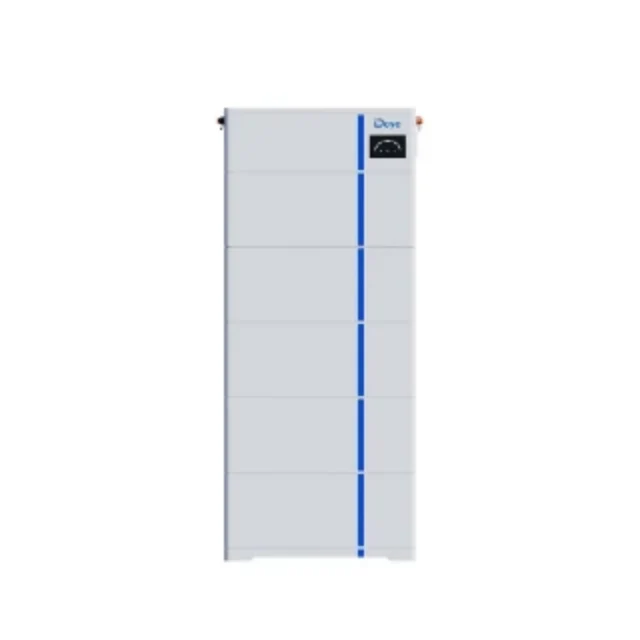
Deye is one of the largest hybrid-inverter and home-storage manufacturers in the world, and one of China’s three most profitable inverter makers alongside Sungrow and Sigenergy. In Australia it is the open-ecosystem, off-grid-capable option at a value price — with one check worth making before you sign.
By the Solar Select team, Researched against the sources listed on this page · Updated · 6 min read
The verdict
One of the world’s largest hybrid-inverter makers, and the open-ecosystem, off-grid-capable option at a value price. The one piece of homework is the model: rebate eligibility is checked model by model, so see yours on the approved list before you sign.
Best for: Off-grid and hybrid-off-grid properties, and buyers whose installer has standardised on Deye and will support it personally.
Look elsewhere if: The longest Australian field history matters more to you than value, or joining a specific retailer’s virtual power plant is central to the plan.
Configuration, the exact approved model, inverter pairing, grid-tied versus backup versus off-grid, and who provides support are what move a Deye quote. Each is set out below.
The 30-second take
- The genuine strength is openness. Deye inverters work with a wide range of third-party batteries rather than locking you to one ecosystem.
- The genuine strength is off-grid. Hybrid and off-grid operation is inverter heritage here, not a marketing claim — it is where Deye most often makes sense.
- The scale is real. Deye turned over more than RMB 10 billion in the first half of 2026, and Deye-built inverters are reported to hold more than 30% of South Africa’s market — one of the hardest backup-power proving grounds in the world.
- Compare quotes on five variables, not a headline figure — configuration, approved model, inverter pairing, operating mode and support. Why there is no price is covered under "How to judge a Deye quote".
- One check before you sign: rebate eligibility is model by model, so ask to see your exact model on the Clean Energy Council approved list.
What Deye actually is
Deye is a Shanghai-listed manufacturer of hybrid inverters and home batteries with more than 6,000 staff. It reported revenue of RMB 10.6 billion and net profit of RMB 2.7 billion for the first half of 2026, and PV Tech counts it among the three most profitable inverter makers in China, alongside Sungrow and Sigenergy. Its battery-pack revenue alone grew 56% in 2025. You can also find vetted Deye installers near you.
Its proving ground is South Africa, where years of load-shedding made backup power a household necessity: Deye was reported to hold more than 30% of that inverter market in 2023, and Deye-built inverters still hold more than 30% of it in 2026. In Australia it sells an all-in-one wall unit combining inverter and battery modules, plus separate stackable high-voltage and low-voltage modules that pair with Deye hybrid inverters. It is newer to Australian homes than to the rest of the world, which is why the installer you choose matters — more on that below.
How to judge a Deye quote
Judge a Deye quote on the system it describes. These five variables are what move the price, and what make two Deye quotes comparable:
- Which configuration — the all-in-one wall unit, or separate inverter and modules. These are different jobs with different labour.
- Whether the exact model is Clean Energy Council approved, because eligibility is model-by-model and the rebate is worth thousands.
- The inverter and battery pairing, given how many valid combinations exist across the range.
- Grid-tied, backup-capable or genuinely off-grid — Deye spans all three and they price very differently.
- Who provides support — the installer, or an importer. This one changes what happens in year four.
We print no Deye price here: the only Australian retail figure we found was a single uncorroborated listing that may or may not include the inverter base, which is not a number to plan around.
“Two Deye quotes are only comparable once these five variables match.”
How the rebate step works, in dollars
Whatever you end up paying, the federal Cheaper Home Batteries rebate is calculated the same way for every brand: in full on the first 14 kWh of usable capacity, then tapering above it. Knowing the dollar figures makes a quote much easier to read, because the rebate line should reconcile to your usable capacity and nothing else. The installer decides the outcome: see the vetted Deye installers in your state before you sign anything.
- About $2,785 at 10.24 kWh.
- About $3,808 at 14 kWh — the most available at the full rate.
- About $4,030 at 15.36 kWh: the extra 1.36 kWh past the step added only around $222.
- About $6,204 at 30.72 kWh, with everything above 14 kWh earning the tapered rate.
If a Deye quote shows a rebate figure that does not line up with these, ask which capacity it was calculated on. The most common cause is nominal capacity being used where usable capacity applies.
Where Deye wins, and where it loses
Against GoodWe, its closest cross-shop, Deye wins on off-grid capability, on an unusually open ecosystem that works with many third-party batteries, and on aggressive pricing.
What it asks of you is a little more homework. The range is configuration-rich, so you want an installer who has commissioned Deye before, and rebate eligibility is checked model by model. For an off-grid or backup-focused property with an installer who knows the range, it is often the strongest value answer on the table.
Living with one
- Configuration depth is the defining trait — export limits, time-of-use schedules and backup behaviour are all deeply adjustable. Powerful in the right hands, a liability in the wrong ones.
- Off-grid and hybrid-off-grid operation is a real strength rather than a brochure line.
- Virtual power plant compatibility is patchy compared with the established brands. Verify per model; do not assume.
- As with any battery, your installer is your first call. Ask who handles a manufacturer claim before you need the answer.
Who should buy one, and who should not
- Buy if you are off-grid or hybrid-off-grid — this is where Deye’s inverter heritage genuinely earns its place.
- Buy if your installer has standardised on Deye and will personally support it.
- Buy if you want inverter-battery flexibility rather than a closed ecosystem.
- Look elsewhere if the longest Australian field history matters more to you than value — that is Tesla’s ground.
- Look elsewhere if virtual power plant participation with a specific retailer matters to you.
Ask these four before you sign
- Which exact model is quoted, and can you show me it on the Clean Energy Council approved battery list?
- Who supports this if it fails in year four — you, or an importer?
- Is this the all-in-one unit, or separate inverter and modules?
- Which virtual power plants will actually accept this model?
Those four answers tell you more than any brochure. Get them in writing. From here, get up to 3 Deye quotes from vetted installers in your state — free, and nobody else sees your details.
How long would a Deye take to pay for itself at your place?
Postcode, your bill, and whether the roof already has panels. About a minute, and the ten-year figure is yours before anyone asks for a phone number. Start with vetted Deye installers in your state.
Read next
Sources
Every quantitative claim on this page traces to one of the sources below — government, manufacturer, or independent AU industry reference. Last verified 2026-10-05.
We use AI to help research and draft. Claims are traced to the sources below and dated. Where we haven’t got a source, we say so on the page — treat that as a starting point and do your own research.
General information only. It doesn’t take your circumstances into account and isn’t legal, financial, insurance or electrical advice. Rebates, tariffs, network rules and product terms change — confirm anything you plan to rely on with your installer, insurer, retailer or distributor, and see our terms.
- deye.com — energy storage products
- solarquotes.com.au — Deye battery review
- pv-tech.org — China inverter sector results, first half of 2026
- energytrend.com — Deye 2025 financial results
- stockanalysis.com — Ningbo Deye Technology employee count
- businesstech.co.za — Deye in South Africa (2023)
- energybee.co.za — Deye and Sunsynk in South Africa (2026)
- cleanenergycouncil.org.au — approved battery list
- dcceew.gov.au — Cheaper Home Batteries Program
Postcode in, up to 3 vetted installers out. Free for homeowners, no obligation. All solar guides · Federal rebates · How it works
Filed under: Brand deep-dives