Australia-wide

Pylontech battery installers in Australia

Get matched with top solar companies in Australia

  • Pylontech offers cabinet and stackable batteries to suit different installation spaces
  • Unlock up to $7,000 in federal solar + battery rebates*
  • Compare quotes from vetted installers, with Pylontech experience where available

Pylontech

What could a Pylontech battery save your home?

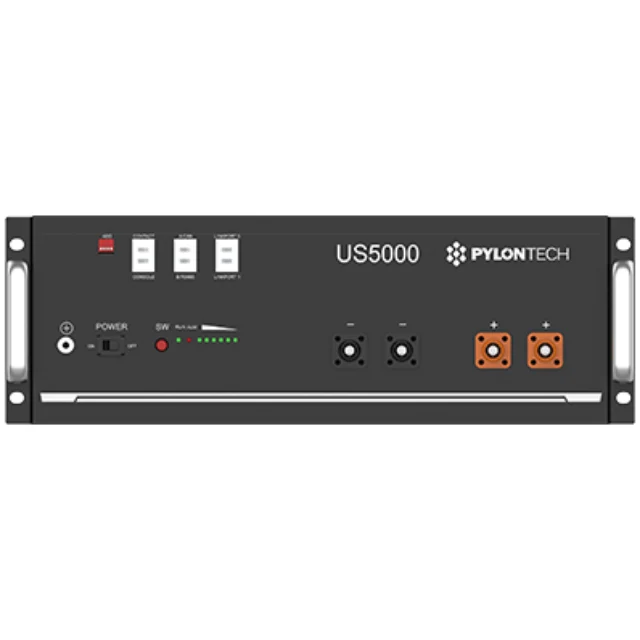
Pylontech US5000 rack-mount battery module

Do you already have solar panels?

Free estimate first. No contact details needed.

*For eligible combined solar and battery installations before January 2027. Battery-only rebates vary with usable capacity. Your installer confirms eligibility and amount.

✓ Up to 3 vetted installers

✓ Free to compare, no obligation

✓ Your chosen battery, your quote request
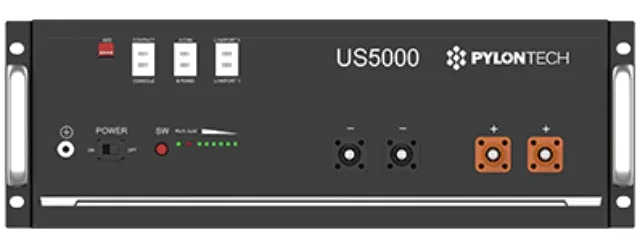
Front panel of the Pylontech US5000 rack-mount module
Image: Pylontech

Meet Pylontech A storage specialist whose modules stack into towers and pair with many inverter brands.

  • Works with many inverter brands

    Pylontech publishes a compatibility list of other makers' inverters, so your installer isn't tied to one brand.

    Your installer should check the exact inverter and firmware against Pylontech's current list.

  • Build the tower you need

    A Force H3 tower takes two to seven 5.12 kWh modules, giving about 9.7 to 34 kWh usable.

    Pylontech's datasheet allows up to six towers in parallel.

  • Rated for a long life

    Pylontech rates Force H3 for more than 8,000 cycles and a design life of 15-plus years at 25 °C.

    Design life is Pylontech's rating, not the warranty term.

  • Rebate-listed, 10-year warranty

    Every Force-H3 tower size is on the approved battery list, and SolarQuotes reports a 10-year product warranty.

    Ask for the Australian warranty document for your exact model before you sign.

Choose the inverter first. The battery fits around it.

The company behind it

Pylontech is a Chinese lithium iron phosphate battery maker, founded in 2009 and listed in Shanghai.

  • Founded 2009

    Established in October 2009 and listed on the Shanghai Stock Exchange in 2019.

  • 2 million+ systems

    More than 2,000,000 storage systems delivered worldwide in 16-plus years, Pylontech says.

  • Sydney office

    In Australia since 2016, with an office in Alexandria, Sydney.

Want a Pylontech battery on your home?

Get my Pylontech quotes

Compare up to 3 vetted installers. Free, no obligation.

  • We pick them, nobody bids

    Request a match with up to 3 approved installers. Current availability, campaign geography and brand suitability are checked for your enquiry.

  • Check the installation credentials

    Ask each installer for their workmanship warranty, trading history and current brand credentials before you decide.

  • Rebates at quote

    The federal Cheaper Home Batteries discount — roughly a quarter off installed cost — plus your state layer, applied upfront at quote.

Find Pylontech installers near you.

Each state page lists its capital and regional centres, the battery rebate stack for that state, and the installers we match you with there. Not listed? Matching runs on postcode, so enter yours anyway.

Is Pylontech right for your home? Fit and warranty checks

A good fit if…

  • Off-grid and hybrid properties where capacity is built to the load, not to a package
  • Installers and owners who want to choose the inverter independently
  • Buyers prioritising cost per kilowatt-hour over ecosystem polish
  • Systems expected to grow in stages over several years

Consider the limitations

  • You want one manufacturer accountable for the entire system
  • A polished consumer app and branded experience matter to you
  • You want the simplest possible quote to compare against all-in-one products
  • Your virtual-power-plant program is built around specific integrated systems

The Pylontech range

US5000 / US series

4.8 kWh nominal per module at 48 V

The classic stackable low-voltage block — add modules to reach the target.

Pelio-L

5.12–102.4 kWh

The modern 48 V cabinet — indoor or outdoor, wall or floor mounted.

Force H2

High-voltage stackable

The high-voltage line for modern hybrid inverters.

Pylontech specifications and source documents

Pylontech is a component brand with an unusually long storage history: sixteen years of building battery modules and millions of systems delivered worldwide, most of them paired with someone else’s inverter. In Australia it is best known as the 48 V block that off-grid and hybrid installers stack to whatever size a property needs, with broad compatibility across independent inverter brands. The newer Pelio and Force lines modernise the packaging, but the proposition is unchanged: a well-understood battery, chosen by installers who want to build the system themselves.

Pylontech questions, answered

Why have I not heard of Pylontech if it is so widely used?
Because it sells to installers rather than to homeowners. These modules sit inside systems badged by the inverter brand, so the name on the app is usually someone else’s. The lack of consumer marketing is not a quality signal in either direction — what matters is the long storage-only track record and the breadth of inverters that officially support the range, both of which are checkable.
Do I need to pick an inverter separately?
Yes, and it is the more consequential of the two choices. Pylontech makes no inverter, so your installer pairs the modules with a compatible platform, and that decision drives your app, your backup behaviour and your support path. Ask which inverter is specified and whether the pairing appears on the manufacturer’s supported list — a combination that merely works on the day is not the same as one that is officially supported.
Is Pylontech a good choice for an off-grid property?
It is one of the more established options for exactly that, which is why the 48 V modules turn up so often in remote builds. Off-grid sizing is a different discipline from grid-connected sizing, though — you are engineering for worst-case weeks rather than average evenings, and an undersized stack means the lights actually go out. Insist on seeing the load calculations, not just a capacity recommendation.
Is Pylontech eligible for the federal battery rebate?
Models do appear on the Clean Energy Council approved battery list, assessed model-by-model, and eligibility also depends on the installation meeting the program rules. Because these are always paired systems, ask to see the specific battery model and the paired inverter on the relevant approved lists for your exact configuration.
Can I add more modules later?
Generally yes, and staged growth is one of the range’s real strengths — the stack was designed to be added to. The limits come from the inverter and the enclosure rather than the battery, so the number worth asking for at quote time is the maximum the specified inverter supports, not just what is being installed today.
What is the difference between the US series, Pelio and Force?
The US series is the long-running stackable 48 V module, Pelio is the modern low-voltage cabinet with indoor and outdoor mounting, and Force is the high-voltage line for contemporary hybrid inverters. The choice follows the inverter and the install type rather than personal preference, but the quote should still name which one it is — “a Pylontech battery” describes three quite different products.
Is 48 volts safer or better than a high-voltage battery?
Low voltage is not automatically safer in the way people assume — every properly installed and approved system is safe, and the danger in a battery is stored energy, which does not care about the voltage class. What 48 V genuinely changes is the servicing world around it: a very large pool of installers and inverters has worked at that voltage for years, so parts, knowledge and compatible equipment are easy to find. High-voltage systems tend to be more efficient over long cable runs and are where most new grid-tied product development is going. Neither is the right answer on its own; the inverter and the install decide it.
Can I add modules from a newer batch to an older stack?
Physically often yes, practically with a caveat worth knowing before you plan a staged build. A stack balances around its weakest module, so bolting a fresh module onto one that has been cycling for five years does not give you a clean extra module of usable capacity. It is not a reason to avoid staged expansion, but it is a reason to do the bulk of your expansion within the first couple of years rather than assuming you can top up indefinitely. Ask your installer what the realistic gain is before paying for the extra module.

Read before you commit