Brand deep-dives
Pylontech battery review
Pylontech: broad inverter compatibility, and no single brand answerable for the system.
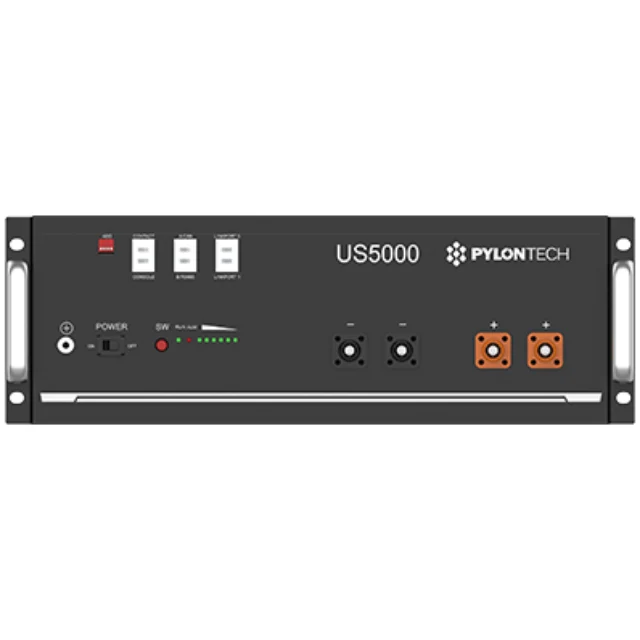
Pylontech makes battery modules and nothing else. Installers stack them to the size a property needs and pair them with an inverter from another manufacturer, which is why the brand is a fixture in off-grid and hybrid builds. It suits owners who want the inverter chosen on its merits, and it asks more of the installer than an all-in-one does.
By Kieron Taylor, Founder, Solar Select · Updated · 6 min read
The verdict
A well-understood battery block with a long storage-only history and unusually broad inverter support. The system around it is assembled by your installer, so the inverter pairing and the installer’s backing decide how it performs and who fixes it.
Best for: Off-grid and hybrid properties sized to the load, staged builds that will grow, and owners who want to pick the inverter independently.
Look elsewhere if: You want one manufacturer accountable for the whole system, a polished branded app, or a virtual power plant built around specific integrated products.
The inverter it is paired with, the voltage line and the module count move a Pylontech quote far more than the modules themselves. The quote section below sets out each factor.
The 30-second take
- A component brand. Pylontech supplies the battery only. The inverter, the app and the backup behaviour all come from whichever inverter brand your installer pairs it with.
- Three lines. The long-running US series is the stackable low-voltage module, Pelio is the newer low-voltage cabinet for indoor or outdoor mounting, and Force is the high-voltage line for current hybrid inverters.
- Compatibility is the selling point. A wide spread of independent inverters, off-grid platforms included, officially support the range.
- Supported beats “it works”. A pairing that commissions on the day but is missing from the supported list can mean years of awkward support.
- Staged growth has a catch. A stack balances to its weakest module, so a new module added to an old stack delivers less than its label suggests.
A battery module, not a home-energy brand
Pylontech has spent its whole history on storage, and most of what it has shipped worldwide sits behind another company’s inverter. That is why many homeowners have never heard the name: it sells to installers, and the logo on the app usually belongs to the inverter maker. Low consumer profile says nothing about quality in either direction. What can be checked is the track record and the list of inverters that officially support the range.
In Australia the brand is best known for the low-voltage module that off-grid and hybrid installers stack to suit the property. The US series is that classic block. Pelio repackages the low-voltage idea as a modern cabinet that can be wall or floor mounted, indoors or out. Force is the high-voltage line, made for contemporary hybrid inverters. A quote that says only “Pylontech battery” could mean any of the three, so it should name the line and the model.
Because the modules come without an inverter, there is no bundle steering the design. An installer can match the battery to the inverter that suits your site. If that is the kind of build you want, you can find vetted Pylontech installers in your state.
The inverter is the bigger decision
With an all-in-one battery, the inverter arrives as part of the package. With Pylontech it is a separate choice, and it shapes nearly everything you will notice as an owner: the monitoring app, the way backup behaves, and who you ring when something faults. Judge that inverter’s software on its own merits, because there is no Pylontech app to fall back on.
Two checks belong at quote stage. First, ask whether the battery and inverter combination appears on the manufacturer’s supported compatibility list. A pairing can commission without complaint and still be unsupported, and that gap tends to show up later as a dispute over whose problem a fault is. Second, confirm the voltage line matches the inverter. The low-voltage and high-voltage ranges are not interchangeable, and fitting the wrong one is costly to undo.
Then there is the data cable. The battery reports to the inverter over a communications link that must be configured at commissioning. It is an easy step to leave half-finished, and a system with it misconfigured can look healthy at handover while charging poorly or showing a false state of charge for months. Ask the installer to demonstrate the battery reading correctly in the inverter’s app before they leave.
“A pairing that works on install day and a pairing the manufacturers support are different things, and only one of them helps you when a fault appears years later.”
Adding modules later: what the stack gives back
Staged growth is a real strength of the range. The stack was designed to be added to, which is why it persists on off-grid properties where loads creep up unpredictably. The practical limits come from the inverter and the enclosure, not the battery, so the figure to ask for is the maximum the specified inverter supports.
The catch is age. A stack balances around its weakest member. Fit a fresh module beside ones that have cycled for years and you do not gain a full module of usable capacity. Stacks built from mixed generations can also behave unpredictably, so a staged build is best kept inside one product line.
None of that argues against expanding. It argues for doing most of it early, and for asking the installer what the realistic gain will be before paying for another module.
The variables in a Pylontech quote
Two quotes for the same number of modules can sit far apart, and the battery is rarely the reason. When you compare up to 3 Pylontech quotes, line these up first.
- The paired inverter. It drives cost, backup capability and the support path, and it is a separate product with its own warranty.
- Low voltage or high voltage. The line follows the inverter, so ask why that one was chosen.
- Modules now against the practical limit. How many are going in, and how many the chosen inverter will take.
- Grid-connected, hybrid or off-grid. Each changes the sizing logic, and off-grid changes it completely.
- The approved-list check. Rebate eligibility is decided model by model. Ask to see the exact battery model on the Clean Energy Council’s current approved list, and the paired inverter on its own list, for your configuration.
Off-grid sizing, and who answers the phone
Pylontech is one of the more established choices for remote properties, but off-grid sizing is a different discipline from suburban sizing. The design has to survive the worst weeks of the year, not an average evening, and an undersized stack means the power really does go out. Ask to see the load calculations behind the recommendation.
Support is the other structural point. There is no consumer-facing Pylontech presence to call. Help runs through the installer and the distributor, so an installer who will not stand behind the job leaves you without an obvious second option. Ask directly: if this faults several years in, who do I ring, and will you diagnose it?
On voltage, neither class is safer by default. Every approved, properly installed system is safe, and the hazard in any battery is stored energy. What the low-voltage format offers is a very large pool of installers, inverters and parts that have worked at that voltage for years. High-voltage systems tend to be more efficient over long cable runs and are where most new grid-tied development is heading.
Who should shortlist Pylontech
- Off-grid and hybrid properties where capacity is engineered to the load.
- Owners who want the inverter chosen independently, on its own strengths.
- Staged builds that will add modules within the first few years.
- Buyers who put cost for capacity ahead of app polish and brand recognition.
- Probably not a household that wants a single manufacturer accountable end to end, the simplest quote to set against all-in-one products, or a VPP program written around integrated systems.
A component battery is only as good as the person assembling the system. The Clean Energy Regulator’s inspection program covered 1,278 home battery installations between July 2025 and April 2026 and classified more than 60% as substandard. With Pylontech the installer is also your support line, so pick one who has paired these modules with your inverter before. Solar Select can connect you with up to 3 vetted installers who fit Pylontech.
How long would a Pylontech take to pay for itself at your place?
Postcode, your bill, and whether the roof already has panels. About a minute, and the ten-year figure is yours before anyone asks for a phone number. Start with vetted Pylontech installers in your state.
Read next
Sources
Every quantitative claim on this page traces to one of the sources below — government, manufacturer, or independent AU industry reference. Last verified 2026-09-17.
We use AI to help research and draft. Claims are traced to the sources below and dated. Where we haven’t got a source, we say so on the page — treat that as a starting point and do your own research.
General information only. It doesn’t take your circumstances into account and isn’t legal, financial, insurance or electrical advice. Rebates, tariffs, network rules and product terms change — confirm anything you plan to rely on with your installer, insurer, retailer or distributor, and see our terms.
Postcode in, up to 3 vetted installers out. Free for homeowners, no obligation. All solar guides · Federal rebates · How it works
Filed under: Brand deep-dives