Queensland
Pylontech battery installers in Queensland.
Get matched with top solar companies in Queensland
- Pylontech offers cabinet and stackable batteries to suit different installation spaces
- Unlock up to $7,000 in federal solar + battery rebates*
- Compare quotes from vetted installers, with Pylontech experience where available
Pylontech
What could a Pylontech battery save your home?
*For eligible combined solar and battery installations before January 2027. Battery-only rebates vary with usable capacity. Your installer confirms eligibility and amount.
✓ Up to 3 vetted installers
✓ Free to compare, no obligation
✓ Your chosen battery, your quote request
Meet Pylontech A storage specialist whose modules stack into towers and pair with many inverter brands.
- Works with many inverter brands
Pylontech publishes a compatibility list of other makers' inverters, so your installer isn't tied to one brand.
Your installer should check the exact inverter and firmware against Pylontech's current list.
- Build the tower you need
A Force H3 tower takes two to seven 5.12 kWh modules, giving about 9.7 to 34 kWh usable.
Pylontech's datasheet allows up to six towers in parallel.
- Rated for a long life
Pylontech rates Force H3 for more than 8,000 cycles and a design life of 15-plus years at 25 °C.
Design life is Pylontech's rating, not the warranty term.
- Rebate-listed, 10-year warranty
Every Force-H3 tower size is on the approved battery list, and SolarQuotes reports a 10-year product warranty.
Ask for the Australian warranty document for your exact model before you sign.
Choose the inverter first. The battery fits around it.
The company behind it
Pylontech is a Chinese lithium iron phosphate battery maker, founded in 2009 and listed in Shanghai.
Founded 2009
Established in October 2009 and listed on the Shanghai Stock Exchange in 2019.
2 million+ systems
More than 2,000,000 storage systems delivered worldwide in 16-plus years, Pylontech says.
Australian office
In Australia since 2016, with an office in NSW.
Want a Pylontech battery in Queensland?
Get my Pylontech quotesCompare up to 3 vetted installers. Free, no obligation.
Why Pylontech is different
Pylontech has spent sixteen years doing one thing — building battery modules — and has delivered more than two million systems worldwide doing it. Almost none of them carry its name on the app, because Pylontech supplies the storage block inside systems fronted by someone else’s inverter. In Australia its reputation lives with installers rather than homeowners: it is the 48-volt block that off-grid and hybrid builders have been stacking for years.
The architecture follows from that. The classic US-series module is 4.8 kilowatt-hours at 48 volts; stacks are built to the property’s load by adding blocks, with compatibility listed across an unusually broad set of independent inverter brands. The newer Pelio cabinet modernises the low-voltage packaging up to 102.4 kilowatt-hours, and the Force line brings a high-voltage option for contemporary hybrids — but the proposition never changes: a well-understood battery, chosen by installers who want to build the system themselves.
Choosing it therefore means choosing a builder, not a package. There is no Pylontech consumer app, no branded home-energy experience, no retail support line to ring — monitoring, control and support all arrive through the inverter brand, the distributor and the installer. Where an all-in-one sells you an ecosystem, this sells you a component with a long record and lets your installer construct the ecosystem around it.
The trade-offs are the mirror image of the strengths. Broad compatibility means the pairing must actually be on the supported list, the battery-to-inverter communications link must be configured correctly at commissioning, and a staged build should stay within one module generation, because a stack balances to its weakest member. None of this troubles an experienced builder; all of it punishes a casual one — which is the single most important thing to know before collecting quotes.
The Pylontech building blocks, piece by piece
The inverter is the first decision, and the one Pylontech leaves entirely to you. The brand makes no inverter at all, so every system is a pairing with an independent platform — and that pairing sets your app, your backup behaviour, your virtual-power-plant options and your support path. A quote should name the inverter, show the combination on the supported compatibility list, and explain why that platform suits your property; a pairing that merely works on the day is not the same thing as a supported one.
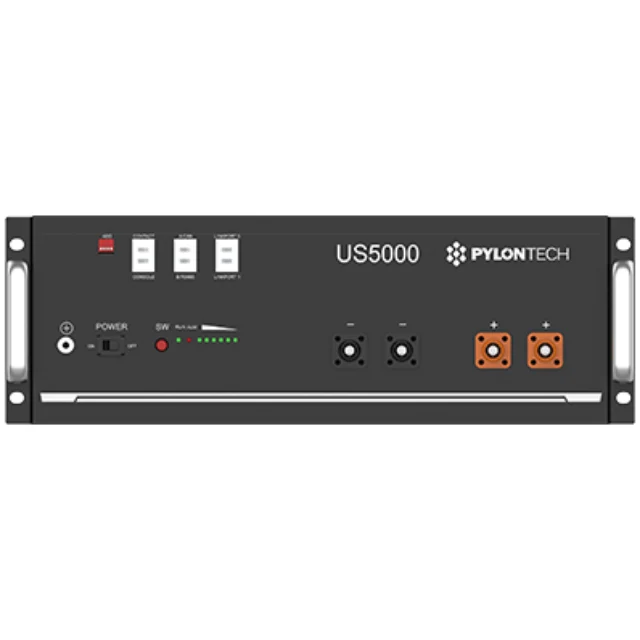
The US-series module is the long-running 48-volt block — 4.8 kilowatt-hours nominal each, stacked until the target capacity is reached. What it decides at quote stage is arithmetic: how many blocks now, how many the chosen inverter can ultimately manage, and whether the enclosure and wiring were sized for the larger number. Staged growth is a genuine strength, with the caveat that most of the growing is best done early, within one module generation.
Pelio is the modern low-voltage cabinet — 5.12 to 102.4 kilowatt-hours, indoor or outdoor, wall or floor mounted — the same 48-volt logic in tidier, more flexible packaging. Its quote-stage decision is placement and format as much as capacity: a cabinet that mounts where the property actually has space changes which designs are possible at all.
Force is the high-voltage line for modern grid-tied hybrid inverters, and it is not interchangeable with the low-voltage families — the inverter choice dictates the voltage class, and the wrong class is an expensive correction. When a quote says only “a Pylontech battery”, insist it say which of the three, because they are quite different products wearing one badge.
Put Pylontech to the test on your own numbers
Reading about it only goes so far — real quotes are where a Pylontech decision gets made. Get 2-3 quotes from vetted installers in Queensland. Free for homeowners.
What Pylontech does best
Off-grid and hybrid properties. This is the block remote builds have leaned on for years, precisely because capacity gets engineered to the load rather than bought as a package — and off-grid sizing is real engineering, designed for the worst weeks rather than the average evening. The long history in exactly these installs is the strongest form of the brand’s credibility.
Freedom of inverter. Listed compatibility across an unusually broad set of independent platforms means the installer picks the electronics that suit the property, then bolts the storage to it — the opposite of a bundle dictating the choice. On unusual properties, that flexibility is often the difference between a good design and a forced one.
Growing in stages. Adding modules later is generally straightforward, which is why the range persists wherever loads grow unpredictably — a shed becomes a workshop, a property gains a bore pump — and the sensible discipline is doing the bulk of expansion within the first couple of years, so the stack stays within one generation of module.
Delivering kilowatt-hours per dollar. Sixteen years of storage-only manufacturing at global volume is what funds the value position: buyers prioritising cost per usable kilowatt-hour over ecosystem polish are the natural constituency, and the delivery record — over two million systems worldwide — is the counterweight to the unfamiliar name.
Who a Pylontech build suits — and who it does not
It suits properties where the system is engineered rather than shopped: off-grid homesteads, hybrid builds, farms and workshops where the load profile is particular and the capacity must be built to it. If your installer talks in load calculations rather than package names, you are in this product’s home territory.
It suits owners who want the inverter chosen on its own merits, with storage as a separate, well-understood component. You give up single-badge simplicity; you gain a design fitted to the property.
It suits the patient budget. Stacking capacity in stages spreads spending in a way sealed products cannot — front-load the growth into the early years and the approach works exactly as intended.
It does not suit buyers who want one manufacturer accountable for everything, a polished consumer app, or the simplest possible quote to line up against all-in-one products — the component route is the wrong shape for all three. The same applies if your virtual-power-plant plans are anchored to a program built around specific integrated systems: check whether your intended pairing qualifies before treating VPP income as part of the maths. And with no consumer-facing brand support behind the hardware, an installer who will not stand behind their own work leaves you with no obvious second call — which makes a casual installer a deal-breaker here rather than a mere risk.
Run the money on usable kilowatt-hours per dollar after the federal rebate — the metric this range is built to win — but price the whole system, because the inverter, enclosure and commissioning are where paired builds hide their differences. Two quotes for the same blocks can both be fair and still differ widely on the engineering around them; the cheaper stack is not the better system if the design around it is thinner.
Pylontech in Queensland
Queensland adds nothing at state level in 2026, leaving the federal discount to carry the case, and the export picture splits the state: Ergon’s regulated regional feed-in tariff sustains real export income while south-east retailer rates do not. Pylontech’s rural and off-grid pedigree is most at home in exactly the regional properties on the Ergon side — where the same blocks also serve households for whom grid reliability, not tariffs, is the reason to store.
Feed-in tariffs in Queensland typically pay 4–13c/kWh while grid power costs 30–35c — so a stored kilowatt-hour is worth what you avoid buying, not what exporting earns, and the wider that gap sits on your own plan, the harder a battery works for you. Heat is the durability question in Queensland — batteries age faster on hot walls, so cabinet placement in shade with genuine airflow is a design requirement, and the Pelio’s indoor and outdoor mounting options give a careful installer room to do it properly.
Put Pylontech to the test on your own numbers
Reading about it only goes so far — real quotes are where a Pylontech decision gets made. Get 2-3 quotes from vetted installers in Queensland. Free for homeowners.
The installer decides the Pylontech outcome
No product on this site depends on its installer more. The hardware arrives as blocks; everything that makes it a system — the inverter pairing, the voltage-class choice, the sizing, the enclosure, the protection — is constructed by the person you hire. An unsupported pairing may commission successfully and then create years of support difficulty; an undersized off-grid stack means the lights actually go out. The design is the product.
Commissioning has a specific trap worth knowing: the battery speaks to the inverter over a communications link that must be configured correctly, and a half-done job can look fine at handover while misreporting state of charge for months. Ask a prospective installer how they verify the comms setup and what their commissioning checklist covers — the ones with a real answer are the ones who have done it before.
Support is the other test. With no consumer-facing brand presence, the installer and distributor are the support chain, so the year-four question — if this faults, who do I call, and will you diagnose it — belongs in every quote conversation, answered in writing. On staged builds, add one more: what is the realistic capacity gain from a module added in year three, given a stack balances to its weakest member? An installer who answers that clearly is telling you they understand the product.
This is where Solar Select earns its place. We put your enquiry in front of up to 3 approved installers, subject to current coverage, eligibility and brand suitability, which for a builder’s product like this is the single most useful filter. Comparing them is free for homeowners, and because only a small field quotes each job, the installers who respond are designing for your property rather than reciting a package.
Is Pylontech right for your home? Fit and warranty checks
A good fit if…
- Off-grid and hybrid properties where capacity is built to the load, not to a package
- Installers and owners who want to choose the inverter independently
- Buyers prioritising cost per kilowatt-hour over ecosystem polish
- Systems expected to grow in stages over several years
Consider the limitations
- You want one manufacturer accountable for the entire system
- A polished consumer app and branded experience matter to you
- You want the simplest possible quote to compare against all-in-one products
- Your virtual-power-plant program is built around specific integrated systems
Why the installer matters more than the battery
More than 60% of inspected home battery installs were substandard. The Clean Energy Regulator inspected 1,278 home battery installations under the Cheaper Home Batteries Program between July 2025 and April 2026. More than 60% came back substandard and 1.2% unsafe — and the hardware was rarely the problem. The install was.
That is the part a brand cannot fix for you. Solar Select checks installer approval and current campaign eligibility for your Queensland enquiry. Confirm business history and current independent reviews before choosing an installer. Your enquiry goes to up to 3 of them, and no one else sees your details.
Battery rebates in Queensland
Cheaper Home Batteries Program (federal) — roughly a quarter off the installed battery cost, applied upfront at the quote by the installer rather than claimed back later.
Federal-only in Queensland for 2026 — Queensland runs federal-only on battery rebates in 2026 — no active state battery program. The federal Cheaper Home Batteries discount still applies in full.
Ready for Pylontech quotes in Queensland?
Postcode in — up to 3 vetted installers out. Federal battery rebate applied at quote. Free, no obligation, maximum 3 installers ever.
Pylontech installers in Brisbane
- Pylontech battery installation Brisbane — serving Greater Brisbane
Regional Queensland
- Pylontech installers Gold Coast — serving the Gold Coast
- Pylontech battery installers in Sunshine Coast — serving the Sunshine Coast
- Pylontech battery installers in Townsville — serving Townsville and surrounds
- Pylontech battery installers in Cairns — serving Cairns and the Far North
- Pylontech battery installers in Toowoomba — serving Toowoomba and surrounds
- Pylontech battery installation Mackay — serving Mackay and surrounds
- Pylontech battery installation Rockhampton — serving Rockhampton and surrounds
- Pylontech battery installation Bundaberg — serving Bundaberg and surrounds
- Pylontech battery installers in Hervey Bay — serving Hervey Bay and surrounds
- Pylontech installers Gladstone — serving Gladstone and surrounds
This page also covers the Queensland towns that no longer have a page of their own. Across the Darling Downs and Maranoa, the Burdekin and North and the Sunshine Coast hinterland, enquiries from Chinchilla, Dalby, Goondiwindi, Roma, Stanthorpe, Warwick, Ayr, Charters Towers, Home Hill, Ingham, Caloundra and Nambour route through this page on postcode. In the Whitsundays and Isaac and greater Brisbane and the Lockyer, the same applies to Airlie Beach, Bowen, Moranbah, Proserpine, Sarina, Beaudesert, Caboolture, Gatton and Ipswich. Further out, Charleville, Cloncurry, Longreach, Mount Isa, Weipa, Biloela, Blackwater, Emerald and Yeppoon in outback Queensland and Central Queensland are matched the same way. Atherton, Innisfail, Mareeba, Tully, Gympie, Kingaroy and Maryborough in the Far North and the Wide Bay sit in the same Queensland pool.
Page updated 6 October 2026