Tasmania
Deye battery installers in Tasmania.
Get matched with top solar companies in Tasmania
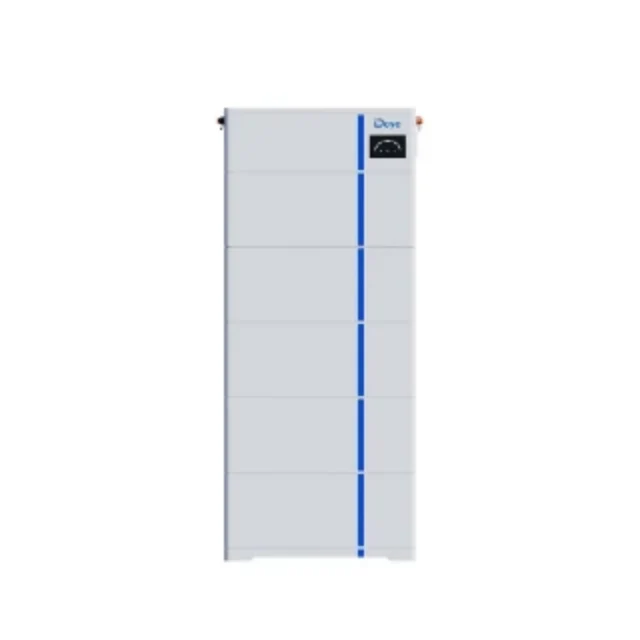
- Deye battery modules stack together to match the storage your home needs
- Unlock up to $7,000 in federal solar + battery rebates*
- Compare quotes from vetted installers, with Deye experience where available
Deye
What could a Deye battery save your home?
*For eligible combined solar and battery installations before January 2027. Battery-only rebates vary with usable capacity. Your installer confirms eligibility and amount.
✓ Up to 3 vetted installers
✓ Free to compare, no obligation
✓ Your chosen battery, your quote request
Meet Deye Built for backup and off-grid living, and it can work with the solar you already have.
- Keep the solar you have
Deye's Australian hybrid inverter can AC-couple to an existing solar system, so working panels and their inverter can stay.
Ask your installer to confirm your current inverter suits this set-up, and which Deye model is quoted.
- Made for off-grid and backup
Deye hybrid inverters run on-grid or off-grid, and up to 16 can be linked in parallel for larger properties.
Ask for the backed-up circuits to be listed by name in your quote.
- Charge from a generator
The inverter can store energy from a diesel generator, handy on rural blocks or through a long outage.
- Approved list, 10-year warranty
Deye AI-W batteries from 5.12 to 30.72 kWh are on the approved battery list, and Deye gives them a 10-year warranty.
Eligibility is model by model: check the exact model string on your quote.
Six charge and discharge time slots, set to suit your power plan.
The company behind it
A Shanghai-listed Chinese maker of hybrid inverters and home batteries, based in Ningbo.
Founded 2000
Deye says its parent, Ningbo Deye Technology, was founded in 2000 and listed in Shanghai in April 2021.
Global reach
Deye says its products are sold in over 140 countries and regions.
Approved here since 2024
Deye's AI-W5.1-B battery joined Australia's approved battery list in May 2024.
Want a Deye battery in Tasmania?
Get my Deye quotesCompare up to 3 vetted installers. Free, no obligation.
Why Deye is different
Deye arrives at the Australian home-battery conversation with global scale behind it: one of the world’s largest hybrid-inverter and home-storage manufacturers, with more than 6,000 staff, and Deye-built inverters reported at more than 30% of South Africa’s market — a country where backup power is tested daily. The scale is real — Deye platforms even reach Australia wearing other companies’ badges — and the brand is newer to Australian homes than to the rest of the world, which is why the installer you choose matters.
What genuinely separates it is openness. Where most value-tier brands lock their batteries to their own inverters, Deye’s hybrid inverters work with a wide range of third-party batteries — the opposite of an ecosystem play. That flexibility has concrete value: battery replacement or expansion later is not chained to one manufacturer’s catalogue, and local availability can drive the choice instead of a compatibility chart. It also means a Deye quote can be assembled from more directions than a closed system allows — which is why two Deye quotes can look surprisingly different.
The second real strength is heritage in hard problems. Off-grid and hybrid-off-grid operation is where the inverter lineage shows — export limiting, deep time-of-use programming, backup behaviour and generator-era design habits — capability built for properties beyond a reliable grid, offered at a value-tier price. This is capability over brand story, and for the right property it is the whole argument.
There is homework on the other side of the ledger, and it is manageable. Virtual-power-plant compatibility must be verified per model; Clean Energy Council listing runs model-by-model; and the configuration depth that makes the platform powerful rewards an installer who has commissioned it before. Every one of those is handled by the installer, not the factory — which is why the installer is the decision that matters.
The Deye system, piece by piece
The all-in-one wall unit is the simplest shape: inverter and modular battery in one enclosure, the fewest separate components on the wall. It suits grid-connected homes that want the Deye price point without the component conversation — but “all-in-one or separates” changes the install, the upgrade path and the cost, so a quote should declare which it is in its first line. Fewest boxes does not mean fewest decisions; the configuration surface underneath is the same.
The high-voltage stackable modules are the mainstream path for larger systems, pairing with Deye’s HV hybrid inverters. Here the deciding question is the pairing itself: the range spans many configurations, and the exact inverter-battery combination on the quote needs confirming explicitly rather than assumed from the shared badge.
The low-voltage packs serve the off-grid-leaning end — several pack sizes with large parallel expansion, the traditional shape for properties running serious autonomous storage. Choosing this family is really choosing a system philosophy: a design can be grid-tied, backup-capable or genuinely off-grid, Deye spans all three, and they price very differently — so the quote must state which one it is building.
The invisible component is the support chain. With a newer brand in this market, who stands behind the hardware — the installer or an importer — is a structural part of what you are buying, and the record’s advice is blunt: agree the escalation path before install, not after the first fault.
Put Deye to the test on your own numbers
Reading about it only goes so far — real quotes are where a Deye decision gets made. Get 2-3 quotes from vetted installers in Tasmania. Free for homeowners.
What Deye does best
Off-grid and the edge of the grid. This is where Deye most often makes sense, and the mechanism is lineage: the hybrid-inverter platform was built for autonomous operation, so the things off-grid design needs — deep configuration, low-voltage architecture, hybrid operation — are native rather than bolted on. A well-specified Deye off-grid system from an experienced designer beats a big-name badge fitted by someone learning.
Not locking you in. The open ecosystem is a structural advantage rather than a spec-sheet line: third-party battery support means future storage decisions stay yours. For buyers who have watched closed ecosystems dictate their owners’ next purchase, that independence is worth real money.
Control for people who want it. Export limits, time-of-use schedules and backup behaviour are all deeply adjustable — power in the hands of an owner or installer who engages with it, and the raw material for working time-varying tariffs and export windows harder than set-and-forget products can. Set up well, that control turns a tariff structure from a fact of life into a lever.
Stretching a budget. Aggressive pricing is part of the record, and on larger systems where cost per kilowatt-hour dominates every other consideration, it compounds. The record is equally clear about what the low price does not include — brand certainty and a long local field history — which is exactly the trade the buyer is choosing to make.
Who a Deye suits — and who it does not
The clearest Deye buyer runs a property the grid serves badly — off-grid now, heading there, or on a connection unreliable enough that autonomy matters. For that buyer the heritage is the product, the configuration depth is necessary rather than optional, and the value pricing puts a serious system within reach.
The second fit is deliberate: a value-driven buyer who wants more capability per dollar than the big-badge brands offer — ideally one whose installer has standardised on Deye and will personally stand behind the install. That last clause is not decoration; on any battery, the installer relationship is what you lean on in year four.
It also suits owners who value flexibility as a feature in itself: the freedom to pair the inverter with third-party batteries, source locally, and keep future options open rather than buying into a sealed ecosystem. That freedom only pays if each pairing is verified against the supported list at the time it is made.
Prefer another brand if you want a long, proven Australian support chain standing behind the product, if virtual-power-plant participation with a specific retailer is central to your plan, or if you are not willing to do the verification work — the approved-list check, the pairing confirmation, the support-path question. Deye rewards diligence and punishes assumption; buyers who need the assumption to be safe should pay for a brand where it is.
Frame the money as value per usable kilowatt-hour after the federal rebate, and check one thing first: the rebate depends entirely on the exact model being on the approved list. With that confirmed and a strong installer, a wide per-kWh advantage over the big-badge brands is a genuine saving rather than a compromise.
Deye in Tasmania
Tasmania adds no state layer, and its winter sun is the country’s weakest — the classic condition for over-sold batteries. Deye’s modular families make it mechanically easy to size sensibly, and the hybrid-off-grid capability suits the state’s remote properties, where a grid connection is marginal and autonomy is part of the design brief. For an ordinary grid-connected Hobart home, the case is value: size it carefully and pick an installer who has commissioned Deye before.
Feed-in tariffs in Tasmania typically pay 8.0–9.0c/kWh while grid power costs 30–35c — so a stored kilowatt-hour is worth what you avoid buying, not what exporting earns, and the wider that gap sits on your own plan, the harder a battery works for you. The regulated flat tariff makes the Tasmanian sums stable and checkable — a good quote shows the stored-versus-exported arithmetic for your usage, not a brochure curve.
Put Deye to the test on your own numbers
Reading about it only goes so far — real quotes are where a Deye decision gets made. Get 2-3 quotes from vetted installers in Tasmania. Free for homeowners.
The installer decides the Deye outcome
With Deye the industry truism becomes literal: the record itself notes outcomes appear more installer-dependent than for the established brands, which means the choice of installer carries more weight than the choice of battery. The platform’s depth — the export limits, schedules and backup behaviours that make it capable — is exactly the surface where an inexperienced setup goes quietly wrong.
Commissioning is the test. Ask how many Deye systems the crew has commissioned — systems, not batteries handled — whether commissioning happens on site or remotely, and what the process is if a firmware update needs the configuration redone. Those questions come straight from how this platform actually fails, and a practised installer answers them without flinching. The answers separate practitioners from dabblers faster than any brochure comparison could.
Paperwork is the other half: the exact model shown on the current Clean Energy Council approved battery list, the inverter-battery pairing confirmed against the supported documentation, and the year-four support path — installer or importer — named in writing. None of that is bureaucracy; with a newer brand it is the product’s missing half, supplied by the person installing it.
This is where being matched well matters more than usual, and it is what Solar Select is for: up to 3 approved installers, subject to current coverage, eligibility and brand suitability, the single most valuable filter this brand has. The matching is free for homeowners, and with a configuration-heavy platform, comparing commissioning answers across a few quotes is the whole point.
Is Deye right for your home? Fit and warranty checks
A good fit if…
- Off-grid and hybrid-off-grid setups, where Deye’s inverter heritage is a genuine strength
- Budget-driven buyers who have decided price outweighs brand certainty
- Larger systems where cost per kWh dominates every other consideration
- Households whose installer has standardised on Deye and will personally support it
- Owners who want inverter-battery flexibility rather than a closed ecosystem
Consider the limitations
- The longest Australian field history matters more to you than value
- Virtual-power-plant participation with a specific retailer matters to you — compatibility is patchier than the major brands
- You want a closed single-brand ecosystem rather than an open one
- You are not willing to verify that your exact model is on the approved list
Why the installer matters more than the battery
More than 60% of inspected home battery installs were substandard. The Clean Energy Regulator inspected 1,278 home battery installations under the Cheaper Home Batteries Program between July 2025 and April 2026. More than 60% came back substandard and 1.2% unsafe — and the hardware was rarely the problem. The install was.
That is the part a brand cannot fix for you. Solar Select checks installer approval and current campaign eligibility for your Tasmania enquiry. Confirm business history and current independent reviews before choosing an installer. Your enquiry goes to up to 3 of them, and no one else sees your details.
Battery rebates in Tasmania
Cheaper Home Batteries Program (federal) — roughly a quarter off the installed battery cost, applied upfront at the quote by the installer rather than claimed back later.
Federal-only in Tasmania for 2026 — Tasmania runs federal-only on battery rebates in 2026. The federal Cheaper Home Batteries discount still applies in full.
Ready for Deye quotes in Tasmania?
Postcode in — up to 3 vetted installers out. Federal battery rebate applied at quote. Free, no obligation, maximum 3 installers ever.
Deye installers in Hobart
- Deye battery installers in Hobart — serving Greater Hobart
Regional Tasmania
- Deye battery installers in Launceston — serving Launceston and surrounds
- Deye installers Devonport — serving Devonport and surrounds
- Deye installers Burnie — serving Burnie and surrounds
This page also covers the Tasmania towns that no longer have a page of their own. Across the North West Coast and greater Hobart, enquiries from Latrobe, Queenstown, Smithton, Ulverstone, Wynyard, Kingston, New Norfolk and Sorell route through this page on postcode. In the North East and the Huon, the same applies to Deloraine, George Town, Scottsdale, St Helens and Huonville.
Page updated 6 October 2026