Bunbury, WA
Dyness battery installers in Bunbury, WA.
Get matched with top solar companies in Bunbury
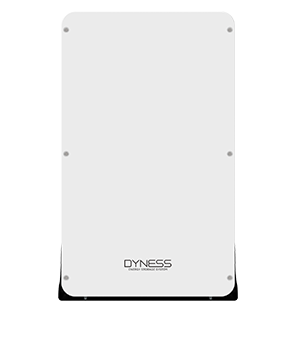
- Dyness PowerBox batteries can be wall-mounted to keep floor space clear
- Unlock up to $7,000 in federal solar + battery rebates*
- Compare quotes from vetted installers, with Dyness experience where available
Dyness
What could a Dyness battery save your home?
*For eligible combined solar and battery installations before January 2027. Battery-only rebates vary with usable capacity. Your installer confirms eligibility and amount.
✓ Up to 3 vetted installers
✓ Free to compare, no obligation
✓ Your chosen battery, your quote request
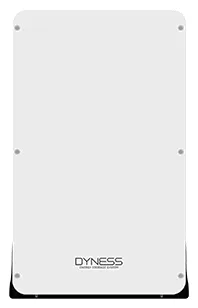
Meet Dyness Stackable and wall-mounted batteries that work with a long list of inverter brands.
- Keep your inverter options open
Dyness lists 26 inverter brands, its own included, as compatible with STACK100 Pro, so your installer has choice.
The exact inverter must be on Dyness's list for your battery.
- Modules stack with zero wiring
STACK100 Pro modules stack with no wiring between them, and Dyness says one tower goes up in 30 minutes.
- Mix modules for three years
STACK100 Pro starts at three modules, 15.36 kWh, and Dyness allows free mixing of modules within three years.
After three years, check expansion options with your installer.
- Three families listed, 10-year cover
PowerBox G2, PowerBox Pro and STACK100 Pro are approved-listed, and PowerBox Pro keeps 70% usable energy for 10 years.
Dyness's warranty needs a CEC-approved installer, and it transfers with the house while the battery stays.
The company behind it
Dyness is a Suzhou-based energy storage maker, founded in 2017, with an Australian branch in Victoria.
Founded 2017
Dyness says it was established in 2017, with its global headquarters in Suzhou, China.
1,000,000+ units shipped
Over 1,000,000 units delivered to more than 100 countries and regions, Dyness says.
Australian branch
Dyness says its Australian branch opened in March 2023, with an office in Burwood, Victoria.
Want a Dyness battery on your Bunbury home?
Get my Dyness quotesCompare up to 3 vetted installers. Free, no obligation.
A Dyness in Bunbury performs exactly as well as its configuration — and the configuration is decided by whoever installs it.
Why the installer matters more than the battery
The Clean Energy Regulator inspected 1,278 home battery installations under the Cheaper Home Batteries Program between July 2025 and April 2026 — more than 60% came back substandard and 1.2% unsafe. Solar Select checks installer approval and current eligibility before matching your Bunbury enquiry. Manufacturer accreditation is a separate check; confirm the credentials relevant to your chosen battery.
What specifically goes wrong on a Dyness install
- Grid connection paperwork has to name both the inverter and the exact Dyness model string, and a pairing that is not on Dyness’s compatibility list is outside the warranty even if it commissions on the day
- Low-voltage and high-voltage families are not interchangeable, and the wrong one for the inverter is an expensive correction
- The battery-to-inverter communications link has to be configured correctly; SolarQuotes owners describe calibration and reporting problems that trace back to this step
- Warranty registration through the app or portal is easy to skip on a busy handover and the company treats it as the gate to longer cover
- Boxes paralleled in numbers need the cabling and enclosure sized for the final count, not the first box
Request my Dyness quotes in Bunbury.
That's why Dyness quotes in Bunbury are only comparable when the scope matches. Here's what to hold constant.
Comparing Dyness quotes in Bunbury
We don't publish price bands, because installed prices move constantly and depend on your roof, switchboard and supply. What we can tell you is what to hold constant so three quotes are actually comparable — match these first, then compare after-rebate dollars per usable kWh.
- Which inverter it pairs with and whether the exact model appears on Dyness’s own compatibility list for that battery family
- Low-voltage boxes or the high-voltage stack, which follows from the inverter rather than from preference
- How many boxes or modules now, and how many the chosen inverter can actually manage
- Whether the Cygni all-in-one is the better shape for the house, since it removes the pairing decision
- Warranty registration through the Dyness app or portal at commissioning, which the company says lengthens cover
A cheaper quote that skips backup hardware, assumes an inverter you don't have, or quietly changes the configuration isn't cheaper — it's a different job.
Want three Dyness quotes you can actually compare? Your enquiry goes to up to 3 vetted installers in Bunbury, all quoting the same scope.
Who installs Dyness batteries in Bunbury?
Solar Select is a matching platform for homeowners looking for Dyness battery installation in Bunbury. Submit your postcode and system requirements to request a match with up to 3 suitable installers, subject to current coverage, availability and brand suitability.
Enter your postcode and we check which vetted installers cover Bunbury for Dyness.
How are Dyness installers matched in Bunbury?
Matching considers approved installer accounts, active campaign geography, the requested system and current eligibility. Verified brand accreditations are prioritised when relevant. The actual match happens after you submit your postcode and enquiry; displayed companies are not a promise of who will receive it.
Compare recent independent reviews, business history, workmanship terms and the accreditation relevant to your chosen battery. Manufacturer accreditation and general installer approval are separate checks.
Battery rebates in Western Australia
- Cheaper Home Batteries Program (federal) — roughly a quarter off the installed battery cost, upfront, paid at its full rate on the first tier of usable capacity and at a reduced rate above that. Applied at quote by the installer, not claimed back later.
- WA Residential Battery Scheme (WA) — WA adds the Residential Battery Scheme — $130 per usable kWh for Synergy customers (max $1,300) or $380 per kWh for Horizon Power customers (max $3,800), capped at 10 kWh and conditional on VPP enrolment. It stacks with the federal rebate. Full WA rebate breakdown
Still weighing a Dyness up? The Bunbury numbers and the deeper reading are below.
Dyness battery installation in Bunbury, WA
Comparing Dyness for a home in Bunbury and the South West? Use your property's postcode and existing solar details when requesting quotes. This page focuses on Bunbury and the South West, WA.
- 9,287 small-scale solar installations recorded in postcode 6230, the anchor postcode for this Bunbury page. These systems total 51,403 kW of installed solar capacity.
- 9.2 kW average new solar system size in postcode 6230 during 2025.
Clean Energy Regulator postcode data · as at 2026-06. Postcode figures are not totals for all of Bunbury and the South West and do not measure installer availability.
The Bunbury numbers
9,287 small-scale systems sit in postcode 6230 on the Clean Energy Regulator's count — 51,403 kW as at 2026-06. For a Dyness addition to an existing Bunbury system, supply the inverter model and switchboard details. These figures describe installed solar, not any installer's experience or the number of local battery jobs.
New systems in 6230 averaged 9.2 kW through 2025, against a fleet average of 5.5 kW across everything installed to date — arrays here have grown to roughly 1.7× their old size as panels got cheaper. That larger roof is what a Dyness would be charged from, so have storage sized against 9.2 kW of generation, not against the biggest configuration on the quote.
Bunbury swings from about 8.3 peak sun hours in Jan to 2.7 in Jun — roughly 3.1× more generation in the sunniest month than the dullest. On a 10 kW array that is around 70.6 kWh a day in Jan against 23 kWh in Jun. Size a Dyness on the winter figure: Dyness is modular, from one block to a cluster, so the real question at quote stage is what it can actually refill on a 23 kWh day, not what it holds on paper.
Battery installations in postcode 6230
For the postcode used on this Bunbury page, the Clean Energy Regulator records:
- July 2025–December 2025
- 259 installations
- January–July 2026
- 319 installations
- Total registered installations
- 578
- Total usable storage
- 10,828.2 kWh
The recorded average is below 20 kWh. Start your quote comparison with evening consumption and the circuits you want backed up; local installation averages cannot size a battery for your home.
All brands, across the postcode; not unique homes or Solar Select installations. Scheme data starts July 2025 and excludes pending registrations. Recent figures may rise as registrations are processed.
Source: Clean Energy Regulator · data to 2026-07; checked 2026-09-13.
Show month-by-month generation
| Month | Peak sun hours | 10 kW array, kWh/day |
|---|---|---|
| Jan | 8.3 | 70.6 kWh |
| Feb | 7.4 | 62.9 kWh |
| Mar | 6 | 51 kWh |
| Apr | 4.4 | 37.4 kWh |
| May | 3.2 | 27.2 kWh |
| Jun | 2.7 | 23 kWh |
| Jul | 2.9 | 24.7 kWh |
| Aug | 3.8 | 32.3 kWh |
| Sep | 4.9 | 41.7 kWh |
| Oct | 6.4 | 54.4 kWh |
| Nov | 7.6 | 64.6 kWh |
| Dec | 8.3 | 70.6 kWh |
Monthly shape from Bureau of Meteorology climatology for Western Australia, scaled to Bunbury's annual average of 5.5 peak sun hours; 85% system derate.
Install counts and capacity: Clean Energy Regulator postcode data for small-scale installations (CC BY).
What owning a Dyness is actually like
Spec sheets stop being interesting about a week after install. These are the things owners notice in year one.
- Day-to-day monitoring comes from whichever inverter the battery is paired with, so the app you live with is the inverter brand’s; Dyness’s own app is there for warranty registration and battery-level data.
- Owners on SolarQuotes praise the build and reliability, and their complaints cluster around software limits and a battery-management system that wants a regular full charge to stay calibrated — a commissioning setting, not a fault.
- Support runs through the installer first and Dyness’s Melbourne office second; SolarQuotes reviewers who had trouble describe slow installer responses more often than slow manufacturer ones.
- The warranty asks for registration through the app or portal and treats extended cover as something only registered systems can buy, so the handover should end with a registration confirmation, not a promise to do it later.
Four questions to ask any Dyness quote
- Which inverter is this paired with, and is the exact model on Dyness’s compatibility list for this battery?
- Low-voltage box, high-voltage stack or the Cygni all-in-one — and why that shape for my house?
- How many modules now, and how many can this inverter take later?
- Will you register the system with Dyness before you leave, and who do I call in year five?
Is Dyness right for your home? Fit and warranty checks
A good fit in Bunbury if…
- Households whose installer wants to choose the inverter on its merits and bolt storage to it
- Buyers prioritising capacity per dollar over ecosystem polish
- Larger homes and small businesses that will grow a stack in stages
- Owners happy for the inverter brand’s app to be the daily interface
Consider the limitations
- You want one manufacturer accountable for inverter, battery and app together
- Your virtual-power-plant plan is written around a specific integrated system
- You want a long Australian field history behind the warranty
- You would rather not depend on the installer to keep the battery calibrated and registered
Dyness specifications and source documents
- Current Dyness line-up in Australia: DL5.0 (4.61 kWh usable), PowerBox Pro (9.216 kWh usable), PowerBox G2 (9.728 kWh usable), STACK100 Pro-3S (15.36 kWh usable), STACK100 Pro-15S (76.8 kWh usable), Cygni 10.0HS-M2 (all-in-one) (7.3 kWh usable). Source
- Dyness is DC-coupled: the battery and inverter are one system, so on a retrofit the existing solar inverter is replaced rather than kept. Source
- Usable capacity runs from 4.61 kWh to 76.8 kWh. Source
- Capacity can be added later without replacing the inverter. Source
- The manufacturer warranty is 10 years, with 70% of original capacity guaranteed at the end of it. Source
- It works with inverters from other brands, not only Dyness's. Source
- Listed models are on the Clean Energy Council approved battery list. Source
- Any accredited installer can fit Dyness under the manufacturer's warranty terms. Source
- Every Dyness model in this record is Clean Energy Council listed, which is the hardware condition of the federal Cheaper Home Batteries Program; the discount is delivered upfront through an SAA-accredited installer or retailer, with no separate application to the Clean Energy Regulator. Source
Grid connection in Bunbury
- Western Power pre-approval — battery systems usually need explicit pre-approval before install. A good installer lodges the application and flags any constraint in the quote — not after.
- Typical export cap ~5 kW — single-phase residential export in Bunbury is typically around 5 kW on the Western Power network. A battery softens the cap — solar that can't export charges the Dyness instead of being curtailed.
- 5–15 business days — typical connection-approval turnaround once the installer lodges with Western Power.
Ready for Dyness quotes in Bunbury?
Request quotes from up to 3 vetted installers for a Dyness in Bunbury — postcode in, quotes out.
Areas served around Bunbury
Matching covers Bunbury and the South West, not just the centre — enquiries route on your postcode. Local solar detail for each suburb:
- Bunbury (6231) · 0.0 km from Bunbury — 18 systems, 50 kW installed
- East Bunbury (6230) · 2.6 km from Bunbury — 9,287 systems, 51,403 kW installed
- South Bunbury (6230) · 3.2 km from Bunbury
- Vittoria (6230) · 3.4 km from Bunbury
- Glen Iris (6230) · 4.4 km from Bunbury
- Carey Park (6230) · 4.5 km from Bunbury
- Davenport (6230) · 4.8 km from Bunbury
- Withers (6230) · 4.9 km from Bunbury
- Pelican Point (6230) · 5.3 km from Bunbury
- College Grove (6230) · 6.2 km from Bunbury
- Picton (6229) · 6.3 km from Bunbury — 54 systems, 1,032 kW installed
- Usher (6230) · 6.3 km from Bunbury
- Eaton (6232) · 7.2 km from Bunbury — 3,050 systems, 14,700 kW installed
- Picton East (6229) · 8.4 km from Bunbury
- Millbridge (6232) · 9.0 km from Bunbury
- Australind (6233) · 9.8 km from Bunbury — 5,406 systems, 28,551 kW installed
- Dalyellup (6230) · 10.2 km from Bunbury
- Gelorup (6230) · 10.6 km from Bunbury
- Dardanup (6236) · 11.5 km from Bunbury — 661 systems, 3,949 kW installed
- Dardanup West (6236) · 11.5 km from Bunbury
- Waterloo (6228) · 12.3 km from Bunbury — 36 systems, 234 kW installed
- Leschenault (6233) · 13.0 km from Bunbury
- North Boyanup (6237) · 13.0 km from Bunbury — 763 systems, 4,273 kW installed
- Paradise (6236) · 13.7 km from Bunbury
- Wellesley (6233) · 16.5 km from Bunbury
- Burekup (6227) · 16.6 km from Bunbury — 218 systems, 1,136 kW installed
- Henty (6236) · 17.2 km from Bunbury
- Stratham (6237) · 17.2 km from Bunbury
- Parkfield (6233) · 17.7 km from Bunbury
- Boyanup (6237) · 19.7 km from Bunbury
- Brunswick (6224) · 20.2 km from Bunbury — 317 systems, 2,090 kW installed
- Roelands (6226) · 21.2 km from Bunbury — 298 systems, 1,783 kW installed
- Stirling Estate (6271) · 21.5 km from Bunbury — 1,066 systems, 5,684 kW installed
- Binningup (6233) · 22.0 km from Bunbury
- Ferguson (6236) · 23.2 km from Bunbury
- Elgin (6237) · 23.9 km from Bunbury
- Gwindinup (6237) · 24.7 km from Bunbury
- Benger (6223) · 25.0 km from Bunbury — 40 systems, 251 kW installed
- Beela (6224) · 25.7 km from Bunbury
- Capel (6271) · 25.7 km from Bunbury
- Crooked Brook (6236) · 25.8 km from Bunbury
- Peppermint Grove Beach (6271) · 26.2 km from Bunbury
- Argyle (6239) · 26.8 km from Bunbury — 1,411 systems, 8,174 kW installed
- The Plains (6237) · 28.6 km from Bunbury
- Wellington Mill (6236) · 29.9 km from Bunbury
- Wellington Forest (6236) · 31.2 km from Bunbury
- Forrest Beach (6271) · 31.7 km from Bunbury
- Beelerup (6239) · 31.8 km from Bunbury
Other locations for Dyness
Dyness installers across Western Australia, town by town
Also comparing Perth? Dyness battery installers in Perth
Read before you commit
Dyness questions, Bunbury answers
Who is Dyness, and who supports it in Bunbury?
Dyness is a Suzhou battery manufacturer founded in 2017; SolarQuotes records a Melbourne office since about 2018 and a company of several hundred staff. The Australian warranty names Dyness Aus Pty Ltd as importer, with a local service line and email, and directs faults to your installer first and Dyness second. Support exists, but it starts with the person who fitted the system.
Is Dyness eligible for the federal battery rebate for a Bunbury home?
The DL5.0, PowerBox G2, PowerBox Pro, STACK100 Pro and Cygni models appear on the Clean Energy Council approved battery list, the hardware gate for the Cheaper Home Batteries Program. Because these are paired systems, ask for the battery model string and the paired inverter on the quote so the configuration matches the listing, and confirm the installer holds SAA accreditation.
Which inverters does Dyness work with in Bunbury, WA?
Dyness publishes compatibility lists on its Australian site: dozens of brands for the low-voltage boxes and more than two dozen for the STACK100 Pro, updated through 2026. The rule is simple — if the exact inverter model is on the list for your battery family, the pairing is supported; if not, the warranty excludes it, however well it appears to work.
What is the difference between the PowerBox, the STACK100 Pro and the Cygni if I live in Bunbury?
The PowerBox is a wall-mounted low-voltage box that parallels in numbers; the STACK100 Pro is a high-voltage stack built up module by module for bigger loads; the Cygni is an all-in-one with Dyness’s own inverter inside. Which one suits you follows from the inverter you are keeping or choosing and from how much the house will grow.
Why do owners mention full charges and calibration for Bunbury households?
Some SolarQuotes reviewers describe the battery-management system wanting a periodic full charge to keep its capacity reading accurate, and software that felt limited. Both are commissioning and configuration matters rather than cell problems — a good installer sets the inverter to allow the calibration charge and explains what the app will show. Ask how yours will handle it.
Do I need to register the warranty across Bunbury and the South West?
Yes. Dyness’s Australian warranty page says registration through the Dyness app or web portal helps you get a longer warranty period, and that only registered systems under warranty can buy extended cover. Have the installer complete it at handover with your details, and keep the confirmation with the invoice, because a claim starts with proof of purchase.
Can I add more Dyness capacity later in Bunbury?
The boxes parallel in large numbers and the stack adds modules, so expansion is designed in; the limit is what the paired inverter can manage and whether the cabling and enclosure were sized for the eventual count. Do most of the growing early so the modules stay within one generation, and ask the installer to write down the ceiling for your inverter at quote stage.
Who installs Dyness batteries in Bunbury?
Solar Select is a matching platform for homeowners seeking Dyness battery installation in Bunbury and the South West. Submit your postcode and requirements to request a match with up to 3 approved installers, subject to current coverage and eligibility. Manufacturer accreditation is verified separately; ask for the credentials relevant to your chosen battery. Free for homeowners.
How do I compare Dyness quotes in Bunbury?
Installed prices move constantly and vary by site, so compare on after-rebate dollars per usable kWh rather than headline totals — and only once the scope matches. For this brand the variables that matter are: which inverter it pairs with and whether the exact model appears on Dyness’s own compatibility list for that battery family; low-voltage boxes or the high-voltage stack, which follows from the inverter rather than from preference; how many boxes or modules now, and how many the chosen inverter can actually manage. Get all three quotes on the same scope, then compare the installers harder than the numbers.
What battery rebates apply in Bunbury?
The federal Cheaper Home Batteries Program applies nationwide — roughly a quarter off installed cost, upfront, paid at its full rate on the first tier of usable capacity and tapering above that. Because Dyness is modular, from one block to a cluster, how much you collect depends on how the configuration lines up with those tiers, so ask the installer to show the tier split rather than one flat "government incentive" line. WA then adds WA Residential Battery Scheme on top.
What does Western Power need to approve for a Dyness in Bunbury?
The connection application covers the whole system, so what gets scrutinised depends on the configuration: grid connection paperwork has to name both the inverter and the exact Dyness model string, and a pairing that is not on Dyness’s compatibility list is outside the warranty even if it commissions on the day. Export in Bunbury is typically around 5 kW single-phase, and approval usually runs 5–15 business days once lodged.
Are your Bunbury installers Dyness-accredited?
Accreditation is one of the things we look at, and where a Dyness-accredited installer covers Bunbury and the South West you'll see that in the match. It is deliberately not the only filter — a current accreditation badge says the installer has done the brand's training, not that they wire a good switchboard or come back in year three. Every installer serving Bunbury is vetted on the same bar set out above before they join. Ask the ones you're matched with what Dyness work they've actually done, and how much of it, before you sign.
Is a Dyness battery worth it in Bunbury?
Bunbury averages 5.5 peak sun hours, so a 10 kW rooftop array generates roughly 46.8 kWh on an average day — enough to cycle a Dyness on most days of the year. With Western Australia feed-in tariffs typically paying 2–10c/kWh while grid power costs 30–35c, every stored kWh you use yourself is worth several times what exporting it earns.
How many solar installations are recorded around Bunbury?
The Clean Energy Regulator counts 9,287 small-scale systems in postcode 6230, totalling 51,403 kW as at 2026-06. That is an installed capacity base spread across postcode 6230, not a count of unique homes or Dyness jobs. It matters for a battery quote because retrofit work — switchboard condition, existing inverter age, whether the array pairs cleanly with Dyness — is where the price and the risk actually sit.
Answered what you needed?
Get your up to 3 vetted Dyness quotes for Bunbury — free, no obligation.
Local data reviewed by the Solar Select team. Installer network information is shown separately above when verified records are available. Bunbury data sourced from BOM (sun hours), CER (rebates) and AER (Western Power network — export figures are indicative; your distributor sets the limit for your address). Dyness product and pricing figures are sourced below. Last verified 2026-09-04. Page updated 6 October 2026.
- Dyness Australia — PowerBox Pro
- Dyness Australia — STACK100 Pro
- Dyness Australia — inverter matching lists
- Dyness — PowerBox Pro warranty terms (Australia)
- SolarQuotes — Dyness battery reviews
- Clean Energy Council — approved batteries
- DCCEEW — Cheaper Home Batteries Program
All Western Australia locations · All Dyness locations · How it works