Brand deep-dives
Dyness battery review
Dyness: storage that pairs with the inverter you choose, and the list that governs it.
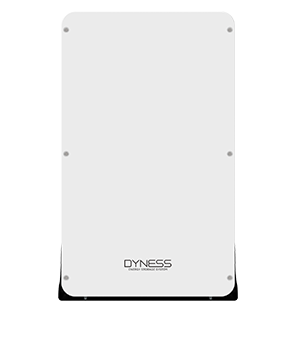
- 4.61 to 76.8 kWh
- Add modules later
- 10-year warranty
Dyness builds batteries and leaves the inverter to other makers, publishing compatibility lists of the third-party hybrids each battery family works with. Clean Energy Council listed models span 4.61 kWh to 76.8 kWh usable, from a single low-voltage block to a high-voltage stack sized for a small business. It suits buyers who want capacity and inverter freedom, and whose installer will own the pairing.
By Kieron Taylor, Founder, Solar Select · Updated · 6 min read
The verdict
Good-value modular storage with unusually broad inverter choice. The freedom comes with homework: the pairing, the communications set-up and the warranty registration all rest on the installer doing them properly.
Best for: Households and small businesses whose installer wants to pick the inverter on merit and grow capacity in stages.
Look elsewhere if: You want a single manufacturer answerable for inverter, battery and app together, or a long Australian field history behind the warranty.
The paired inverter, the battery family and the module count move a Dyness quote more than the brand does. “What changes a Dyness quote” below walks through each.
The 30-second take
- A battery maker, not an ecosystem. Dyness sells storage that pairs with other brands’ hybrid inverters, plus the Cygni all-in-one for buyers who want the inverter included.
- Wide listed range. Clean Energy Council listed models run from the DL5.0 at 4.61 kWh usable to the STACK100 Pro-15S at 76.8 kWh usable.
- The compatibility list is the rule. Pair the battery with an inverter model that is missing from Dyness’s list for that family and the warranty does not cover it, even if everything commissions without complaint.
- 10 years to 70%. The PowerBox Pro’s Australian warranty terms run 10 years and guarantee 70% of usable energy at the end, and Dyness ties longer and extended cover to registering the system.
- Daily life runs through the inverter’s app. Dyness’s own app handles registration and battery-level data, so choose the inverter brand with its software in mind.
Dyness at a glance
Each row is read from the source beside it, on the date it carries. Anything the manufacturer has not published is left out rather than guessed.
| Current models | DL5.0 (4.61 kWh usable), PowerBox Pro (9.216 kWh usable), PowerBox G2 (9.728 kWh usable), STACK100 Pro-3S (15.36 kWh usable), STACK100 Pro-15S (76.8 kWh usable), Cygni 10.0HS-M2 (all-in-one) (7.3 kWh usable) cleanenergycouncil.org.au |
|---|---|
| Usable capacity | 4.61 to 76.8 kWh cleanenergycouncil.org.au |
| How it connects | DC-coupled: the battery replaces or includes the inverter au.dyness.com |
| Add capacity later | Yes, modules can be added after install au.dyness.com |
| Inverter pairing | Works with other brands of inverter au.dyness.com |
| Warranty | 10 years cdn.prod.website-files.com |
| Capacity at end of warranty | 70% guaranteed cdn.prod.website-files.com |
| CEC approved list | Yes, listed cleanenergycouncil.org.au |
| Who can install it | Any CEC-accredited installer cdn.prod.website-files.com |
The Dyness range, from wall box to stack
Dyness’s Australian range comes in distinct shapes. The PowerBox G2 and PowerBox Pro are wall-mounted low-voltage boxes, paralleled to build capacity; on the Clean Energy Council list the PowerBox Pro carries 9.216 kWh usable and the G2 9.728 kWh. The smaller DL5.0 block is listed at 4.61 kWh usable.
The STACK100 Pro is the high-voltage product: modules stacked into a cluster, with clusters able to run in parallel. Listed configurations run from the STACK100 Pro-3S at 15.36 kWh usable to the 15S at 76.8 kWh, which is small-commercial territory and well beyond what most houses need.
The Cygni is the exception in the catalogue — an all-in-one with Dyness’s own inverter inside and battery modules beneath it. The listed Cygni 10.0HS-M2 has 7.3 kWh usable. It matters because it removes the pairing decision that defines every other Dyness purchase. If you would sooner start from the installer than the product, find vetted Dyness installers in your state.
The compatibility list is part of the warranty
Dyness’s selling point is openness. It publishes lists of the third-party hybrid inverters each battery family has been matched with, and the high-voltage stack has a list of its own, separate from the low-voltage boxes. For an installer, that means choosing the inverter that suits the house and adding storage to it, instead of accepting whichever inverter a battery brand dictates.
The part buyers miss is that the list is not a suggestion. If the exact inverter model appears there for your battery family, the pairing is supported. If it does not, the warranty excludes it — however well the system seems to run on commissioning day. Grid-connection paperwork also has to name the inverter and the precise Dyness model string together, so a vague quote causes trouble twice.
Low-voltage and high-voltage families cannot be swapped for each other either. Which one you get follows from the inverter, not from taste, and fitting the wrong family is a costly mistake to unwind. Ask the installer to show you the inverter on the current list for the battery being quoted, and keep a copy.
“An open battery is only as open as its compatibility list. A pairing that is off the list can work perfectly and still be unwarranted.”
Commissioning: where owner complaints start
Owner reviews on SolarQuotes are mixed to positive. People praise the build and the dependability of the hardware; the grumbles gather around software limits and a battery-management system that wants a periodic full charge to keep its capacity reading accurate. That calibration charge is a setting on the inverter, not a defect in the cells.
Those reports often trace back to the communications link between battery and inverter. When it is configured properly the inverter knows the battery’s true state; when it is not, reporting drifts. Your daily monitoring comes from the inverter brand’s app, with Dyness’s app reserved for registration and battery-level data, so ask the installer to show you what normal looks like on the screen before they leave.
Support runs installer first, then Dyness’s Melbourne office. Reviewers who struggled describe a slow installer more often than a slow manufacturer, which is another argument for choosing the installer with care.
What changes a Dyness quote
A pair of Dyness quotes can describe quite different systems. When you compare up to 3 Dyness quotes from vetted installers, check each against these.
- The paired inverter. Brand, exact model, and whether it is already on your wall or being supplied. It should appear on Dyness’s compatibility list for the quoted battery family.
- Low-voltage boxes or the high-voltage stack. This follows from the inverter. A larger home or a business heading for big capacity will usually land on the STACK100 Pro.
- Module count now and later. The ceiling is whatever the inverter can manage, so have the installer write down the maximum for yours.
- Cabling and enclosure sizing. Paralleled boxes need cable and housing specified for the number you intend to end up with. Doing that properly on day one costs more up front and less later.
- Whether the Cygni suits the house better. An all-in-one removes the pairing question entirely.
- Check the listing, not the brand. Eligibility for the rebate turns on the exact model. Ask to see the exact battery model string on the current Clean Energy Council approved list, with the paired inverter named on the quote so the configuration matches the listing.
Warranty: the registration step at handover
The PowerBox Pro’s Australian warranty terms run for 10 years and guarantee that the battery retains 70% of its usable energy at the end of that period. The terms also require installation by a properly accredited battery installer.
Dyness asks owners to register the system through its app or web portal. The company says registration helps secure a longer warranty period, and that extended cover can only be bought for registered systems still under warranty. It is an easy step to miss at a busy handover, so make it part of completion: the installer registers the system in your name and you file the confirmation beside the invoice, since any claim starts with proof of purchase.
If you plan to expand, do most of it early so the added modules stay within the same product generation as the originals.
Who should put Dyness on the shortlist
- Households whose installer has a preferred inverter and wants storage that works with it.
- Buyers who put capacity ahead of ecosystem polish and are comfortable living in the inverter brand’s app.
- Larger homes and small businesses that expect to build a stack in stages.
- Anyone who wants the pairing question removed can look at the Cygni all-in-one.
- Probably not the buyer who wants a single manufacturer accountable for everything, whose virtual-power-plant plan is built around a specific integrated system, or who wants a long local track record behind the warranty.
Against Pylontech, the other well-known open battery maker, Dyness offers the broader current catalogue and published compatibility lists; Pylontech has the longer history and the larger body of reviews. Either way, the result depends on the person doing the pairing. Ask how many Dyness systems they have commissioned, on which inverters, and who you call in later years. Solar Select matches homeowners with up to 3 vetted installers — request quotes from Dyness battery installers near you.
How long would a Dyness take to pay for itself at your place?
Postcode, your bill, and whether the roof already has panels. About a minute, and the ten-year figure is yours before anyone asks for a phone number. Start with vetted Dyness installers in your state.
Read next
Sources
Every quantitative claim on this page traces to one of the sources below — government, manufacturer, or independent AU industry reference. Last verified 2026-09-17.
We use AI to help research and draft. Claims are traced to the sources below and dated. Where we haven’t got a source, we say so on the page — treat that as a starting point and do your own research.
General information only. It doesn’t take your circumstances into account and isn’t legal, financial, insurance or electrical advice. Rebates, tariffs, network rules and product terms change — confirm anything you plan to rely on with your installer, insurer, retailer or distributor, and see our terms.
Postcode in, up to 3 vetted installers out. Free for homeowners, no obligation. All solar guides · Federal rebates · How it works
Filed under: Brand deep-dives