Australian Capital Territory
EcoFlow battery installers in Australian Capital Territory.
Get matched with top solar companies in Australian Capital Territory
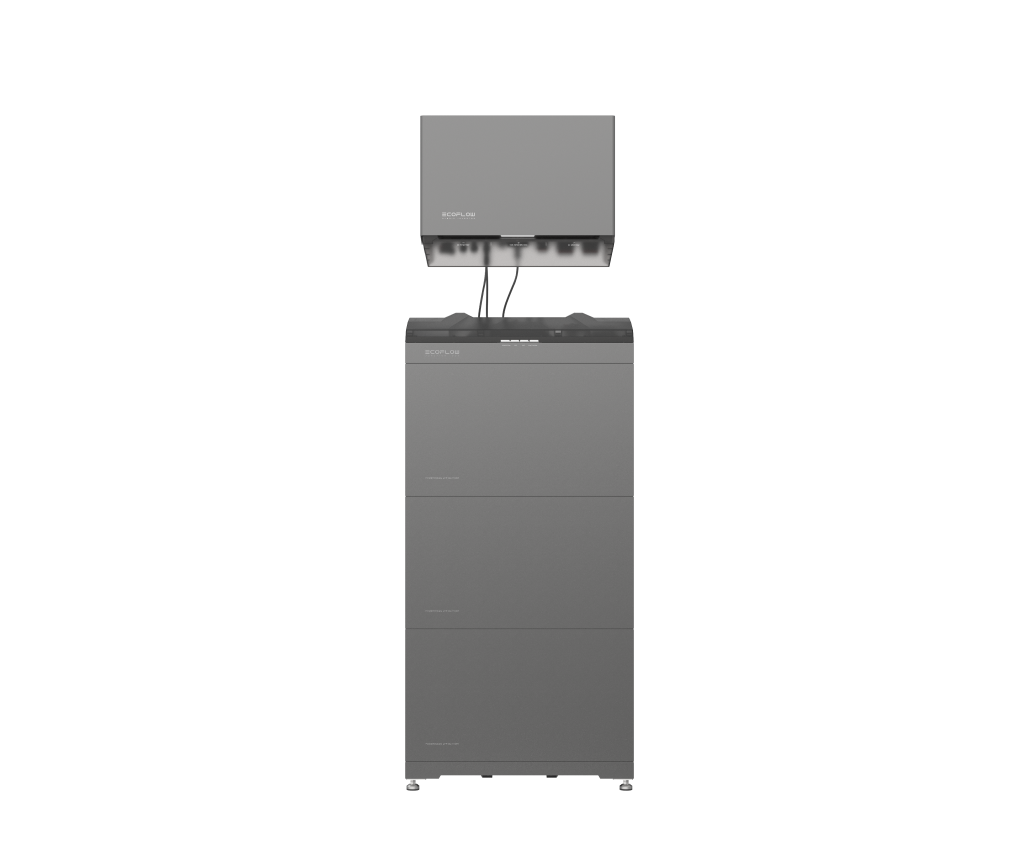
- EcoFlow PowerOcean lets you choose the number of battery packs your home needs
- Unlock up to $7,000 in federal solar + battery rebates*
- Compare quotes from vetted installers, with EcoFlow experience where available
EcoFlow
What could an EcoFlow battery save your home?
*For eligible combined solar and battery installations before January 2027. Battery-only rebates vary with usable capacity. Your installer confirms eligibility and amount.
✓ Up to 3 vetted installers
✓ Free to compare, no obligation
✓ Your chosen battery, your quote request
Meet EcoFlow A slim home battery with a 15-year warranty and a fire-prevention module built in.
- 15 years of warranty cover
EcoFlow's Australian warranty runs for 15 years on the PowerOcean battery, which is covered to keep at least 70% of its capacity.
Cover ends sooner at 6,000 cycles. Ask your installer to confirm they're EcoFlow-authorised; the warranty requires it.
- Fire protection inside the system
An active aerosol fire-prevention module is built in, and EcoFlow says it reacts within 7 seconds of detecting flames.
- Ready for rain and frost
IP65 sealing, a self-heating pad and a -20 °C to 50 °C working range suit inside or outside walls.
Packs that warm themselves up for frosty mornings.
The company behind it
EcoFlow, founded in 2017 by battery engineers, makes portable power stations and home batteries.
Founded 2017
EcoFlow says it began in 2017 as the idea of a group of battery engineers.
Global user base
EcoFlow says it has more than 5 million users across 140-plus countries and regions.
Australian warranty entity
EcoFlow Australia Pty Ltd and its affiliates issue the Australian PowerOcean home-battery warranty.
Want an EcoFlow battery in Australian Capital Territory?
Get my EcoFlow quotesCompare up to 3 vetted installers. Free, no obligation.
Why EcoFlow is different
Almost every brand on an Australian battery shortlist arrived from the same direction: solar inverters first, storage second. EcoFlow came the other way. It was founded in 2017 by battery engineers who left DJI, and it built a global business selling portable power stations — the suitcase-sized boxes people take camping and drag out during blackouts. Fixed home storage is the newer business, and in Australia it is very new indeed: SolarQuotes dates the home-battery range here to late 2025.
That history shows up in the product. PowerOcean is a stack rather than a cabinet — an EcoFlow hybrid inverter with identical LFP battery packs cascading underneath it — and the safety engineering is built into the pack rather than added around it. The Australian datasheet lists an active aerosol fire-prevention module as integrated, an outdoor-rated enclosure, and passive convection cooling with no fans to fail. A company whose reputation was made on batteries people carry has designed a fixed one that assumes it will live outside and be left alone.
The warranty term is the other thing that separates it, and SolarQuotes singles it out as the standout feature of the range. Most of the market settles on the same term; EcoFlow committed to a longer one, with a floor on remaining capacity at the end of it. That is a real commercial promise, not a marketing line, and it is written into the Australian warranty policy rather than implied by a brochure.
The catch is symmetrical and worth stating plainly. At the date we checked, SolarQuotes carried no owner reviews of EcoFlow home batteries at all, because there are barely any Australian owners yet. So a buyer is asked to weigh a strong specification and a long promise against an absence of evidence about what happens when something goes wrong. That is a legitimate trade to make with open eyes, and a bad one to make by accident.
The EcoFlow system, piece by piece
The inverter is the first decision and the one that constrains the rest. PowerOcean uses EcoFlow’s own hybrid inverter, in a single-phase family and a separate three-phase family, and the battery packs are built to sit under it. There is no version of this product that bolts onto an inverter from another brand. On a house getting solar and storage at the same time that costs nothing, because an inverter was being bought regardless. On a retrofit it means the existing inverter comes out, and a clear quote shows that as a swap line rather than folding it into a single number.
The battery is one pack repeated. Every step up the range is another identical module cascaded onto the stack, not a different or denser battery, which makes the capacity question refreshingly simple: how many packs now, and how many more can this installation take later. Because the packs hang off the inverter, the answer depends on how the stack is mounted as much as on what the household needs.
Mounting is therefore a capacity decision disguised as an aesthetic one. The datasheet offers floor-standing or wall mounting, and the stack grows downward from the inverter. A wall position chosen because it looks tidier can quietly cap how far the system can ever be extended, and a homeowner who plans to add packs after an EV arrives should have that conversation before the brackets go up rather than after.
The model string matters more here than for most brands. EcoFlow’s Australian warranty policy covers a newer battery line alongside the packs that appear on the approved-product register. Both are legitimate products with the same warranty behind them, but only the listed models clear the hardware gate for the federal discount. A quote naming the wrong one is not a scam; it is an expensive administrative mistake that surfaces after the install.
Monitoring comes in two halves: a homeowner portal and app, and a separate professional portal the installer works in. The split is sensible and common, and it creates one specific handover risk — a system left registered under the installer’s login rather than the owner’s. It costs nothing to fix on the day and is tedious to fix a year later.
Put EcoFlow to the test on your own numbers
Reading about it only goes so far — real quotes are where a EcoFlow decision gets made. Get 2-3 quotes from vetted installers in Australian Capital Territory. Free for homeowners.
What EcoFlow does best
Living outdoors on a difficult site. The enclosure is rated for outdoor mounting and cooled by convection rather than fans, and the fire-prevention module is inside the pack rather than mounted separately nearby. On a narrow inner-city block, or a house with no garage wall to spare, that combination removes several of the objections that stop a battery going in at all.
Making the capacity conversation simple. Because every increment is the same pack, an installer cannot dress up a bigger system as a better one. The quote is a count, the upgrade path is a count, and a homeowner comparing three proposals can line them up without a spreadsheet. Brands with three module families and two voltage classes are harder to compare fairly, and harder to hold to account.
Charging on a modern retail plan. The range supports tariff-aware charging, including dynamic plans that reprice through the day. On a time-of-use plan that is where most of a battery’s money is actually made, and a system configured to it at commissioning behaves very differently from one left on a default schedule. The capability being present is EcoFlow’s contribution; using it is the installer’s.
Backing the product with an unusually long commitment. The warranty term and the capacity floor at the end of it are the reason many buyers look at this brand in the first place, and they are documented rather than promised verbally. For a household intending to stay put for a long time, that horizon is a genuine point of difference against brands that stop at the market standard.
Who an EcoFlow system suits — and who it does not
It suits households buying solar and storage together, where committing to EcoFlow’s hybrid inverter is a free decision rather than a replacement, and where the simplicity of one repeated pack is worth more than a catalogue of options.
It suits people who read the specification and weight it heavily: the long warranty horizon, the integrated fire-prevention module, the outdoor rating. If those are the things that decide it for you, this brand argues its case better than most at its position in the market.
It suits awkward sites. A stack that is designed to sit outside, needs no fan, and carries its own suppression inside the pack solves siting problems that force other systems into a garage that is already full.
It does not suit anyone who wants to keep an existing solar inverter, because the packs pair with EcoFlow’s hybrid and nothing else. It does not suit a buyer who wants to read a decade of Australian owner experience before committing — that body of evidence does not exist yet, and pretending otherwise would be dishonest. And it does not suit a household that wants the largest possible pool of local tradespeople who have fitted the product many times before.
The sharpest way to test the fit is to ask what happens in year six. If the answer that matters to you is a documented warranty term, EcoFlow is competitive. If the answer that matters is the number of people within an hour’s drive who have opened one up and fixed it, a longer-established brand is the safer buy today, and there is no shame in choosing on that basis.
EcoFlow in Australian Capital Territory
The ACT’s Sustainable Household Scheme provides a $2,000–$15,000 loan at low interest over up to 10 years, stacking with the federal discount. Financing tends to push an EcoFlow buyer toward the full pack count up front — one commissioning, one mounting decision, packs of a single vintage — and because every pack is identical, the installer can model the smaller and larger counts under the scheme and show the difference in one line rather than in a product comparison.
Feed-in tariffs in Australian Capital Territory typically pay 5–7c/kWh while grid power costs 30–35c — so a stored kilowatt-hour is worth what you avoid buying, not what exporting earns, and the wider that gap sits on your own plan, the harder a battery works for you. Canberra’s cold snaps concentrate consumption into winter evenings, and a stack sized for that season with its charging schedule set to match is what turns the loan into a lower bill rather than idle capacity on a wall.
Put EcoFlow to the test on your own numbers
Reading about it only goes so far — real quotes are where a EcoFlow decision gets made. Get 2-3 quotes from vetted installers in Australian Capital Territory. Free for homeowners.
The installer decides the EcoFlow outcome
EcoFlow’s own warranty policy puts the installer inside the contract. It excludes damage where the owner had the system installed by someone the manufacturer has not authorised, which means an unauthorised install does not merely risk a workmanship dispute — it undermines the long warranty that was the main reason to choose the brand. Confirming authorisation in writing before signing costs one email and protects the entire proposition.
The second question is experience with this specific hybrid. An installer who has spent years pairing batteries with other manufacturers’ inverters is not automatically fluent in this one, and grid connection here covers the inverter and the battery as a single submission. Export limits, backup behaviour and tariff schedules all get set during commissioning, and a system that technically works while quietly ignoring the household’s retail plan is the most common way a good battery underperforms.
The third is the paperwork that decides the rebate. The listed model strings and the newer warranty-covered line are easy to confuse, and the person who writes the quote is the person who gets that right or wrong. Ask for the exact model string and check it against the register yourself; it takes a minute and it is the single highest-value check a homeowner can do on this brand.
The fourth is the handover. Registration in the owner’s name on the homeowner portal, the backed-up circuits listed by name, the mounting decision explained in terms of future capacity, and tariff-aware charging actually configured. None of that is difficult. All of it is routinely skipped by someone in a hurry.
This is where Solar Select earns its place. We put your enquiry in front of up to 3 approved installers, subject to current coverage, eligibility and brand suitability — and comparing them is free for homeowners. On a brand this new, with a warranty that names the installer and a rebate that turns on a model string, the person holding the screwdriver is the variable that decides whether the specification you paid for is the system you end up living with.
Is EcoFlow right for your home? Fit and warranty checks
A good fit if…
- Households building solar and battery together, where choosing EcoFlow’s hybrid inverter costs nothing extra
- Buyers who weight the warranty term and the safety engineering above a long local reputation
- Sites where the battery has to live outdoors and a separately mounted fire accessory would be awkward
- Homes on a time-of-use or dynamic retail plan that will actually use tariff-aware charging
- People happy to be early on a brand in exchange for the hardware specification
Consider the limitations
- You want to keep an existing solar inverter — PowerOcean packs run on EcoFlow’s own hybrid and nothing else
- You want a brand with years of Australian warranty claims behind it before you commit
- You want a wide pool of local installers who have commissioned the product many times
- You want an independent body of owner reviews to read before deciding
EcoFlow specifications and source documents
- EcoFlow pairs with its own hybrid inverter: new solar-and-battery installs use one unit; a retrofit means replacing the existing inverter. Source
- Listed models are on the Clean Energy Council approved battery list. Source
- EcoFlow requires a manufacturer-certified installer for the warranty to hold. Source
- All four PowerOcean packs in this record sit on the Clean Energy Council approved battery list, which is the hardware condition of the federal Cheaper Home Batteries Program; the discount is applied upfront by an accredited installer or retailer rather than claimed afterwards. Source
Why the installer matters more than the battery
More than 60% of inspected home battery installs were substandard. The Clean Energy Regulator inspected 1,278 home battery installations under the Cheaper Home Batteries Program between July 2025 and April 2026. More than 60% came back substandard and 1.2% unsafe — and the hardware was rarely the problem. The install was.
That is the part a brand cannot fix for you. Solar Select checks installer approval and current campaign eligibility for your Australian Capital Territory enquiry. Confirm business history and current independent reviews before choosing an installer. Your enquiry goes to up to 3 of them, and no one else sees your details.
Battery rebates in Australian Capital Territory
Cheaper Home Batteries Program (federal) — roughly a quarter off the installed battery cost, applied upfront at the quote by the installer rather than claimed back later.
Sustainable Household Scheme — The ACT adds the Sustainable Household Scheme — a $2,000–$15,000 loan at 3% interest over up to 10 years. It is a loan, not a rebate, and it stacks with the federal Cheaper Home Batteries discount.
Ready for EcoFlow quotes in Australian Capital Territory?
Postcode in — up to 3 vetted installers out. Federal battery rebate applied at quote. Free, no obligation, maximum 3 installers ever.
EcoFlow installers in Canberra
- EcoFlow battery installation Canberra — serving the ACT
Page updated 6 October 2026