Tasmania
Huawei battery installers in Tasmania.
Get matched with top solar companies in Tasmania
- Huawei LUNA2000 stores your solar energy in a compact, fan-free battery stack
- Unlock up to $7,000 in federal solar + battery rebates*
- Compare quotes from vetted installers, with Huawei experience where available
Huawei
What could a Huawei battery save your home?
*For eligible combined solar and battery installations before January 2027. Battery-only rebates vary with usable capacity. Your installer confirms eligibility and amount.
✓ Up to 3 vetted installers
✓ Free to compare, no obligation
✓ Your chosen battery, your quote request
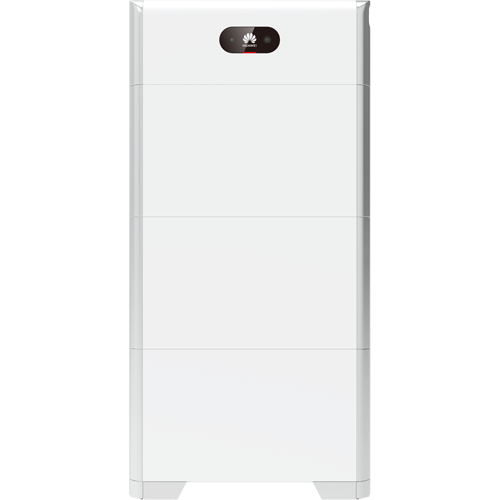
Meet Huawei A quiet, fan-free stack where every 5 kWh module is managed on its own.
- Each module works independently
A built-in optimiser manages each module separately, which Huawei says lifts usable energy by over 10% across its life.
Huawei's own lab figure. It says real results can vary.
- 5 kWh modules join old ones
Huawei says its 5 kWh modules join older ones later; charge levels sync after one cycle.
Sold new now as iStore; Huawei expansion modules until 31 Dec 2026, while stocks last.
- Near-silent, with no fans
It cools by natural convection, with no fans, and runs below 29 dB: quiet enough near living areas.
- 10-year warranty, all sizes listed
Huawei's warranty policy covers the battery packs in Australia for 10 years to 60% capacity, and all three sizes are approved-listed.
Cover can end sooner once a pack reaches 16.45 MWh of throughput.
The company behind it
Huawei is a technology group founded in 1987, selling its solar and battery range in Australia as FusionSolar.
Founded 1987
Founded in 1987 and 100% privately owned by its employees, Huawei says.
Global support network
Huawei lists 160+ global technical support and spare-parts centres for its solar business.
Australian listing holder
Huawei Technologies (Australia) Pty Ltd holds the approved-battery listing for the LUNA2000-S0 range.
Want a Huawei battery in Tasmania?
Get my Huawei quotesCompare up to 3 vetted installers. Free, no obligation.
Why Huawei is different
Most home batteries are one sealed box with one set of electronics inside it. The LUNA2000 is a tower of identical battery modules with a power control module sitting on top, and each battery module carries its own management electronics. That is the design decision everything else follows from: a module that develops a fault isolates itself while the rest of the stack keeps working, and a replacement is a like-for-like swap rather than a whole-unit exchange. SolarQuotes’ review picks this out as the genuine engineering point of difference, not the marketing.
The second difference is who makes it. Huawei is a telecoms and power-electronics company with a scale most battery brands cannot approach, and its residential solar business runs on the same FusionSolar platform in every market it sells into. In Australia that translates into a permanent service office and a monitoring platform that is not going to be abandoned — and into a warranty policy that expects the system to stay connected so firmware reaches the cells. The connection is part of the product, not a convenience.
The third difference is peculiar to Australia. The same hardware is sold here under two badges, Huawei and iStore, and SolarQuotes reports that direct Huawei-badged sales have largely given way to the iStore channel. A homeowner reading a Huawei quote therefore has a supply question before any hardware question: where is the stock coming from, and which company will process a claim on it. Huawei’s Australian site still lists the LUNA2000-S0 and a find-an-installer tool, so the answer varies by retailer.
What does not vary is the coupling. The LUNA2000 is DC-coupled to Huawei’s own SUN2000 hybrid inverters and is not offered as a stand-alone battery for other brands. Choose the battery and you have chosen the inverter, which simplifies a new build and complicates a retrofit onto an inverter you already like. Everything below assumes that trade has been understood.
The LUNA2000 stack, piece by piece
The battery module is the repeating unit. Huawei’s Australian specifications page lists the S0 system in one-, two- and three-module configurations, and the modules are identical, so the quote-stage question is simply how many. Because each module manages itself, a stack is not weakened by having more of them; what changes with count is how hard the whole tower can charge and discharge, which is set by the module above it.
The power control module sits on top of the stack and decides the stack’s power rating. Huawei’s specifications show a single-module stack delivering less than a two- or three-module one, so a stack quoted with the wrong pairing will commission and then quietly underperform on a summer evening. It is the one component a homeowner cannot see from the app and should ask about by name.
The SUN2000 hybrid inverter is the third part and the one that shapes the rest of the system: single- or three-phase, and the size that suits the array. Huawei’s compatibility list runs across its residential single-phase and three-phase ranges, so the inverter choice is made on the house, not on the battery. On a retrofit it replaces the existing inverter, and the quote should show that swap as a line, not hide it.
The backup box is separate hardware. Without it the LUNA2000 will not carry the house in an outage, and with it the switchover is not instantaneous — SolarQuotes’ review reports a short gap and heat derating on the box itself. Huawei’s warranty policy also covers the backup box for a shorter period than the battery. It needs a shaded mounting position and a named list of the circuits it protects.
Put Huawei to the test on your own numbers
Reading about it only goes so far — real quotes are where a Huawei decision gets made. Get 2-3 quotes from vetted installers in Tasmania. Free for homeowners.
What Huawei does best
Surviving a single fault gracefully. Because the modules are independent, one failing does not strand the household without storage while a replacement is arranged; the stack keeps working around it. For a homeowner who wants a battery to be boring for a decade, that is the most valuable property the design has, and it is the one SolarQuotes’ review leads with.
Living close to people. The tower is passively cooled and fan-free, and owners on SolarQuotes describe it as near silent. A battery that can be mounted against a bedroom wall or beside a patio without a fan cycling all evening is a real quality-of-life difference on smaller blocks where there is nowhere else to put it.
Being backed by a company that will still exist. Huawei’s size and its global FusionSolar platform mean the monitoring will not be switched off and spare modules will be made for a long time, which is the reassurance reviewers keep returning to. The caveat is the badge: that backing is only useful if your quote is on the channel Huawei actually services here.
Keeping the design simple. One inverter family, one module type, one power module: there is very little to configure compared with an open-ecosystem battery, and less for a rushed installer to get wrong. The decisions that remain — module count, backup scope, mounting — are the ones a homeowner can check.
Who a Huawei LUNA2000 suits — and who it does not
It suits homes already running a Huawei SUN2000 hybrid inverter, or building new with one, because the battery is designed for exactly that inverter and nothing else. Owners on SolarQuotes who fall into this group report an easy, reliable system that simply works overnight.
It suits households that want a quiet, compact battery close to living space, and buyers who take comfort from a very large parent company standing behind the warranty and the monitoring platform.
It suits people who will size the stack properly now. Expansion is possible, but SolarQuotes reviewers who started with one module tend to say they should have bought more at the outset, because a later module has to be matched to what is already on the wall.
It does not suit homes that want to keep a good non-Huawei inverter, because the battery replaces it. It does not suit households that need seamless switchover for medical or sensitive equipment, because the backup box has a short gap and derates in heat. And it does not suit anyone who wants to buy the easiest-to-source badge today — SolarQuotes is clear that that badge is currently iStore.
The real fit test is the supply chain. If a retailer can tell you where Huawei-badged stock comes from, who registers the warranty and who answers a claim in year six, the hardware is a sound choice. If they cannot, the same tower under the iStore badge is the safer way to buy it.
Huawei in Tasmania
Tasmania adds no state layer in 2026, and its short winter days put the sizing question at its sharpest: how many modules can the roof actually refill in June? The LUNA2000’s fixed steps make the answer checkable — start with the modules winter generation can cycle, and treat a later module as a genuine option rather than a plan.
Feed-in tariffs in Tasmania typically pay 8.0–9.0c/kWh while grid power costs 30–35c — so a stored kilowatt-hour is worth what you avoid buying, not what exporting earns, and the wider that gap sits on your own plan, the harder a battery works for you. Tasmania’s flat regulated feed-in tariff means no time windows to play, so the value of every stored kilowatt-hour is simply the gap between export and grid price, all year round.
Put Huawei to the test on your own numbers
Reading about it only goes so far — real quotes are where a Huawei decision gets made. Get 2-3 quotes from vetted installers in Tasmania. Free for homeowners.
The installer decides the Huawei outcome
A LUNA2000 is simple hardware with three places an installer can quietly get it wrong. The first is pairing the power control module to the module count; the second is the backup box — whether it is in the quote, where it is mounted and which circuits it actually carries; the third is the monitoring dongle, because Huawei’s warranty policy expects the system to stay connected to FusionSolar and narrows cover for cell damage if it is left offline. None of these show up on handover day.
The badge adds a fourth. An installer selling Huawei-badged hardware through an iStore-supplied channel, or the reverse, needs to register the system with the company that will honour the claim, and the grid-connection paperwork has to name the exact SUN2000 model and the stack. Ask them to write down who the warranty is with before you pay a deposit.
Commissioning on this system is mostly about the app: pairing the dongle, putting the account in your name, setting the backup reserve and checking that the tower reports the module count you paid for. An installer who does that in front of you has done the job; one who says the app can be sorted later has left the warranty exposed.
This is where Solar Select earns its place. We put your enquiry in front of up to 3 approved installers, subject to current coverage, eligibility and brand suitability — and comparing them is free for homeowners. With a battery whose main risks are supply and registration rather than engineering, the installer who can answer the badge question in one sentence is the one to shortlist.
Is Huawei right for your home? Fit and warranty checks
A good fit if…
- Homes already running, or happy to run, a Huawei SUN2000 hybrid inverter
- Owners who want a quiet battery mounted close to living areas
- Buyers who value a very large parent company behind the warranty
- Households that will size the stack properly now rather than expand later
Consider the limitations
- You want to keep an existing non-Huawei inverter — this battery replaces it
- You need seamless blackout switchover for medical or sensitive equipment
- You want the badge that is easiest to buy and service locally today — that is currently iStore, not Huawei
- You would rather not depend on cloud monitoring to keep warranty cover intact
Huawei specifications and source documents
- Listed models are on the Clean Energy Council approved battery list. Source
- The LUNA2000-5, 10 and 15-S0 systems sit on the Clean Energy Council approved battery list, the hardware gate for the federal Cheaper Home Batteries Program, which applies to systems from 5 kWh to 100 kWh connected to new or existing solar PV. Source
Why the installer matters more than the battery
More than 60% of inspected home battery installs were substandard. The Clean Energy Regulator inspected 1,278 home battery installations under the Cheaper Home Batteries Program between July 2025 and April 2026. More than 60% came back substandard and 1.2% unsafe — and the hardware was rarely the problem. The install was.
That is the part a brand cannot fix for you. Solar Select checks installer approval and current campaign eligibility for your Tasmania enquiry. Confirm business history and current independent reviews before choosing an installer. Your enquiry goes to up to 3 of them, and no one else sees your details.
Battery rebates in Tasmania
Cheaper Home Batteries Program (federal) — roughly a quarter off the installed battery cost, applied upfront at the quote by the installer rather than claimed back later.
Federal-only in Tasmania for 2026 — Tasmania runs federal-only on battery rebates in 2026. The federal Cheaper Home Batteries discount still applies in full.
Ready for Huawei quotes in Tasmania?
Postcode in — up to 3 vetted installers out. Federal battery rebate applied at quote. Free, no obligation, maximum 3 installers ever.
Huawei installers in Hobart
- Huawei battery installers in Hobart — serving Greater Hobart
Regional Tasmania
- Huawei battery installers in Launceston — serving Launceston and surrounds
This page also covers the Tasmania towns that no longer have a page of their own. Across the North West Coast and greater Hobart, enquiries from Burnie, Devonport, Latrobe, Queenstown, Smithton, Ulverstone, Wynyard, Kingston, New Norfolk and Sorell route through this page on postcode. In the North East and the Huon, the same applies to Deloraine, George Town, Scottsdale, St Helens and Huonville.
Page updated 6 October 2026