Darwin, NT
iStore battery installers across Greater Darwin, NT.
Get matched with top solar companies in Darwin
- Add compatible iStore battery modules as your household's energy needs grow
- Unlock up to $7,000 in federal solar + battery rebates*
- Compare quotes from vetted installers, with iStore experience where available
iStore
What could an iStore battery save your home?
*For eligible combined solar and battery installations before January 2027. Battery-only rebates vary with usable capacity. Your installer confirms eligibility and amount.
✓ Up to 3 vetted installers
✓ Free to compare, no obligation
✓ Your chosen battery, your quote request
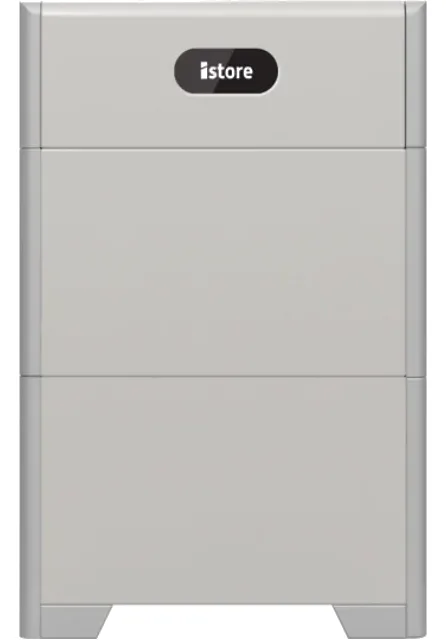
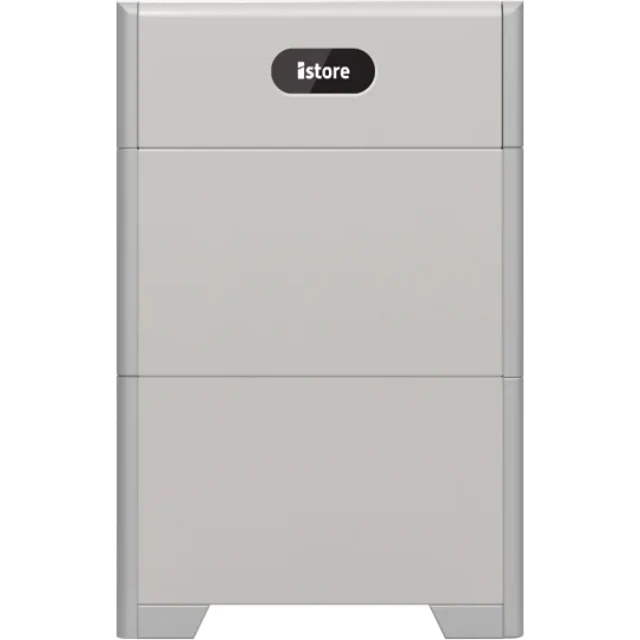
Meet iStore One Australian brand for your battery, inverter, hot water and EV charger.
- Grow from 5 to 60 kWh
Start at 5 kWh and add compatible modules as your needs change, up to 60 kWh, without replacing the battery.
Each stack takes up to three 5 kWh modules, so bigger systems use more than one stack.
- Quiet, with no cooling fan
Natural cooling with no fan keeps noise under 29 dB, so it hums along quietly in the background.
- Installers' third pick
In SolarQuotes' 2026 survey, 11% of installers chose iStore for their own home, ranking it third.
The company behind it
iStore is an Australian home-energy brand selling batteries, inverters, heat pump hot water and EV chargers.
Australian, family-run
iStore says it is an Australian-owned, family-run company.
25+ years' experience
iStore says it has over 25 years of experience in the solar and water heating industries.
Began with heat pumps
iStore says its business started with a single product: its heat pump.
Want an iStore battery on your Darwin home?
Get my iStore quotesCompare up to 3 vetted installers. Free, no obligation.
An iStore in Darwin performs exactly as well as its configuration — and the configuration is decided by whoever installs it.
Why the installer matters more than the battery
The Clean Energy Regulator inspected 1,278 home battery installations under the Cheaper Home Batteries Program between July 2025 and April 2026 — more than 60% came back substandard and 1.2% unsafe. Solar Select checks installer approval and current eligibility before matching your Darwin enquiry. Manufacturer accreditation is a separate check; confirm the credentials relevant to your chosen battery.
What specifically goes wrong on an iStore install
- Regional familiarity is the real risk: an installer who rarely fits iStore is learning on your roof, and the brand’s footprint varies by state
- Battery and inverter pairing must be confirmed against exact model numbers within iStore’s own range
- Bundled ecosystem quotes need each component justified separately — a strong battery does not automatically make the bundled extras the right pick
- Clean Energy Council listing is model-by-model — the wrong variant forfeits the federal rebate
Request my iStore quotes in Darwin.
That's why iStore quotes in Darwin are only comparable when the scope matches. Here's what to hold constant.
Comparing iStore quotes in Darwin
We don't publish price bands, because installed prices move constantly and depend on your roof, switchboard and supply. What we can tell you is what to hold constant so three quotes are actually comparable — match these first, then compare after-rebate dollars per usable kWh.
- Module count and the expansion ceiling of the quoted configuration
- Which iStore hybrid inverter is included, and that the pairing is a validated combination
- Whether hot water or EV charging is being bundled, and whether each piece stands on its own merits rather than riding the bundle
- Single-phase or three-phase, and circuit-level backup scope
- Confirmation the exact battery model is on the Clean Energy Council approved list
A cheaper quote that skips backup hardware, assumes an inverter you don't have, or quietly changes the configuration isn't cheaper — it's a different job.
Want three iStore quotes you can actually compare? Your enquiry goes to up to 3 vetted installers in Darwin, all quoting the same scope.
Who installs iStore batteries in Darwin?
Solar Select is a matching platform for homeowners looking for iStore battery installation in Darwin. Submit your postcode and system requirements to request a match with up to 3 suitable installers, subject to current coverage, availability and brand suitability.
Enter your postcode and we check which vetted installers cover Darwin for iStore.
How are iStore installers matched in Darwin?
Matching considers approved installer accounts, active campaign geography, the requested system and current eligibility. Verified brand accreditations are prioritised when relevant. The actual match happens after you submit your postcode and enquiry; displayed companies are not a promise of who will receive it.
Compare recent independent reviews, business history, workmanship terms and the accreditation relevant to your chosen battery. Manufacturer accreditation and general installer approval are separate checks.
Battery rebates in Northern Territory
- Cheaper Home Batteries Program (federal) — roughly a quarter off the installed battery cost, upfront, paid at its full rate on the first tier of usable capacity and at a reduced rate above that. Applied at quote by the installer, not claimed back later.
- Home and Business Battery Scheme (HBBS) (NT) — The NT adds the most generous state layer in Australia — a $400 per usable kWh grant capped at $12,000 via Grants NT — on top of the federal rebate. Installer availability is the real constraint in the Territory, not the money. Full NT rebate breakdown
Still weighing an iStore up? The Darwin numbers and the deeper reading are below.
iStore battery installation in Darwin, NT
Comparing iStore for a home in Greater Darwin? Use your property's postcode and existing solar details when requesting quotes. This page focuses on Greater Darwin, NT.
- 19,466 small-scale solar installations across 22 postcodes assigned to the Darwin study area.
- 8.1 kW median of residential-plausible postcode average system sizes in 2025.
Clean Energy Regulator postcode data · as at 2026-06. Solar Select aggregation of CER data for postcodes containing mapped suburbs nearest to Darwin within 45 km. This study area is not an official city boundary; postcodes can cross its edges. These figures do not measure installer availability.
The Darwin numbers
Solar Select's Darwin study-area aggregation of Clean Energy Regulator data includes 19,466 small-scale systems across 22 postcodes — about 169 MW of capacity as at 2026-06. For an iStore retrofit in Darwin, check the existing inverter and switchboard before choosing the configuration. Ask whether the inverter stays, is replaced, or works alongside another one; installation counts do not answer that for your home.
In the typical Greater Darwin postcode, new systems averaged about 8.1 kW through 2025. That is the scale of array an iStore battery would be charged from here, so ask each installer to size storage against that generation rather than the headline capacity: the configuration that suits a 8.1 kW roof is not automatically the biggest one quoted.
Power and Water runs the Darwin–Katherine grid covering Greater Darwin and Palmerston, and building here genuinely differs: cyclone-rated mounting, wet-season humidity, and the Territory's HBBS grant paperwork all sit inside a quote before brand differences matter. Ask what iStore work the installer has commissioned through a full wet season, not just how many units they have sold.
Darwin swings from about 6.5 peak sun hours in Sep to 5.3 in Jun — roughly 1.2× more generation in the sunniest month than the dullest. On a 10 kW array that is around 55.3 kWh a day in Sep against 45.1 kWh in Jun. Size an iStore on the winter figure: iStore is 5–60 kWh modular, so the real question at quote stage is what it can actually refill on a 45.1 kWh day, not what it holds on paper.
Show month-by-month generation
| Month | Peak sun hours | 10 kW array, kWh/day |
|---|---|---|
| Jan | 5.6 | 47.6 kWh |
| Feb | 5.4 | 45.9 kWh |
| Mar | 5.5 | 46.8 kWh |
| Apr | 5.8 | 49.3 kWh |
| May | 5.5 | 46.8 kWh |
| Jun | 5.3 | 45.1 kWh |
| Jul | 5.6 | 47.6 kWh |
| Aug | 6.1 | 51.9 kWh |
| Sep | 6.5 | 55.3 kWh |
| Oct | 6.5 | 55.3 kWh |
| Nov | 6.2 | 52.7 kWh |
| Dec | 5.8 | 49.3 kWh |
Monthly shape from Bureau of Meteorology climatology for Northern Territory, scaled to Darwin's annual average of 5.8 peak sun hours; 85% system derate.
Install counts and capacity: Clean Energy Regulator postcode data for small-scale installations (CC BY).
What owning an iStore is actually like
Spec sheets stop being interesting about a week after install. These are the things owners notice in year one.
- The ecosystem is the practical difference day to day — hot water heating on solar through the same brand’s kit is load-shifting that shows up on real bills.
- Local-brand accountability means the support chain ends in Australia rather than at an importer — ask who answers the phone anyway, because the answer varies by region.
- Monitoring covers the essentials competently; owners running the full ecosystem get the most from it.
- Familiarity among installers is regionally uneven — deepest where the brand’s distribution is strongest, thinner elsewhere, and the outcome tracks that familiarity.
Four questions to ask any iStore quote
- Can you show me this exact battery model on the Clean Energy Council approved list?
- How many iStore systems have you commissioned, and is iStore’s support strong in this region?
- Which exact inverter pairs with this battery, and is that a validated combination?
- If hot water or EV charging is bundled, what does each piece cost and earn on its own?
Is iStore right for your home? Fit and warranty checks
A good fit in Darwin if…
- Households electrifying broadly — storage, hot water, EV — who want one brand and one support chain across the lot
- Buyers who specifically want an Australian brand with local distribution behind the badge
- Value-focused homes where modular sizing from small to very large matters
- Customers of installers who carry iStore’s range and support it directly
Consider the limitations
- You want the deepest possible national installer network wherever you live
- You are retrofitting onto an existing non-iStore inverter you want to keep
- Virtual-power-plant participation is central to your plan — verify program acceptance per model before counting on it
- You want a global-scale manufacturer’s volume behind the hardware rather than a local brand’s curation of it
Grid connection in Darwin
- Power and Water Corporation pre-approval — battery systems usually need explicit pre-approval before install. A good installer lodges the application and flags any constraint in the quote — not after.
- Typical export cap ~5 kW — single-phase residential export in Darwin is typically around 5 kW on the Power and Water Corporation network. A battery softens the cap — solar that can't export charges the iStore instead of being curtailed.
- 5–15 business days — typical connection-approval turnaround once the installer lodges with Power and Water Corporation.
Ready for iStore quotes in Darwin?
Request quotes from up to 3 vetted installers for an iStore in Darwin — postcode in, quotes out.
Areas served around Darwin
Matching covers Greater Darwin, not just the centre — enquiries route on your postcode. Local solar detail for each suburb:
- Darwin City (0800) · 0.0 km from Darwin — 153 systems, 5,375 kW installed
- East Point (0820) · 5.3 km from Darwin — 1,648 systems, 19,280 kW installed
- Daly (0822) · 5.6 km from Darwin — 1,376 systems, 17,392 kW installed
- Fleming (0822) · 5.6 km from Darwin
- Mapuru (0822) · 5.6 km from Darwin
- Marrakai (0822) · 5.6 km from Darwin
- Milikapiti (0822) · 5.6 km from Darwin
- Wagait Beach (0803) · 5.6 km from Darwin — 2 systems, 12 kW installed
- Wagait Beach (0822) · 5.6 km from Darwin
- Mandorah (0822) · 6.1 km from Darwin
- Cox Peninsula (0822) · 7.1 km from Darwin
- Fannie Bay (0820) · 7.4 km from Darwin
- Nightcliff (0810) · 7.9 km from Darwin — 4,401 systems, 32,916 kW installed
- Nightcliff (0814) · 7.9 km from Darwin — 4 systems, 18 kW installed
- Coconut Grove (0810) · 8.2 km from Darwin
- Ludmilla (0820) · 8.3 km from Darwin
- Cullen Bay (0820) · 8.5 km from Darwin
- Parap (0804) · 8.7 km from Darwin — 16 systems, 85 kW installed
- Parap (0820) · 8.7 km from Darwin
- Bagot (0820) · 8.8 km from Darwin
- Larrakeyah (0820) · 8.8 km from Darwin
- The Gardens (0820) · 8.9 km from Darwin
- Woolner (0820) · 9.1 km from Darwin
- Millner (0810) · 9.4 km from Darwin
- Rapid Creek (0810) · 9.4 km from Darwin
- Stuart Park (0820) · 9.4 km from Darwin
- The Narrows (0820) · 9.9 km from Darwin
- Brinkin (0810) · 10.1 km from Darwin
- Raaf Base Darwin (0820) · 10.1 km from Darwin
- Eaton (0820) · 10.2 km from Darwin
- Charles Darwin University (0815) · 10.3 km from Darwin
- Bayview (0820) · 10.5 km from Darwin
- Alawa (0810) · 10.6 km from Darwin
- Jingili (0810) · 10.7 km from Darwin
- Darwin (0801) · 10.8 km from Darwin — 12 systems, 387 kW installed
- Winnellie (0820) · 10.9 km from Darwin
- Winnellie (0821) · 10.9 km from Darwin — 8 systems, 166 kW installed
- Winnellie (0822) · 10.9 km from Darwin
- Moil (0810) · 11.1 km from Darwin
- Marrara (0812) · 11.2 km from Darwin — 2,397 systems, 16,759 kW installed
- Nakara (0810) · 11.3 km from Darwin
- Casuarina (0810) · 11.6 km from Darwin
- Casuarina (0811) · 11.6 km from Darwin — 2 systems, 9 kW installed
- Tiwi (0810) · 11.7 km from Darwin
- Darwin International Airport (0820) · 11.8 km from Darwin
- Wagaman (0810) · 11.8 km from Darwin
- Charles Darwin (0820) · 12.0 km from Darwin
- Charles Darwin (0822) · 12.1 km from Darwin
Other locations for iStore
iStore installers across Northern Territory, town by town
Read before you commit
iStore questions, Darwin answers
In Darwin, who is iStore — is it really an Australian brand?
iStore is an Australian energy brand selling batteries, hybrid inverters, heat pump hot water, EV chargers and pool heating through local distribution. Like most local brands it curates and engineers its range rather than fabricating every cell itself — what you are buying is the Australian accountability layer: local distribution, local support, one brand across the electric home. Ask who handles support in your region, because depth varies by state.
Is an iStore battery eligible for the federal rebate for a Darwin home?
Model-by-model on the Clean Energy Council approved list, as with every brand. With a modular range the specific configuration matters, so have the installer show you the exact quoted model on the current list before you sign anything.
How big can an iStore battery system get in Darwin, NT?
The modular range runs from 5 kWh to 60 kWh, which covers everything from a small starter battery to genuinely large storage for big or off-peak-hungry households. The usual modular caveat applies: the ceiling that matters is the one your quoted configuration was designed for, so confirm what adding modules later actually involves.
Is bundling hot water and EV charging with the battery a good idea if I live in Darwin?
The engineering logic is sound — a heat pump running on midday solar shifts a big recurring load onto power you have already paid for, and one brand across the pieces simplifies support. The commercial logic needs checking piece by piece: each component should stand on its own merits and price, not ride the bundle. A good installer will happily quote the pieces separately so you can see.
Can I add an iStore battery to solar I already own for Darwin households?
iStore batteries pair with iStore’s own hybrid inverters, so the natural path is the system taking over the inverter role rather than bolting onto another brand’s hardware. On ageing solar that can be a sensible generational refresh; on a recent inverter it means replacing something that works. Ask the installer to justify the design against an AC-coupled alternative that would leave your inverter alone.
What happens to an iStore system in a blackout across Greater Darwin?
Backup-capable configurations hold up the circuits wired to the backup side automatically, and the modular capacity determines how long they run. As with any hybrid system the scope is set at design time — which circuits, which phase, what happens as the modules run down — so have the quote spell out the blackout behaviour rather than accepting a general assurance that the battery has backup.
In Darwin, is a smaller Australian brand riskier than a global one?
It is a different risk, not automatically a bigger one. Global scale means volume-tested hardware but support that can end at an importer; a local brand means the accountability sits here but on a smaller organisation. The practical questions are the same either way: how long has the support chain existed, who answers in year four, and how experienced is the installer with this exact product. Weight those over the size of the logo.
Who installs iStore batteries in Darwin?
Solar Select is a matching platform for homeowners seeking iStore battery installation in Greater Darwin. Submit your postcode and requirements to request a match with up to 3 approved installers, subject to current coverage and eligibility. Manufacturer accreditation is verified separately; ask for the credentials relevant to your chosen battery. Free for homeowners.
How do I compare iStore quotes in Darwin?
Installed prices move constantly and vary by site, so compare on after-rebate dollars per usable kWh rather than headline totals — and only once the scope matches. For this brand the variables that matter are: module count and the expansion ceiling of the quoted configuration; which iStore hybrid inverter is included, and that the pairing is a validated combination; whether hot water or EV charging is being bundled, and whether each piece stands on its own merits rather than riding the bundle. Get all three quotes on the same scope, then compare the installers harder than the numbers.
What battery rebates apply in Darwin?
The federal Cheaper Home Batteries Program applies nationwide — roughly a quarter off installed cost, upfront, paid at its full rate on the first tier of usable capacity and tapering above that. Because iStore is 5–60 kWh modular, how much you collect depends on how the configuration lines up with those tiers, so ask the installer to show the tier split rather than one flat "government incentive" line. NT then adds Home and Business Battery Scheme (HBBS) on top.
What does Power and Water Corporation need to approve for an iStore in Darwin?
The connection application covers the whole system, so what gets scrutinised depends on the configuration: regional familiarity is the real risk: an installer who rarely fits iStore is learning on your roof, and the brand’s footprint varies by state. Export in Darwin is typically around 5 kW single-phase, and approval usually runs 5–15 business days once lodged.
Are your Darwin installers iStore-accredited?
Accreditation is one of the things we look at, and where an iStore-accredited installer covers Greater Darwin you'll see that in the match. It is deliberately not the only filter — a current accreditation badge says the installer has done the brand's training, not that they wire a good switchboard or come back in year three. Every installer serving Darwin is vetted on the same bar set out above before they join. Ask the ones you're matched with what iStore work they've actually done, and how much of it, before you sign.
Is an iStore battery worth it in Darwin?
Darwin averages 5.8 peak sun hours, so a 10 kW rooftop array generates roughly 49.3 kWh on an average day — enough to cycle an iStore on most days of the year. With Northern Territory feed-in tariffs typically paying 8–27c/kWh while grid power costs 30–35c, every stored kWh you use yourself is worth several times what exporting it earns.
How many solar installations are recorded across Greater Darwin?
Solar Select's Darwin study-area aggregation of Clean Energy Regulator data includes 19,466 small-scale systems across 22 postcodes — about 169 MW as at 2026-06. These are system counts, not a count of unique homes or iStore installers. For a retrofit, check your existing inverter, switchboard and actual generation before choosing storage; the study-area total cannot establish those details.
Answered what you needed?
Get your up to 3 vetted iStore quotes for Darwin — free, no obligation.
Local data reviewed by the Solar Select team. Installer network information is shown separately above when verified records are available. Darwin data sourced from BOM (sun hours), CER (rebates) and AER (Power and Water Corporation network — export figures are indicative; your distributor sets the limit for your address). iStore product and pricing figures are sourced below. Last verified 2026-08-15. Page updated 6 October 2026.
- iStore — energy solutions
- SolarQuotes — battery brand reviews
- Clean Energy Council — approved batteries
- DCCEEW — Cheaper Home Batteries Program
All Northern Territory locations · All iStore locations · How it works