Brand deep-dives
iStore battery review
iStore: an Australian brand covering the whole electric home, and a footprint that varies by state.
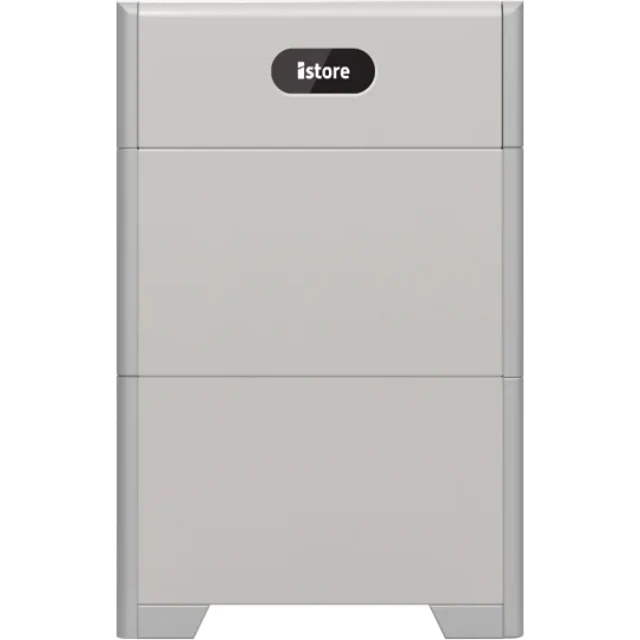
iStore is an Australian energy brand selling a modular LFP home battery alongside its own hybrid inverters, heat pump hot water, EV chargers and pool heating. The battery is conventional; the pitch is one brand and one local support chain across the house. It suits broad electrification projects and is a harder fit for a retrofit onto another brand’s inverter.
By Kieron Taylor, Founder, Solar Select · Updated · 6 min read
The verdict
A value-positioned modular battery whose real difference is the surrounding ecosystem and the local accountability of an Australian brand. It works best on a new system or a full refresh, fitted by an installer who handles iStore regularly.
Best for: Households electrifying storage, hot water and EV charging together, and new solar-and-battery installs where the iStore hybrid is specified anyway.
Look elsewhere if: You are keeping a recent inverter from another brand, or few installers in your region fit iStore regularly.
Module count, the hybrid inverter and any bundled hot water or EV charging move an iStore quote more than the battery alone. The section on what a quote is made of covers each.
The 30-second take
- An ecosystem, not a lone battery. iStore sells storage, hybrid inverters, heat pump hot water, EV charging and pool heating designed to work together under one Australian badge.
- Modular LFP storage. The battery scales by adding modules, from a small starter system to very large household storage, with the ceiling set by the configuration you are quoted.
- The battery needs an iStore hybrid inverter. On a new system that is simple; on a retrofit it usually means replacing the inverter you have.
- Bundles deserve line-by-line scrutiny. Hot water on solar is real load-shifting, but every bundled item should justify itself separately.
- Regional depth varies. Distribution is strongest in Western Australia and thinner in the east, and installer familiarity follows the same pattern.
One badge across battery, hot water and EV charging
iStore’s argument is that a battery is one part of an electric home, and the parts work better when they are chosen together. Its range covers a modular home battery, its own hybrid inverters in single-phase and three-phase versions, heat pump hot water systems, EV chargers and pool heating, all sold through an established Australian distribution network.
The battery itself is conventional engineering: lithium iron phosphate modules that stack to the capacity a household needs, sized at design time with space left to add more. The range stretches from a small starter system to very large storage for big, high-consumption households.
What is different is the accountability. As a local brand, iStore’s support chain ends in Australia, not at an importer acting for an overseas manufacturer. Like most local brands it specifies and engineers what it sells and does not make every cell in-house. What you are buying is local distribution, local support and a single brand to deal with across several appliances. You can find iStore installers in your state to see who carries the range near you.
The inverter pairing, and what it does to a retrofit
iStore batteries pair with iStore’s own hybrid inverters. On a new solar-and-battery system that is no constraint at all: inverter and battery are specified together, and the hybrid handles panels and storage in one unit.
On a home that already has solar, it is the question that shapes the whole job. The natural iStore design has its hybrid taking over from the existing inverter, not sitting beside it. If that inverter is old, replacing it brings the whole system up to date in one visit. If it was installed recently, you would be removing equipment that works, and the comparison should include an AC-coupled battery that would leave it in place. Ask the installer to explain why the iStore design beats that alternative for your house.
Within iStore’s range, the pairing still needs checking. Battery and inverter should be confirmed by exact model number as a validated combination, and both model numbers should appear on the quote.
- Ask which exact iStore inverter pairs with the quoted battery, and whether that combination is validated.
- Ask what happens to your current inverter if the design replaces it.
- Ask for an AC-coupled alternative to be quoted alongside if your existing inverter is recent.
“On a new system the iStore inverter pairing is invisible. On a retrofit it is the first thing to ask about.”
Pulling a bundled quote apart
The ecosystem is where iStore differs day to day. A heat pump hot water system run on midday solar moves a large, recurring load onto energy the household has already generated, and that shows up on bills. One brand across the pieces also simplifies support. The engineering logic holds.
The commercial logic has to be checked item by item. A good battery does not make the bundled hot water unit or EV charger the right pick for your house, and a bundle total can hide a weak component behind a strong one. Judge every item as if it were being bought alone. Ask for the battery, inverter, hot water and charger to be quoted as separate lines, with what each is expected to earn or save. A capable installer will do this without fuss.
Monitoring covers the essentials competently, and households running the full ecosystem get the most out of it.
Why your state matters with iStore
iStore is a smaller local player, and its footprint is uneven. Distribution runs deepest in Western Australia and thins out in the eastern states. Installer familiarity follows distribution, and outcomes follow familiarity: an installer who rarely fits the product is practising on your house. Against a national volume brand such as Sungrow, iStore offers the wider ecosystem and local accountability, and gives up installer familiarity and field volume.
So the useful questions are local ones. How many iStore systems has this installer commissioned? Who handles support in this region, and how long has that arrangement existed? Who answers a warranty call several years in? A smaller Australian brand carries a different kind of risk from a global one, not necessarily more of it — accountability sits here, on a smaller organisation — and these answers tell you more than the size of the logo.
Households counting on virtual power plant income should also verify program acceptance for the specific model, which is thinner than for the big national brands. To test local depth, compare up to 3 iStore quotes from vetted installers near you.
What an iStore quote is made of
iStore is positioned at the value end of the market. What a particular quote comes to depends on these.
- Module count, and the expansion ceiling of the configuration chosen — the room to add later is set now.
- The hybrid inverter included, since the battery needs one from iStore’s range.
- Bundled extras. Hot water, EV charging or pool heating change the total and should be separable.
- Phases and backup. Single-phase or three-phase supply, and which circuits are wired for backup. Backup-capable configurations hold up the circuits on the backup side automatically, and the scope is fixed at design time, so have the quote spell it out.
- The exact battery model’s place on the Clean Energy Council approved battery list. Eligibility for the federal rebate is decided model by model, and with a modular range the configuration matters. Ask to see the quoted model on the current list; the wrong variant forfeits the rebate.
The households iStore fits
- Households electrifying several things at once — storage, hot water, EV charging — that would rather deal with a single supplier for all of it.
- People for whom a locally accountable brand matters more than global manufacturing scale.
- New solar-and-battery installs, where the iStore hybrid is being specified anyway.
- Value-focused homes that need flexible sizing, from a small start to very large storage.
- Probably not a retrofit onto a recent inverter from another brand that you want to keep, or a home in a region where few installers fit iStore regularly.
Whatever the brand, the installation decides most of the result. Clean Energy Regulator inspectors looked at 1,278 home battery installations between July 2025 and April 2026, and more than 60% were classified substandard. With iStore, favour installers who carry the range and support it themselves, and ask each how many they have commissioned. From there, get matched with up to 3 vetted installers for an iStore quote.
How long would a iStore take to pay for itself at your place?
Postcode, your bill, and whether the roof already has panels. About a minute, and the ten-year figure is yours before anyone asks for a phone number. Start with vetted iStore installers in your state.
Read next
Sources
Every quantitative claim on this page traces to one of the sources below — government, manufacturer, or independent AU industry reference. Last verified 2026-09-17.
We use AI to help research and draft. Claims are traced to the sources below and dated. Where we haven’t got a source, we say so on the page — treat that as a starting point and do your own research.
General information only. It doesn’t take your circumstances into account and isn’t legal, financial, insurance or electrical advice. Rebates, tariffs, network rules and product terms change — confirm anything you plan to rely on with your installer, insurer, retailer or distributor, and see our terms.
Postcode in, up to 3 vetted installers out. Free for homeowners, no obligation. All solar guides · Federal rebates · How it works
Filed under: Brand deep-dives