Queensland
Redback battery installers in Queensland.
Get matched with top solar companies in Queensland
- Redback combines a solar inverter and battery storage in one home system
- Unlock up to $7,000 in federal solar + battery rebates*
- Compare quotes from vetted installers, with Redback experience where available
Redback
What could a Redback battery save your home?
*For eligible combined solar and battery installations before January 2027. Battery-only rebates vary with usable capacity. Your installer confirms eligibility and amount.
✓ Up to 3 vetted installers
✓ Free to compare, no obligation
✓ Your chosen battery, your quote request
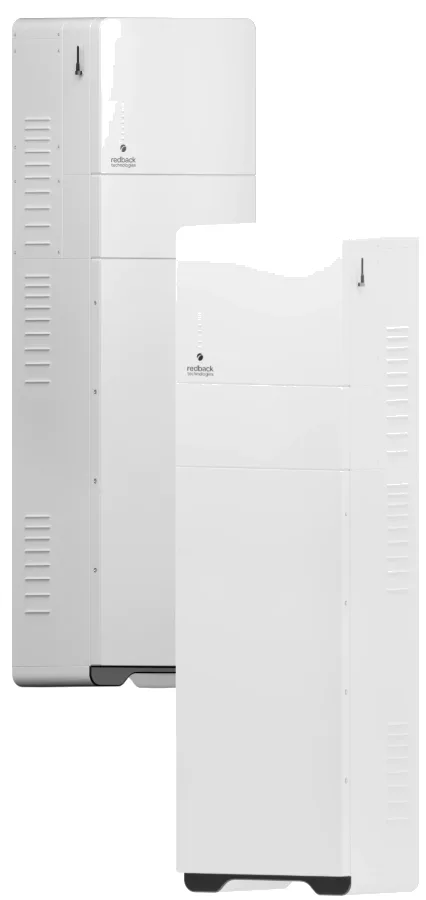
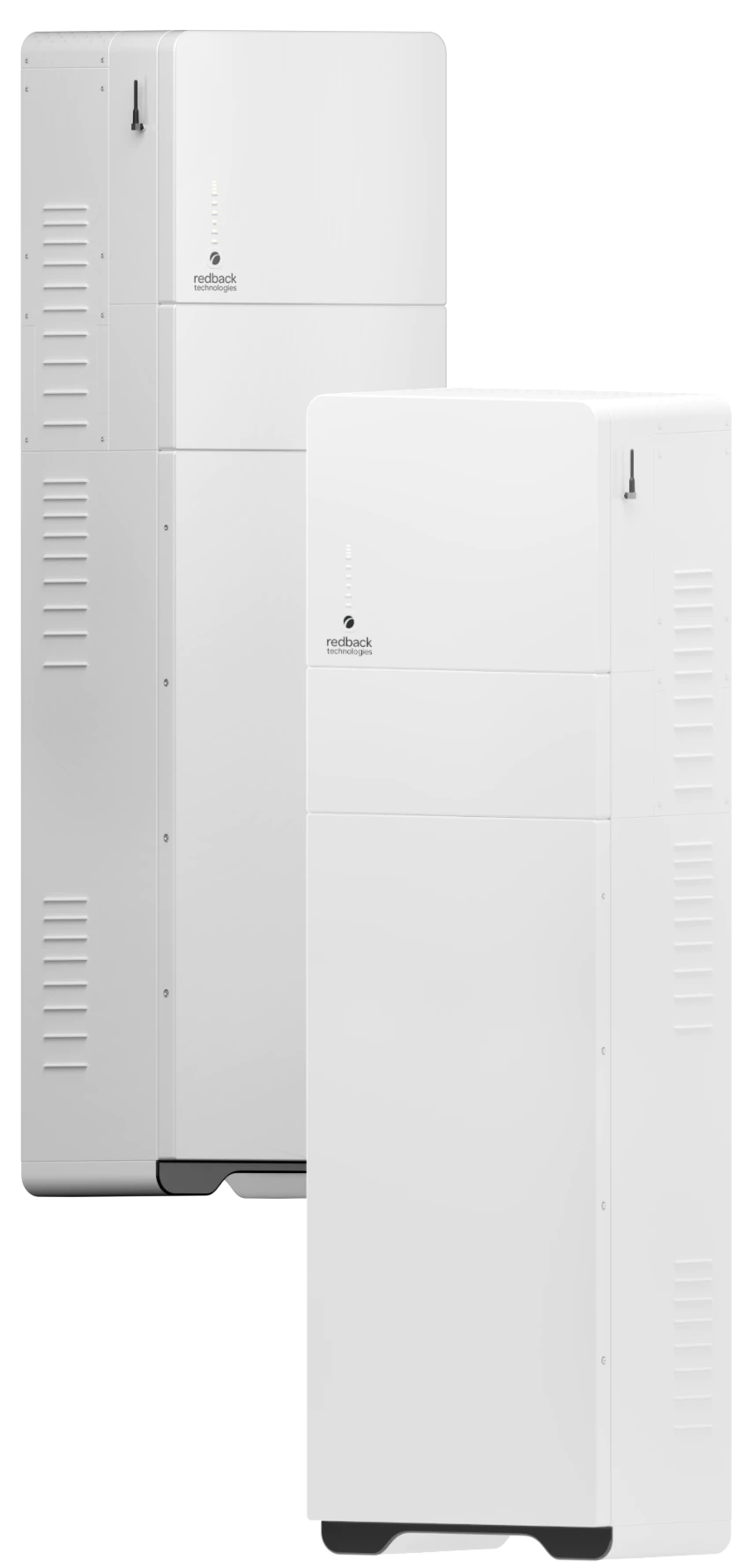
Meet Redback A Queensland-born, all-in-one battery system with switchgear pre-wired and load control included.
- Arrives with switchgear pre-wired
Pre-wired switchgear and a pre-made control panel come as standard, which Redback says makes installation quicker.
- Uses spare solar on appliances
Smart Load Control can switch an appliance on a relay from your export power or solar generation.
Ask which appliance goes on the relay, and whether its wiring is in your quote.
- Designed in Australia
Redback designs its systems in Australia, and its RED-P1, RED-R1 and RED-R2 batteries are approved-listed.
Check the exact battery on your quote against the approved list.
The company behind it
Redback began as a Queensland start-up making hybrid battery systems, and changed hands in 2024.
Queensland start-up
Founded by Philip Livingston; the Queensland Government profiled it as a Queensland start-up in 2016.
New owners, 2024
New owners took Redback out of administration in May 2024.
Queensland listing holder
Redback Energy Pty Ltd, of Queensland, holds most of its approved listings.
Want a Redback battery in Queensland?
Get my Redback quotesCompare up to 3 vetted installers. Free, no obligation.
Why Redback is different
Redback is the one company in this tier that engineers its systems in Australia. It was founded in Brisbane in 2015, its warranty is issued by an Australian entity from a Salisbury address, and its inverters are designed around Australian switchboards, Australian network rules and Australian heat before the hardware is built in China. That shows up in the small things installers notice: pre-wired switchgear in the cabinet, a control panel made up before the truck leaves, remote meter checks and a CT-flip function so a wiring mistake can be corrected from the portal instead of a second site visit.
The second difference is that the inverter is the product. Redback sells hybrid battery systems — an inverter with an enclosure of battery units beneath it — rather than a battery you bolt to someone else’s electronics. The G3 range keeps a low-voltage enclosure of stackable packs; the Hybrid Battery Max and its three-phase sibling move to high-voltage enclosures that take two to five battery units each. Either way, Redback’s software sits over the whole system, and its warranty excludes third-party inverters and battery modules outright.
The third difference is the history, and it cuts both ways. SolarQuotes records that Redback entered voluntary administration in March 2024 and emerged that May under a new owner, and the company’s own warranty page links to a 2025 warranty-delay resolution. Owners who bought through that period lived through it; buyers today inherit a business that survived it. Neither fact should be hidden in a quote conversation, and a good Redback installer will raise it before you do.
What the history does not change is the engineering brief. Smart Load Control — the inverter deciding, moment to moment, which loads run on solar, battery or grid — is included as standard on the current range, and the whole system is built to be commissioned and diagnosed remotely by an installer who has registered with Redback. That is the trade: a locally engineered, tightly integrated system in exchange for a closed ecosystem and a smaller field base than the global brands.
The Redback system, piece by piece
The hybrid inverter is the first decision and the one that fixes everything else. The single-phase G3 range comes in two output sizes and pairs with a low-voltage enclosure; the Hybrid Battery Max is single-phase with a high-voltage enclosure; the three-phase series runs from modest to very large output for bigger homes and small commercial sites. Redback’s own table shows each family with its own maximum storage, so the inverter you are quoted sets the ceiling on how much battery you can ever hang off it.
The battery enclosure is the second. On the G3 it holds stackable low-voltage packs; on the Max and three-phase systems it is a high-voltage cabinet that takes between two and five battery units, with a separate management module at the top. The enclosure decides your usable capacity in fixed steps, and the datasheet for the high-voltage cabinet lists a lower ingress rating than the inverter — so where the enclosure sits matters as much as what is in it.
The switchgear and control panel are the part no other brand in this tier sells you. Redback ships the cabinet pre-wired, with a made-up control panel and inverter-level switchgear, which is what lets the company talk about quick installation and a stealth install with minimal exposed cabling. It also means the installer is working to Redback’s wiring plan, not improvising one — a genuine quality-control advantage when the crew is unfamiliar with the brand.
The software layer is the fourth piece: Bluetooth for commissioning, Wi-Fi or Ethernet for the cloud, an optional 4G path, the MyRedback app and a web portal, and Smart Load Control included. Redback’s warranty requires a stable cloud connection, so the network path is a warranty condition rather than a convenience, exactly as it is for the connected brands overseas.
Put Redback to the test on your own numbers
Reading about it only goes so far — real quotes are where a Redback decision gets made. Get 2-3 quotes from vetted installers in Queensland. Free for homeowners.
What Redback does best
Being engineered for the house it is going into. Australian switchboards, Australian network export rules and Australian summers are the design inputs, and the document centre carries commissioning guides for specific network operators’ dynamic-export and emergency-backstop schemes. For a homeowner in a state with tight export limits, that local fluency is worth more than a global brand’s glossier app.
Controlling loads, not just storing energy. Smart Load Control is standard on the current range: the inverter decides which circuits draw from solar, battery or grid as conditions change. Owners on SolarQuotes who praise the system tend to praise this — the sense that the house is being run, rather than just backed up.
Making the install repeatable. Pre-wired switchgear, a made-up control panel, remote meter checks and a CT-flip fix mean fewer ways for a crew to get the wiring wrong and fewer return visits when they do. That is the practical meaning of a locally engineered product: the engineering effort went into the parts installers actually struggle with.
Sitting inside a VPP without drama. Redback describes the range as VPP-compatible with major energy retailers, and SolarQuotes reports that all Redback batteries were added to Amber’s SmartShift program in late 2024. For a household that intends to earn from the battery as well as save, that breadth is a concrete advantage over brands still negotiating retailer by retailer.
Who a Redback system suits — and who it does not
It suits households that want one Australian company accountable for the inverter, the battery, the switchgear and the software, and who value a local engineering office over a global badge. Owners on SolarQuotes who fit this description report a system that runs the house well and an app they actually use.
It suits homes with complicated export or backstop rules — the states and networks with dynamic-export schemes — because Redback’s commissioning documentation is written for exactly those networks.
It suits buyers who want load control built in rather than bolted on, and who intend to join a VPP: the compatibility is broad and the software was designed with dispatch in mind.
It does not suit homes that want to keep an existing inverter, because the inverter is the product and the warranty excludes third-party electronics. It does not suit off-grid properties, which the warranty specifically excludes. And it does not suit anyone who needs the reassurance of an unbroken corporate history: the 2024 administration and the 2025 warranty-delay episode are on the record, and SolarQuotes’ reviews include owners who describe slow claims and software trouble alongside the majority who describe good service.
The real fit test is the installer’s registration status and their answer to the year-six question. Redback runs a Registered Redback Installer process through its portal, its warranty needs a cloud connection maintained, and claims run through the installer first. A registered installer who has commissioned these systems through the network schemes in your state, and who will say in writing who handles a claim, is the difference between the good and the bad reviews.
Redback in Queensland
Queensland adds nothing at state level in 2026, so the federal discount carries the case — and Queensland is Redback’s home state, with the company engineered and warranted out of Brisbane. Energy Queensland’s dynamic-export scheme is one Redback documents commissioning for, which matters on the south-east network where export limits bite; on the Ergon side of the state, the regulated regional tariff makes export income real and a battery a smaller step.
Feed-in tariffs in Queensland typically pay 4–13c/kWh while grid power costs 30–35c — so a stored kilowatt-hour is worth what you avoid buying, not what exporting earns, and the wider that gap sits on your own plan, the harder a battery works for you. Heat is the durability question in Queensland, and the high-voltage cabinet’s lower ingress rating and the warranty’s temperature window make a shaded, ventilated position a design requirement rather than a preference.
Put Redback to the test on your own numbers
Reading about it only goes so far — real quotes are where a Redback decision gets made. Get 2-3 quotes from vetted installers in Queensland. Free for homeowners.
The installer decides the Redback outcome
A Redback system is designed to be installed by someone who has registered with Redback and works to its wiring plan, so the first question is simply whether your installer has. Registration is a portal process the company documents, and it is what unlocks remote commissioning, remote meter checks and the CT-flip fix. An unregistered crew can bolt the hardware up; they cannot run the system the way it was designed to be run.
The second question is the cloud. Redback’s warranty conditions require a stable connection to its cloud, and the hardware offers Wi-Fi, Ethernet and an optional 4G path to make that possible. An installer who leaves a system on a flaky household Wi-Fi link has left the warranty exposed and the Smart Load Control half-blind. Ask which path they are using and whether it has been tested from the portal before they leave.
The third is the enclosure position. The high-voltage battery cabinet carries a lower ingress rating than the inverter, and the warranty sets an operating temperature window, so where the cabinet sits — shaded, ventilated, out of the weather — is a design decision. The circuits on Smart Load Control and the backup port should be listed by name on the quote, because they are what the system will actually do for you in an outage.
This is where Solar Select earns its place. We put your enquiry in front of up to 3 approved installers, subject to current coverage, eligibility and brand suitability — and comparing them is free for homeowners. For a brand whose reviews split so cleanly between well-supported and poorly supported systems, the installer is not a detail; they are most of the outcome.
Is Redback right for your home? Fit and warranty checks
A good fit if…
- Households that want one Australian company accountable for inverter, battery, switchgear and software
- Homes on networks with dynamic-export or backstop schemes that Redback documents commissioning for
- Buyers who want load control built in rather than bolted on
- Households planning to join a VPP and earn from the battery as well as save
Consider the limitations
- You want to keep an existing inverter — the inverter is the product and third-party electronics are excluded from warranty
- Your property is off-grid, which the warranty specifically excludes
- You need the reassurance of an unbroken corporate history behind a ten-year relationship
- You would rather not depend on a cloud connection to keep warranty cover intact
Redback specifications and source documents
- Redback pairs with its own hybrid inverter: new solar-and-battery installs use one unit; a retrofit means replacing the existing inverter. Source
- Listed models are on the Clean Energy Council approved battery list. Source
- Any accredited installer can fit Redback under the manufacturer's warranty terms. Source
- Redback’s Clean Energy Council listed enclosures qualify as hardware for the federal Cheaper Home Batteries Program, whose STC factor has tapered by capacity band since 1 May 2026 — so the enclosure size you choose changes how much of the system is discounted at the full rate. Source
Why the installer matters more than the battery
More than 60% of inspected home battery installs were substandard. The Clean Energy Regulator inspected 1,278 home battery installations under the Cheaper Home Batteries Program between July 2025 and April 2026. More than 60% came back substandard and 1.2% unsafe — and the hardware was rarely the problem. The install was.
That is the part a brand cannot fix for you. Solar Select checks installer approval and current campaign eligibility for your Queensland enquiry. Confirm business history and current independent reviews before choosing an installer. Your enquiry goes to up to 3 of them, and no one else sees your details.
Battery rebates in Queensland
Cheaper Home Batteries Program (federal) — roughly a quarter off the installed battery cost, applied upfront at the quote by the installer rather than claimed back later.
Federal-only in Queensland for 2026 — Queensland runs federal-only on battery rebates in 2026 — no active state battery program. The federal Cheaper Home Batteries discount still applies in full.
Ready for Redback quotes in Queensland?
Postcode in — up to 3 vetted installers out. Federal battery rebate applied at quote. Free, no obligation, maximum 3 installers ever.
Redback installers in Brisbane
- Redback battery installers in Brisbane — serving Greater Brisbane
Regional Queensland
- Redback battery installers in Gold Coast — serving the Gold Coast
- Redback battery installation Sunshine Coast — serving the Sunshine Coast
- Redback installers Townsville — serving Townsville and surrounds
- Redback battery installation Cairns — serving Cairns and the Far North
- Redback installers Toowoomba — serving Toowoomba and surrounds
- Redback battery installers in Mackay — serving Mackay and surrounds
- Redback battery installers in Rockhampton — serving Rockhampton and surrounds
- Redback battery installers in Bundaberg — serving Bundaberg and surrounds
- Redback battery installation Hervey Bay — serving Hervey Bay and surrounds
- Redback battery installers in Gladstone — serving Gladstone and surrounds
This page also covers the Queensland towns that no longer have a page of their own. Across the Darling Downs and Maranoa, the Burdekin and North and the Sunshine Coast hinterland, enquiries from Chinchilla, Dalby, Goondiwindi, Roma, Stanthorpe, Warwick, Ayr, Charters Towers, Home Hill, Ingham, Caloundra and Nambour route through this page on postcode. In the Whitsundays and Isaac and greater Brisbane and the Lockyer, the same applies to Airlie Beach, Bowen, Moranbah, Proserpine, Sarina, Beaudesert, Caboolture, Gatton and Ipswich. Further out, Charleville, Cloncurry, Longreach, Mount Isa, Weipa, Biloela, Blackwater, Emerald and Yeppoon in outback Queensland and Central Queensland are matched the same way. Atherton, Innisfail, Mareeba, Tully, Gympie, Kingaroy and Maryborough in the Far North and the Wide Bay sit in the same Queensland pool.
Page updated 6 October 2026