Victoria
Ruixu battery installers in Victoria.
Get matched with top solar companies in Victoria
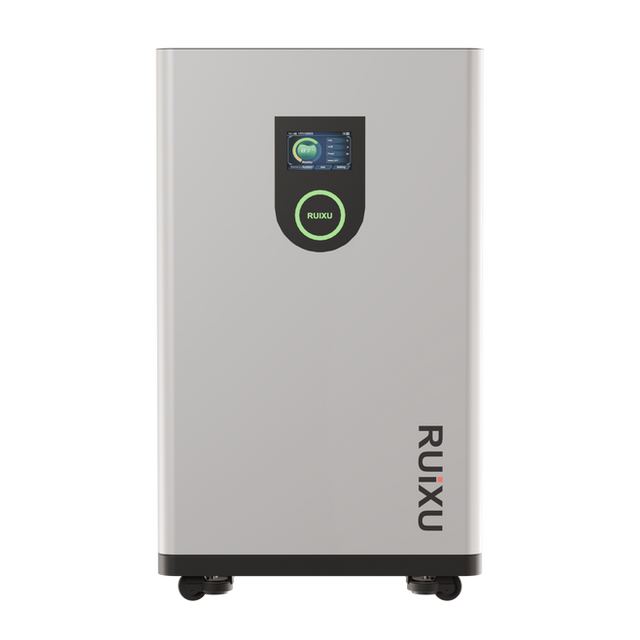
- The Ruixu Lithi2-16 has a built-in screen to check your battery's status
- Unlock up to $7,000 in federal solar + battery rebates*
- Compare quotes from vetted installers, with Ruixu experience where available
Ruixu
What could a Ruixu battery save your home?
*For eligible combined solar and battery installations before January 2027. Battery-only rebates vary with usable capacity. Your installer confirms eligibility and amount.
✓ Up to 3 vetted installers
✓ Free to compare, no obligation
✓ Your chosen battery, your quote request
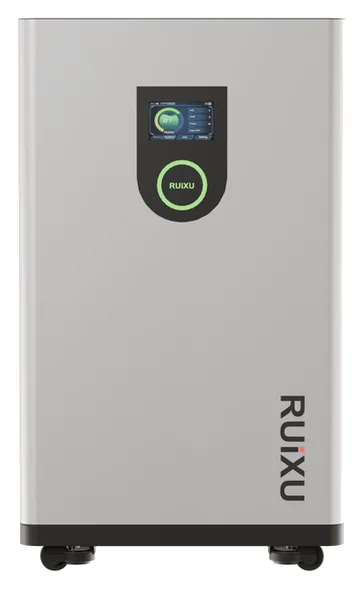
Meet Ruixu 16 kWh in one wheeled cabinet, with a touchscreen and self-heating built in.
- Lots of storage, one box
The Lithi2-16 holds 16 kWh usable in one floor-standing cabinet, so there are no modules to stack.
It's the only Ruixu model on the approved list, so check 16 kWh suits how much power you use.
- Rolls into place on wheels
Four hidden heavy-duty wheels make the 145 kg unit easier to move into place, and a wall mount stops it tipping.
Check the anti-tip wall mount is in your quote.
- A touchscreen on the battery
A 5-inch touchscreen on the front shows how the battery is doing and lets you change settings right there.
The company behind it
Ruixu is a Chinese lithium battery maker, founded in 2017, with its factory in Zhuhai, Guangdong.
Founded 2017
Ruixu was founded in 2017 and makes lithium iron phosphate batteries and inverters.
Factory in Zhuhai
Ruixu makes them at a 20,000 m² factory in Zhuhai, Guangdong Province, China.
NSW warehouse
SolarQuotes reported in July 2025 that Ruixu has a NSW warehouse but no Australian office.
Want a Ruixu battery in Victoria?
Get my Ruixu quotesCompare up to 3 vetted installers. Free, no obligation.
Why Ruixu is different
Ruixu sells one home battery in Australia and it is deliberately large. Where most brands build capacity from small modules stacked into a tower, this is a single floor-standing unit that holds in one enclosure roughly what a competitor assembles from three or four. There is no smaller version. That makes the first question about this brand unusually blunt: does your household actually need this much storage, because there is no option to buy less of it.
It is a battery only. Ruixu does not make an inverter, so the unit has to be paired with a hybrid inverter from another manufacturer, chosen and configured by your installer. That gives you freedom in choosing the inverter and it means nobody is automatically accountable for the pairing, which is the standard trade on any open battery.
The hardware shows a manufacturer thinking about the practical realities of a heavy object. Four concealed heavy-duty wheels let a unit weighing as much as two adults be moved into position without a lifting crew, an anti-tipping mount anchors it to the wall afterwards, an inspection port on the side gives access to the management system and fuse, and the enclosure is electro-coated using a process borrowed from car bodies to resist rust outdoors. There is also a touchscreen on the front, so settings can be read and changed at the battery rather than only through a phone.
The warranty is where this brand needs the most care, and it is the reason to read before signing rather than after. It is a defects warranty: it promises the product will be free of defects for its term, and it sets out no percentage of original capacity you should still have at the end, no state-of-health figure and no throughput table. It also reserves the manufacturer’s right to refuse a claim where the battery is judged on inspection to have reached its normal end of life, even inside the warranty period. Those two things together mean gradual capacity loss is not clearly something you can claim against.
The Ruixu system, piece by piece
The unit is the whole product. Cells, management system, fire module, heater and screen are inside one enclosure, and capacity is added by putting a second unit alongside the first rather than by adding modules to a stack. The manufacturer’s own datasheet takes the same product up into sizes that belong on commercial sites, which is where the larger capacity figures in the record come from; a house will use one, occasionally two.
The inverter is somebody else’s and it is not optional. Because Ruixu makes no inverter, the hybrid that runs the battery is a separate purchase with a separate warranty, and the two have to communicate over a data link. The warranty specifically excludes faults caused by communication cabling that does not follow the manufacturer’s guidance, which tells you where this pairing most often goes wrong.
The physical install is a genuine part of the design rather than an afterthought. A unit of this weight needs a floor that will carry it, a route to get it there, and the anti-tipping anchor fitted once it is placed. The wheels make the first two solvable in a way that a wall-hung stack of the same capacity would not be, and they also mean the battery can be rolled clear for maintenance later.
The self-heating function draws power to warm the pack when the temperature falls far enough, so charging continues in genuinely cold conditions instead of slowing to protect the cells. It is a real capability and a narrow one: it earns its place in alpine and tableland Australia and will barely engage in most of the country.
The exclusions read like a checklist of ordinary installation errors: loose terminal connections, under-sized cabling, incorrect parallel connections, insufficient space for airflow, and product under-sized for the application. None of those are exotic. All of them are decisions made by whoever installs it, which puts a great deal of weight on that choice.
Put Ruixu to the test on your own numbers
Reading about it only goes so far — real quotes are where a Ruixu decision gets made. Get 2-3 quotes from vetted installers in Victoria. Free for homeowners.
What Ruixu does best
Putting a lot of storage in one place cheaply. For a household that genuinely uses a great deal of power, buying capacity in one unit rather than assembling it from modules is straightforward and, on this brand, keenly priced. That is the real core of the value proposition.
Being serviceable. Wheels, an inspection port to the management system and fuse, and a touchscreen on the unit are all things that make a battery easier to live with and easier to work on over a decade. Plenty of sealed competitors offer none of them, and they matter more the longer you own the thing.
Handling cold. The self-heating pack is a feature that usually appears further up the market, and for a house in the high country it turns a battery from something that sulks through winter into something that works all year.
Surviving outdoors. An electro-coated enclosure, an aerosol fire module inside the pack and a wide operating temperature band together make a strong case for a unit that will live outside on an Australian site, which is where a lot of these batteries end up regardless of what was intended.
Who a Ruixu system suits — and who it does not
It suits households with genuinely high consumption who want a large amount of storage in one box, at a price that a modular equivalent will struggle to match.
It suits awkward sites. A heavy battery that can be wheeled into a position no forklift will reach solves a problem that occasionally decides whether a job can be done at all.
It suits cold locations where the self-heating pack is answering a real limitation rather than adding a feature nobody will use.
It does not suit a household that wants a warranty committing to remaining capacity, because this one does not make that commitment and explicitly reserves the right to decline a claim on a battery judged to be at normal end of life. If that clause bothers you, trust the instinct — it should carry weight.
And it does not suit a modest household. There is no smaller model, so a buyer whose consumption does not justify this much capacity is paying for storage that will never cycle. A good installer will say so; a poor one will sell you the only product they have. Ask for a smaller battery from another brand to be quoted alongside it, and compare the two on what you actually use rather than on price per kilowatt-hour.
Ruixu in Victoria
Victoria runs federal-only on battery rebates in 2026 — Solar Homes covers panels, not storage — so the federal discount stands alone. Because this unit is large, it crosses the point where the program’s support rate begins to taper, which means the discount does not scale with the capacity as neatly as it does on a smaller battery. Ask for the calculation on this specific size rather than accepting a headline figure.
Feed-in tariffs in Victoria typically pay 4.9–12c/kWh while grid power costs 30–35c — so a stored kilowatt-hour is worth what you avoid buying, not what exporting earns, and the wider that gap sits on your own plan, the harder a battery works for you. Victoria’s alpine and tableland towns are also where the self-heating pack stops being a specification line and becomes the reason to shortlist this brand at all.
Put Ruixu to the test on your own numbers
Reading about it only goes so far — real quotes are where a Ruixu decision gets made. Get 2-3 quotes from vetted installers in Victoria. Free for homeowners.
The installer decides the Ruixu outcome
The pairing is the job. Ruixu supplies a battery and nothing else, so the hybrid inverter and the communication between the two are entirely your installer’s design. The right question is not whether they have fitted this battery but whether they have fitted it with the specific inverter in your quote, and what happened when they did.
The warranty exclusions make ordinary workmanship decisive here in a way it is not on every brand. Loose terminals, under-sized cabling, incorrect parallel connections and insufficient airflow are all named as grounds for refusing cover, and every one of them is something a rushed installation produces. Slow, tidy work on this product is not fussiness; it is what keeps the warranty alive.
Sizing deserves a careful conversation because the product cannot flex. With no smaller model available, an installer working from a genuine consumption profile might reasonably conclude this brand is the wrong answer for your house. One who never raises the question has sold you the product they stock rather than the system you needed.
The physical logistics are worth confirming in advance: the route in, the floor, the standing position, the wall anchor, and whether the position stays shaded and ventilated through summer. On a unit this heavy, discovering a problem on delivery day is expensive for everyone.
This is where Solar Select earns its place. We put your enquiry in front of up to 3 approved installers, subject to current coverage, eligibility and brand suitability — and comparing them is free for homeowners. On a young brand with no local manufacturer office, an open pairing to design and a warranty that turns on installation quality, the installer is very close to being the whole purchase.
Is Ruixu right for your home? Fit and warranty checks
A good fit if…
- Households that genuinely need a lot of storage and want it in one box
- Sites where a heavy unit has to be moved into an awkward position and wheels solve a real problem
- Cold-climate locations where a self-heating pack answers a genuine winter limitation
- Buyers pairing it with a hybrid inverter they have chosen deliberately on its own merits
Consider the limitations
- You want a warranty that commits to how much capacity you will still have at the end of it
- You want a smaller battery, since there is no lower model in the Australian range
- You want a brand with years of Australian installs and an established local service operation
- You want the battery and inverter to come from one manufacturer with one point of accountability
Ruixu specifications and source documents
- Listed models are on the Clean Energy Council approved battery list. Source
- The Lithi2-16 is on the Clean Energy Council approved battery list, the hardware condition of the federal Cheaper Home Batteries Program, and a single unit sits well inside the program band of 5 kWh to 100 kWh of usable capacity. The program pays its full rate on the first 14 kWh of usable capacity and tapers above that, so one unit of this size crosses that boundary on its own. Source
Why the installer matters more than the battery
More than 60% of inspected home battery installs were substandard. The Clean Energy Regulator inspected 1,278 home battery installations under the Cheaper Home Batteries Program between July 2025 and April 2026. More than 60% came back substandard and 1.2% unsafe — and the hardware was rarely the problem. The install was.
That is the part a brand cannot fix for you. Solar Select checks installer approval and current campaign eligibility for your Victoria enquiry. Confirm business history and current independent reviews before choosing an installer. Your enquiry goes to up to 3 of them, and no one else sees your details.
Battery rebates in Victoria
Cheaper Home Batteries Program (federal) — roughly a quarter off the installed battery cost, applied upfront at the quote by the installer rather than claimed back later.
Federal-only in Victoria for 2026 — Victoria runs federal-only on battery rebates in 2026 — the Solar Homes rebate covers panels, not storage. The federal Cheaper Home Batteries discount still applies in full.
Ready for Ruixu quotes in Victoria?
Postcode in — up to 3 vetted installers out. Federal battery rebate applied at quote. Free, no obligation, maximum 3 installers ever.
Ruixu installers in Melbourne
- Ruixu installers Melbourne — serving Greater Melbourne
Regional Victoria
- Ruixu installers Geelong — serving Geelong and the Bellarine
- Ruixu battery installers in Ballarat — serving Ballarat and surrounds
- Ruixu battery installers in Bendigo — serving Bendigo and surrounds
- Ruixu battery installers in Shepparton — serving Shepparton and the Goulburn Valley
- Ruixu battery installation Mildura — serving Mildura and Sunraysia
- Ruixu installers Warragul — serving Warragul–Drouin and West Gippsland
- Ruixu battery installation Traralgon — serving Traralgon and the Latrobe Valley
This page also covers the Victoria towns that no longer have a page of their own. Across Gippsland, the Wimmera and Mallee and the Central Highlands, enquiries from Bairnsdale, Cowes, Inverloch, Korumburra, Lakes Entrance, Leongatha, Maffra, Moe, Morwell, Sale, Wonthaggi, Ararat, Horsham, Kerang, Stawell, Swan Hill, Daylesford and Maryborough route through this page on postcode. In the Hume and High Country and the South West, the same applies to Alexandra, Beechworth, Benalla, Bright, Kilmore, Mansfield, Myrtleford, Seymour, Wangaratta, Wodonga, Camperdown, Colac, Hamilton, Portland and Warrnambool. Further out, Bacchus Marsh, Emerald, Gisborne, Healesville, Melton, Pakenham, Sunbury, Wallan, Drysdale, Lara, Ocean Grove and Torquay in outer Melbourne and the Bellarine and Surf Coast are matched the same way. Cobram, Echuca, Kyabram, Numurkah, Rochester, Yarrawonga, Castlemaine, Kyneton and Woodend in the Goulburn Valley and Murray and the Macedon Ranges and Goldfields sit in the same Victoria pool.
Page updated 6 October 2026