Australian Capital Territory
Sungrow battery installers in Australian Capital Territory.
Get matched with top solar companies in Australian Capital Territory
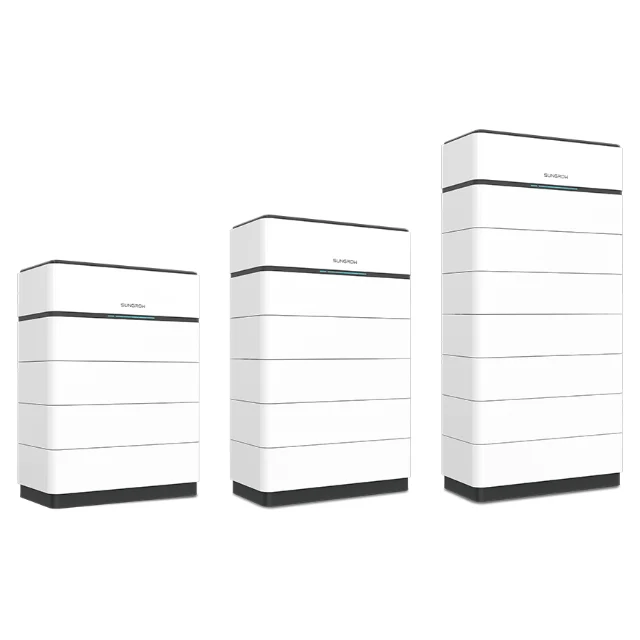
- Sungrow's stackable batteries offer different storage sizes for smaller and larger homes
- Unlock up to $7,000 in federal solar + battery rebates*
- Compare quotes from vetted installers, with Sungrow experience where available
Sungrow
What could a Sungrow battery save your home?
*For eligible combined solar and battery installations before January 2027. Battery-only rebates vary with usable capacity. Your installer confirms eligibility and amount.
✓ Up to 3 vetted installers
✓ Free to compare, no obligation
✓ Your chosen battery, your quote request
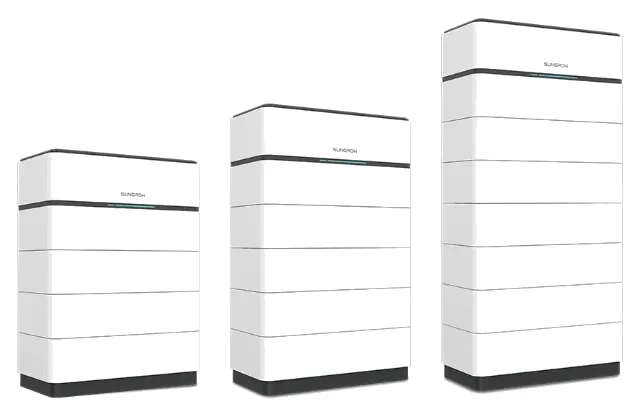
Meet Sungrow Battery modules that stack into a tower, matched to Sungrow's own hybrid inverters.
- Modules plug in, no cables
SBR modules plug and play with no cables needed between them, and Sungrow says one person can install them.
- Fine steps for typical homes
SBR builds in 3.2 kWh modules, two to eight per stack, from 6.4 up to 25.6 kWh, and can be extended later.
Ask how many more modules your quoted stack can take later.
- Installers' second pick
21% of installers in SolarQuotes' 2026 survey picked Sungrow for their own home, putting it second.
- 10 years, 70% capacity promised
For batteries installed from October 2024, Sungrow promises 70% capacity at ten years, with unlimited cycles for home use and backup.
Sungrow's warranty requires the battery to run between -20 °C and 50 °C. Sungrow's warranty document names SBH200 to SBH400; if your quote is an SBH100 or SBH150, ask for its warranty terms in writing.
The company behind it
A Chinese inverter and battery maker based in Hefei, founded in 1997.
Founded 1997
Sungrow says it was established in 1997 and marks 2003 as the year of its first grid-connected inverter.
Shenzhen-listed
Sungrow says it has been listed on the Shenzhen Stock Exchange since 2011.
Australian office
Sungrow Australia Group runs an office in NSW with a 1800 hotline.
Want a Sungrow battery in Australian Capital Territory?
Get my Sungrow quotesCompare up to 3 vetted installers. Free, no obligation.
Why Sungrow is different
Every battery market has a reference point — the product other quotes get measured against — and in Australia that product is Sungrow. It sits among the top two brands by home-battery market share and finished on the podium in the 2026 installer vote, a standing earned through a plain mechanism: strong value per kilowatt-hour, delivered through a dense national installer base that keeps parts nearby and familiarity high. Installers once treated it as the budget option; the market now treats it as the solid mid-range default, which is a meaningful climb.
The architecture is a two-family modular design. SBR builds capacity from smaller stackable modules and carries the volume for typical homes; SBH uses larger modules with higher continuous power, running to parallel stacks for bigger and three-phase properties. Both are high-voltage lithium iron phosphate stacks whose modules plug together without external cabling, and both are DC-coupled — solar feeds the modules with fewer conversion steps than an AC-coupled retrofit allows.
The mechanism has a lock built into it: SBR and SBH work exclusively with Sungrow’s SH-series hybrid inverters. Not with another brand, and not even with Sungrow’s own SG string inverters — a distinction that has caught out buyers who assumed the badge was enough. A quoted battery without a compatible SH hybrid is not a complete system, and a home with a healthy non-Sungrow inverter is looking at a replacement job, not an addition.
The real trade-offs, then, are two. The closed pairing means changing inverter brand later means changing the battery too — a long-term flexibility cost that should be priced in consciously. And the performance warranty carries site-condition requirements that independent analysis has flagged as difficult to meet on consistently hot sites, which turns mounting location from an afterthought into a contract term.
The Sungrow system, piece by piece
The SH hybrid inverter is the first decision, because nothing else works without it. SH-RS models serve single-phase homes and SH-T models serve three-phase ones, and that choice fixes the backup design, the solar it can manage, and whether the quote is complete at all — the most common reason two Sungrow quotes cannot be compared is that only one of them actually includes the inverter.
SBR modules are the mainstream capacity. They stack in fixed steps, so the real content of a quote is a module count and the reasoning behind it — matched to your evening usage, not to a round number. Mixed-age or mismatched modules have been linked to imbalance issues, which is why later additions should go through an installer who checks compatibility rather than just clipping on another unit.
SBH modules are the answer when the house outgrows SBR’s comfort zone: larger modules, more continuous power, and parallel stacking for properties running ducted air conditioning or several heavy loads at once. SBR versus SBH is settled at design stage — the families pair with different inverter configurations — so the family named on the quote is a decision, not a detail.
The last part is not hardware but placement. The performance warranty attaches conditions to where the stack lives, so “where exactly will it be mounted” is a contract question as much as a practical one. Shaded, ventilated, with service access — the answer should be specific enough to hold the paperwork together for a decade.
Put Sungrow to the test on your own numbers
Reading about it only goes so far — real quotes are where a Sungrow decision gets made. Get 2-3 quotes from vetted installers in Australian Capital Territory. Free for homeowners.
What Sungrow does best
Cost per usable kilowatt-hour. This is the brand other batteries get priced against, and the advantage compounds with size: on larger stacks, where per-kWh cost dominates every other consideration, the value case is at its strongest. The mechanism is volume — a widely installed product carries tighter quotes than a niche one, because more installers are competing to fit it.
Being fixable. A battery is a ten-year relationship, and Sungrow’s practical edge is that when something needs attention, parts are usually straightforward to source and someone nearby has done the job before. A dense installer base is not glamorous, but it is exactly the property you want in year six, and few brands in this market match it. That depth also keeps quotes fair: an installer who knows a rival crew will price the same stack has less room to pad.
Three-phase homes, properly. The SH-T inverter with an SBH stack delivers genuine three-phase capability rather than a single-phase product stretched sideways — which puts Sungrow on the shortlist for larger households, workshops and rural connections where many competitors quietly bow out.
Working within the incentive landscape. Virtual-power-plant participation is supported across several Australian programs — a shorter list than the biggest ecosystems, but a workable one — and the modular sizing lets capacity be set against per-kWh state schemes deliberately. The habit to build: check the specific program against the specific model, because there is usually a path but never an automatic one.
Who a Sungrow suits — and who it does not
It suits buyers whose decision is anchored in value with a safety net: strong cost per kilowatt-hour from a brand with real Australian support depth, rather than the cheapest possible box or the biggest badge. If your shortlist question is “where is the sensible middle”, this is usually on it.
It suits homes buying inverter and battery together as one new system. The closed pairing costs nothing when there is no incumbent inverter to protect — the SH hybrid and the battery are specified as a matched set from day one, and the design conversation is clean. Three-phase households get an extra reason: few value-tier competitors handle three-phase this well.
It does not suit retrofits onto a healthy non-Sungrow inverter. Replacing working equipment erases the price advantage that justified the choice, and an AC-coupled battery from another maker will usually serve that home better. Nor does it suit buyers who want the freedom to change inverter brand later without the battery going with it.
Hot-site buyers should slow down rather than walk away. The warranty’s site-condition requirements are manageable with the right placement, but they are the installer’s problem to solve on paper before they become your problem in summer — make the clause and the mounting plan part of the same conversation.
On money, judge value per usable kilowatt-hour after the federal rebate, and judge it at the size you will actually cycle. Sungrow’s per-kWh strength grows with the stack, which tempts over-sizing; the discipline is to size to your evening load and let the modular design carry future growth, rather than paying today for capacity that waits years to be useful.
Sungrow in Australian Capital Territory
The ACT’s Sustainable Household Scheme lends $2,000–$15,000 at low interest rather than granting a rebate, and it stacks with the federal discount. A loan suits the way a Sungrow system is bought — inverter and battery together as one new system, since the batteries only pair with Sungrow’s own SH hybrids — because it smooths the cost of doing the whole job once instead of staging it and paying for two rounds of labour.
Feed-in tariffs in Australian Capital Territory typically pay 5–7c/kWh while grid power costs 30–35c — so a stored kilowatt-hour is worth what you avoid buying, not what exporting earns, and the wider that gap sits on your own plan, the harder a battery works for you. Canberra households also carry some of the country’s heaviest winter evening loads once the heating comes on — and stored midday solar meeting that load is where the numbers are won.
Put Sungrow to the test on your own numbers
Reading about it only goes so far — real quotes are where a Sungrow decision gets made. Get 2-3 quotes from vetted installers in Australian Capital Territory. Free for homeowners.
The installer decides the Sungrow outcome
The failure modes with this brand are almost all specification failures. A battery quoted without its SH hybrid inverter, the wrong family for the load, a three-phase home given a single-phase backup design, mismatched modules added down the track — every one of them is decided before a single bracket goes on the wall. The hardware is well understood; the variable is the person writing the quote.
Siting is the second place experience shows. Because the performance warranty attaches conditions to the install environment, a good installer treats placement as an engineering question — aspect, ventilation, service access — and writes the reasoning down. An installer who shrugs at the mounting question is telling you how the rest of the job will go.
Commissioning and handover close the loop. Backup circuits named on paper, the tariff schedule set to your actual retailer plan, the app connected and explained, and a clear answer to who supports the system in year four — you should hear “us”, not a shrug toward a distributor. Sungrow’s popularity means many installers have this routine down cold; it also means some are coasting on familiarity, so ask how they handle the parts of your job that are not routine.
That is the gap Solar Select works in. Submit an enquiry and we match it with up to 3 approved installers, subject to current coverage, eligibility and brand suitability. The service is free for homeowners, and matching only a small group means each installer treats your job as winnable and quotes it properly.
Is Sungrow right for your home? Fit and warranty checks
A good fit if…
- Buyers who want strong cost per kWh from a brand with real Australian support depth
- Three-phase homes — the SH-T inverter with an SBH stack gives genuine three-phase capability
- Larger stacks where cost per kWh dominates the decision
- Households buying inverter and battery together as one new system
- Anyone who values a dense installer base and easy parts availability
Consider the limitations
- You are retrofitting onto an existing non-Sungrow inverter — you would have to replace it, which removes the price advantage
- You live somewhere consistently very hot; read the warranty conditions with your installer before committing
- You want freedom to change inverter brand later
- You want a single all-in-one box rather than a battery plus separate inverter
Why the installer matters more than the battery
More than 60% of inspected home battery installs were substandard. The Clean Energy Regulator inspected 1,278 home battery installations under the Cheaper Home Batteries Program between July 2025 and April 2026. More than 60% came back substandard and 1.2% unsafe — and the hardware was rarely the problem. The install was.
That is the part a brand cannot fix for you. Solar Select checks installer approval and current campaign eligibility for your Australian Capital Territory enquiry. Confirm business history and current independent reviews before choosing an installer. Your enquiry goes to up to 3 of them, and no one else sees your details.
Battery rebates in Australian Capital Territory
Cheaper Home Batteries Program (federal) — roughly a quarter off the installed battery cost, applied upfront at the quote by the installer rather than claimed back later.
Sustainable Household Scheme — The ACT adds the Sustainable Household Scheme — a $2,000–$15,000 loan at 3% interest over up to 10 years. It is a loan, not a rebate, and it stacks with the federal Cheaper Home Batteries discount.
Ready for Sungrow quotes in Australian Capital Territory?
Postcode in — up to 3 vetted installers out. Federal battery rebate applied at quote. Free, no obligation, maximum 3 installers ever.
Sungrow installers in Canberra
- Sungrow battery installers in Canberra — serving the ACT
Page updated 6 October 2026