Sydney, NSW
BYD battery installers across Greater Sydney, NSW.
Get matched with top solar companies in Sydney
- BYD Battery-Box offers a choice of compatible inverter brands for your solar setup
- Unlock up to $7,000 in federal solar + battery rebates*
- Compare quotes from vetted installers, with BYD experience where available
BYD
What could a BYD battery save your home?
*For eligible combined solar and battery installations before January 2027. Battery-only rebates vary with usable capacity. Your installer confirms eligibility and amount.
✓ Up to 3 vetted installers
✓ Free to compare, no obligation
✓ Your chosen battery, your quote request
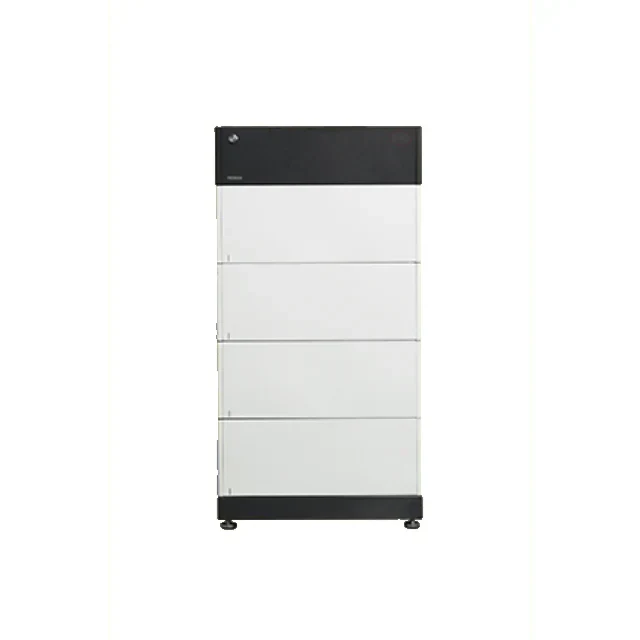
Meet BYD A plug-together battery that pairs with inverters from a range of brands.
- Pair it with your inverter
Battery-Box works with inverters on BYD's compatible list, across different brands, possibly the one already on your wall.
The exact inverter must be on BYD's compatible inverter list for your Battery-Box.
- Modules click in, no wiring
Owners rate Battery-Box 4.9 from 273 SolarQuotes reviews (Oct 2026); with no internal wiring, adding a module is simple.
- Two module sizes, room to grow
HVS stacks run 5.1 to 12.8 kWh, larger HVM stacks reach 22.1 kWh, and three identical stacks can join.
Ask whether your quoted stack has space for another module. Original HVM listings end 5 Dec 2026; ask for HVM+ if you want the rebate.
The company behind it
BYD started as a battery maker and now also builds cars, with home batteries here since 2017.
Founded 1994
BYD says it was founded in November 1994; it started out as a battery manufacturer.
Hong Kong-listed
BYD listed on the Hong Kong Stock Exchange in 2002.
Australian homes since 2017
BYD brought its home battery to Australia in 2017; Alps Power is its Australian service representative.
Want a BYD battery on your Sydney home?
Get my BYD quotesCompare up to 3 vetted installers. Free, no obligation.
A BYD in Sydney performs exactly as well as its configuration — and the configuration is decided by whoever installs it.
Why the installer matters more than the battery
The Clean Energy Regulator inspected 1,278 home battery installations under the Cheaper Home Batteries Program between July 2025 and April 2026 — more than 60% came back substandard and 1.2% unsafe. Solar Select checks installer approval and current eligibility before matching your Sydney enquiry. Manufacturer accreditation is a separate check; confirm the credentials relevant to your chosen battery.
What specifically goes wrong on a BYD install
- Compatibility is the whole game — a battery-and-inverter pair that is not on the manufacturer’s supported list can work on the day and cause support problems for years
- Split responsibility can become finger-pointing between vendors unless the installer commits, in writing, to owning the diagnosis
- High-voltage and low-voltage families are not interchangeable, and the wrong family for the chosen inverter is a costly correction
- Firmware versions on both sides need to match the supported combination, which is an install-day discipline rather than a product feature
Request my BYD quotes in Sydney.
That's why BYD quotes in Sydney are only comparable when the scope matches. Here's what to hold constant.
Comparing BYD quotes in Sydney
We don't publish price bands, because installed prices move constantly and depend on your roof, switchboard and supply. What we can tell you is what to hold constant so three quotes are actually comparable — match these first, then compare after-rebate dollars per usable kWh.
- Which inverter the battery is paired with — this is a second brand decision and it drives cost, backup behaviour and who you call when something fails
- High-voltage (HVS/HVM) or low-voltage (LVS), since the two suit different inverters and different install shapes
- Module count in the stack, and whether the design leaves room to add one later
- Whether the existing inverter is being kept, upgraded or replaced as part of the job
- Confirmation that the exact battery and inverter combination is on the Clean Energy Council approved list
A cheaper quote that skips backup hardware, assumes an inverter you don't have, or quietly changes the configuration isn't cheaper — it's a different job.
Want three BYD quotes you can actually compare? Your enquiry goes to up to 3 vetted installers in Sydney, all quoting the same scope.
Who installs BYD batteries in Sydney?
Solar Select is a matching platform for homeowners looking for BYD battery installation in Sydney. Submit your postcode and system requirements to request a match with up to 3 suitable installers, subject to current coverage, availability and brand suitability.
Enter your postcode and we check which vetted installers cover Sydney for BYD.
How are BYD installers matched in Sydney?
Matching considers approved installer accounts, active campaign geography, the requested system and current eligibility. Verified brand accreditations are prioritised when relevant. The actual match happens after you submit your postcode and enquiry; displayed companies are not a promise of who will receive it.
Compare recent independent reviews, business history, workmanship terms and the accreditation relevant to your chosen battery. Manufacturer accreditation and general installer approval are separate checks.
Battery rebates in New South Wales
- Cheaper Home Batteries Program (federal) — roughly a quarter off the installed battery cost, upfront, paid at its full rate on the first tier of usable capacity and at a reduced rate above that. Applied at quote by the installer, not claimed back later.
- NSW VPP Incentive (Peak Demand Reduction Scheme) (NSW) — NSW adds a VPP top-up of roughly $550–$1,500 for connecting the battery to an approved Virtual Power Plant. It stacks with the federal rebate, but it is VPP-conditional — if you don’t want a third-party operator dispatching your battery during peak events, you lose it. Full NSW rebate breakdown
Still weighing a BYD up? The Sydney numbers and the deeper reading are below.
BYD battery installation in Sydney, NSW
Comparing BYD for a home in Greater Sydney? Use your property's postcode and existing solar details when requesting quotes. This page focuses on Greater Sydney, NSW.
- 459,610 small-scale solar installations across 229 postcodes assigned to the Sydney study area.
- 11.1 kW median of residential-plausible postcode average system sizes in 2025.
Clean Energy Regulator postcode data · as at 2026-06. Solar Select aggregation of CER data for postcodes containing mapped suburbs nearest to Sydney within 45 km. This study area is not an official city boundary; postcodes can cross its edges. These figures do not measure installer availability.
The Sydney numbers
Solar Select's Sydney study-area aggregation of Clean Energy Regulator data includes 459,610 small-scale systems across 229 postcodes — about 3,573 MW of capacity as at 2026-06. For a BYD retrofit in Sydney, check the existing inverter and switchboard before choosing the configuration. Ask whether the inverter stays, is replaced, or works alongside another one; installation counts do not answer that for your home.
In the typical Greater Sydney postcode, new systems averaged about 11.1 kW through 2025. That is the scale of array a BYD battery would be charged from here, so ask each installer to size storage against that generation rather than the headline capacity: the configuration that suits a 11.1 kW roof is not automatically the biggest one quoted.
Greater Sydney splits across three networks — Ausgrid through the city, east and north, Endeavour Energy from Parramatta out through Blacktown and the south-west, and Essential Energy on the rural fringe. Which one your address sits on sets the export limit and the approval timeline before any hardware is chosen, so ask each installer to name the network their BYD quote assumes.
Sydney swings from about 6.5 peak sun hours in Jan to 2.6 in Jun — roughly 2.5× more generation in the sunniest month than the dullest. On a 10 kW array that is around 55.3 kWh a day in Jan against 22.1 kWh in Jun. Size a BYD on the winter figure: BYD is 4–24 kWh typical, far higher in multi-stack builds, so the real question at quote stage is what it can actually refill on a 22.1 kWh day, not what it holds on paper.
Show month-by-month generation
| Month | Peak sun hours | 10 kW array, kWh/day |
|---|---|---|
| Jan | 6.5 | 55.3 kWh |
| Feb | 5.6 | 47.6 kWh |
| Mar | 4.7 | 39.9 kWh |
| Apr | 3.7 | 31.5 kWh |
| May | 2.9 | 24.7 kWh |
| Jun | 2.6 | 22.1 kWh |
| Jul | 2.8 | 23.8 kWh |
| Aug | 3.7 | 31.5 kWh |
| Sep | 4.7 | 39.9 kWh |
| Oct | 5.5 | 46.8 kWh |
| Nov | 6.1 | 51.9 kWh |
| Dec | 6.5 | 55.3 kWh |
Monthly shape from Bureau of Meteorology climatology for New South Wales, scaled to Sydney's annual average of 4.6 peak sun hours; 85% system derate.
Install counts and capacity: Clean Energy Regulator postcode data for small-scale installations (CC BY).
What owning a BYD is actually like
Spec sheets stop being interesting about a week after install. These are the things owners notice in year one.
- Two vendors means two support chains. When something misbehaves, the first question is whether it is the battery or the inverter, and a good installer owns that triage rather than leaving you between two manufacturers.
- Monitoring comes from the inverter brand, not from BYD — so the app you live with every day is Fronius’s or Sungrow’s, and it is worth looking at that app before choosing.
- The pairing flexibility is genuinely useful on retrofits: an installer can add storage to a home whose inverter is still healthy, without discarding working equipment.
- Virtual-power-plant eligibility usually follows the inverter rather than the battery, so check the program against the pair, not the battery alone.
Four questions to ask any BYD quote
- Which inverter is this paired with, and is that pair on BYD’s supported compatibility list?
- If the system faults, who diagnoses whether it is the battery or the inverter — you, or me?
- Is this the HVS, HVM or LVS family, and why that one for my home?
- How many modules, and can the stack take another one later?
Is BYD right for your home? Fit and warranty checks
A good fit in Sydney if…
- Homes with a healthy inverter from a brand that already supports the Battery-Box
- Buyers who want to choose the inverter and the battery on their own merits
- Off-grid and hybrid setups, where the low-voltage LVS family is a long-standing option
- Large properties needing capacity built up through multiple parallel stacks
Consider the limitations
- You want one manufacturer accountable for the whole system end to end
- You would rather not think about inverter compatibility at all
- The simplest possible quote comparison matters more than component choice
- Your preferred virtual-power-plant program is built around a specific all-in-one product
Grid connection in Sydney
- Distributor pre-approval — battery systems usually need explicit pre-approval from your distributor: across Greater Sydney that is Ausgrid, Endeavour Energy or Essential Energy, depending on the address. A good installer lodges the application and flags any constraint in the quote — not after.
- Typical export cap ~5 kW — single-phase residential export across Greater Sydney is typically around 5 kW, though the exact cap depends on which network your address is on. A battery softens the cap — solar that can't export charges the BYD instead of being curtailed.
- 5–15 business days — typical connection-approval turnaround once the installer lodges with your distributor.
Ready for BYD quotes in Sydney?
Request quotes from up to 3 vetted installers for a BYD in Sydney — postcode in, quotes out.
Areas served around Sydney
Matching covers Greater Sydney, not just the centre — enquiries route on your postcode. Local solar detail for each suburb:
- Sydney South (2000) · 0.0 km from Sydney — 83 systems, 2,438 kW installed
- Sydney (2001) · 0.3 km from Sydney
- Sydney Gateway Facility (2891) · 0.3 km from Sydney
- Darling Harbour (2000) · 0.7 km from Sydney
- World Square (2002) · 0.7 km from Sydney
- Barangaroo (2000) · 0.9 km from Sydney
- Parliament House (2000) · 1.1 km from Sydney
- Darling Island (2009) · 1.2 km from Sydney — 36 systems, 839 kW installed
- Haymarket (2000) · 1.2 km from Sydney
- Millers Point (2000) · 1.2 km from Sydney
- Pyrmont (2009) · 1.2 km from Sydney
- The Rocks (2000) · 1.2 km from Sydney
- Darlinghurst (2010) · 1.4 km from Sydney — 329 systems, 2,724 kW installed
- Taylor Square (2010) · 1.4 km from Sydney
- Woolloomooloo (2011) · 1.4 km from Sydney — 74 systems, 1,223 kW installed
- Kings Cross (2011) · 1.6 km from Sydney
- Potts Point (2011) · 1.6 km from Sydney
- Ultimo (2007) · 1.6 km from Sydney — 42 systems, 699 kW installed
- Broadway (2007) · 1.7 km from Sydney
- Dawes Point (2000) · 1.7 km from Sydney
- Surry Hills (2010) · 1.7 km from Sydney
- Hmas Kuttabul (2011) · 1.8 km from Sydney
- Chippendale (2008) · 1.9 km from Sydney — 134 systems, 1,289 kW installed
- Elizabeth Bay (2011) · 1.9 km from Sydney
- Strawberry Hills (2012) · 1.9 km from Sydney
- Strawberry Hills (2013) · 1.9 km from Sydney
- Hmas Rushcutters (2027) · 2.0 km from Sydney — 151 systems, 1,337 kW installed
- Rushcutters Bay (2011) · 2.0 km from Sydney
- Glebe (2037) · 2.1 km from Sydney — 540 systems, 3,641 kW installed
- Balmain East (2041) · 2.1 km from Sydney — 898 systems, 5,250 kW installed
- Darlington (2008) · 2.4 km from Sydney
- Paddington (2021) · 2.4 km from Sydney — 418 systems, 3,277 kW installed
- Redfern (2016) · 2.4 km from Sydney — 244 systems, 1,910 kW installed
- Kirribilli (2061) · 2.6 km from Sydney — 53 systems, 446 kW installed
- Milsons Point (2061) · 2.6 km from Sydney
- The University Of Sydney (2006) · 2.7 km from Sydney
- Darling Point (2027) · 2.8 km from Sydney
- Edgecliff (2027) · 2.8 km from Sydney
- Forest Lodge (2037) · 2.8 km from Sydney
- Balmain (2041) · 2.9 km from Sydney
- McMahons Point (2060) · 2.9 km from Sydney — 365 systems, 3,601 kW installed
- Camperdown (2050) · 3.5 km from Sydney — 241 systems, 2,356 kW installed
- North Sydney (2059) · 3.5 km from Sydney — 3 systems, 43 kW installed
- Waverton (2060) · 3.6 km from Sydney
- Beaconsfield (2015) · 4.5 km from Sydney — 505 systems, 9,639 kW installed
- Clovelly West (2031) · 6.3 km from Sydney — 1,386 systems, 10,293 kW installed
- Hunters Hill (2110) · 7.2 km from Sydney — 844 systems, 6,981 kW installed
- Castlecrag (2068) · 7.8 km from Sydney — 1,781 systems, 13,616 kW installed
Other locations for BYD
BYD installers across New South Wales, town by town
- BYD battery installation Central Coast — 51 km
- BYD battery installers in Wollongong — 68 km
- BYD installers Bowral — 99 km
- BYD battery installers in Newcastle — 118 km
- BYD battery installation Orange — 206 km
- BYD battery installation Dubbo — 301 km
- BYD battery installers in Tamworth — 310 km
- BYD battery installers in Port Macquarie — 314 km
- BYD installers Wagga Wagga — 378 km
- BYD battery installers in Coffs Harbour — 436 km
- BYD installers Albury — 462 km
- BYD installers Ballina — 603 km
Read before you commit
BYD questions, Sydney answers
Why does a BYD quote also name another brand in Sydney?
Because BYD makes the battery and not the inverter, so every installed BYD system is a pairing — commonly with Fronius, SMA, Sungrow or GoodWe. That is not a quirk to work around; it is the product’s design, and it is why the Battery-Box turns up in retrofits where the homeowner wants to keep a good inverter. What it means practically is that you are judging two products and one installer, and the compatibility of the pair matters as much as either part.
Is a two-brand system riskier than an all-in-one for a Sydney home?
It concentrates the risk in a different place. An all-in-one gives you one number to call; a paired system gives you component choice and a retrofit path, at the cost of a support boundary between two manufacturers. The boundary is only a problem if nobody owns it, which is why the question to press your installer on is who performs the diagnosis when something faults. An installer who answers that clearly removes most of the difference.
Can I add a BYD battery to the solar I already have in Sydney, NSW?
Often yes, and it is one of the better reasons to consider one. If your existing inverter is on BYD’s supported list, the battery can be added without replacing hardware that still works. If it is not on the list, the answer is that the inverter is being replaced too, and the quote should say so plainly rather than presenting the job as a simple battery addition.
What is the difference between the high-voltage and low-voltage families if I live in Sydney?
They suit different inverters and different jobs. The high-voltage HVS and HVM stacks are the usual choice for grid-connected homes with a modern hybrid inverter, while the 48 V low-voltage LVS family is the traditional shape for off-grid and certain hybrid setups. You should not be choosing between them yourself — the inverter decision determines it — but you should expect your installer to explain which one they have specified and why.
Is BYD eligible for the federal battery rebate for Sydney households?
Battery-Box models do appear on the Clean Energy Council approved list, and eligibility is assessed model-by-model. Because these systems are always a pairing, ask to see both the battery and the inverter on the relevant approved lists for the exact configuration quoted, rather than relying on the brand being generally approved.
How big can a BYD system get across Greater Sydney?
Far bigger than a house needs. Stacks combine in parallel well past domestic requirements, which is why the same product family turns up in commercial installs. For a home the practical ceiling is set by your inverter, your budget and your evening load, not by the battery — so the sizing conversation should start from your actual consumption rather than from what the hardware can theoretically do.
Is this the same BYD that makes electric cars in Sydney?
Yes, and the manufacturing scale behind the cells is a fair thing to weigh. It is not a guarantee about your specific installation, though: home storage lives or dies on the inverter pairing, the design and the installer’s work, none of which come from the factory. Treat the scale as reassurance about the component, not as a substitute for checking the system around it.
Who installs BYD batteries in Sydney?
Solar Select is a matching platform for homeowners seeking BYD battery installation in Greater Sydney. Submit your postcode and requirements to request a match with up to 3 approved installers, subject to current coverage and eligibility. Manufacturer accreditation is verified separately; ask for the credentials relevant to your chosen battery. Free for homeowners.
How do I compare BYD quotes in Sydney?
Installed prices move constantly and vary by site, so compare on after-rebate dollars per usable kWh rather than headline totals — and only once the scope matches. For this brand the variables that matter are: which inverter the battery is paired with — this is a second brand decision and it drives cost, backup behaviour and who you call when something fails; high-voltage (HVS/HVM) or low-voltage (LVS), since the two suit different inverters and different install shapes; module count in the stack, and whether the design leaves room to add one later. Get all three quotes on the same scope, then compare the installers harder than the numbers.
What battery rebates apply in Sydney?
The federal Cheaper Home Batteries Program applies nationwide — roughly a quarter off installed cost, upfront, paid at its full rate on the first tier of usable capacity and tapering above that. Because BYD is 4–24 kWh typical, far higher in multi-stack builds, how much you collect depends on how the configuration lines up with those tiers, so ask the installer to show the tier split rather than one flat "government incentive" line. NSW then adds NSW VPP Incentive (Peak Demand Reduction Scheme) on top.
Which distributor approves a BYD connection in Sydney?
Across Greater Sydney the poles-and-wires network is Ausgrid, Endeavour Energy or Essential Energy, depending on the address — your installer identifies which one at quote stage and lodges with them. The application covers the whole system, so what gets scrutinised depends on the configuration: compatibility is the whole game — a battery-and-inverter pair that is not on the manufacturer’s supported list can work on the day and cause support problems for years. Export is typically around 5 kW single-phase, though the exact cap depends on your network, and approval usually runs 5–15 business days once lodged.
Are your Sydney installers BYD-accredited?
Accreditation is one of the things we look at, and where a BYD-accredited installer covers Greater Sydney you'll see that in the match. It is deliberately not the only filter — a current accreditation badge says the installer has done the brand's training, not that they wire a good switchboard or come back in year three. Every installer serving Sydney is vetted on the same bar set out above before they join. Ask the ones you're matched with what BYD work they've actually done, and how much of it, before you sign.
Is a BYD battery worth it in Sydney?
Sydney averages 4.6 peak sun hours, so a 10 kW rooftop array generates roughly 39.1 kWh on an average day — enough to cycle a BYD on most days of the year. With New South Wales feed-in tariffs typically paying 5–12c/kWh while grid power costs 30–35c, every stored kWh you use yourself is worth several times what exporting it earns.
How many solar installations are recorded across Greater Sydney?
Solar Select's Sydney study-area aggregation of Clean Energy Regulator data includes 459,610 small-scale systems across 229 postcodes — about 3,573 MW as at 2026-06. These are system counts, not a count of unique homes or BYD installers. For a retrofit, check your existing inverter, switchboard and actual generation before choosing storage; the study-area total cannot establish those details.
Answered what you needed?
Get your up to 3 vetted BYD quotes for Sydney — free, no obligation.
Local data reviewed by the Solar Select team. Installer network information is shown separately above when verified records are available. Sydney data sourced from BOM (sun hours), CER (rebates) and AER (Ausgrid network — export figures are indicative; your distributor sets the limit for your address). BYD product and pricing figures are sourced below. Last verified 2026-08-16. Page updated 6 October 2026.
- BYD Battery-Box — product range
- SolarQuotes — battery brand reviews
- Clean Energy Council — approved batteries
- DCCEEW — Cheaper Home Batteries Program
All New South Wales locations · All BYD locations · How it works