Moe, VIC
Deye battery installers in Moe, VIC.
Get matched with top solar companies in Moe
- Deye battery modules stack together to match the storage your home needs
- Unlock up to $7,000 in federal solar + battery rebates*
- Compare quotes from vetted installers, with Deye experience where available
Deye
What could a Deye battery save your home?
*For eligible combined solar and battery installations before January 2027. Battery-only rebates vary with usable capacity. Your installer confirms eligibility and amount.
✓ Up to 3 vetted installers
✓ Free to compare, no obligation
✓ Your chosen battery, your quote request
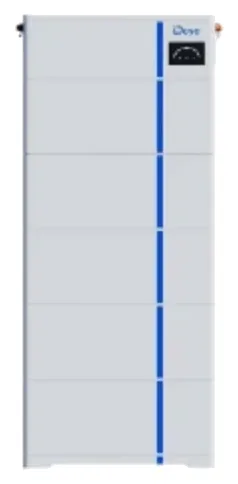
Meet Deye Built for backup and off-grid living, and it can work with the solar you already have.
- Keep the solar you have
Deye's Australian hybrid inverter can AC-couple to an existing solar system, so working panels and their inverter can stay.
Ask your installer to confirm your current inverter suits this set-up, and which Deye model is quoted.
- Made for off-grid and backup
Deye hybrid inverters run on-grid or off-grid, and up to 16 can be linked in parallel for larger properties.
Ask for the backed-up circuits to be listed by name in your quote.
- Charge from a generator
The inverter can store energy from a diesel generator, handy on rural blocks or through a long outage.
- Approved list, 10-year warranty
Deye AI-W batteries from 5.12 to 30.72 kWh are on the approved battery list, and Deye gives them a 10-year warranty.
Eligibility is model by model: check the exact model string on your quote.
Six charge and discharge time slots, set to suit your power plan.
The company behind it
A Shanghai-listed Chinese maker of hybrid inverters and home batteries, based in Ningbo.
Founded 2000
Deye says its parent, Ningbo Deye Technology, was founded in 2000 and listed in Shanghai in April 2021.
Global reach
Deye says its products are sold in over 140 countries and regions.
Approved here since 2024
Deye's AI-W5.1-B battery joined Australia's approved battery list in May 2024.
Want a Deye battery on your Moe home?
Get my Deye quotesCompare up to 3 vetted installers. Free, no obligation.
A Deye in Moe performs exactly as well as its configuration — and the configuration is decided by whoever installs it.
Why the installer matters more than the battery
The Clean Energy Regulator inspected 1,278 home battery installations under the Cheaper Home Batteries Program between July 2025 and April 2026 — more than 60% came back substandard and 1.2% unsafe. Solar Select checks installer approval and current eligibility before matching your Moe enquiry. Manufacturer accreditation is a separate check; confirm the credentials relevant to your chosen battery.
What specifically goes wrong on a Deye install
- Clean Energy Council listing is model-by-model, not brand-wide — the wrong model means no federal rebate at all
- The range is configuration-rich, so an installer who has commissioned Deye before is worth more than usual
- Inverter and battery pairing needs confirming explicitly given how many configurations exist across the range
- Support escalation paths should be agreed before install, not discovered afterwards
Request my Deye quotes in Moe.
That's why Deye quotes in Moe are only comparable when the scope matches. Here's what to hold constant.
Comparing Deye quotes in Moe
We don't publish price bands, because installed prices move constantly and depend on your roof, switchboard and supply. What we can tell you is what to hold constant so three quotes are actually comparable — match these first, then compare after-rebate dollars per usable kWh.
- Which configuration — all-in-one unit or separate inverter and modules
- Whether the exact model quoted is on the Clean Energy Council approved list, since eligibility is model-by-model
- Inverter and battery pairing, given how many combinations exist across the range
- Whether the design is grid-tied, backup-capable or genuinely off-grid — Deye spans all three and they price very differently
- Who provides support, and whether that is the installer or an importer
A cheaper quote that skips backup hardware, assumes an inverter you don't have, or quietly changes the configuration isn't cheaper — it's a different job.
Want three Deye quotes you can actually compare? Your enquiry goes to up to 3 vetted installers in Moe, all quoting the same scope.
Who installs Deye batteries in Moe?
Solar Select is a matching platform for homeowners looking for Deye battery installation in Moe. Submit your postcode and system requirements to request a match with up to 3 suitable installers, subject to current coverage, availability and brand suitability.
Enter your postcode and we check which vetted installers cover Moe for Deye.
How are Deye installers matched in Moe?
Matching considers approved installer accounts, active campaign geography, the requested system and current eligibility. Verified brand accreditations are prioritised when relevant. The actual match happens after you submit your postcode and enquiry; displayed companies are not a promise of who will receive it.
Compare recent independent reviews, business history, workmanship terms and the accreditation relevant to your chosen battery. Manufacturer accreditation and general installer approval are separate checks.
Battery rebates in Victoria
- Cheaper Home Batteries Program (federal) — roughly a quarter off the installed battery cost, upfront, paid at its full rate on the first tier of usable capacity and at a reduced rate above that. Applied at quote by the installer, not claimed back later.
- Federal-only in 2026 (VIC) — Victoria runs federal-only on battery rebates in 2026 — the Solar Homes rebate covers panels, not storage. The federal Cheaper Home Batteries discount still applies in full. Full VIC rebate breakdown
Still weighing a Deye up? The Moe numbers and the deeper reading are below.
Deye battery installation in Moe, VIC
Comparing Deye for a home in Moe? Use your property's postcode and existing solar details when requesting quotes. This page focuses on Moe, VIC.
- 3,716 small-scale solar installations recorded in postcode 3825, the anchor postcode for this Moe page. These systems total 21,624 kW of installed solar capacity.
- 7.9 kW average new solar system size in postcode 3825 during 2025.
Clean Energy Regulator postcode data · as at 2026-06. Postcode figures are not totals for all of Moe and do not measure installer availability.
The Moe numbers
Postcode 3825 has a smaller install base — 3,716 systems and 21,624 kW on the Clean Energy Regulator's count as at 2026-06. That total does not establish how many Deye installers serve Moe. Confirm the equipment, site assessment and aftercare arrangements with the business quoting your address; check the existing inverter and switchboard before choosing a retrofit.
New systems in 3825 averaged 7.9 kW through 2025. That is the array a Deye battery would be charged from here, so ask each installer to size storage against that generation rather than against the headline capacity: the configuration that suits a 7.9 kW roof is not automatically the biggest one quoted.
Moe swings from about 6.6 peak sun hours in Jan to 1.7 in Jun — roughly 3.9× more generation in the sunniest month than the dullest. On a 10 kW array that is around 56.1 kWh a day in Jan against 14.5 kWh in Jun. Size a Deye on the winter figure: Deye is modular, several families, so the real question at quote stage is what it can actually refill on a 14.5 kWh day, not what it holds on paper.
Battery installations in postcode 3825
For the postcode used on this Moe page, the Clean Energy Regulator records:
- July 2025–December 2025
- 144 installations
- January–July 2026
- 153 installations
- Total registered installations
- 297
- Total usable storage
- 7,208.3 kWh
Recorded systems average between 20 and 30 kWh. Ask how much of the proposed storage your solar can refill and your household can use, especially in winter, before choosing a similar capacity.
All brands, across the postcode; not unique homes or Solar Select installations. Scheme data starts July 2025 and excludes pending registrations. Recent figures may rise as registrations are processed.
Source: Clean Energy Regulator · data to 2026-07; checked 2026-09-13.
Show month-by-month generation
| Month | Peak sun hours | 10 kW array, kWh/day |
|---|---|---|
| Jan | 6.6 | 56.1 kWh |
| Feb | 5.9 | 50.2 kWh |
| Mar | 4.5 | 38.3 kWh |
| Apr | 3.1 | 26.4 kWh |
| May | 2.1 | 17.8 kWh |
| Jun | 1.7 | 14.5 kWh |
| Jul | 1.9 | 16.2 kWh |
| Aug | 2.7 | 23 kWh |
| Sep | 3.7 | 31.5 kWh |
| Oct | 4.8 | 40.8 kWh |
| Nov | 5.8 | 49.3 kWh |
| Dec | 6.4 | 54.4 kWh |
Monthly shape from Bureau of Meteorology climatology for Victoria, scaled to Moe's annual average of 4.1 peak sun hours; 85% system derate.
Install counts and capacity: Clean Energy Regulator postcode data for small-scale installations (CC BY).
What owning a Deye is actually like
Spec sheets stop being interesting about a week after install. These are the things owners notice in year one.
- Configuration depth is the defining trait — export limits, time-of-use schedules and backup behaviour are all deeply adjustable, which is powerful in the right hands and a liability in the wrong ones.
- Off-grid and hybrid-off-grid operation is a genuine strength rather than a marketing claim, and it is the situation where Deye most often makes sense.
- Virtual-power-plant compatibility in Australia is patchy compared with the established brands — treat it as something to verify per model, not assume.
- As with any battery, the installer is your first call: ask who handles a manufacturer claim before you need the answer.
Four questions to ask any Deye quote
- Which exact model is quoted, and can you show me it on the Clean Energy Council approved battery list?
- Who supports this if it fails in year four — you, or an importer?
- Is this the all-in-one unit or separate inverter and modules?
- Which virtual power plants will actually accept this model?
Is Deye right for your home? Fit and warranty checks
A good fit in Moe if…
- Off-grid and hybrid-off-grid setups, where Deye’s inverter heritage is a genuine strength
- Budget-driven buyers who have decided price outweighs brand certainty
- Larger systems where cost per kWh dominates every other consideration
- Households whose installer has standardised on Deye and will personally support it
- Owners who want inverter-battery flexibility rather than a closed ecosystem
Consider the limitations
- The longest Australian field history matters more to you than value
- Virtual-power-plant participation with a specific retailer matters to you — compatibility is patchier than the major brands
- You want a closed single-brand ecosystem rather than an open one
- You are not willing to verify that your exact model is on the approved list
Grid connection in Moe
- AusNet Services pre-approval — battery systems usually need explicit pre-approval before install. A good installer lodges the application and flags any constraint in the quote — not after.
- Typical export cap ~5 kW — single-phase residential export in Moe is typically around 5 kW on the AusNet Services network. A battery softens the cap — solar that can't export charges the Deye instead of being curtailed.
- 5–15 business days — typical connection-approval turnaround once the installer lodges with AusNet Services.
Ready for Deye quotes in Moe?
Request quotes from up to 3 vetted installers for a Deye in Moe — postcode in, quotes out.
Areas served around Moe
Matching covers the wider Moe area, not just the centre — enquiries route on your postcode. Local solar detail for each suburb:
- Newborough (3825) · 2.7 km from Moe — 3,716 systems, 21,624 kW installed
- Newborough East (3825) · 2.7 km from Moe
- Yallourn (3825) · 4.5 km from Moe
- Moe South (3825) · 5.2 km from Moe
- Westbury (3825) · 5.4 km from Moe
- Hernes Oak (3825) · 6.2 km from Moe
- Trafalgar East (3824) · 6.8 km from Moe — 931 systems, 6,082 kW installed
- Tanjil South (3825) · 7.5 km from Moe
- Coalville (3825) · 7.6 km from Moe
- Yallourn North (3825) · 8.3 km from Moe
- Thalloo (3825) · 10.1 km from Moe
- Thaloo (3825) · 10.1 km from Moe
- Narracan (3824) · 10.6 km from Moe
- Trafalgar (3824) · 10.7 km from Moe
- Maryvale (3840) · 11.4 km from Moe — 2,657 systems, 19,095 kW installed
- Trafalgar South (3824) · 11.6 km from Moe
- Driffield (3840) · 12.8 km from Moe
- Morwell (3840) · 14.2 km from Moe
- Morwell East (3840) · 14.2 km from Moe
- Morwell Upper (3840) · 14.2 km from Moe
- Willow Grove (3825) · 14.7 km from Moe
- Nuntin (3860) · 15.3 km from Moe — 1,388 systems, 8,931 kW installed
- Thorpdale (3835) · 15.4 km from Moe — 92 systems, 864 kW installed
- Mid Valley (3840) · 15.8 km from Moe
- Yinnar (3869) · 16.6 km from Moe — 417 systems, 2,522 kW installed
- Delburn (3871) · 16.7 km from Moe — 661 systems, 4,122 kW installed
- Tyers (3844) · 17.6 km from Moe — 4,982 systems, 33,122 kW installed
- Hazelwood (3840) · 17.7 km from Moe
- Yarragon (3823) · 17.8 km from Moe — 516 systems, 3,266 kW installed
- Yarragon South (3823) · 17.8 km from Moe
- Moondarra (3825) · 18.8 km from Moe
- Childers (3824) · 20.0 km from Moe
- Hill End (3825) · 20.7 km from Moe
- Caringal (3825) · 21.0 km from Moe
- Churchill (3842) · 21.1 km from Moe — 809 systems, 4,496 kW installed
- Shady Creek (3821) · 21.1 km from Moe — 650 systems, 4,875 kW installed
- Thorpdale South (3824) · 21.1 km from Moe
- Hazelwood North (3840) · 21.6 km from Moe
- Boola (3825) · 21.8 km from Moe
- Darnum (3822) · 22.0 km from Moe — 192 systems, 1,328 kW installed
- Traralgon (3844) · 22.3 km from Moe
- Jacob Creek (3825) · 22.4 km from Moe
- Glengarry West (3854) · 22.6 km from Moe — 326 systems, 2,121 kW installed
- Nilma North (3821) · 22.6 km from Moe
- Jeeralang Junction (3840) · 22.8 km from Moe
- Johnstones Hill (3870) · 23.2 km from Moe — 329 systems, 1,526 kW installed
- Boolarra (3870) · 23.5 km from Moe
- Hazelwood South (3840) · 23.5 km from Moe
Other locations for Deye
Deye installers across Victoria, town by town
Also comparing Melbourne? Deye battery installers in Melbourne
- Deye installers Traralgon — 22 km
- Deye battery installers in Warragul — 30 km
- Deye battery installers in Gisborne — 166 km
- Deye battery installers in Geelong — 167 km
- Deye battery installers in Bacchus Marsh — 169 km
- Deye installers Wangaratta — 200 km
- Deye battery installers in Shepparton — 213 km
- Deye battery installation Ballarat — 222 km
- Deye battery installers in Bendigo — 235 km
- Deye battery installers in Echuca — 263 km
- Deye battery installers in Warrnambool — 330 km
- Deye installers Mildura — 576 km
Read before you commit
Deye questions, Moe answers
Is a Deye battery eligible for the federal rebate in Moe?
Some models are and some are not — Clean Energy Council listing is model-by-model rather than brand-wide. This is the single biggest practical trap with Deye: ask your installer to show you the exact model on the approved list before you sign, because the rebate is worth thousands and is not recoverable afterwards.
Is Deye a good brand for a home battery for a Moe home?
Deye is one of the largest hybrid-inverter and home-storage manufacturers in the world — more than 6,000 staff, revenue above RMB 10 billion in the first half of 2026, and Deye-built inverters reported at more than 30% of South Africa’s market, where backup power is tested daily. It is newer to Australian homes than to those markets, so the practical advice is simple: choose an installer who has commissioned Deye before, and check your exact model is on the approved list.
What is the advantage of a Deye system in Moe, VIC?
Two things: price, and openness. Deye hybrid inverters support a wide range of third-party batteries, so you are not locked to one manufacturer the way you are with Sungrow, SolarEdge or Fronius. Deye also has genuine off-grid heritage, which matters if you are running a property without a reliable grid connection.
In Moe, is Deye a risky choice because it is newer to Australia?
Worry about the right thing. The hardware risk on modern LFP batteries is lower than most buyers assume; the real exposure is who honours the paperwork and turns up in year four. Deye is a large, profitable manufacturer, so the sensible questions are about the installer’s track record with the product and who handles a manufacturer claim — not about cell chemistry.
Is Deye a good choice for an off-grid system for Moe households?
This is where Deye makes the most sense. Its hybrid inverter heritage is genuinely strong for off-grid and hybrid-off-grid work, with the configuration depth those systems need. The caveat is unchanged: off-grid outcomes track the designer, not the brand. A well-specified Deye off-grid system from an experienced installer beats a big-name badge fitted by someone learning.
Can I use a Deye inverter with a different brand of battery across Moe?
Often yes, and that openness is Deye's real differentiator — its inverters support a wide range of third-party batteries rather than locking you into one manufacturer. That flexibility is worth something if you want to change battery later or source locally. Just confirm the specific pairing is on the supported list and that the battery model itself is Clean Energy Council approved, because the rebate depends on the battery, not the inverter.
Why does Deye hardware sometimes appear under another brand name in Moe?
Because Deye manufactures for other companies as well as itself, so the same underlying hybrid-inverter platform can reach Australia wearing a different badge. That is normal in this industry and is not a warning sign on its own, but it does mean the badge tells you less than usual about who supports you. Ask who the importer is, who you call when something fails, and whether that entity has been in the Australian market long enough to still be here in year eight.
What should I ask a Deye installer that I would not ask about a mainstream brand for a Moe home?
Ask how many Deye systems they have commissioned, not how many batteries they have installed overall. Deye systems are configuration-heavy — the settings depth that makes them capable off-grid also makes them easier to set up badly. Ask specifically who does the commissioning, whether it is done on site or remotely, and what happens if the system needs reconfiguring after a firmware update.
Who installs Deye batteries in Moe?
Solar Select is a matching platform for homeowners seeking Deye battery installation in Moe. Submit your postcode and requirements to request a match with up to 3 approved installers, subject to current coverage and eligibility. Manufacturer accreditation is verified separately; ask for the credentials relevant to your chosen battery. Free for homeowners.
How do I compare Deye quotes in Moe?
Installed prices move constantly and vary by site, so compare on after-rebate dollars per usable kWh rather than headline totals — and only once the scope matches. For this brand the variables that matter are: which configuration — all-in-one unit or separate inverter and modules; whether the exact model quoted is on the Clean Energy Council approved list, since eligibility is model-by-model; inverter and battery pairing, given how many combinations exist across the range. Get all three quotes on the same scope, then compare the installers harder than the numbers.
What battery rebates apply in Moe?
The federal Cheaper Home Batteries Program applies nationwide — roughly a quarter off installed cost, upfront, paid at its full rate on the first tier of usable capacity and tapering above that. Because Deye is modular, several families, how much you collect depends on how the configuration lines up with those tiers, so ask the installer to show the tier split rather than one flat "government incentive" line. VIC runs federal-only on batteries in 2026.
What does AusNet Services need to approve for a Deye in Moe?
The connection application covers the whole system, so what gets scrutinised depends on the configuration: clean Energy Council listing is model-by-model, not brand-wide — the wrong model means no federal rebate at all. Export in Moe is typically around 5 kW single-phase, and approval usually runs 5–15 business days once lodged.
Are your Moe installers Deye-accredited?
Accreditation is one of the things we look at, and where a Deye-accredited installer covers Moe you'll see that in the match. It is deliberately not the only filter — a current accreditation badge says the installer has done the brand's training, not that they wire a good switchboard or come back in year three. Every installer serving Moe is vetted on the same bar set out above before they join. Ask the ones you're matched with what Deye work they've actually done, and how much of it, before you sign.
Is a Deye battery worth it in Moe?
Moe averages 4.1 peak sun hours, so a 10 kW rooftop array generates roughly 34.9 kWh on an average day — enough to cycle a Deye on most days of the year. With Victoria feed-in tariffs typically paying 4.9–12c/kWh while grid power costs 30–35c, every stored kWh you use yourself is worth several times what exporting it earns.
How many solar installations are recorded around Moe?
The Clean Energy Regulator counts 3,716 small-scale systems in postcode 3825, totalling 21,624 kW as at 2026-06. That is a postcode-level record of installed systems, not evidence of any Deye installer's experience. It matters for a battery quote because retrofit work — switchboard condition, existing inverter age, whether the array pairs cleanly with Deye — is where the price and the risk actually sit.
Answered what you needed?
Get your up to 3 vetted Deye quotes for Moe — free, no obligation.
Local data reviewed by the Solar Select team. Installer network information is shown separately above when verified records are available. Moe data sourced from BOM (sun hours), CER (rebates) and AER (AusNet Services network — export figures are indicative; your distributor sets the limit for your address). Deye product and pricing figures are sourced below. Last verified 2026-09-17. Page updated 6 October 2026.
- Deye — energy storage products
- SolarQuotes — Deye battery review
- PV Tech — China inverter sector results, first half of 2026
- StockAnalysis — Ningbo Deye Technology employee count
- EnergyBee — Deye and Sunsynk in South Africa (2026)
- Clean Energy Council — approved batteries
- DCCEEW — Cheaper Home Batteries Program