Hobart, TAS
Pylontech battery installers across Greater Hobart, TAS.
Get matched with top solar companies in Hobart
- Pylontech offers cabinet and stackable batteries to suit different installation spaces
- Unlock up to $7,000 in federal solar + battery rebates*
- Compare quotes from vetted installers, with Pylontech experience where available
Pylontech
What could a Pylontech battery save your home?
*For eligible combined solar and battery installations before January 2027. Battery-only rebates vary with usable capacity. Your installer confirms eligibility and amount.
✓ Up to 3 vetted installers
✓ Free to compare, no obligation
✓ Your chosen battery, your quote request
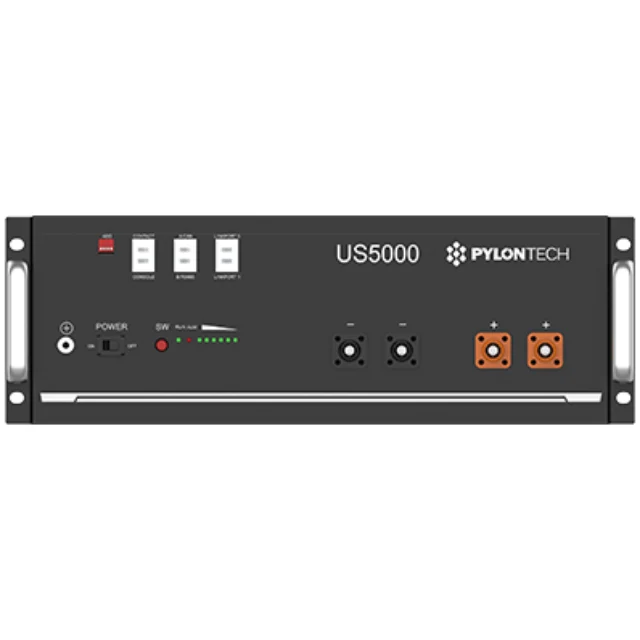
Meet Pylontech A storage specialist whose modules stack into towers and pair with many inverter brands.
- Works with many inverter brands
Pylontech publishes a compatibility list of other makers' inverters, so your installer isn't tied to one brand.
Your installer should check the exact inverter and firmware against Pylontech's current list.
- Build the tower you need
A Force H3 tower takes two to seven 5.12 kWh modules, giving about 9.7 to 34 kWh usable.
Pylontech's datasheet allows up to six towers in parallel.
- Rated for a long life
Pylontech rates Force H3 for more than 8,000 cycles and a design life of 15-plus years at 25 °C.
Design life is Pylontech's rating, not the warranty term.
- Rebate-listed, 10-year warranty
Every Force-H3 tower size is on the approved battery list, and SolarQuotes reports a 10-year product warranty.
Ask for the Australian warranty document for your exact model before you sign.
Choose the inverter first. The battery fits around it.
The company behind it
Pylontech is a Chinese lithium iron phosphate battery maker, founded in 2009 and listed in Shanghai.
Founded 2009
Established in October 2009 and listed on the Shanghai Stock Exchange in 2019.
2 million+ systems
More than 2,000,000 storage systems delivered worldwide in 16-plus years, Pylontech says.
Australian office
In Australia since 2016, with an office in NSW.
Want a Pylontech battery on your Hobart home?
Get my Pylontech quotesCompare up to 3 vetted installers. Free, no obligation.
A Pylontech in Hobart performs exactly as well as its configuration — and the configuration is decided by whoever installs it.
Why the installer matters more than the battery
The Clean Energy Regulator inspected 1,278 home battery installations under the Cheaper Home Batteries Program between July 2025 and April 2026 — more than 60% came back substandard and 1.2% unsafe. Solar Select checks installer approval and current eligibility before matching your Hobart enquiry. Manufacturer accreditation is a separate check; confirm the credentials relevant to your chosen battery.
What specifically goes wrong on a Pylontech install
- Inverter compatibility decides everything — an unsupported pairing may commission successfully and then create years of support difficulty
- Low-voltage and high-voltage lines are not interchangeable, and the wrong one for the inverter is an expensive correction
- Off-grid sizing is a genuine engineering exercise; an undersized stack on an off-grid property is a much bigger problem than on a grid-connected one
- With no consumer-facing brand support, an installer who does not stand behind their work leaves you with no obvious second call
- Communications setup between battery and inverter is a commissioning step that is easy to leave half-done — it can look fine on handover day and misreport capacity for months
- Stacks assembled from mismatched module generations behave unpredictably; a staged build should stay within one product line wherever possible
Request my Pylontech quotes in Hobart.
That's why Pylontech quotes in Hobart are only comparable when the scope matches. Here's what to hold constant.
Comparing Pylontech quotes in Hobart
We don't publish price bands, because installed prices move constantly and depend on your roof, switchboard and supply. What we can tell you is what to hold constant so three quotes are actually comparable — match these first, then compare after-rebate dollars per usable kWh.
- Which inverter it pairs with — this is the decision that shapes cost, backup and support, since Pylontech supplies no inverter
- Low voltage (US, Pelio) or high voltage (Force), which follows the inverter choice
- Module count now against the practical stack limit for the chosen inverter
- Whether the build is grid-connected, hybrid or off-grid, since that changes the sizing logic entirely
- Confirmation the exact model is on the Clean Energy Council approved battery list
A cheaper quote that skips backup hardware, assumes an inverter you don't have, or quietly changes the configuration isn't cheaper — it's a different job.
Want three Pylontech quotes you can actually compare? Your enquiry goes to up to 3 vetted installers in Hobart, all quoting the same scope.
Who installs Pylontech batteries in Hobart?
Solar Select is a matching platform for homeowners looking for Pylontech battery installation in Hobart. Submit your postcode and system requirements to request a match with up to 3 suitable installers, subject to current coverage, availability and brand suitability.
Enter your postcode and we check which vetted installers cover Hobart for Pylontech.
How are Pylontech installers matched in Hobart?
Matching considers approved installer accounts, active campaign geography, the requested system and current eligibility. Verified brand accreditations are prioritised when relevant. The actual match happens after you submit your postcode and enquiry; displayed companies are not a promise of who will receive it.
Compare recent independent reviews, business history, workmanship terms and the accreditation relevant to your chosen battery. Manufacturer accreditation and general installer approval are separate checks.
Battery rebates in Tasmania
- Cheaper Home Batteries Program (federal) — roughly a quarter off the installed battery cost, upfront, paid at its full rate on the first tier of usable capacity and at a reduced rate above that. Applied at quote by the installer, not claimed back later.
- Federal-only in 2026 (TAS) — Tasmania runs federal-only on battery rebates in 2026. The federal Cheaper Home Batteries discount still applies in full. Full TAS rebate breakdown
Still weighing a Pylontech up? The Hobart numbers and the deeper reading are below.
Pylontech battery installation in Hobart, TAS
Comparing Pylontech for a home in Greater Hobart? Use your property's postcode and existing solar details when requesting quotes. This page focuses on Greater Hobart, TAS.
- 33,638 small-scale solar installations across 55 postcodes assigned to the Hobart study area.
- 9.6 kW median of residential-plausible postcode average system sizes in 2025.
Clean Energy Regulator postcode data · as at 2026-06. Solar Select aggregation of CER data for postcodes containing mapped suburbs nearest to Hobart within 45 km. This study area is not an official city boundary; postcodes can cross its edges. These figures do not measure installer availability.
The Hobart numbers
Solar Select's Hobart study-area aggregation of Clean Energy Regulator data includes 33,638 small-scale systems across 55 postcodes — about 208 MW of capacity as at 2026-06. For a Pylontech retrofit in Hobart, check the existing inverter and switchboard before choosing the configuration. Ask whether the inverter stays, is replaced, or works alongside another one; installation counts do not answer that for your home.
In the typical Greater Hobart postcode, new systems averaged about 9.6 kW through 2025. That is the scale of array a Pylontech battery would be charged from here, so ask each installer to size storage against that generation rather than the headline capacity: the configuration that suits a 9.6 kW roof is not automatically the biggest one quoted.
Greater Hobart runs along the Derwent through Glenorchy, Clarence and down to Kingston on TasNetworks' grid, with the lowest winter sun of any capital. That makes sizing the real conversation: a Pylontech configuration that cycles daily in January can sit half-charged through June unless it is sized against the winter figure, so ask for the winter maths, not the annual average.
Hobart swings from about 6.6 peak sun hours in Jan to 1.4 in Jun — roughly 4.7× more generation in the sunniest month than the dullest. On a 10 kW array that is around 56.1 kWh a day in Jan against 11.9 kWh in Jun. Size a Pylontech on the winter figure: Pylontech is 4.8 kWh per module, stacking past 100 kWh, so the real question at quote stage is what it can actually refill on a 11.9 kWh day, not what it holds on paper.
Show month-by-month generation
| Month | Peak sun hours | 10 kW array, kWh/day |
|---|---|---|
| Jan | 6.6 | 56.1 kWh |
| Feb | 5.6 | 47.6 kWh |
| Mar | 4.1 | 34.9 kWh |
| Apr | 2.8 | 23.8 kWh |
| May | 1.8 | 15.3 kWh |
| Jun | 1.4 | 11.9 kWh |
| Jul | 1.6 | 13.6 kWh |
| Aug | 2.5 | 21.3 kWh |
| Sep | 3.6 | 30.6 kWh |
| Oct | 4.9 | 41.7 kWh |
| Nov | 5.8 | 49.3 kWh |
| Dec | 6.3 | 53.6 kWh |
Monthly shape from Bureau of Meteorology climatology for Tasmania, scaled to Hobart's annual average of 3.9 peak sun hours; 85% system derate.
Install counts and capacity: Clean Energy Regulator postcode data for small-scale installations (CC BY).
What owning a Pylontech is actually like
Spec sheets stop being interesting about a week after install. These are the things owners notice in year one.
- Everything you interact with day to day — app, monitoring, control — comes from the inverter brand, so evaluate that software rather than expecting a Pylontech experience.
- Wide compatibility is the practical advantage: an installer can pair these modules with the inverter that actually suits your property instead of the one a bundle dictates.
- Stacking more modules later is generally straightforward, which is why the range persists in off-grid builds where loads grow unpredictably.
- Support runs through the installer and distributor rather than a consumer-facing brand presence, which makes the choice of installer more consequential than usual.
- The battery talks to the inverter over a communications link that has to be configured correctly at commissioning — get it wrong and the system either refuses to charge properly or reports nonsense state-of-charge figures.
- Mixing module vintages in one stack is a real consideration on staged builds: the pack balances to its weakest member, so adding a much newer module years later does not deliver a full module’s worth of extra usable capacity.
Four questions to ask any Pylontech quote
- Which inverter is this paired with, and is the combination on the supported compatibility list?
- Is this the low-voltage or high-voltage line, and why that one?
- How many modules, and how many more can this design take?
- If the system faults in year four, who do I call — and will you diagnose it?
Is Pylontech right for your home? Fit and warranty checks
A good fit in Hobart if…
- Off-grid and hybrid properties where capacity is built to the load, not to a package
- Installers and owners who want to choose the inverter independently
- Buyers prioritising cost per kilowatt-hour over ecosystem polish
- Systems expected to grow in stages over several years
Consider the limitations
- You want one manufacturer accountable for the entire system
- A polished consumer app and branded experience matter to you
- You want the simplest possible quote to compare against all-in-one products
- Your virtual-power-plant program is built around specific integrated systems
Grid connection in Hobart
- TasNetworks pre-approval — battery systems usually need explicit pre-approval before install. A good installer lodges the application and flags any constraint in the quote — not after.
- Typical export cap ~5 kW — single-phase residential export in Hobart is typically around 5 kW on the TasNetworks network. A battery softens the cap — solar that can't export charges the Pylontech instead of being curtailed.
- 5–15 business days — typical connection-approval turnaround once the installer lodges with TasNetworks.
Ready for Pylontech quotes in Hobart?
Request quotes from up to 3 vetted installers for a Pylontech in Hobart — postcode in, quotes out.
Areas served around Hobart
Matching covers Greater Hobart, not just the centre — enquiries route on your postcode. Local solar detail for each suburb:
- Hobart (7001) · 0.0 km from Hobart — 6 systems, 104 kW installed
- Bathurst Street Po (7000) · 0.2 km from Hobart — 1,295 systems, 9,669 kW installed
- Glebe (7000) · 0.9 km from Hobart
- West Hobart (7000) · 1.0 km from Hobart
- Battery Point (7004) · 1.3 km from Hobart — 803 systems, 4,261 kW installed
- North Hobart (7000) · 1.5 km from Hobart
- North Hobart (7002) · 1.5 km from Hobart — 3 systems, 14 kW installed
- Queens Domain (7000) · 1.5 km from Hobart
- South Hobart (7004) · 1.5 km from Hobart
- Sandy Bay (7005) · 2.1 km from Hobart — 1,192 systems, 7,448 kW installed
- Sandy Bay (7006) · 2.1 km from Hobart — 10 systems, 42 kW installed
- Mount Stuart (7000) · 2.3 km from Hobart
- Dynnyrne (7005) · 2.4 km from Hobart
- Rosny (7018) · 2.4 km from Hobart — 2,677 systems, 16,913 kW installed
- University Of Tasmania (7005) · 2.4 km from Hobart
- Montagu Bay (7018) · 3.1 km from Hobart
- New Town (7008) · 3.1 km from Hobart — 1,255 systems, 7,755 kW installed
- Bellerive (7018) · 3.4 km from Hobart
- Cornelian Bay (7008) · 3.6 km from Hobart
- Rose Bay (7015) · 3.7 km from Hobart — 1,255 systems, 7,348 kW installed
- Tolmans Hill (7007) · 3.7 km from Hobart — 448 systems, 2,859 kW installed
- Rosny Park (7018) · 3.8 km from Hobart
- Lenah Valley (7008) · 4.1 km from Hobart
- Lower Sandy Bay (7005) · 4.1 km from Hobart
- Lindisfarne (7015) · 4.4 km from Hobart
- Mount Nelson (7007) · 4.5 km from Hobart
- Warrane (7018) · 4.7 km from Hobart
- Lutana (7009) · 4.8 km from Hobart — 1,091 systems, 7,092 kW installed
- Moonah (7009) · 4.8 km from Hobart
- West Moonah (7009) · 5.3 km from Hobart
- Geilston Bay (7015) · 5.4 km from Hobart
- Flagstaff Gully (7015) · 5.9 km from Hobart
- Ridgeway (7054) · 5.9 km from Hobart — 1,437 systems, 8,297 kW installed
- Derwent Park (7009) · 6.0 km from Hobart
- Howrah (7018) · 6.4 km from Hobart
- Goodwood (7010) · 6.6 km from Hobart — 1,357 systems, 8,152 kW installed
- Elwick (7010) · 6.8 km from Hobart
- Mornington (7018) · 6.8 km from Hobart
- Dowsing Point (7010) · 6.9 km from Hobart
- Glenorchy (7010) · 6.9 km from Hobart
- Fern Tree (7054) · 7.1 km from Hobart
- Risdon (7017) · 7.3 km from Hobart — 1,050 systems, 6,072 kW installed
- Taroona (7053) · 7.5 km from Hobart — 509 systems, 3,094 kW installed
- Wellington Park (7054) · 8.1 km from Hobart
- Albion Heights (7050) · 8.2 km from Hobart — 1,769 systems, 10,900 kW installed
- Montrose (7010) · 8.2 km from Hobart
- Rokeby (7019) · 8.6 km from Hobart — 781 systems, 4,567 kW installed
- Tranmere (7018) · 8.6 km from Hobart
Other locations for Pylontech
Pylontech installers across Tasmania, town by town
- Pylontech installers Launceston — 162 km
Read before you commit
Pylontech questions, Hobart answers
Why have I not heard of Pylontech if it is so widely used in Hobart?
Because it sells to installers rather than to homeowners. These modules sit inside systems badged by the inverter brand, so the name on the app is usually someone else’s. The lack of consumer marketing is not a quality signal in either direction — what matters is the long storage-only track record and the breadth of inverters that officially support the range, both of which are checkable.
Do I need to pick an inverter separately for a Hobart home?
Yes, and it is the more consequential of the two choices. Pylontech makes no inverter, so your installer pairs the modules with a compatible platform, and that decision drives your app, your backup behaviour and your support path. Ask which inverter is specified and whether the pairing appears on the manufacturer’s supported list — a combination that merely works on the day is not the same as one that is officially supported.
Is Pylontech a good choice for an off-grid property in Hobart, TAS?
It is one of the more established options for exactly that, which is why the 48 V modules turn up so often in remote builds. Off-grid sizing is a different discipline from grid-connected sizing, though — you are engineering for worst-case weeks rather than average evenings, and an undersized stack means the lights actually go out. Insist on seeing the load calculations, not just a capacity recommendation.
Is Pylontech eligible for the federal battery rebate if I live in Hobart?
Models do appear on the Clean Energy Council approved battery list, assessed model-by-model, and eligibility also depends on the installation meeting the program rules. Because these are always paired systems, ask to see the specific battery model and the paired inverter on the relevant approved lists for your exact configuration.
Can I add more modules later for Hobart households?
Generally yes, and staged growth is one of the range’s real strengths — the stack was designed to be added to. The limits come from the inverter and the enclosure rather than the battery, so the number worth asking for at quote time is the maximum the specified inverter supports, not just what is being installed today.
What is the difference between the US series, Pelio and Force across Greater Hobart?
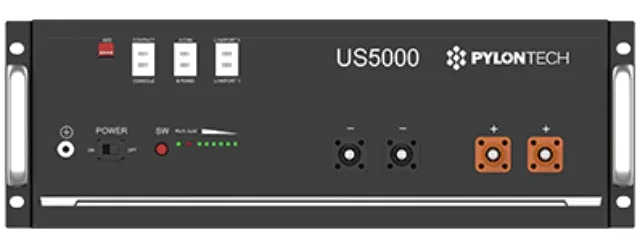
The US series is the long-running stackable 48 V module, Pelio is the modern low-voltage cabinet with indoor and outdoor mounting, and Force is the high-voltage line for contemporary hybrid inverters. The choice follows the inverter and the install type rather than personal preference, but the quote should still name which one it is — “a Pylontech battery” describes three quite different products.
Is 48 volts safer or better than a high-voltage battery in Hobart?
Low voltage is not automatically safer in the way people assume — every properly installed and approved system is safe, and the danger in a battery is stored energy, which does not care about the voltage class. What 48 V genuinely changes is the servicing world around it: a very large pool of installers and inverters has worked at that voltage for years, so parts, knowledge and compatible equipment are easy to find. High-voltage systems tend to be more efficient over long cable runs and are where most new grid-tied product development is going. Neither is the right answer on its own; the inverter and the install decide it.
Can I add modules from a newer batch to an older stack for a Hobart home?
Physically often yes, practically with a caveat worth knowing before you plan a staged build. A stack balances around its weakest module, so bolting a fresh module onto one that has been cycling for five years does not give you a clean extra module of usable capacity. It is not a reason to avoid staged expansion, but it is a reason to do the bulk of your expansion within the first couple of years rather than assuming you can top up indefinitely. Ask your installer what the realistic gain is before paying for the extra module.
Who installs Pylontech batteries in Hobart?
Solar Select is a matching platform for homeowners seeking Pylontech battery installation in Greater Hobart. Submit your postcode and requirements to request a match with up to 3 approved installers, subject to current coverage and eligibility. Manufacturer accreditation is verified separately; ask for the credentials relevant to your chosen battery. Free for homeowners.
How do I compare Pylontech quotes in Hobart?
Installed prices move constantly and vary by site, so compare on after-rebate dollars per usable kWh rather than headline totals — and only once the scope matches. For this brand the variables that matter are: which inverter it pairs with — this is the decision that shapes cost, backup and support, since Pylontech supplies no inverter; low voltage (US, Pelio) or high voltage (Force), which follows the inverter choice; module count now against the practical stack limit for the chosen inverter. Get all three quotes on the same scope, then compare the installers harder than the numbers.
What battery rebates apply in Hobart?
The federal Cheaper Home Batteries Program applies nationwide — roughly a quarter off installed cost, upfront, paid at its full rate on the first tier of usable capacity and tapering above that. Because Pylontech is 4.8 kWh per module, stacking past 100 kWh, how much you collect depends on how the configuration lines up with those tiers, so ask the installer to show the tier split rather than one flat "government incentive" line. TAS runs federal-only on batteries in 2026.
What does TasNetworks need to approve for a Pylontech in Hobart?
The connection application covers the whole system, so what gets scrutinised depends on the configuration: inverter compatibility decides everything — an unsupported pairing may commission successfully and then create years of support difficulty. Export in Hobart is typically around 5 kW single-phase, and approval usually runs 5–15 business days once lodged.
Are your Hobart installers Pylontech-accredited?
Accreditation is one of the things we look at, and where a Pylontech-accredited installer covers Greater Hobart you'll see that in the match. It is deliberately not the only filter — a current accreditation badge says the installer has done the brand's training, not that they wire a good switchboard or come back in year three. Every installer serving Hobart is vetted on the same bar set out above before they join. Ask the ones you're matched with what Pylontech work they've actually done, and how much of it, before you sign.
Is a Pylontech battery worth it in Hobart?
Hobart averages 3.9 peak sun hours, so a 10 kW rooftop array generates roughly 33.2 kWh on an average day — enough to cycle a Pylontech on most days of the year. With Tasmania feed-in tariffs typically paying 8.0–9.0c/kWh while grid power costs 30–35c, every stored kWh you use yourself is worth several times what exporting it earns.
How many solar installations are recorded across Greater Hobart?
Solar Select's Hobart study-area aggregation of Clean Energy Regulator data includes 33,638 small-scale systems across 55 postcodes — about 208 MW as at 2026-06. These are system counts, not a count of unique homes or Pylontech installers. For a retrofit, check your existing inverter, switchboard and actual generation before choosing storage; the study-area total cannot establish those details.
Answered what you needed?
Get your up to 3 vetted Pylontech quotes for Hobart — free, no obligation.
Local data reviewed by the Solar Select team. Installer network information is shown separately above when verified records are available. Hobart data sourced from BOM (sun hours), CER (rebates) and AER (TasNetworks network — export figures are indicative; your distributor sets the limit for your address). Pylontech product and pricing figures are sourced below. Last verified 2026-08-16. Page updated 6 October 2026.
- Pylontech — company and products
- Solar Choice — Pylontech battery review
- Clean Energy Council — approved batteries
- DCCEEW — Cheaper Home Batteries Program
All Tasmania locations · All Pylontech locations · How it works