Brand deep-dives
Anker SOLIX battery review
Anker SOLIX X1: a slim modular stack with a polished app, and two different products under one name.
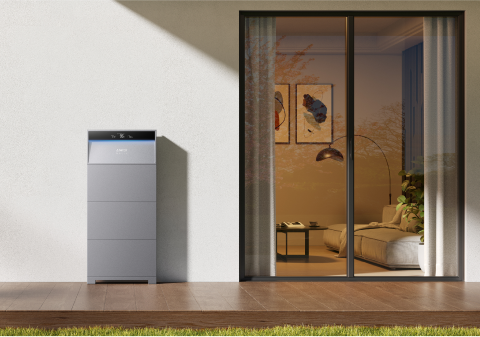
The SOLIX X1 is the home battery from Anker, the consumer-electronics company best known for charging gear. It is a slim, modular stack sold in two forms: an AC-coupled unit that adds storage to existing solar, and a hybrid that takes over the inverter role on a new system. Which one is on your quote is the first thing to establish.
By Kieron Taylor, Founder, Solar Select · Updated · 6 min read
The verdict
A polished, slim modular battery from a major consumer-electronics company, sold as two distinct products. The AC-coupled X1 is a strong retrofit option and the hybrid suits new systems; installer familiarity with the exact variant decides the result.
Best for: Homes adding storage to healthy existing solar, design-conscious buyers, and households that want to expand capacity in stages.
Look elsewhere if: Virtual power plant income is central to your plan, or your installer has never commissioned an X1.
Variant, module count and backup scope move an Anker SOLIX quote more than the badge does. The section on configuration choices covers each.
The 30-second take
- Two products share the X1 name. The AC-coupled X1 sits beside an existing solar inverter; the X1 hybrid replaces the inverter and runs panels, storage and grid through one unit.
- Capacity grows by adding modules. A household can start smaller and expand, provided the configuration quoted leaves free positions to expand into.
- Hardware and app are a real strength. A slim wall profile, an outdoor-rated enclosure and an app with usable control over charging behaviour and tariff windows.
- Backup is fast but scoped. Switchover is quick enough that connected circuits barely notice, and only circuits wired to the backup side benefit.
- Installer experience is variant-specific. The two versions are commissioned differently, so pick an installer who has fitted the X1 you are actually being quoted.
What the X1 is, and where the Anker pedigree shows
Anker built its name on charging gear, and SOLIX is the same company’s home-energy division. The X1 is its residential battery system, and the consumer-electronics background is visible in two places: the enclosure and the app.
The enclosure is slim against the wall and carries an outdoor ingress rating, which gives an installer more freedom about where it goes. On a narrow side passage, where a deeper cabinet would get in the way, that can decide whether a battery fits at all. The app feels finished where many battery apps feel tacked on, with practical control over when the battery charges and how it responds to tariff windows.
Underneath, the X1 is a modular stack: battery modules are added to reach the capacity a household needs, and the range includes single-phase and three-phase variants. If you are already at the quoting stage, you can find Anker SOLIX installers in your state and compare how each would configure it.
AC-coupled or hybrid: two different installs behind one badge
A quote that says “Anker SOLIX X1” has not yet told you what you are buying. The AC-coupled X1 is the retrofit product. It connects alongside the solar inverter already on your wall and leaves that inverter in charge of the panels, so a working solar system is not disturbed. The X1 hybrid is the new-system product. It takes over the inverter’s job entirely, with panels, storage and grid management running through one Anker SOLIX unit — the tidier architecture for a new build or a complete system refresh.
Neither is the better product in general. The right choice follows from one question: is your current solar equipment worth keeping? If it is healthy, the AC-coupled unit avoids replacing something that works. If the inverter is ageing or there is no solar yet, the hybrid is the cleaner design.
The part buyers rarely hear is that the two variants are commissioned differently. An installer who has fitted several of one is not automatically practised at the other. And because newer product generations reach Australia in waves, confirm that the specific variant on a quote is available here and approved; do not take either for granted.
- Ask which X1 this is — AC-coupled or hybrid — and why it suits your roof and existing equipment.
- Ask how many of that specific variant the installer has commissioned.
- Ask to see the exact configuration on the current Clean Energy Council approved battery list. Rebate eligibility is decided model by model, and newer variants can lag the list.
“Whether your existing solar is worth keeping decides which X1 you should be quoted. Everything else follows from that.”
Expandable only if the stack has room
Modularity is central to the X1 design. Capacity is raised by adding modules to the stack, not by swapping the unit, which suits a household whose usage or tariff is likely to change. Against a fixed-size unit such as the Tesla Powerwall, staged growth is the X1’s main structural advantage; the Powerwall’s advantage is far deeper installer familiarity in Australia.
The catch is that today’s configuration sets tomorrow’s ceiling. A stack quoted with every module position filled cannot grow, whatever the brochure says about expansion. Before signing, ask how many free positions the quoted system leaves and what adding a module later involves. If growth is part of your reason for choosing the X1, have that answer written on the quote.
Blackout switchover and VPP plans: scope both on paper
The X1 switches to battery quickly enough in a blackout that circuits on the backup side barely register the change. That benefit applies only to circuits actually wired to the backup side, and deciding which ones is design-stage work that does not happen by default. Agree it in writing: which circuits stay live, what the system does as the stack runs low, and whether it restarts itself from solar the following morning.
Virtual power plant support is the other area to pin down. Some Australian programs have started accepting SOLIX systems, though acceptance is decided per model and per retailer, and the choice is narrower than owners of the long-established brands enjoy. If VPP income is part of your sums, have the specific program named on the quote and confirmed.
The configuration choices that set an Anker SOLIX quote
Anker SOLIX sits in the middle of the market. Within that, the total on a quote is shaped by configuration choices more than by the badge.
- Variant. The AC-coupled unit and the hybrid are different products with different installation work, and the hybrid also does the job of a solar inverter.
- Module count, and how much expansion room the stack keeps in reserve.
- Single-phase or three-phase, and whether the variant quoted is shipping in Australia now — parts of the range are newer than others.
- Backup circuits. Whether a backup side is designed in at all, and how many circuits are wired to it.
- Approval status of the exact configuration, since the federal rebate depends on it.
Because configurations vary so much, line up quotes on the same variant and module count before comparing totals. That is easier with more than one design in front of you: compare up to 3 Anker SOLIX quotes from vetted installers.
Is the X1 on your shortlist?
- Households adding storage to existing solar, where the AC-coupled X1 leaves the inverter alone.
- Buyers who care how the hardware looks and how the app works, and will use the control it offers.
- Homes planning to grow capacity in stages, with the free module positions confirmed.
- Tight installation sites, where a slim outdoor-rated unit opens up wall positions a bulkier battery would not.
- Probably not a household whose plan centres on deep virtual power plant participation, where the longer-established brands have wider program support.
Anker SOLIX is a recent arrival in Australian home storage, and its local support chain has not yet been exercised by years of volume. That is a reason to weight the installer’s experience heavily: a newer brand in the hands of someone fitting it for the first time doubles up the risk. Of the 1,278 home battery installations the Clean Energy Regulator inspected from July 2025 to April 2026, more than 60% were classified as substandard, so workmanship is the variable to manage on any brand. Ask who handles a manufacturer claim several years in, then get matched with up to 3 vetted installers who can quote the X1.
How long would a Anker SOLIX take to pay for itself at your place?
Postcode, your bill, and whether the roof already has panels. About a minute, and the ten-year figure is yours before anyone asks for a phone number. Start with vetted Anker SOLIX installers in your state.
Read next
Sources
Every quantitative claim on this page traces to one of the sources below — government, manufacturer, or independent AU industry reference. Last verified 2026-09-17.
We use AI to help research and draft. Claims are traced to the sources below and dated. Where we haven’t got a source, we say so on the page — treat that as a starting point and do your own research.
General information only. It doesn’t take your circumstances into account and isn’t legal, financial, insurance or electrical advice. Rebates, tariffs, network rules and product terms change — confirm anything you plan to rely on with your installer, insurer, retailer or distributor, and see our terms.
Postcode in, up to 3 vetted installers out. Free for homeowners, no obligation. All solar guides · Federal rebates · How it works
Filed under: Brand deep-dives