Brand deep-dives
Bluetti battery review
Bluetti: a whole system in one decision, and the inverter that comes with it.
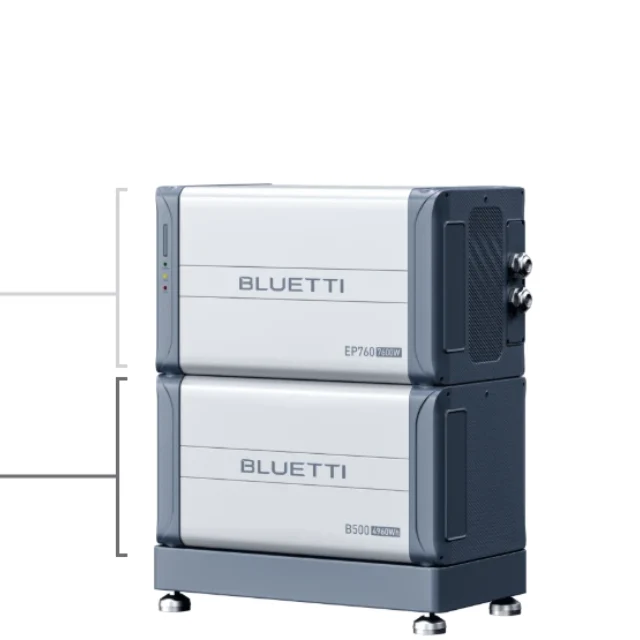
Bluetti’s installed EP range is packaged, not configured: the EP760 for single-phase homes and the EP2000 for three-phase, each with a hybrid inverter and expandable storage in the box. It suits new solar-and-battery builds and full replacements. It is a harder fit where a good inverter is already on the wall.
By Kieron Taylor, Founder, Solar Select · Updated · 6 min read
The verdict
A tidy packaged system that strips most of the specification risk out of a new solar-and-battery install. The bundled hybrid inverter is the strength on a fresh build and the sticking point on a retrofit.
Best for: New installs and full system replacements, including three-phase homes that want a straightforward package in the EP2000.
Look elsewhere if: You have a recent inverter worth keeping, want capacity in fine increments, or are counting on virtual-power-plant income.
Phase, expansion room, backup wiring and the fate of your existing inverter move a Bluetti quote more than the battery does. The section on quote factors covers each.
The 30-second take
- Packaged, not configured. The EP760 serves single-phase homes and the EP2000 serves three-phase ones; each ships with a hybrid inverter and storage that grows by adding modules.
- This is fixed infrastructure. The EP systems are wired into the switchboard by an electrician — a separate product class from the portable power stations that made the Bluetti name.
- The inverter is part of the deal. On a new build that is a convenience. On a retrofit it takes over the job your current inverter does, so the quote should say what becomes of the old unit.
- Backup is a wiring scope. Which circuits stay live in an outage is designed at quote stage and should be written down circuit by circuit.
- Check the exact model. Rebate eligibility is decided model by model, so ask to see the quoted EP system on the current Clean Energy Council approved list.
What the EP systems actually are
Most Australians know Bluetti from portable power stations — the units that go camping or wait in the garage for a blackout. The EP range belongs to another class of product entirely. An EP760 or EP2000 is fixed to the property, wired into the switchboard by a licensed electrician, and subject to the same grid-connection and rebate rules as any other home battery.
The range is deliberately short. The EP760 is the single-phase system and the EP2000 is the three-phase system. Each arrives as a package: hybrid inverter, base battery, and room to add expansion modules later. There is no catalogue of families and variants to work through, and that is the point. You can find vetted Bluetti installers in your state once you know which system your switchboard calls for.
That choice is not really a matter of taste. Your supply is either single-phase or three-phase, and the phase picks the product. Settle it early, because on a three-phase home the backup behaviour also has to be specified. Which phases and which circuits stay energised during an outage is something the installer designs with you; it is not a factory default.
The inverter in the box, and why it decides retrofit jobs
Every EP system ships with a hybrid inverter of its own. On a new solar-and-battery install that is plainly convenient: panels, inverter and storage are specified together and answer to the same app and the same warranty conversation.
On a home that already has solar, it changes the job. A Bluetti package does not sit politely beside the inverter you have; it takes over that inverter’s role. If the solar system is old and its inverter is nearing the end of its life, that can be a neat generational upgrade. If the inverter went in recently and works well, you are paying to remove something that did nothing wrong. An AC-coupled battery — a design that leaves the existing inverter untouched — is usually the more natural shape for that house, and Bluetti does not offer that route.
It also means installation is an electrical redesign and not an appliance delivery. Solar strings are re-terminated, the switchboard is reworked and the grid-connection details change. The standard of that switchboard work will shape how the system behaves for as long as you own it, far more than the badge will.
“A packaged system narrows the ways a quote can go wrong. It does not narrow the ways a switchboard can.”
What the package gives up
Packaging is a trade. Fewer possible combinations means fewer chances for a quote to be subtly mis-specified, and for a typical home that is a real benefit. The cost is tailoring: capacity grows in module steps inside each system’s range, not in the fine increments the modular specialists sell. An awkward house — unusual loads, tight wall space, a very particular backup wish-list — is often better served by a more configurable brand.
Set against Anker SOLIX, another consumer-electronics name now selling installed storage, Bluetti offers the simpler decision, a tidy three-phase option and a longer relationship with Australian shoppers through its portable line. Anker’s stacked design is the more flexible of the pair and has an AC-coupled route for retrofits. Both are newer to wired-in home storage here than the established battery makers, which is a reason to weigh the installer’s experience heavily.
Day to day, owners deal with a single system and a single app that feels closer to consumer electronics than to utility software. Virtual power plants are not central to the offer. If VPP income is part of your sums, confirm that the specific program accepts the specific EP model before you rely on it.
Where a Bluetti quote gains or loses
Because the hardware comes as a package, the differences between quotes for a Bluetti system mostly sit in the work around it. When you compare up to 3 Bluetti quotes, line them up on these points.
- EP760 or EP2000. Phase sets the product, and the three-phase package brings more switchboard work with it.
- Base capacity or expanded. Ask how many expansion modules the quoted configuration includes and how many more it can accept later.
- Backup wiring. No backup, essential-circuits backup and broader backup are different electrical jobs. Have the protected circuits listed by name.
- The existing inverter. If it is coming out, the quote should cover its removal, the re-termination of the solar strings and any remaining warranty you are giving up on it.
- The approved-list check. Eligibility for the federal Cheaper Home Batteries Program is decided model by model. Ask the installer to show you the exact quoted system on the current Clean Energy Council approved list before you sign.
Backup and expansion: get both in writing
“Backup capable” describes the hardware, not your house. An EP system can automatically hold up the circuits connected to its backup output; how many circuits, which ones and for how long comes down to load maths and wiring. Nobody should promise a whole home running indefinitely without doing that arithmetic in front of you.
Expansion deserves the same treatment. Adding modules later is part of the design, but the practical limit is set by the configuration installed on day one and by what the switchboard and cabling were sized for. Ask how far this particular configuration can grow, and what that growth would involve electrically, while the installer is still quoting.
Who should shortlist a Bluetti EP system
- New solar-and-battery builds, where an inverter has to be chosen anyway and the bundled one saves a decision.
- Full replacements of ageing solar, where the old inverter was due to go regardless.
- Three-phase homes that want a clean packaged answer in the EP2000.
- Buyers who prefer a single packaged decision and already know Bluetti from its camping and backup products.
- Probably not a household keeping a recent inverter, one that wants capacity in fine increments, or one whose payback depends on virtual-power-plant income.
Bluetti’s installed range is newer to Australia than its portable one, so fewer installers know the EP series well than know the long-established brands. That makes the installer the main variable. The Clean Energy Regulator inspected 1,278 home battery installations between July 2025 and April 2026 and classified more than 60% as substandard, overwhelmingly on installation and not on hardware. Ask each installer how many wired-in EP systems — not portable units — they have commissioned, and who will support yours in later years. Solar Select can match you with up to 3 vetted installers: get matched with Bluetti battery installers near you.
How long would a Bluetti take to pay for itself at your place?
Postcode, your bill, and whether the roof already has panels. About a minute, and the ten-year figure is yours before anyone asks for a phone number. Start with vetted Bluetti installers in your state.
Read next
Sources
Every quantitative claim on this page traces to one of the sources below — government, manufacturer, or independent AU industry reference. Last verified 2026-09-17.
We use AI to help research and draft. Claims are traced to the sources below and dated. Where we haven’t got a source, we say so on the page — treat that as a starting point and do your own research.
General information only. It doesn’t take your circumstances into account and isn’t legal, financial, insurance or electrical advice. Rebates, tariffs, network rules and product terms change — confirm anything you plan to rely on with your installer, insurer, retailer or distributor, and see our terms.
Postcode in, up to 3 vetted installers out. Free for homeowners, no obligation. All solar guides · Federal rebates · How it works
Filed under: Brand deep-dives