Brand deep-dives
EcoFlow battery review: PowerOcean
EcoFlow PowerOcean: a 15-year warranty, and the installer condition attached to it.
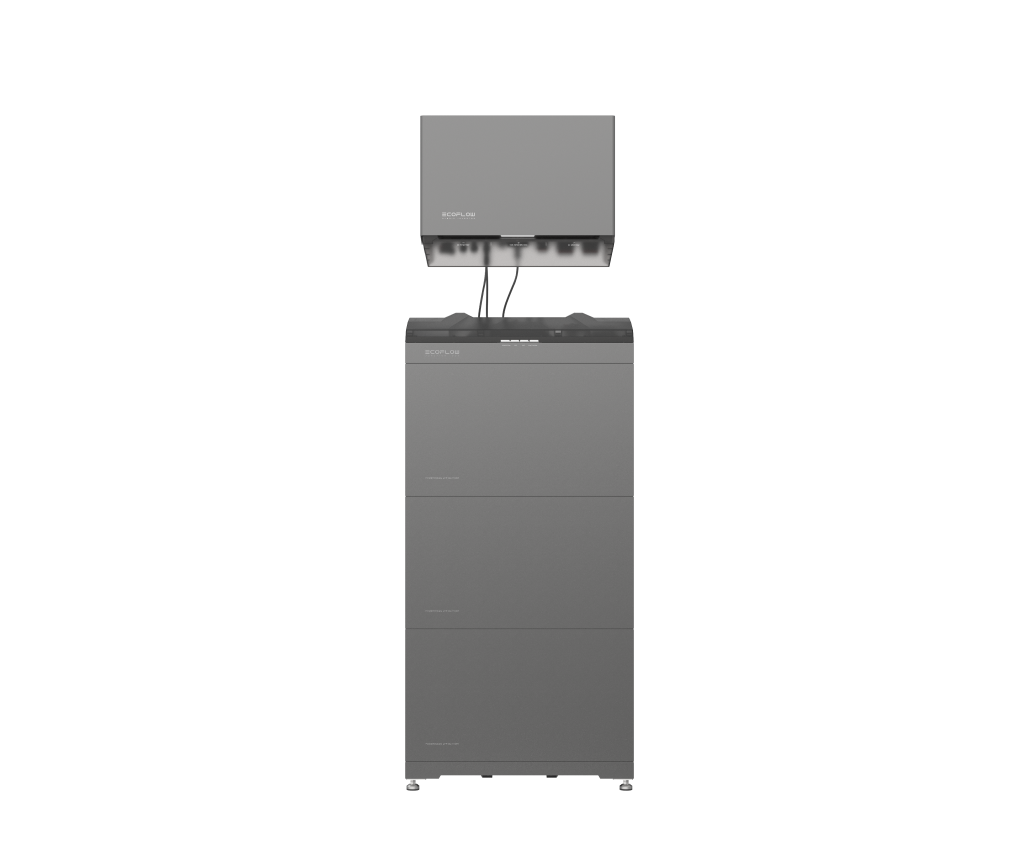
- 4.8 to 19.4 kWh
- Add modules later
- 15-year warranty
PowerOcean is a hybrid system: an EcoFlow inverter on top, LFP packs stacked below, housed for outdoor use, with an aerosol fire module inside every pack. Clean Energy Council listed packs run from 4.8 kWh to 19.4 kWh usable. It is at its best on a new solar-and-battery install fitted by an installer EcoFlow has authorised.
By Kieron Taylor, Founder, Solar Select · Updated · 6 min read
The verdict
Strong hardware specification and a long warranty from a brand that is new to fixed home storage in Australia. The warranty depends on an authorised installer fitting it, so the installer is the decision.
Best for: New solar-and-battery installs, outdoor sites, and homes on time-varying tariffs that will use tariff-aware charging.
Look elsewhere if: You want to keep your current inverter, or you place most weight on a long local service record.
Pack count, phase, mounting style and installer authorisation move an EcoFlow quote. “Reading an EcoFlow quote” below covers each.
The 30-second take
- One inverter, identical packs. Capacity is a tally of one LFP pack repeated under an EcoFlow hybrid inverter; the four listed sizes are 4.8, 9.7, 14.5 and 19.4 kWh usable.
- 15 years to 70%. The Australian warranty from EcoFlow runs 15 years with a floor of 70% of nominal capacity, which puts the term at the long end of the market.
- The installer sits inside the warranty. Damage is not covered if the person who fitted the system lacked EcoFlow’s authorisation, so ask for proof before signing.
- Closed pairing. PowerOcean packs need an EcoFlow hybrid inverter above them. That adds nothing to a new build and means an inverter swap on a retrofit.
- Match the model string. The rebate is assessed per model, and the warranty document extends to a later pack line that is absent from the approved register.
EcoFlow at a glance
Each row is read from the source beside it, on the date it carries. Anything the manufacturer has not published is left out rather than guessed.
| Current models | PowerOcean EF BD-5.1-S1 (4.8 kWh usable), PowerOcean EF BD-10.2-S1 (9.7 kWh usable), PowerOcean EF BD-15.3-S1 (14.5 kWh usable), PowerOcean EF BD-20.4-S1 (19.4 kWh usable) cer.gov.au |
|---|---|
| Usable capacity | 4.8 to 19.4 kWh cer.gov.au |
| How it connects | Hybrid: works either way enterprise-service-us-cdn.ecoflow.com |
| Add capacity later | Yes, modules can be added after install enterprise-service-us-cdn.ecoflow.com |
| Inverter pairing | Own ecosystem only enterprise-service-us-cdn.ecoflow.com |
| Warranty | 15 years enterprise-service-us-cdn.ecoflow.com |
| Capacity at end of warranty | 70% guaranteed enterprise-service-us-cdn.ecoflow.com |
| CEC approved list | Yes, listed cer.gov.au |
| Who can install it | Manufacturer-certified installers only enterprise-service-us-cdn.ecoflow.com |
How a PowerOcean stack goes together
EcoFlow made its name in portable power stations and has moved into permanent home storage with PowerOcean. The system is a column: a hybrid inverter at the top and LFP battery packs cascading beneath it, either standing on the floor or fixed to a wall. It can live outdoors; the enclosure is built for it.
The range is a single pack repeated. The approved register lists four PowerOcean configurations — 4.8, 9.7, 14.5 and 19.4 kWh usable — and each step up is another identical pack, never a separate product. Single-phase and three-phase homes get separate hybrid inverter families, and the packs do not operate without one of them.
Fire suppression is part of the pack. According to the datasheet for Australia, each pack contains an active aerosol module; it is not a bolt-on extra. No fire module removes risk altogether, and a salesperson who implies otherwise is overselling. Its practical effect is on siting: fewer add-on parts to position and maintain, and more options on a tight block. To see who fits it locally, find vetted EcoFlow installers in your state.
The warranty has an installer clause
The headline is the term. The warranty EcoFlow issues for home battery systems in Australia lasts 15 years and sets a minimum of 70% of nominal capacity. That is a longer term than most of the market offers.
The clause to read is about who does the installing. Cover falls away for damage when the owner engaged an installer without EcoFlow’s authorisation. An unauthorised install can therefore undo the main reason to choose the product, and the gap tends to surface only when a claim is made.
Get the authorisation confirmed on paper at quote stage, not at handover. EcoFlow’s fixed-storage range is a recent arrival in Australia, which means many installers are commissioning it for the first time and the claims process is young. EcoFlow has a Sydney office and an Australian support number, which keeps any escalation onshore. The sensible response is to pick an installer who has already handed over several PowerOcean systems and can show you one.
“With most batteries the installer stands beside the warranty. With PowerOcean the installer is written into it.”
Model strings and the rebate
The PowerOcean packs we hold on record all appear on the Clean Energy Council’s approved list — the hardware test for the federal Cheaper Home Batteries Program. An accredited installer or retailer takes the discount off upfront.
There is a trap specific to this brand. The warranty document reaches further than the register: it includes a later pack line that is not on the approved list. A quote naming that line could leave the warranty intact and the rebate in doubt. Eligibility attaches to the model and not to the brand, so have the installer point to your quote’s precise pack model on the current approved list.
Three-phase buyers should take particular care here, because the three-phase inverter family reached Australian approval later than the single-phase one.
Reading an EcoFlow quote
The packs are identical, so the variation between quotes comes from everything around them. Ask for up to 3 EcoFlow quotes from vetted installers and look for these.
- Pack count. A quoted capacity is really a tally of identical packs under a single inverter. Convert competing quotes to usable kilowatt-hours before comparing them.
- Phase. A single-phase supply and a three-phase supply call for separate inverter families.
- Floor or wall. Packs are added below the inverter. Hang it low on a wall for neatness and you may run out of room for more packs unless the whole unit is re-mounted.
- The existing inverter. On a retrofit it comes out, because PowerOcean packs pair only with EcoFlow’s hybrid. Expect the swap to be itemised.
- Authorisation. The quote pack should include written proof of the installer’s EcoFlow authorisation.
- Backup scope. Only circuits moved onto the inverter’s backup terminals stay live in an outage. Have each one named, and make sure the inverter’s output suits the appliances on them.
Set-up that pays off after handover
Grid connection treats the inverter and battery as a single submission. Someone whose battery work has always involved other makers’ inverters may hand over an unfamiliar hybrid with the export cap or backup mode only partly configured, and the system will still look complete. Ask to be walked through both.
Monitoring comes in halves: homeowners get an app and portal, while installers work in a professional portal of their own. Make sure the homeowner account is created in your own name before the installer leaves, so you are never relying on their login.
PowerOcean can schedule charging against time-of-use and dynamic pricing. On current retail plans that feature does much of the earning. Confirm it has been configured for your actual plan and not left on a default schedule.
Who should shortlist PowerOcean
- New solar-and-battery builds, where an inverter is being chosen anyway and EcoFlow’s hybrid adds nothing to the job.
- Buyers who rank warranty term and safety engineering first.
- Outdoor and tight sites, where fire suppression inside the pack and a weather-ready enclosure widen the placement options.
- Households on time-varying retail plans that will put tariff-aware charging to work.
- Probably not a retrofit around an inverter you want to keep, or a buyer who wants a deep pool of experienced local installers and a large library of owner reviews, which a longer-established brand such as Sungrow can offer.
Between July 2025 and April 2026 the Clean Energy Regulator inspected 1,278 home battery installations and rated more than 60% of them substandard. Workmanship matters with any battery, and more so with a product whose warranty names the installer. Ask each installer whether they are EcoFlow-authorised, and ask for the number of PowerOcean handovers they have completed. Solar Select can introduce you to up to 3 vetted installers: get matched with EcoFlow battery installers near you.
How long would a EcoFlow take to pay for itself at your place?
Postcode, your bill, and whether the roof already has panels. About a minute, and the ten-year figure is yours before anyone asks for a phone number. Start with vetted EcoFlow installers in your state.
Read next
Sources
Every quantitative claim on this page traces to one of the sources below — government, manufacturer, or independent AU industry reference. Last verified 2026-09-17.
We use AI to help research and draft. Claims are traced to the sources below and dated. Where we haven’t got a source, we say so on the page — treat that as a starting point and do your own research.
General information only. It doesn’t take your circumstances into account and isn’t legal, financial, insurance or electrical advice. Rebates, tariffs, network rules and product terms change — confirm anything you plan to rely on with your installer, insurer, retailer or distributor, and see our terms.
- cleanenergycouncil.org.au — approved battery list
- dcceew.gov.au — Cheaper Home Batteries Program
- uts.edu.au — CER battery inspection findings, April 2026
- EcoFlow — PowerOcean single-phase datasheet for Australia
- EcoFlow — warranty policy for home solar battery solutions in Australia
- EcoFlow Australia — PowerOcean product page
- SolarQuotes — EcoFlow battery review
- SolarQuotes — EcoFlow readies for the Australian home battery market
- Clean Energy Regulator — CEC approved solar batteries register
Postcode in, up to 3 vetted installers out. Free for homeowners, no obligation. All solar guides · Federal rebates · How it works
Filed under: Brand deep-dives