Brand deep-dives
Enphase battery review
Enphase IQ Battery review: the strongest retrofit in the category, true three-phase backup, and the cost per kWh you pay for both.
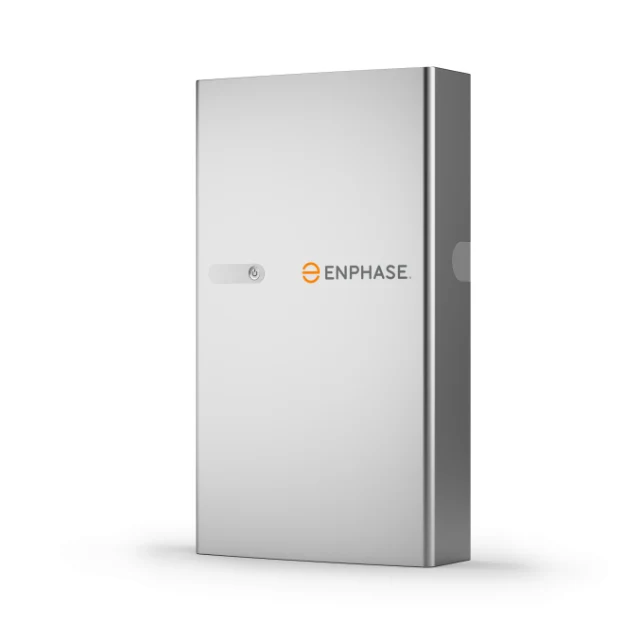
Enphase is the clearest answer in the category to one specific question — how do I add a battery to solar I already own without replacing the inverter? It is a much weaker answer to almost every question about scale.
By Kieron Taylor, Founder, Solar Select · Updated · 6 min read
The verdict
The cleanest way to add storage to solar you already own, because nothing about your existing inverter has to change. It is also among the most expensive ways to buy a kilowatt-hour, and that gap widens as the system grows.
Best for: Retrofits onto any brand of existing solar, homes already on Enphase microinverters, and three-phase homes that want backup on all three phases.
Look elsewhere if: You want one large battery, you are chasing the shortest payback, or wall space is tight.
The sourced per-kWh figure, and whether it is quoted before or after the rebate, is in the cost section below.
The 30-second take
- The best true retrofit here. AC-coupled, so it works alongside existing solar of any brand without replacing your inverter.
- No single point of failure. Each unit holds several grid-forming microinverters, so one failure degrades output instead of stopping it.
- True three-phase backup via FlexPhase — set at installation, and not changeable in software afterwards.
- The blunt trade-off: priced well above the market per usable kWh, and every unit needs its own wall space.
- Solar Choice’s installer network puts Enphase at about $1,465 per usable kWh installed before the federal battery rebate — the highest per-kWh figure it publishes for any mainstream brand. Its review is dated March 2026; we checked it September 2026.
Why architecture, not value, is the reason to choose it
Enphase is priced well above the market on cost per kWh and did not place in the top three of the 2026 Australian installer vote. Any review that leads with value is selling you something. See the Enphase profile — IQ Battery, microinverters and fit.
What it does have is a genuinely different architecture. The IQ Battery is AC-coupled, so it sits alongside solar you already own rather than requiring a new inverter. Inside each unit are several grid-forming microinverters instead of one central inverter, which means a single failure degrades output rather than taking the system down. If your reason for buying is resilience or retrofit, that architecture is the argument — and it is a real one.
“Its architecture, not its value, is the reason to choose it. If you are buying on payback, buy something else.”
What you actually get
- IQ Battery — small modular AC-coupled LFP units, stacked in small increments.
- FlexPhase — same hardware, configured at install for single-phase or true three-phase backup.
- System controller — required for backup, and the line most often missing from a quote. Check it is in the price.
Capacity scales in small steps, which is the flexibility people buy it for. It is also why the price scales in small steps, and why the wall fills up faster than buyers expect.
What an Enphase system costs installed
Solar Choice averages real quotes across its own installer network and puts Enphase at about $1,465 per usable kWh installed, before the federal battery rebate. That is the highest per-kWh figure it publishes for any mainstream brand, and it is stated plainly rather than softened — it is the number the rest of this page explains. Its review is dated March 2026 and we checked it September 2026; it varies by installer, site and configuration.
Read comparative figures carefully here. Enphase is the brand where before-rebate and after-rebate numbers get mixed up most often, because the small unit size means published examples are quoted on both bases — and a range quoted on the wrong basis makes the most expensive brand in the category look like one of the cheapest. When you compare against another brand, check both numbers are on the same footing.
The short summary: this is among the highest cost per usable kWh in the market. That is defensible if you are retrofitting or you want the resilience, and hard to defend if you simply want a lot of storage.
How Enphase’s small steps land against the rebate step
The federal rebate pays in full to 14 kWh of usable capacity and tapers above. Enphase stacks in unusually small increments, which is an advantage here: you can land close to the step deliberately instead of overshooting it because that was the next size up. When you are ready for numbers, get Enphase quotes from vetted installers near you.
- At 5 kWh the rebate is about $1,360.
- At 10 kWh it is about $2,720 — still entirely at the full rate.
- At 14 kWh it is about $3,808, the most available at the full rate.
- At 20 kWh it is about $4,787, with the capacity above 14 kWh earning the tapered rate.
Because units are small, the practical question is how many boxes get you closest to the step without going past it — and where the next two will go if you expand later.
Where Enphase wins, and where it loses
Against the Tesla Powerwall, its usual cross-shop, Enphase wins on true retrofit onto any existing solar without changing your inverter, on genuine three-phase backup, on finer sizing steps, and on having no single point of failure inside the unit.
It loses on cost per usable kWh, substantially, and on wall space — far more of it for the same capacity. If what you want is one large system rather than several small ones, the case weakens quickly.
Living with one
- The app and per-panel monitoring are widely rated best in the category. If you want to see exactly which panel is underperforming, this is the ecosystem that shows you.
- Passively cooled with no fans or moving parts — one of the quieter options, and a reasonable candidate for indoor installation.
- Virtual power plant support in Australia is solid across the major programs, and the system can be controlled at inverter level by dynamic-pricing retailers.
- The operating temperature range is narrower than some rivals, so siting matters in hot parts of Australia. Indoors is often the sensible default.
Who should buy one, and who should not
- Buy if you are retrofitting onto existing solar of any brand — this is where Enphase genuinely wins.
- Buy if you already run Enphase microinverters and want one ecosystem and one app.
- Buy if you have three-phase supply and want true three-phase backup.
- Look elsewhere if you want a large system — cost and wall space both become hard to justify at scale.
- Look elsewhere if you are optimising for payback period, or wall space is limited.
Ask these four before you sign
- How many units, and where exactly will they be mounted?
- Is this configured for single-phase or true three-phase backup?
- Does my existing solar need any change to work with the battery?
- Is the system controller included in this price?
The FlexPhase answer is the one that cannot be fixed later. Get it right at quote stage. From here, get up to 3 Enphase quotes from vetted installers in your state — free, and nobody else sees your details.
How long would a Enphase take to pay for itself at your place?
Postcode, your bill, and whether the roof already has panels. About a minute, and the ten-year figure is yours before anyone asks for a phone number. Start with vetted Enphase installers in your state.
Read next
Sources
Every quantitative claim on this page traces to one of the sources below — government, manufacturer, or independent AU industry reference. Last verified 2026-08-21.
We use AI to help research and draft. Claims are traced to the sources below and dated. Where we haven’t got a source, we say so on the page — treat that as a starting point and do your own research.
General information only. It doesn’t take your circumstances into account and isn’t legal, financial, insurance or electrical advice. Rebates, tariffs, network rules and product terms change — confirm anything you plan to rely on with your installer, insurer, retailer or distributor, and see our terms.
- enphase.com — IQ Battery
- solarquotes.com.au — Enphase battery review
- solarchoice.net.au — battery reviews, installer-network pricing
- cleanenergycouncil.org.au — approved battery list
- dcceew.gov.au — Cheaper Home Batteries Program
Postcode in, up to 3 vetted installers out. Free for homeowners, no obligation. All solar guides · Federal rebates · How it works
Filed under: Brand deep-dives