Brand deep-dives
ESY Sunhome battery review: HM6
ESY Sunhome: one outdoor tower, and a sizing decision you only get to make once.
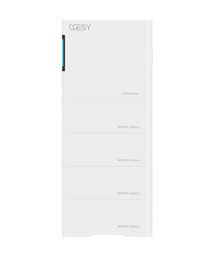
- 4.86 to 29.18 kWh
- Add modules later
- 10-year warranty
The HM6 is a single-phase all-in-one. A hybrid inverter sits on top of lithium iron phosphate battery modules that stack beneath it, all inside one floor-standing enclosure built to live outdoors. It suits households that know how much storage they need and would rather have one tidy unit outside than separate boxes on a wall.
By Kieron Taylor, Founder, Solar Select · Updated · 6 min read
The verdict
A tidy, well-reviewed single-phase all-in-one that is simple to site and simple to compare. Its warranty terms shut the expansion window soon after installation, so it rewards households that size correctly the first time.
Best for: Single-phase homes that want one outdoor tower, are confident about the capacity they need, and either have no inverter yet or are happy to replace the one they have.
Look elsewhere if: Your home is three-phase, you want to keep the inverter already on the wall, or you expect to add storage several years from now.
Module count, the inverter swap on a retrofit and where the tower stands move an ESY Sunhome quote more than anything else. The section on quote factors walks through each.
The 30-second take
- One tower, one inverter. The HM6 combines a hybrid inverter and its stacked LFP modules in a single floor-standing, outdoor-rated unit for single-phase homes.
- Sized by module count. Clean Energy Council listed models run from 4.86 kWh to 29.18 kWh usable. The inverter is identical on all of them, so a taller stack means longer runtime, not more power.
- Expansion closes early. The Australian warranty terms allow capacity to be added only during a short period after the original install, which makes the size on the quote close to permanent.
- Warranty on paper. 10 years, with 70% of capacity retained at the end of it, conditional on an authorised supply channel and a correctly licensed installer.
- Match the model string. The register names this product differently from the brochure, so ask to see the exact quoted model on the current approved list before you sign.
ESY Sunhome at a glance
Each row is read from the source beside it, on the date it carries. Anything the manufacturer has not published is left out rather than guessed.
| Current models | ESYSUNHOME 5KWH+ (HM6-05) (4.86 kWh usable), ESYSUNHOME 10KWH+ (HM6-10) (9.73 kWh usable), ESYSUNHOME 15KWH+ (HM6-15) (14.59 kWh usable), ESYSUNHOME 20KWH+ (HM6-20) (19.46 kWh usable), ESYSUNHOME 25KWH+ (HM6-25) (24.32 kWh usable), ESYSUNHOME 30KWH+ (HM6-30) (29.18 kWh usable) cer.gov.au |
|---|---|
| Usable capacity | 4.86 to 29.18 kWh cer.gov.au |
| How it connects | Hybrid: works either way esysunhome.com |
| Add capacity later | Yes, modules can be added after install esysunhome.com |
| Inverter pairing | Own ecosystem only esysunhome.com |
| Warranty | 10 years esysunhome.com |
| Capacity at end of warranty | 70% guaranteed esysunhome.com |
| CEC approved list | Yes, listed cer.gov.au |
| Who can install it | Any CEC-accredited installer esysunhome.com |
How the HM6 tower is put together
ESY Sunhome builds its residential product as a single column. The hybrid inverter sits at the top, identical battery modules stack underneath it, and the whole assembly stands on the ground in one footprint. There is no separate inverter on the wall and no cable run between two boxes, which is a large part of why the system is quick to site and easy to compare.
The model tells you the size. On the approved-product register the single-phase line starts at 4.86 kWh usable and finishes at 29.18 kWh usable, with steps at 9.73, 14.59, 19.46 and 24.32 kWh in between. The chemistry is lithium iron phosphate throughout.
One detail catches people out: you get the same inverter whichever model you buy. A taller stack stores more energy, but it cannot push more power into the house at any one moment. If your worry is running the oven, the air conditioner and a pool pump together, a bigger ESY tower does not solve that. It keeps a smaller set of loads going for longer. To talk that through with someone who fits them, you can find vetted ESY Sunhome installers in your state.
The enclosure is rated for outdoor mounting, cools itself passively with no fans, and carries a built-in extinguisher. That makes it a practical answer on tight blocks with no garage wall to spare, provided the spot chosen is out of the worst of the afternoon sun.
The expansion window closes early — size it as if it never opens
Most modular batteries are sold on the promise that you can start small and add later. ESY Sunhome’s own Australian warranty terms take a different line: extra capacity may be added only during a limited period following the original installation, and after that the stack is closed. Ask your installer to show you the clause and to write the closing date on your paperwork.
In practice that turns the module count on the quote into a long-term commitment. A household that buys a small tower intending to grow into it when the electric car arrives will find the door already shut, and there is no route to standing a second tower beside the first further down the track.
So do the sizing work before you sign. Look at a full year of your own usage if your retailer provides it, and be realistic about what is coming: an EV, heat pump hot water, a second air conditioner. If any of those are likely, size for them now. Our system size guide explains how to read your own consumption.
- Ask what one more module costs today, and what it would cost if added before the window shuts.
- Get the closing date for expansion in writing, taken from the warranty terms and not from memory.
- Check the inverter’s output against your evening peak, because no amount of extra storage raises it.
“On most stackable batteries the first quote is a starting point. On this one it is very nearly the final answer.”
The line items behind an ESY Sunhome quote
Because the range is one inverter and a variable number of identical modules, quotes for this brand are unusually easy to line up. The differences between two installers usually come down to a handful of things.
- Module count. It is the main lever, and given the expansion rule it deserves more thought here than on almost any other brand.
- What happens to your current inverter. The tower brings its own hybrid inverter, so on a retrofit the existing one comes out. A careful quote shows that as a separate line instead of folding it into one total.
- Which product family is named. ESY Sunhome also has a larger high-voltage line certified separately. It is a different system, and the quote should make clear which one you are being offered.
- Where the tower stands. It is a floor-mounted outdoor unit, so the position has to work in heavy rain and summer heat. A shaded spot keeps it clear of the hot end of its operating range, where performance eases off.
- Backup scope. The circuits kept alive in a blackout depend on how the changeover is wired. Ask for them listed by name.
When you compare up to 3 ESY Sunhome quotes, line them up on module count and backed-up circuits before you look at anything else, so you know you are comparing the same system.
Living with it: firmware, the app and owner feedback
ESY Sunhome is a recent arrival in Australia, yet it has gathered more owner reviews on SolarQuotes than the other newer brands, and the tone of them is positive. Owners describe dependable everyday running, blackout supply that did its job, and support staff who responded when contacted.
Two criticisms recur. Early firmware sometimes needed a remote update soon after commissioning, and some owners expected finer control over grid export from the app than they found. Both are manageable if raised up front: ask the installer to check for and load the latest firmware before handover, and ask to be shown the export settings in the app so you know what you can change yourself.
Because the brand’s local history is short, the installer’s familiarity with this particular tower carries more weight than usual. Grid connection covers inverter and battery in a single application, and someone fitting their first one can leave export limits and backup behaviour on factory defaults that do not suit your tariff.
The register check, and the supply-chain check
Eligibility for the federal Cheaper Home Batteries discount is decided model by model, not brand by brand. The single-phase HM6 models are on the Clean Energy Council approved battery list, but each listing has its own expiry date and the register uses different model strings from the sales brochure. Ask the installer to show you the exact quoted model on the current list, and make sure the same string appears on your contract.
The warranty runs for 10 years with 70% of capacity retained at the end of the term. It comes with two conditions worth checking before money changes hands: the unit must be bought through an authorised distribution channel, and the installer must hold the correct licensing for your state. A suspiciously cheap tower from an unclear source can turn up without the cover you thought you were buying. One way to reduce that risk is to get ESY Sunhome quotes from vetted local installers and ask each where their stock comes from.
Who should shortlist an ESY Sunhome
- Single-phase homes wanting one neat unit outdoors, particularly where wall space is scarce.
- Households sure of their numbers, who can choose a module count now and be comfortable living with it.
- New solar-and-battery installs, or retrofits where the old inverter is due for replacement anyway.
- Buyers who put weight on a deep pool of local owner feedback when the brand itself is young here.
- Probably not a three-phase home, a household planning to add storage years from now, or anyone set on keeping a healthy existing inverter.
Whatever the brand, the install decides how the system performs. Solar Select can match you with up to 3 vetted installers at no cost. Ask each how many HM6 towers they have commissioned, whether they update firmware before handover, and where they would stand the unit on your block. Start by finding ESY Sunhome installers who cover your area.
How long would a ESY Sunhome take to pay for itself at your place?
Postcode, your bill, and whether the roof already has panels. About a minute, and the ten-year figure is yours before anyone asks for a phone number. Start with vetted ESY Sunhome installers in your state.
Read next
Sources
Every quantitative claim on this page traces to one of the sources below — government, manufacturer, or independent AU industry reference. Last verified 2026-09-17.
We use AI to help research and draft. Claims are traced to the sources below and dated. Where we haven’t got a source, we say so on the page — treat that as a starting point and do your own research.
General information only. It doesn’t take your circumstances into account and isn’t legal, financial, insurance or electrical advice. Rebates, tariffs, network rules and product terms change — confirm anything you plan to rely on with your installer, insurer, retailer or distributor, and see our terms.
- cleanenergycouncil.org.au — approved battery list
- dcceew.gov.au — Cheaper Home Batteries Program
- cer.gov.au — CEC approved solar batteries register (HM6 listed models and usable capacity)
- esysunhome.com — warranty terms and conditions, single-phase system, Australia
- esysunhome.com — HM6 single-phase residential energy storage system
- esysunhome.com — download centre
- solarquotes.com.au — ESY Sunhome battery review
Postcode in, up to 3 vetted installers out. Free for homeowners, no obligation. All solar guides · Federal rebates · How it works
Filed under: Brand deep-dives