Brand deep-dives
FelicityESS battery review: LUX
FelicityESS: a modular range that scales past the house, and a warranty that changes as it ages.
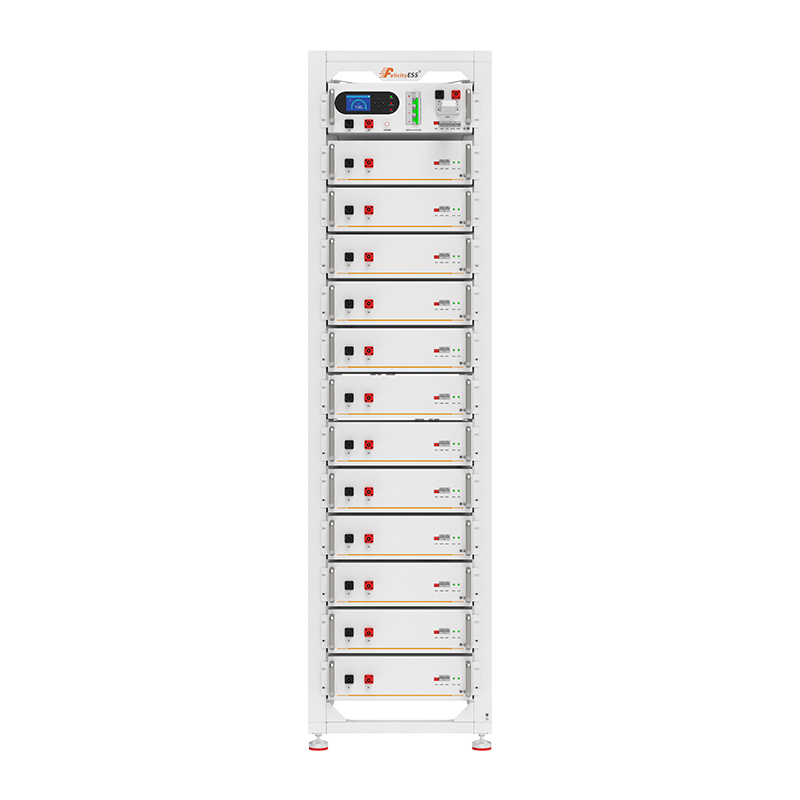
- 4.98 to 58.36 kWh
- Add modules later
FelicityESS is the storage brand of a Chinese manufacturer that also makes inverters and solar panels, sold here through a Sydney-based company. Its LUX batteries are modular blocks, offered as a low-voltage family for homes and a high-voltage family for much bigger sites. It suits price-led buyers who read a warranty document before they sign.
By Kieron Taylor, Founder, Solar Select · Updated · 6 min read
The verdict
A broad, competitively priced modular range from a manufacturer that builds the whole system. The warranty is structured in stages that thin out towards the end of the term, so it suits buyers who have read the policy and weighed that up.
Best for: Price-led buyers comfortable with the staged warranty, and larger sites that want a bigger modular bank than most residential brands offer.
Look elsewhere if: You want repair-or-replace cover for the full advertised term, or a published floor on remaining capacity at the end of it.
Series, module count and the inverter chosen alongside the battery move a FelicityESS quote far more than the brand name does. The quote-factors section below takes each in turn.
The 30-second take
- Two LUX families. LUX-X is the low-voltage household line and LUX-Y is a high-voltage line that stacks far beyond domestic needs. They are separate system designs, not two sizes of one product.
- Wide capacity span. Clean Energy Council listed models run from 4.98 kWh to 58.36 kWh usable, and the suffix on the model string is the module count.
- A warranty in stages. The manufacturer’s policy covers the battery on different terms in each of three periods, finishing with inspections only, labour and parts excluded.
- Two battery brands, one warranty card. The same manufacturer sells another battery line on different terms, so the logo on the unit changes the cover.
- The inverter is its own decision. Backup capability and a separate warranty period both sit with the inverter in the quote, not with the battery.
FelicityESS at a glance
Each row is read from the source beside it, on the date it carries. Anything the manufacturer has not published is left out rather than guessed.
| Current models | LUX-X-48100LCG01-US (4.98 kWh usable), LUX-X-48100LG01-USM2 (9.96 kWh usable), LUX-X-48100LG01-USM4 (19.92 kWh usable), LUX-X-48100LG01-USM8 (39.84 kWh usable), LUX-Y-48100HG01M4 (19.45 kWh usable), LUX-Y-48100HG01M12 (58.36 kWh usable) cer.gov.au |
|---|---|
| Usable capacity | 4.98 to 58.36 kWh cer.gov.au |
| Add capacity later | Yes, modules can be added after install cer.gov.au |
| CEC approved list | Yes, listed cer.gov.au |
Two families under one name: LUX-X and LUX-Y
The LUX range is built from modular blocks, and it splits into two families that share a name and little else. LUX-X is low-voltage and sized for houses. On the approved-product register it starts with a single block at 4.98 kWh usable and steps up through 9.96 and 19.92 kWh to a 39.84 kWh configuration. LUX-Y is high-voltage, beginning at 19.45 kWh usable and reaching 58.36 kWh, which is more than most homes will ever use.
The naming is more helpful than it looks. The suffix that closes the model string is the module count, so the string on the quote tells you exactly how many blocks are going in. That only works if the quote carries the full string. “A Felicity LUX battery” could be either family, in any size, and the two are engineered as different systems.
Behind the batteries is a manufacturer that also builds hybrid inverters and all-in-one units. Buying battery and inverter from one maker keeps a single supplier relationship, which some households value. To see who fits the range locally, you can find vetted FelicityESS installers in your state.
Read the warranty by stage, not by headline
The part of this product a buyer would not think to ask about is how the warranty behaves over time. The manufacturer’s policy does not apply one set of terms from start to finish. It moves through three stages.
- Early stage: cells found to be defective are swapped for new ones.
- Middle stage: the manufacturer attempts a repair first, and replaces the battery only if that repair does not succeed.
- Final stage: the manufacturer offers free inspections, with labour charges and parts fees excluded — so a fault in this period falls largely on the owner.
The policy document sets out which years fall into each stage, and it is worth reading those boundaries yourself before you compare this battery with one whose cover is flat across the whole term. SolarQuotes’ reviewer singles out this structure as a concern, while the small number of owner reviews published there are positive.
Capacity is handled differently too. Most batteries sold in Australia promise that a stated share of original capacity will remain when the term ends. The FelicityESS policy is written around faults: it describes what the manufacturer will do when something breaks, and it does not set a retained-capacity floor, a cycle count or a throughput table. That says nothing about the quality of the cells. It does mean a gradual fade in capacity is not something the document gives you a benchmark for, and that belongs in your comparison with brands that publish one.
“The length of a warranty is the headline. What it pays for in each stage is the product.”
Which logo is on the box
There is a second wrinkle. The same manufacturer sells batteries under two brands, and a single warranty card covers both on different terms. Nothing on the outside of a unit tells a homeowner which policy applies, and a quote that gives only the family name does not settle it either.
The fix is simple. Have the full model string and the brand name written into the contract, and ask for the warranty document that applies to that exact battery before you sign. If the unit that arrives carries a different logo or a different string, query it before it is installed.
It also helps to know where the paperwork lives. The storage brand’s own web address now redirects to the parent company’s Australian site. Claims run through your supplier, who lodges them with the manufacturer or an authorised service partner, and the policy asks you to produce your purchase and installation invoices. Keep both, and ask your installer who their supplier is.
Why two FelicityESS quotes rarely match
With a range this wide, two quotes carrying the same brand can describe very different systems. These are the lines that separate them.
- Series. Low-voltage LUX-X and high-voltage LUX-Y target very different system sizes, and the system design around them differs too.
- Module count. The suffix on the model string is what you are paying for. Check that it matches the usable capacity you discussed.
- The inverter. It is a separate line item with its own warranty period, and it decides what the system can do in a blackout: which circuits are backed up and how much it can supply at once.
- Installation conditions. The warranty excludes damage from incorrect installation, inadequate ventilation or departing from the installation guide, so location and workmanship are part of what the quote is buying.
- Installer familiarity. FelicityESS is still new to Australia and few systems have been commissioned here, which makes it reasonable to ask how many the installer has done.
Once you compare up to 3 FelicityESS quotes from vetted installers, check that each names the same series, the same module count and the same inverter. If they do not, you are looking at different systems.
The approved-list check for this brand
Rebate eligibility under the federal Cheaper Home Batteries Program is decided model by model. The LUX-X and LUX-Y models are on the Clean Energy Council approved battery list, which is the hardware condition of the program. Because the manufacturer sells a second, similarly named battery line, ask the installer to show you the exact quoted model on the current list and confirm it is a LUX model.
Grid connection covers the inverter and battery together. An installer who has not worked with this manufacturer’s inverters before can leave export limits and backup behaviour on defaults that do not suit your tariff, so ask how those will be set and who will walk you through them.
Who should shortlist FelicityESS
- Price-led buyers who have read the staged warranty and are comfortable carrying more of the risk late in the term.
- Larger sites wanting a big modular bank, where the high-voltage family reaches sizes few residential brands offer.
- Households that prefer one manufacturer for battery and inverter.
- Buyers who will insist on paperwork: full model string, brand name and the matching warranty document in the contract.
- Probably not anyone who wants repair-or-replace cover across the whole advertised term, a published capacity floor, or a deep pool of Australian owner reviews to read first.
Installation quality matters on every brand. The Clean Energy Regulator inspected 1,278 home battery installations between July 2025 and April 2026 and found more than 60% substandard, overwhelmingly because of how they were installed and not the hardware. With a warranty that explicitly excludes installation faults, that matters doubly here. The matching is free and goes to up to 3 vetted installers. Begin by finding FelicityESS installers near you.
How long would a FelicityESS take to pay for itself at your place?
Postcode, your bill, and whether the roof already has panels. About a minute, and the ten-year figure is yours before anyone asks for a phone number. Start with vetted FelicityESS installers in your state.
Read next
Sources
Every quantitative claim on this page traces to one of the sources below — government, manufacturer, or independent AU industry reference. Last verified 2026-09-17.
We use AI to help research and draft. Claims are traced to the sources below and dated. Where we haven’t got a source, we say so on the page — treat that as a starting point and do your own research.
General information only. It doesn’t take your circumstances into account and isn’t legal, financial, insurance or electrical advice. Rebates, tariffs, network rules and product terms change — confirm anything you plan to rely on with your installer, insurer, retailer or distributor, and see our terms.
- cleanenergycouncil.org.au — approved battery list
- dcceew.gov.au — Cheaper Home Batteries Program
- uts.edu.au — CER battery inspection findings, April 2026
- cer.gov.au — CEC approved solar batteries register (LUX-X and LUX-Y listed models and usable capacity)
- Guangdong Felicity New Energy — FelicityESS warranty policy v4.0
- felicitysolar.com.au — Felicity Solar Australia product range
- solarquotes.com.au — FelicityESS battery review
Postcode in, up to 3 vetted installers out. Free for homeowners, no obligation. All solar guides · Federal rebates · How it works
Filed under: Brand deep-dives