Brand deep-dives
Fox ESS battery review
Fox ESS: capacity sized to the house, and model names that are easy to mix up.
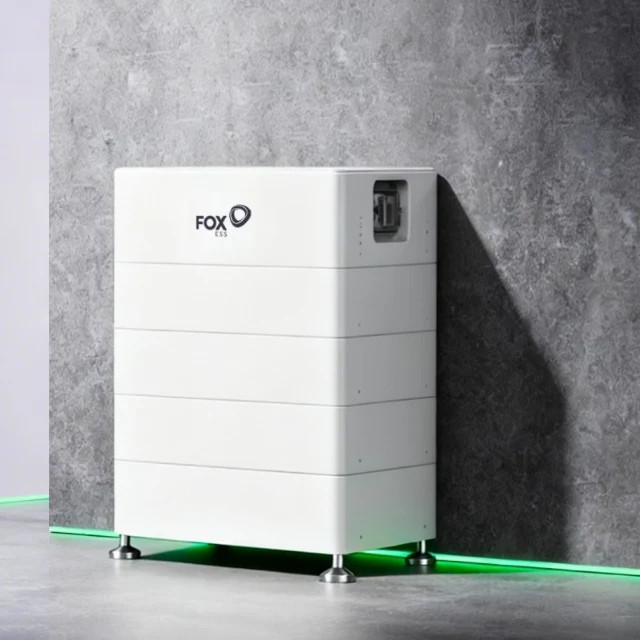
Fox ESS builds high-voltage lithium iron phosphate batteries in several modular families, paired with its own hybrid inverters. The range is broad enough for an installer to land close to the capacity a home needs instead of rounding up to a package. It suits new solar-and-battery installs and buyers weighing usable storage against cost.
By Kieron Taylor, Founder, Solar Select · Updated · 6 min read
The verdict
A broad, value-positioned modular range that lets an installer match capacity to the household closely. The trade is a shorter Australian track record and a catalogue that is easy to mis-specify, so the paperwork and the installer carry more weight than usual.
Best for: New solar-and-battery installs, larger homes that need a deep stack without commercial hardware, and buyers comparing usable capacity for the money.
Look elsewhere if: You are keeping an inverter you like, you want the longest local field record, or your preferred virtual power plant does not list the model.
Which family is quoted, how many modules are in the stack and what happens to your existing inverter move a Fox ESS quote more than the brand name does. The quote-factors section further down covers each.
The 30-second take
- Three families, three ways of growing. EQ is the mainstream modular stack, EP is a fixed block that expands through extra units in parallel, and CQ is the large-format end for big homes, three-phase properties and light commercial sites.
- Nominal and usable line up. On the EQ family Fox states that the whole nominal capacity can be drawn, so the two figures on a quote should nearly match.
- It wants its own inverter. The high-voltage stacks pair with a matching Fox ESS hybrid inverter — a convenience on a new install, and usually a replacement on a retrofit.
- Growth was fast. Fox ESS has scaled quickly in Australia, and installer experience with it differs widely.
- The quote must carry the exact model. Variant names sit close together and approval is model by model, so a line reading only “Fox ESS battery” tells you nothing you can check.
How the EQ, EP and CQ families differ
Fox ESS sells high-voltage battery systems built on lithium iron phosphate cells, the chemistry most of the market uses, and pairs them with its own hybrid inverters. What sets the range apart is the number of ways it can be sized. Once you know which family fits, you can find vetted Fox ESS installers in your state.
The EQ family is the one most households will see on a quote. It is a modular stack: the installer keeps adding modules until the capacity suits your evening load, instead of picking the nearest pre-set package. Fox states that the full nominal capacity of the EQ modules is usable, which makes like-for-like comparison with other brands simpler.
The EP family is a fixed block. It grows by placing further units in parallel, not by adding modules inside one stack, and suits a household that wants a set size without module-level tuning. The CQ family is the large-format end, aimed at big homes, three-phase properties and light commercial sites.
The three expand in different ways, so the family you start with shapes your options for the life of the system.
A few characters on the quote decide what turns up
The standout risk with Fox ESS is not the hardware. It is the catalogue. Inside the EQ family alone there are several variants whose names differ by a few digits, and they are different products. Across the whole range there are many closely named options.
That matters in three places. The first is comparison: two quotes that both say “Fox ESS” may describe different products at different capacities. The second is inverter pairing. High-voltage stacks need the correct Fox ESS hybrid inverter, and a mismatched pair can cap capacity or change backup behaviour in ways that surface only later. The third is the rebate. The Clean Energy Council approves batteries model by model, so the check has to be made against the precise variant. Ask the installer to show you the exact quoted model on the current approved list before you sign.
The fix is simple. Insist that the quote carries the full model string, the module count and the usable capacity, with the paired inverter named on the same page.
“With a catalogue this broad, the model string on the quote is the specification. Everything else is a brand name.”
Expansion headroom is a day-one decision
A modular stack invites the assumption that more capacity can always be bolted on. With Fox ESS that holds only inside the headroom the original design left. The inverter rating and the enclosure each set a ceiling, and a stack that already fills it can only get bigger by swapping equipment.
So tell the installer now if an electric vehicle, a pool or another large load is likely in the next few years. Then ask how many more modules this inverter and this enclosure will accept, and have the answer written on the quote. When you compare up to 3 Fox ESS quotes side by side, spare headroom is one of the few lines that separates otherwise similar designs.
Reading a Fox ESS quote
- The family. EQ, EP and CQ are built and expanded differently, so they are not interchangeable line items.
- Module count against the ceiling. How many modules are fitted, and how many more the inverter and enclosure allow.
- The inverter. Whether the matching Fox ESS hybrid replaces your existing inverter or goes in beside it, and what becomes of the old unit.
- Nominal versus usable. Ask every installer for the usable figure and compare those. On the EQ family the two should nearly match; if they do not, ask why.
- Backup scope. Which circuits sit on the backup side, and whether changeover is automatic, are design choices. Get them listed in writing instead of accepting “it has backup”.
Fox ESS sits at the value end of the market by design. That comes from volume manufacturing and a deliberate market position, not from a different chemistry. What you weigh against it is track record and ecosystem polish.
Ownership: the app, VPPs and a fast-grown installer base
You watch and control the system in Fox’s own app and web portal. It is serviceable, and it is not why people choose the brand.
Virtual power plant coverage is thinner than it is for a longer-established rival such as Sungrow. If VPP income is central to your plan, check that your preferred program lists the exact model before you commit.
Fox’s volume in Australia is recent. Long-run field data arrives with time, not with shipments, and the installer pool expanded as quickly as the brand did, so experience differs sharply from one installer to the next. That is a reason to ask pointed questions: how many Fox ESS systems have you commissioned, and who handles a warranty claim several years in? Get the second answer in writing.
Who should shortlist Fox ESS
- Households that want capacity matched closely to their load instead of rounded up to the next package.
- Larger homes that need a deep stack without moving to commercial equipment.
- New solar-and-battery installs, where the matching hybrid inverter is part of the design and not a clash with existing gear.
- Value-focused buyers comparing usable capacity for the money.
- Probably not anyone keeping an inverter they like, which points towards an AC-coupled battery, or anyone who would sooner pick between two products than sift through many similar ones.
The installer matters more than the logo here. Between July 2025 and April 2026 the Clean Energy Regulator inspected 1,278 home battery installations and classified more than 60% as substandard. On a brand where model selection and inverter pairing are the main ways a job goes wrong, an installer who has done it many times is the best protection you have. You can get matched with up to 3 vetted Fox ESS installers and put the same model-string questions to each.
How long would a Fox ESS take to pay for itself at your place?
Postcode, your bill, and whether the roof already has panels. About a minute, and the ten-year figure is yours before anyone asks for a phone number. Start with vetted Fox ESS installers in your state.
Read next
Sources
Every quantitative claim on this page traces to one of the sources below — government, manufacturer, or independent AU industry reference. Last verified 2026-09-17.
We use AI to help research and draft. Claims are traced to the sources below and dated. Where we haven’t got a source, we say so on the page — treat that as a starting point and do your own research.
General information only. It doesn’t take your circumstances into account and isn’t legal, financial, insurance or electrical advice. Rebates, tariffs, network rules and product terms change — confirm anything you plan to rely on with your installer, insurer, retailer or distributor, and see our terms.
Postcode in, up to 3 vetted installers out. Free for homeowners, no obligation. All solar guides · Federal rebates · How it works
Filed under: Brand deep-dives