Brand deep-dives
FranklinWH battery review
FranklinWH: a controller that runs the whole house, and switchboard work to match.
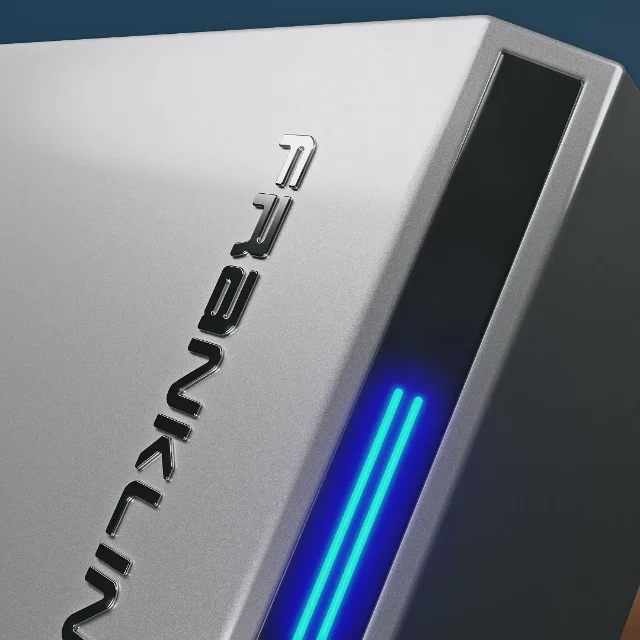
FranklinWH pairs an AC-coupled aPower battery with the aGate, a controller that manages solar, grid, battery, generator and EV charging as one system. It is a high-end product for households that want real resilience through long outages, and it leaves existing solar exactly as it is.
By Kieron Taylor, Founder, Solar Select · Updated · 6 min read
The verdict
A high-end whole-home energy system whose value sits in the aGate controller, not the battery. It is excellent for long outages and generator-backed properties, and only as good as the circuit design agreed before installation.
Best for: Households that want serious blackout resilience, rural properties with a generator, and owners of existing solar they want to keep.
Look elsewhere if: You want the lowest cost per kilowatt-hour on a small home, or a single integrated system for a from-scratch build.
Unit count, the depth of circuit control and generator or EV integration move a FranklinWH quote more than the battery does. Each is walked through under what sits behind the number.
The 30-second take
- The aGate is the product. It sits at the centre of the home and coordinates solar, grid, storage, a generator and EV charging, with individual circuits controllable from the app.
- AC-coupled and inverter-agnostic. The aPower battery works beside whatever solar inverter you already own, so a healthy solar system is left alone.
- Designed for long outages. The system can restart itself from stored energy with the grid down and keep its managed circuits going on solar, day after day.
- High-end positioning. You are paying for whole-home management. If all you want is stored kilowatt-hours at the lowest cost, that layer is capability you will not use.
- Installer skill shows immediately. The aGate changes how the home’s circuits are managed, which makes this switchboard-level work.
A house controller with a battery attached
Most home battery brands start with the battery and add an app. FranklinWH starts at the switchboard. Its aGate controller is installed where the home’s power sources meet, and from there it coordinates rooftop solar, the grid connection, the aPower battery, a generator if there is one, and EV charging. The battery itself is deliberately conventional. The control layer is where the engineering effort went.
The aPower is AC-coupled and indifferent to which solar inverter it sits beside. On a retrofit the existing solar system keeps running as before, with its own app, and the FranklinWH equipment decides where the energy goes. aPower units can be stacked in parallel under one aGate, which is how the system reaches the large capacities that rural and high-consumption properties call for.
One caveat follows from that design. Because the old inverter stays, its age and condition still matter: if it is nearing retirement, a replacement becomes its own project later, outside the scope of this install. Ask the installer to note the inverter’s age on the quote. To see who fits the system locally, find FranklinWH installers in your state.
The circuit list is the real specification
Here is what a FranklinWH buyer would not know to ask. The headline capability — choosing which circuits ride through an outage and which are shed automatically — only exists if someone makes those choices carefully at design time. The aGate controls the circuits it has been wired and configured to control. A rushed install that lumps everything together leaves you with a capable controller doing very little.
So the circuit schedule deserves as much attention as the battery count. Walk through the house with the installer and name the circuits you refuse to lose: refrigeration, lighting, communications, a water pump. Then look at the large discretionary loads and decide what happens to each when the grid drops or stored energy runs low.
- Ask for the list of individually controlled circuits in writing, attached to the quote.
- Ask which circuits stay live in an outage, and which drop out first as the battery empties.
- Ask who sets up the rules in the app, and whether you will be shown how to change them.
This is work inside the switchboard, and workmanship shows straight away. It is the main reason installer experience carries so much weight with this brand.
“With FranklinWH the circuit schedule is the specification. Whatever is written on it before you sign is what keeps running when the street goes dark.”
Long outages, generators and running without the grid
Blackout performance is the strongest part of the product. Changeover is automatic. If the system has shut down while the grid is still out, it can start itself again from stored energy, and with solar attached it can keep the managed circuits running indefinitely. That is off-grid capability in the proper sense, not a short bridge until power returns.
Generator handling is unusually tidy. The aGate treats a generator as another source to be managed, bringing it in automatically under rules the owner sets, with no manual changeover. Rural owners with an existing generator get real use from this. It still has to be configured correctly to behave that way, so ask specifically how the handover is set up and tested at commissioning.
Sizing is the other half. A single aPower comfortably covers an evening for most grid-connected homes. Whole-home resilience is a bigger ask, and once the must-keep circuits are added up it often points to more than one unit. The architecture makes a later addition simple, though it still costs money, so do the load sums before deciding. If backup is your main reason for buying, compare up to 3 FranklinWH quotes and look at how each installer sized the system.
What sits behind a FranklinWH number
FranklinWH sits at the top end of the market by design, and the battery is only part of what is being quoted. These are the items that change the total.
- Number of aPower units, and whether the aGate configuration leaves room for another later.
- Depth of circuit control. Per-circuit management is the point of the product, so a quote that does not itemise the controlled circuits has skipped it.
- Generator and EV charging integration, either wired in now or provided for so it can be added without rework.
- Your existing solar inverter. The AC-coupled design keeps it, so its age and condition belong in the conversation even though it is not being replaced.
- The exact model’s approval status. Federal rebate eligibility is decided model by model on the Clean Energy Council approved battery list, so ask the installer to show you the quoted aPower variant on the current list before you sign.
Where a simpler battery is the better buy
FranklinWH’s closest mainstream comparison is the current Tesla Powerwall. Against it, FranklinWH offers per-circuit management, cleaner generator integration, larger stacked capacity and the freedom to leave an existing solar inverter in place. The Powerwall answers with a longer Australian history, a bigger installer network, a household-name badge and an integrated solar inverter, which makes it the simpler choice when solar and storage are being built together from nothing.
The aGate architecture earns its cost as complexity grows. On a small home where one compact battery is the whole job, much of what you are paying for will sit idle. The same goes for a buyer whose only measure is cost per stored kilowatt-hour, or one who wants a single DC-coupled solar-and-battery system from one vendor.
FranklinWH is also a relatively recent arrival in Australia, with customer satisfaction scores among the strongest in the market over that period. The practical response is to choose an installer who has commissioned several systems and supports them directly, and to get in writing who handles a manufacturer claim.
Who should shortlist FranklinWH
- Households that want to ride through long outages, not just brief interruptions.
- Owners of solar they are happy with, since the battery works beside any inverter brand.
- Rural and semi-rural properties with a generator, large loads or a need for stacked capacity.
- Buyers who will actually use circuit-level control and are comfortable with top-tier positioning to get it.
- Probably not a small home wanting one compact battery at the lowest cost per kilowatt-hour, or a from-scratch build where a single integrated system would be simpler.
Installation quality decides the outcome on every brand, and more so on one that changes how the house is wired. Between July 2025 and April 2026 the Clean Energy Regulator inspected 1,278 home battery installations and classified more than 60% of them as substandard. Ask each installer how many aGate systems they have commissioned, then get matched with up to 3 vetted installers for a FranklinWH quote.
How long would a FranklinWH take to pay for itself at your place?
Postcode, your bill, and whether the roof already has panels. About a minute, and the ten-year figure is yours before anyone asks for a phone number. Start with vetted FranklinWH installers in your state.
Read next
Sources
Every quantitative claim on this page traces to one of the sources below — government, manufacturer, or independent AU industry reference. Last verified 2026-09-17.
We use AI to help research and draft. Claims are traced to the sources below and dated. Where we haven’t got a source, we say so on the page — treat that as a starting point and do your own research.
General information only. It doesn’t take your circumstances into account and isn’t legal, financial, insurance or electrical advice. Rebates, tariffs, network rules and product terms change — confirm anything you plan to rely on with your installer, insurer, retailer or distributor, and see our terms.
Postcode in, up to 3 vetted installers out. Free for homeowners, no obligation. All solar guides · Federal rebates · How it works
Filed under: Brand deep-dives