Brand deep-dives
Fronius battery review
Fronius Reserva review: the inverter brand’s own battery, the GEN24 Plus requirement, and when the service case wins.
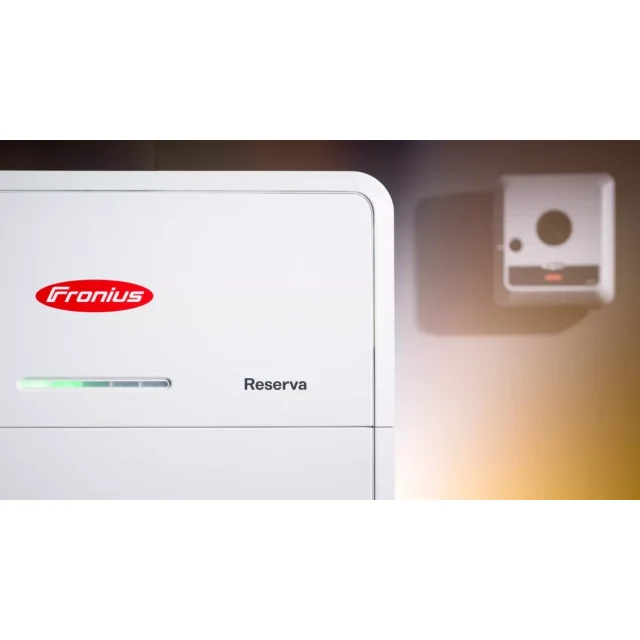
Fronius is a top-three inverter brand here and a brand-new battery entrant. Those two facts pull in opposite directions, and which one matters more depends entirely on what you already have on your wall.
By Kieron Taylor, Founder, Solar Select · Updated · 6 min read
The verdict
You are paying for Fronius’s Australian service depth, not for the cells. The cost per kWh is higher than comparable stacks, and the battery itself has only been sold here since late 2025.
Best for: Homes already running, or about to buy, a GEN24 Plus, and buyers who rank local repair and spare parts above the lowest number on the quote.
Look elsewhere if: Your Fronius inverter is an older SnapINverter you would rather keep, or you are buying on cost per kWh alone.
The biggest swing in a Reserva quote is whether a GEN24 Plus is already on your wall. The cost section works through it.
The 30-second take
- You are buying a service argument, not a cell. The chemistry is unremarkable and the cost per kWh is higher than comparable stacks. What is different is an Australian office, warehouse and repair centre.
- The catch: Reserva pairs only with a Fronius GEN24 Plus hybrid inverter. An older Fronius SnapINverter does not qualify — you would be buying an inverter too.
- We publish no Reserva price, deliberately — no independent Australian source carries a Fronius-specific installed figure we can stand behind. What moves your number is below.
- Best for homes already on, or buying, a GEN24 Plus, and buyers who weight service depth over lowest cost per kWh.
- Be clear-eyed: Reserva has only been available here since late 2025, so long-run Australian field data on this battery does not exist yet.
The real case for Fronius
Fronius sits consistently top-three among inverter brands in the Australian installer vote. Reserva, its own home battery, is a different proposition: a small-share new entrant available here only since late 2025. Anyone selling you the battery on the inverter’s reputation is blurring two very different track records. See the Fronius profile — the Reserva and GEN24 pairing explained.
The case is still real, and it is about what happens after handover. Fronius runs a local office, a warehouse and a repair centre, and has years of installer relationships behind it — at a moment when at least one long-established European competitor has left the Australian residential market entirely. On a device that has to be serviceable in year six, knowing who answers the phone is worth paying something for.
“The cells are ordinary. The Australian service layer is the product. Decide whether that is what you are buying.”
What Reserva actually is
A high-voltage, DC-coupled LFP tower built from stackable modules in four Australian sizes, with up to four towers able to run in parallel. It is slim enough for tight garage installs, which sounds like a detail until you see where it has to go.
Module count sets continuous power as well as capacity. Two quotes at the same kWh can behave differently under load, so ask what the configuration actually delivers rather than reading the headline number.
- Reserva tower — stackable modules, four AU sizes, up to four towers in parallel.
- GEN24 Plus hybrid inverter — required, backup and black-start capable. Not optional and not substitutable.
- Primo single-phase / Symo three-phase, which sets the backup design that follows.
What a Fronius Reserva costs installed
We are not printing a Reserva price, and it is worth saying why. Every Australian figure we could find for it traces back to a retailer selling it, and the one independent source that prices batteries brand by brand has no Fronius row — its nearest figure is a band covering the leading brands generally, not the Reserva. A price we cannot source is worse than no price. What does not go stale is the list of things that move your number, which is the rest of this page.
Whether a GEN24 Plus is already on your wall or has to be bought is the single biggest swing in any Reserva quote — larger than module count, larger than the switchboard work. If you are on an older SnapINverter, you are pricing an inverter and a battery, and that comparison quite often ends somewhere else.
Be clear-eyed about the cost per kWh too: comparable modular stacks are materially cheaper. That is the trade being made, and it is a defensible one if service depth is what you actually want. Want that checked against real quotes? Accredited Fronius installers, state by state.
How Reserva’s sizes land against the rebate step
The federal Cheaper Home Batteries rebate pays in full on the first 14 kWh of usable capacity, then tapers. Reserva’s four sizes straddle that step, so the size you pick decides how much of your capacity earns the full rate.
- At 12.6 kWh the rebate is about $3,427 — entirely at the full rate.
- At 14 kWh it is about $3,808, the maximum available at the full rate.
- At 15.8 kWh it is about $4,102: the 1.8 kWh above the step added only around $294.
- At 25.2 kWh it is about $5,636, with most of the capacity above 14 kWh earning the tapered rate.
On a brand already priced above the market, that taper matters more than usual — the marginal kWh is expensive twice over. Size deliberately.
Where Fronius wins, and where it loses
Against Sungrow, its most common cross-shop, Fronius wins on Australian service presence, on a long installer-trust record on the inverter side, and on a slim indoor-friendly form factor.
It loses on cost per kWh, materially. It also carries the same closed-inverter constraint as Sungrow without the price advantage, and a much shorter battery track record. If you are buying on numbers alone, this is not the brand the numbers point to. Next step: accredited Fronius installers in your state, up to 3 quotes and no obligation.
Living with one
- Monitoring runs through Fronius’s own platform alongside the inverter, so solar and storage appear as one system rather than two apps that disagree with each other.
- Data is hosted on European servers — relevant to some owners, irrelevant to others, but worth knowing either way.
- Virtual power plant participation is possible but narrower than the market leaders. Confirm your intended retailer accepts the exact configuration before you sign.
- Commissioning with correct tariff settings is what makes the monitoring useful after handover. Ask whether that is part of the job.
Who should buy one, and who should not
- Buy if you already run, or are buying, a Fronius GEN24 Plus — this is the clean path.
- Buy if you weight local service and spare parts over lowest cost per kWh.
- Buy if installation space is tight; the tower’s slim depth genuinely matters.
- Look elsewhere if you have an older SnapINverter and do not want to replace it.
- Look elsewhere if you want the lowest cost per kWh, or a long field history on the exact battery model.
Ask these four before you sign
- Does this price include a Fronius GEN24 Plus inverter, or does it assume I already have one?
- How many modules, and what continuous power does that configuration deliver?
- Which circuits are backed up, and is black start included?
- Where is this model manufactured — can you confirm that in writing?
How long would a Fronius take to pay for itself at your place?
Postcode, your bill, and whether the roof already has panels. About a minute, and the ten-year figure is yours before anyone asks for a phone number. Start with vetted Fronius installers in your state.
Read next
Sources
Every quantitative claim on this page traces to one of the sources below — government, manufacturer, or independent AU industry reference. Last verified 2026-08-21.
We use AI to help research and draft. Claims are traced to the sources below and dated. Where we haven’t got a source, we say so on the page — treat that as a starting point and do your own research.
General information only. It doesn’t take your circumstances into account and isn’t legal, financial, insurance or electrical advice. Rebates, tariffs, network rules and product terms change — confirm anything you plan to rely on with your installer, insurer, retailer or distributor, and see our terms.
- fronius.com — Reserva energy storage
- solarquotes.com.au — battery brand reviews
- cleanenergycouncil.org.au — approved battery list
- dcceew.gov.au — Cheaper Home Batteries Program
Postcode in, up to 3 vetted installers out. Free for homeowners, no obligation. All solar guides · Federal rebates · How it works
Filed under: Brand deep-dives