Brand deep-dives
GoodWe battery review
GoodWe Lynx Home review: two battery families, one rebate trap, and the questions that sort a real quote from a vague one.
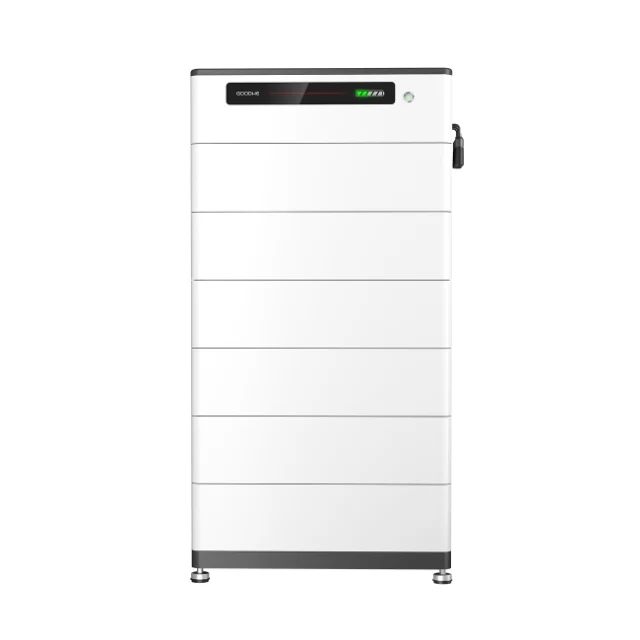
GoodWe competes on breadth. There is a Lynx Home configuration for almost any house — which is the reason to consider it, and also the reason a GoodWe quote needs checking more carefully than a single-product brand’s.
By Kieron Taylor, Founder, Solar Select · Updated · 6 min read
The verdict
A wide, keenly priced range that can fit houses a narrower line-up cannot. The risk sits in the paperwork, not the hardware: rebate eligibility is decided model by model, so the exact model on the quote has to be checked.
Best for: Unusual single-phase or three-phase setups, and price-led buyers whose installer fits GoodWe week in, week out.
Look elsewhere if: You want the brand most Australian installers know by heart, or a particular virtual power plant is central to the plan.
A sourced per-kWh figure, and what it does and does not include, sits in the cost section below.
The 30-second take
- Breadth is the pitch. Lynx Home spans low-voltage and high-voltage modular families, single and three phase, backup and off-grid-leaning designs.
- The trap: rebate eligibility is decided model by model, not brand-wide. The wrong model means no federal rebate at all — thousands of dollars, unrecoverable after the fact.
- Solar Choice’s installer network puts GoodWe at about $666 per usable kWh installed, including the federal battery rebate — among the lowest of any brand it tracks. Reviewed September 2026.
- Best for unusual house setups that a narrower range cannot fit, and buyers weighing price heavily.
- Weigh the installer harder than the badge. With value-tier equipment, outcomes track who fits it more closely than what they fit.
Where GoodWe actually sits
GoodWe is one of the longer-standing Chinese inverter manufacturers in the Australian market, and that inverter heritage is the right frame for its batteries: a high-volume global manufacturer with an established local presence, but not a podium finisher in the 2026 Australian installer battery vote. You can also find vetted GoodWe installers near you.
Its strength is range and price rather than category leadership. If your house is awkward — three-phase, an unusual roof, a retrofit that does not suit a high-voltage stack — there is more likely to be a GoodWe answer than a Tesla one. That is a real advantage, and it is a different advantage from being the best battery on the market.
Low voltage or high voltage — the fork that decides everything
The Lynx Home range splits two ways, and the split drives compatibility, expansion and price. High voltage is the mainstream path, stacking modules against a GoodWe HV hybrid inverter. Low voltage suits smaller or retrofit-leaning configurations and some off-grid designs.
They are not interchangeable, and the inverter has to match the family. The most common way a GoodWe quote goes wrong is a battery and an inverter that are each fine and are not a listed compatible pair.
- Lynx Home high voltage — stackable modules, the mainstream choice.
- Lynx Home low voltage — modular packs, retrofit and off-grid-leaning setups.
- GoodWe hybrid inverter — required, and the exact model has to be compatible with the exact battery.
What a GoodWe system costs installed
We publish no GoodWe installed range, because the sources that carry one turned out to cite each other rather than the market. What we can give you is measured: Solar Choice averages actual quotes across its own installer network and puts GoodWe at about $666 per usable kWh installed, including the federal battery rebate — among the lowest per-kWh figures it publishes for any brand. Reviewed September 2026. It varies by installer, site and configuration.
GoodWe generally prices below the top tier, and the range is wide enough that two quotes can differ substantially without either being wrong — they may simply be different families. Before comparing two GoodWe numbers, confirm they are the same voltage family, the same module count, and that both include a compatible inverter rather than assuming one.
“Two GoodWe quotes that differ by thousands are usually two different systems wearing the same badge.”
How GoodWe’s sizes land against the rebate step
The federal rebate pays fully on the first 14 kWh of usable capacity and tapers above it. Because GoodWe’s families stack in different increments, the same nominal budget can land on very different sides of that step depending which family you are quoted. When you are ready for numbers, get GoodWe quotes from vetted installers near you.
A common mainstream configuration sits just under the step, which is the most rebate-efficient place to be. Going bigger is not wrong — it simply buys capacity at a lower rebate rate, and that should be a decision rather than a surprise.
- At 9.6 kWh the rebate is about $2,611, all at the full rate.
- At 12.8 kWh it is about $3,482 — still inside the full-rate band.
- At 14 kWh it is about $3,808, the maximum at the full rate.
- At 20 kWh it is about $4,787, with everything above 14 kWh earning the tapered rate.
Whatever size you land on, get the exact model shown to you on the approved list before you sign. Eligibility here is not a brand property.
Where GoodWe wins, and where it loses
Against Sungrow, its most common cross-shop, GoodWe wins on breadth across low and high voltage, on competitive pricing, and on flexible configurations for houses that do not fit a standard template.
It loses on installer mindshare — fewer Australian installers reach for it by default — on virtual power plant compatibility, which is narrower, and on that model-by-model rebate eligibility, which has to be checked rather than assumed. None of those are faults in the hardware. They are all reasons the person quoting it matters more. From here, get up to 3 GoodWe quotes from vetted installers in your state — free, and nobody else sees your details.
Living with one
- Monitoring covers solar, battery and consumption competently without trying to be a smart-home platform.
- The breadth of the range is the practical advantage in year one and a complexity cost in year five — keep your exact model numbers somewhere you can find them.
- "Backup ready" on a quote is not backup installed. Backup needs explicit circuit-level planning and switchboard work.
- Verify virtual power plant compatibility per model with your intended retailer rather than assuming it.
Who should buy one, and who should not
- Buy if your house needs a configuration a narrower range cannot provide.
- Buy if price is weighing heavily and you have an installer who fits GoodWe regularly.
- Look elsewhere if you want the brand with the deepest Australian installer familiarity.
- Look elsewhere if joining a specific virtual power plant is central to your plan.
Ask these four before you sign
- Which exact battery and inverter models are quoted, and can you show me they are a listed compatible pair?
- Can you show me this exact model on the Clean Energy Council approved battery list?
- How many GoodWe systems have you installed, and who supports this one in year four?
- Is backup included, and which circuits stay live?
How long would a GoodWe take to pay for itself at your place?
Postcode, your bill, and whether the roof already has panels. About a minute, and the ten-year figure is yours before anyone asks for a phone number. Start with vetted GoodWe installers in your state.
Read next
Sources
Every quantitative claim on this page traces to one of the sources below — government, manufacturer, or independent AU industry reference. Last verified 2026-08-21.
We use AI to help research and draft. Claims are traced to the sources below and dated. Where we haven’t got a source, we say so on the page — treat that as a starting point and do your own research.
General information only. It doesn’t take your circumstances into account and isn’t legal, financial, insurance or electrical advice. Rebates, tariffs, network rules and product terms change — confirm anything you plan to rely on with your installer, insurer, retailer or distributor, and see our terms.
Postcode in, up to 3 vetted installers out. Free for homeowners, no obligation. All solar guides · Federal rebates · How it works
Filed under: Brand deep-dives