Brand deep-dives
Growatt battery review
APX, ARK XH and ALP explained, and why the voltage class is the decision you cannot undo.
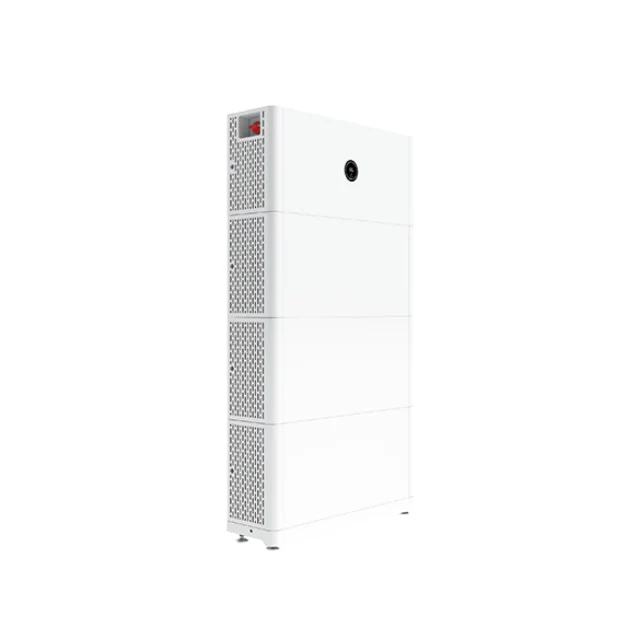
Growatt has been in Australian homes for over a decade — as an inverter, not as a battery. Those are two different reputations with two different amounts of evidence behind them, and the most useful thing this review can do is keep them apart.
By Kieron Taylor, Founder, Solar Select · Updated · 6 min read
The verdict
A long Australian inverter record and a much shorter battery one, so judge it on the battery evidence. The range is good at growing in stages, provided the quote names the family and model rather than just the brand.
Best for: Households that expect their load to grow and would rather add capacity in roughly 5 kWh steps than buy it all up front.
Look elsewhere if: A long local field record on the battery itself is what you are buying for, or the quote cannot tell you whether it is APX, ARK XH or ALP.
Family, model and inverter pairing decide a Growatt quote, and each has its own section further down.
The 30-second take
- Three battery families, two voltage classes. APX and ARK XH are high voltage; ALP is the 48 V low-voltage line. They are not interchangeable and they suit different inverters.
- The word “Growatt” on a quote is not a specification. Ask which family and which model — this is the single most common way a Growatt quote goes wrong.
- The inverter record is long; the storage record is not. Judge the battery on battery evidence, not on fifteen years of inverters.
- Genuinely good at staged growth — the range moves in roughly 5 kWh units, so capacity can follow the household instead of being bought all at once.
- We publish no Growatt price here, deliberately — see below for why, and for what actually moves the number.
Is Growatt a good battery, or a good inverter company?
It is worth being precise about this, because the marketing blurs it and the answer changes what you should check. Growatt is, by independent tracking of global shipments, the largest residential solar inverter supplier in the world, and it has been selling inverters into Australia for well over fifteen years. That is a real record and it is not in dispute. You can also find accredited Growatt installers in your state.
Home storage is a newer chapter for the company. The manufacturing scale and the distribution network carry over, which genuinely helps — parts move, and the brand is not going to vanish. What does not carry over is field time. A battery that has been in Australian roof cavities and garages for a decade has told the market things a newer one has not yet had the chance to.
None of that is a reason to strike Growatt off a shortlist. It is a reason to ask your installer how many Growatt *batteries* they have commissioned, rather than how long they have been fitting Growatt gear.
“A long inverter record and a short storage record are both true at once. The quote you are holding is for the storage one.”
APX, ARK XH or ALP — which one is actually in your quote?
This is where Growatt quotes diverge from each other, and it is the part most buyers never look at. The residential range splits across two voltage classes, and a system designed around one cannot be converted to the other afterwards without replacing hardware.
High-voltage families suit the modern grid-connected hybrid inverters most new installs use. The low-voltage line is the traditional 48 V shape, still the right answer for a lot of off-grid and hybrid builds. Neither is better in the abstract — but exactly one of them is right for your house, and the reasoning should appear on the quote rather than in the installer’s head.
- APX — the newer high-voltage platform, cobalt-free cells, stacking without cabling between modules.
- ARK XH — the earlier high-voltage family, stacked modules, single and three-phase homes.
- ALP — the 48 V low-voltage line, sized in 5 kWh units, the off-grid and hybrid answer.
- The paired inverter — the range is built around Growatt’s own inverters, and cross-brand pairing narrows the options sharply.
If a quote names a capacity but not a family, that is the first thing to send back. Mis-specification here is not a cosmetic error — correcting a voltage class after install means new equipment.
The expansion story, and its one condition
Growatt sizes in roughly 5 kWh steps, and across the families the range runs from small single-phase systems up past 40 kWh. That granularity is one of the better arguments for the brand: a household that expects an electric car or a growing load in three years can buy for today and add later, in sensible increments.
The condition is headroom, and it is set on the day of install, not the day you decide to expand. The inverter rating and the stack configuration fix a ceiling. A system specified right at that ceiling has nowhere to go, and reaching it means new hardware rather than another module. Want that checked against real quotes? Accredited Growatt installers, state by state.
So the question at quote time is not only “how much capacity am I getting”. It is “how much can this configuration accept later, and what would adding it involve”. Ask it before the design is locked, because afterwards the answer is fixed.
Why we are not printing a Growatt price
We could find figures for Growatt. We could not verify them to the standard we hold ourselves to — the numbers available to us came from search summaries rather than from pages we could open and read, and a price we cannot stand behind is worse than no price at all.
There is a second reason, and it is the stronger one. Installed battery pricing in Australia moves with certificate prices, exchange rates, installer capacity and a federal rebate that steps down on a schedule. A figure written this month is describing a different market by the time most people read it. What does not go stale is the list of things that change your number.
“A number we cannot source is not a service to you. The list of things that move it does not expire.”
What actually moves a Growatt quote
- Which family, and which voltage class. The largest single swing, and the one that cannot be revisited later.
- The paired inverter, and the fate of your existing one. If a working inverter is being replaced to make the battery fit, that cost belongs in the comparison.
- How many 5 kWh units now, against the ceiling of the design. Capacity today and headroom tomorrow are separate line items in everything but the price.
- Single-phase or three-phase. This narrows the family choice before anything else does.
- Backup scope. Which circuits stay live, and whether changeover is automatic. “Backup capable” on its own describes nothing.
- Switchboard condition. Older boards sometimes need work before anything can be added, and that line is the one most often missing from the cheapest quote.
- Rebate treatment. The federal battery rebate reaches you as an upfront discount from the installer, so two quotes can differ by thousands purely on which side of it they are written.
Make all three of your quotes describe the same job before you compare any totals. Our guide to reading a solar quote line by line applies the same discipline to the rest of the system.
Rebate eligibility, and the model-by-model catch
Growatt models do appear on the Clean Energy Council approved battery list, which is the gate for the federal battery rebate. But listing is assessed per model, not per brand, and with three families and several variants in circulation a brand-level “yes, Growatt qualifies” is not enough to rely on.
Ask the installer to show you the exact quoted model on the current list before you sign. It takes a minute and it is the difference between a rebate you assumed and a rebate you have. Ready to compare? Find accredited Growatt installers in your state — up to 3 quotes, free for homeowners.
How long would a Growatt take to pay for itself at your place?
Postcode, your bill, and whether the roof already has panels. About a minute, and the ten-year figure is yours before anyone asks for a phone number. Start with vetted Growatt installers in your state.
Read next
Sources
Every quantitative claim on this page traces to one of the sources below — government, manufacturer, or independent AU industry reference. Last verified 2026-08-23.
We use AI to help research and draft. Claims are traced to the sources below and dated. Where we haven’t got a source, we say so on the page — treat that as a starting point and do your own research.
General information only. It doesn’t take your circumstances into account and isn’t legal, financial, insurance or electrical advice. Rebates, tariffs, network rules and product terms change — confirm anything you plan to rely on with your installer, insurer, retailer or distributor, and see our terms.
Postcode in, up to 3 vetted installers out. Free for homeowners, no obligation. All solar guides · Federal rebates · How it works
Filed under: Brand deep-dives